

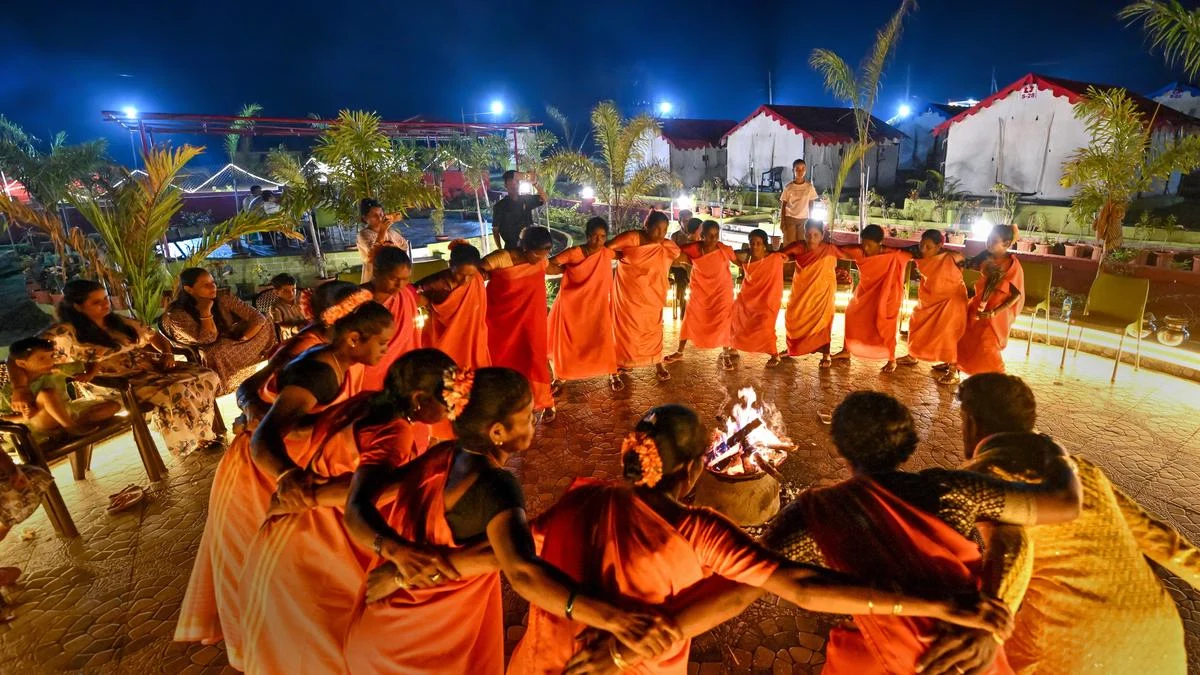
ARAUKU VALLEY – As the sun dips below the jagged peaks of the Eastern Ghats, a rhythmic pulse begins to emanate from the heart of Bosubeda village. It is the sound of the thudum and dappu—traditional drums—signaling the commencement of the Dhimsa, a dance that has defined the social fabric of the Araku Valley’s indigenous tribes for centuries. At the Araku MountainView Camping Resort (AMCR), this is not merely a performance for tourists; it is the cornerstone of a new movement in Andhra Pradesh’s tourism sector: the shift from "stopover sightseeing" to "deep cultural immersion."
Founded by Colonel Y. Siva Sankara Rao, a recipient of the prestigious Presidential Sena Medal, the resort is more than a hospitality venture. It represents a strategic effort to preserve the intangible heritage of the region while providing a sustainable livelihood for the tribal communities of the valley.
Main Facts: A Confluence of Culture and Conservation
The Araku MountainView Camping Resort is strategically located near the Madagada viewpoint road, an area renowned for its panoramic vistas and high-altitude coffee plantations. However, unlike the conventional concrete hotels that dot the main Araku town, AMCR emphasizes a low-impact, nature-first philosophy.
The Dhimsa Experience
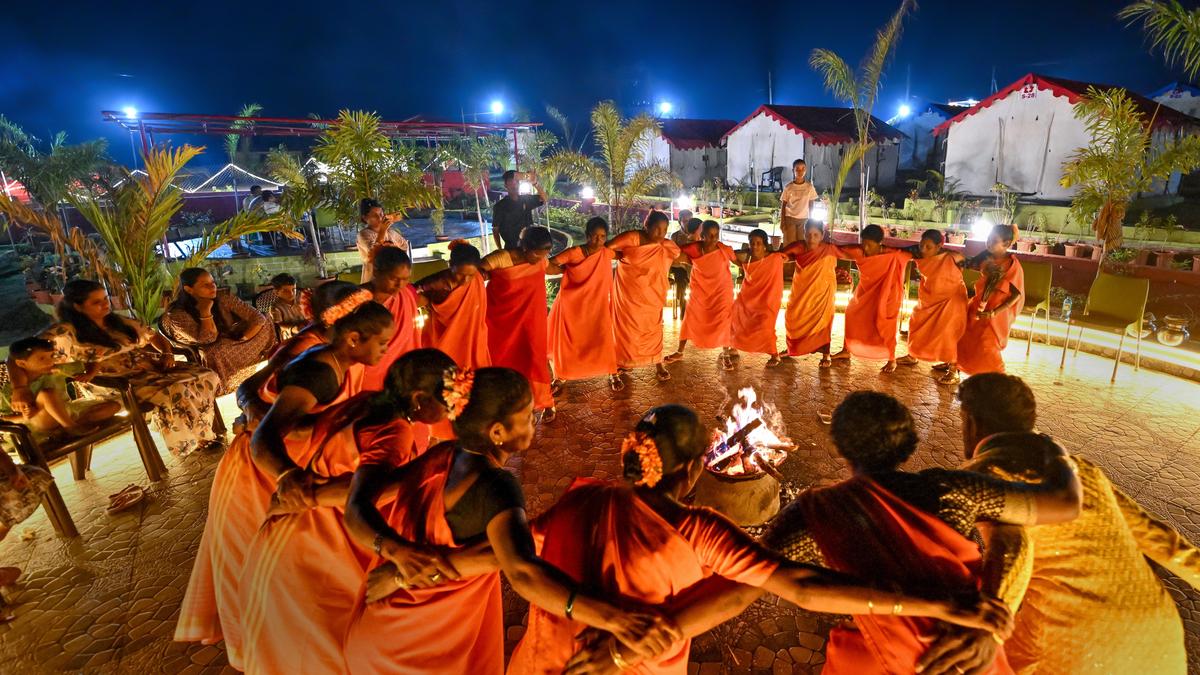
The evening’s centerpiece is the Dhimsa dance. Performed primarily by women from the local tribal communities, the dance is characterized by its chain-like formations and synchronized footwork. Historically performed during the Chaitra Parva festival and harvest seasons, the Dhimsa at the resort serves as a bridge between the guests and the land. The dancers, adorned in traditional sarees and brass ornaments, move in a circular motion around a central bonfire, inviting visitors to join the rhythm—a gesture that breaks the traditional barrier between "observer" and "participant."
Diverse Accommodations
Catering to a wide demographic, the resort offers two distinct types of stays:
- Swiss Camps: These are luxury-oriented, weather-protected structures equipped with modern amenities, including attached washrooms and comfortable bedding. They are designed for families and travelers who seek the "glamping" (glamorous camping) experience.
- American-style Tents: Targeted at the more adventurous demographic, these rugged tents offer a closer connection to the elements while maintaining essential comforts.
Celestial Tourism
Beyond the cultural performances, the resort leverages the low light pollution of the Eastern Ghats to offer curated stargazing sessions. In an era where "astro-tourism" is gaining global traction, the clear skies over Bosubeda provide a rare opportunity for urban dwellers to observe constellations and celestial events, often supplemented by open-air movie screenings and acoustic music sessions.
Chronology: The Evolution of the Araku Tourism Circuit
To understand the significance of the Araku MountainView Camping Resort, one must look at the historical trajectory of the valley’s development.
The 1990s – Early 2000s: The Transit Era
For decades, Araku Valley was viewed primarily as a day-trip destination from Visakhapatnam. Tourists would arrive via the scenic Kirandul-Kottavalasa railway line, visit the Borra Caves and the Coffee Museum, and depart by evening. The local tribal communities remained largely on the periphery of the formal tourism economy, often relegated to selling forest produce or handicrafts at roadside stalls.
2010 – 2020: The Rise of Infrastructure
As road connectivity improved, the volume of tourists increased. This period saw the rise of government-run resorts and private hotels. However, the "mass tourism" model began to take a toll on the environment, with plastic waste and noise pollution threatening the valley’s fragile ecosystem.
2021 – Present: The Experiential Pivot
Post-pandemic travel trends saw a marked shift toward outdoor, socially distanced, and "authentic" experiences. Recognizing this gap, Colonel Y. Siva Sankara Rao envisioned a space that combined his military discipline with a passion for nature. The establishment of AMCR in Bosubeda marked a departure from the "hotel room" model. The focus shifted toward the "living cultural zone," a project currently under development adjacent to the campsite.
Supporting Data: The Economics of the "Living Museum"
The shift toward experiential tourism is backed by significant socio-economic data. According to tourism operators in the Visakhapatnam district, the average length of stay in Araku has increased from 1.2 days in 2018 to approximately 2.5 days in 2024. This increase is directly attributed to the availability of "activity-based" stays.
Livelihood Generation
The AMCR initiative currently supports dozens of local families. By integrating Dhimsa performers and tribal cooks into the resort’s daily operations, the project ensures that a significant percentage of tourism revenue remains within the local village economy.
- Artisan Engagement: The upcoming "Tribal Life Setup" aims to employ local craftsmen to build traditional mud-and-thatch houses, showcasing vernacular architecture.
- Agro-Tourism: The resort sources its ingredients—including millets, wild honey, and organic vegetables—directly from tribal farmers, promoting the "Slow Food" movement.
Environmental Impact
By utilizing tented accommodations rather than permanent concrete structures, the resort maintains a lower carbon footprint. The use of natural materials in the upcoming cultural zone further emphasizes a commitment to sustainable development goals (SDGs) regarding responsible consumption and production.
Official Responses: A Vision of "Invisible" Traditions
Colonel Y. Siva Sankara Rao, the visionary behind the project, emphasizes that the goal is to make the "invisible" aspects of tribal life visible to the modern world.
"We wanted visitors to experience the traditions and warmth of the people who belong to these hills," says Rao. "In most tourist circuits, the traveler is a spectator. Here, we want them to be a guest of the community. When you watch the Dhimsa or eat food cooked in a traditional tribal kitchen, you aren’t just consuming a service; you are participating in a legacy."
Rao further explained the philosophy behind the "Tribal Life Setup" currently under construction. "Visitors will be able to walk through recreated tribal living spaces, understand the use of natural materials in housing, and get introduced to traditional food prepared using locally-sourced ingredients. It is about education as much as it is about relaxation."

Local community leaders have also expressed support. A spokesperson for the Bosubeda village council noted that the resort has provided a platform for the younger generation to take pride in their heritage. "Our songs and dances are not just for festivals anymore; they are a source of professional pride and income," the spokesperson stated.
Implications: The Future of Eco-Tourism in the Eastern Ghats
The success of the Araku MountainView Camping Resort carries several long-term implications for the region and the broader Indian tourism industry.
1. Preservation of Intangible Heritage
As globalization reaches the remote corners of the Eastern Ghats, there is a risk of tribal youth moving away from traditional practices. By commodifying these traditions in a respectful and sustainable manner, projects like AMCR provide a financial incentive for the preservation of folk dances, languages, and culinary techniques.
2. A Blueprint for Sustainable Development
The resort serves as a case study for "regenerative tourism." Instead of merely minimizing harm, the model seeks to actively improve the local environment and social fabric. If scaled, this model could replace the high-density hotel clusters that have led to environmental degradation in other Indian hill stations like Shimla or Ooty.
3. Diversification of the Tourism Portfolio
Araku has long been known for its coffee and caves. The introduction of "stargazing," "cultural immersion," and "rugged camping" diversifies the valley’s appeal, attracting niche markets such as digital nomads, researchers, and adventure enthusiasts. This diversification helps stabilize the local economy, making it less dependent on seasonal peaks.
4. Policy Alignment
The project aligns with the Indian Ministry of Tourism’s "Swadesh Darshan" and "Dekho Apna Desh" initiatives, which encourage domestic travelers to explore the country’s rich cultural diversity. It also supports the state government’s push to promote the Eastern Ghats as a premier eco-tourism destination.
Conclusion
As night settles over Bosubeda, the firelight flickers against the canvas of the Swiss tents, and the last echoes of the Dhimsa drums fade into the mountain air. The Araku MountainView Camping Resort is more than a place to sleep; it is a laboratory for a new kind of travel—one where the luxury of the experience is measured not by the thread count of the sheets, but by the depth of the connection to the earth and its oldest guardians.
Travel Information:
- Location: Bosubeda, approximately 110 km from Visakhapatnam.
- Access: Accessible via the Visakhapatnam-Araku Ghat road or the scenic railway line.
- Contact: Detailed bookings and cultural program schedules are available at www.amcr.in.
