

Introduction
In the final days of February 2022, as the world watched in stunned silence the rapid escalation of Russian military forces into Ukrainian territory, a different kind of mobilization was taking place within the global intellectual community. While tanks rolled toward Kyiv and families sought refuge in the damp shadows of subway stations, the international literary world began to forge a collective response. On March 1, 2022, this response culminated in a powerful, unprecedented open letter orchestrated by PEN International.
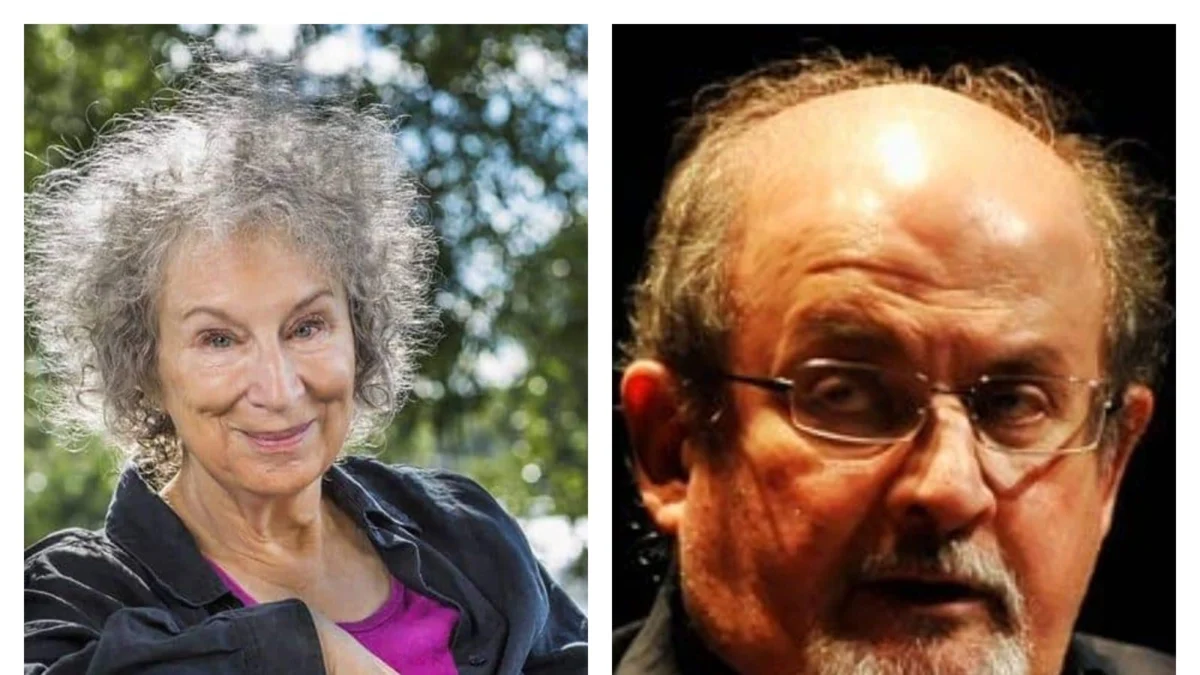
Signed by over 1,000 of the world’s most influential writers, the document serves as both a condemnation of state-led violence and a manifesto for the preservation of democratic values. With signatories ranging from Nobel laureates to Booker Prize winners, the letter represents a rare moment of total unity among creators who often occupy disparate ideological spaces. By lending their names to this cause, literary titans such as Margaret Atwood, Salman Rushdie, and Orhan Pamuk have signaled that the invasion of Ukraine is not merely a geopolitical dispute, but a fundamental assault on the human spirit and the freedom of expression.
Main Facts: A Global Mandate for Peace
The open letter, released by PEN International, is more than a simple petition; it is a high-level diplomatic statement from the "Republic of Letters." The document explicitly condemns the Russian invasion and expresses unwavering solidarity with the writers, journalists, artists, and citizens of Ukraine.
The Signatories
The sheer weight of the names attached to the document is staggering. Among the 1,000+ signatories are:
- Nobel Laureates: Orhan Pamuk (Turkey), Svetlana Alexievich (Belarus), and Olga Tokarczuk (Poland). Their involvement is particularly poignant given Alexievich’s history of documenting the struggles of the post-Soviet soul and Tokarczuk’s focus on the interconnectedness of European history.
- Literary Heavyweights: Margaret Atwood, the Canadian author of The Handmaid’s Tale, and Salman Rushdie, a long-time advocate for free speech who has faced state-sponsored threats himself.
- Contemporary Voices: Jonathan Franzen, Colm Tóibín, Elif Shafak, and Tsitsi Dangarembga (the 2021 PEN International Award for Freedom of Expression winner).
The Core Message
The letter’s primary objective is to demand an immediate end to the "senseless war" and the "unleashed violence" perpetrated by Russian forces. It frames the conflict not just as a territorial grab, but as a direct attack on the right of a sovereign people to "debate their future allegiance and history without Moscow’s interference."
Chronology: From First Strikes to Literary Resistance
The timeline of this intellectual mobilization mirrors the rapid descent of the region into full-scale conflict.
February 24, 2022: The Russian Federation launches a comprehensive invasion of Ukraine. As the first missiles strike major cities, the international community begins to scramble for a response beyond economic sanctions.
February 25–26, 2022: Individual authors begin to take to social media and news outlets. Margaret Atwood and Salman Rushdie are among the first to issue personal statements of support. Behind the scenes, PEN International—the world’s leading association of writers—begins drafting a unified response to ensure that the literary world speaks with one voice.
February 27, 2022: PEN International officially releases the open letter. Within hours, hundreds of signatures pour in from every continent. The letter is translated into multiple languages, including Ukrainian and Russian, to ensure its message reaches those on the front lines and those within the aggressor state.
March 1, 2022: The number of signatories surpasses the 1,000-mark. The letter gains global traction in major news outlets, becoming a symbol of the "soft power" resistance against the Kremlin’s narrative. The publication of this list coincides with reports of increasing civilian casualties and the displacement of millions, adding a sense of urgent gravity to the authors’ words.
Supporting Data and Analysis: The Language of Dissent
The text of the PEN International letter is meticulously crafted to counter the specific rhetoric used by the Russian government to justify the invasion.
Defending History and Sovereignty
One of the most significant passages in the letter states: “We stand united in condemnation of a senseless war, waged by President Putin’s refusal to accept the rights of Ukraine’s people to debate their future allegiance and history.”
This is a direct rebuttal to Vladimir Putin’s pre-invasion essay and televised addresses, in which he claimed that Ukraine has no historical claim to true statehood. By emphasizing the "right to debate history," the authors are asserting that history belongs to the people who live it, not to the autocrats who wish to rewrite it.
The Attack on Democracy
The letter characterizes the war as an "attack on democracy and freedom not just in Ukraine, but around the world." This aligns with data from human rights organizations that suggest a global "democratic recession." The authors argue that the fall of a free Ukraine would set a precedent that endangers the safety of any nation that dares to pursue a path independent of authoritarian neighbors.
The Role of Propaganda
The signatories call for an "end to the propaganda that is fueling the violence." In the context of 2022, this refers to the state-controlled media in Russia that framed the invasion as a "special military operation" aimed at "denazification." For writers—individuals whose lives are dedicated to the pursuit of truth through language—the corruption of words to justify slaughter is seen as a professional and moral sacrilege.
Official Responses and Global Context
The release of the letter has triggered a wave of supporting statements from cultural institutions worldwide.
PEN International’s Stance
Burhan Sonmez, the President of PEN International, emphasized that the organization’s mission has always been to bridge divides through literature, but that silence in the face of tyranny is a form of complicity. The organization has also moved to provide emergency funds and resources for Ukrainian writers and journalists who are currently reporting from combat zones or seeking asylum.
The Russian Dissent
Crucially, the movement is not limited to Western writers. Several Russian authors, despite the threat of severe legal repercussions under new "fake news" laws in Russia, have added their names or issued separate pleas for peace. This highlights a growing rift between the Russian creative intelligentsia and the Kremlin.
International Cultural Sanctions
The PEN letter is part of a broader trend of "cultural decoupling" from the Russian state. Since the letter’s release, major publishing houses have suspended deals with Russian publishers, and international book fairs have uninvited Russian state delegations. While controversial to some, these measures are intended to isolate the Russian administration and signal that the "business of culture" cannot continue as usual during a war of aggression.
Implications: The Power of the Pen in the 21st Century
The significance of 1,000 authors signing this letter extends beyond mere symbolism. It carries profound implications for the role of the intellectual in modern conflict.
1. The Protection of Truth
In modern warfare, the "information space" is as much a battlefield as the physical ground. By signing this letter, world-renowned authors are using their platforms to validate the Ukrainian narrative and provide a "moral compass" for their readers. When a Nobel laureate like Svetlana Alexievich—who is Belarusian and intimately understands the regional dynamics—signs such a document, it lends immense credibility to the anti-war movement.
2. Solidarity as a Survival Mechanism
For the writers and journalists currently in Ukraine, the knowledge that they have the backing of the world’s literary elite provides more than just emotional comfort. It creates a degree of "visibility" that can serve as a shield. When the world is watching specific individuals, it becomes slightly more difficult for an occupying force to make them "disappear" without international outcry.
3. The Reassertion of European Identity
The letter concludes with a powerful sentiment: “There can be no free and safe Europe without a free and independent Ukraine.” This statement marks a shift in how Ukraine is perceived—not as a "buffer zone" or a former Soviet republic, but as an essential, foundational piece of the European democratic project. The literary community is effectively redrawing the cultural map of Europe to include Ukraine at its heart.
4. A Precedent for Intellectual Activism
This mobilization sets a high bar for how the global creative community responds to future crises. It suggests that in the age of digital connectivity, the "ivory tower" is a thing of the past. Authors are no longer expected to remain neutral observers; they are increasingly viewed as essential participants in the defense of global human rights.
Conclusion
The open letter signed by Margaret Atwood, Salman Rushdie, and their 1,000 colleagues is a landmark in the history of literary activism. It serves as a reminder that while weapons can destroy buildings and take lives, they cannot easily extinguish the ideas of sovereignty, freedom, and truth.
As the conflict in Ukraine continues to evolve, this document will remain a testament to a moment when the world’s greatest storytellers refused to let a false narrative go unchallenged. In the face of "darkest hours," the global literary community has chosen to stand in the light of solidarity, asserting that the power of the written word remains a formidable foe to the forces of tyranny. The message is clear: the world is reading, the world is writing, and the world will not forget.
