

By [Your Name/Agency]
Published: October 26, 2023 (Based on JLF 2022 Proceedings)
Main Facts: The Centrality of Reason in an Age of Unreason
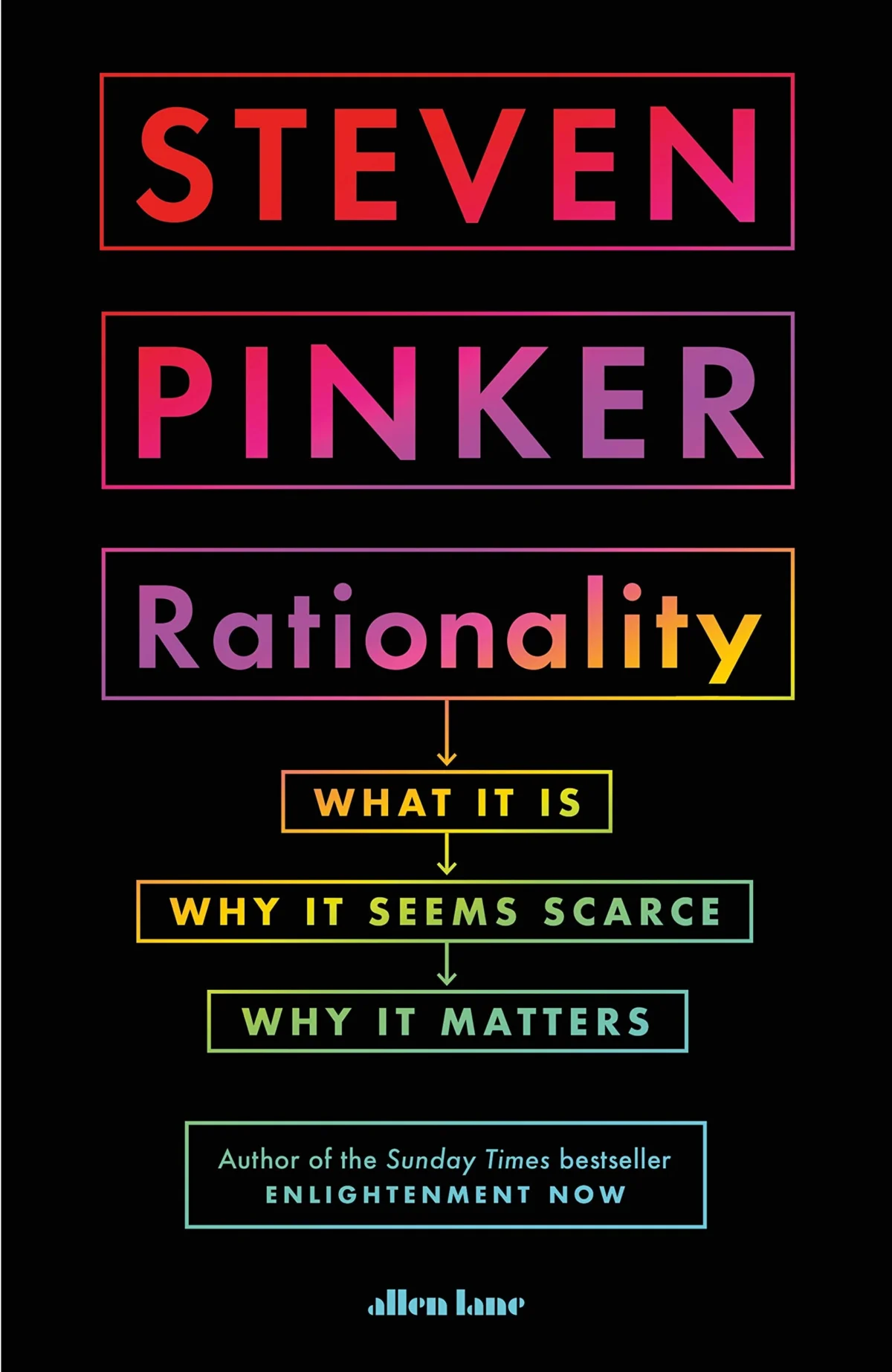
At the 2022 Jaipur Literature Festival (JLF), a premier global assembly of intellect and art, Canadian-American cognitive psychologist and author Steven Pinker delivered a profound meditation on the state of the human mind. In a session centered on his latest work, Rationality: What It Is, Why It Seems Scarce, Why It Matters, Pinker argued that the capacity for reason is not merely an academic virtue but the primary engine behind every measurable improvement in the human condition.
In conversation with economist and journalist Mihir S. Sharma, Pinker sought to demystify the apparent paradox of the 21st century: how a species capable of sequencing the genome and landing rovers on Mars can simultaneously fall prey to conspiracy theories, fake news, and the polarizing vitriol of social media. Pinker’s thesis is clear: rationality is a tool kit that must be consciously applied, and its current suppression—whether through institutional "cancel culture" or innate cognitive biases—poses a direct threat to the foundations of democratic progress.
Pinker emphasized that there is no "magical force" or teleological guarantee that life will improve. Instead, he posited that the laws of nature, particularly entropy and evolution, often lean toward disorder and conflict. It is only through the rigorous application of human rationality that we have managed to beat back the "Four Horsemen" of famine, pestilence, war, and death.
Chronology: From Linguistic Instincts to Global Progress
To understand Pinker’s current focus on rationality, one must trace the arc of his three-decade career, which he described during the session as a "homecoming" to his roots in cognitive psychology.
The Foundation of Human Nature
In the 1990s, Pinker rose to international prominence with The Language Instinct (1994). His work argued that language is not a cultural invention but a biological adaptation. This sparked a career-long inquiry into the "innate structure" of the human mind. If language is an instinct, Pinker reasoned, then what other faculties are hard-wired by evolution?
The Political and Social Shift
By the early 2000s, Pinker moved from the mechanics of the mind to the implications of human nature on society. In The Blank Slate (2002), he challenged the prevailing orthodoxies of the time, arguing that acknowledging a universal human nature is not a threat to progress but a prerequisite for it. This led him to investigate the historical outcomes of human behavior, resulting in his monumental 2011 work, The Better Angels of Our Nature, which documented the historical decline of violence.

The Rationality Synthesis
His 2018 book, Enlightenment Now, further expanded this data-driven optimism, crediting the values of the Enlightenment—reason, science, and humanism—for the unprecedented spike in life expectancy and wealth. His latest work, discussed at JLF 2022, represents the final piece of this intellectual puzzle. Having established that the world is getting better, Pinker now focuses on the mechanism of that improvement: the cognitive tools of rationality.
Supporting Data: Why Rationality Matters and Why It Fails
Pinker’s discourse at JLF was grounded in the reality of human cognitive limitations. He addressed the "Rationality Paradox"—the fact that individuals can be highly rational in their personal lives (navigating traffic, managing finances) but profoundly irrational in their political or tribal allegiances.
The Scarcity of Reason
Pinker argued that rationality "seems scarce" because the human brain did not evolve for the purpose of abstract truth-seeking or statistical analysis. Instead, it evolved for survival within small, hunter-gatherer groups. Consequently, we are prone to "myside bias"—the tendency to evaluate information in a way that supports our own group or ideology.
Supporting data in the realm of cognitive psychology suggests that:
- Motivated Reasoning: People use their intellectual powers to reach a conclusion they find socially or emotionally satisfying, rather than the most accurate one.
- Subjectivity: Our reasoning is perpetually clouded by our environment. Pinker noted that the "biggest bias is to assume that we are not biased but somebody else is."
Rationality as the Engine of Progress
Pinker countered the romantic notion that "emotions" or "instincts" are superior guides to human affairs. He provided a stark reminder: "The laws of nature tend to make life worse." Without the rational application of science, the default human state is one of poverty and early death. He pointed to the reduction of famine through the Green Revolution and the decline of global conflict as direct results of rational policy-making and international cooperation, rather than any inherent "magic" in the universe.
Official Responses and the Critique of Cancel Culture
One of the most provocative segments of the JLF session involved Pinker’s critique of modern social dynamics, specifically "cancel culture" and institutional censorship. While Pinker did not represent a government office, his status as a Harvard professor and public intellectual makes his critique of academic and media institutions a significant "official" response to current cultural trends.
The Fallacy of Infallibility
Pinker warned that the rise of "cancel culture"—the practice of deplatforming or silencing individuals with controversial views—is rooted in a dangerous psychological state: the feeling of infallibility.

"The implicit rationale for silencing people is that they should not be allowed to spread misinformation," Pinker noted. However, he argued that for this to be a valid stance, the person doing the censoring must assume they have a "pipeline to the truth." This, he asserted, is a logical impossibility for a flawed, biological species.
The Institutional Crisis
Pinker expressed concern over institutional censorship in universities and newsrooms. He argued that when institutions remove opposing views, they undermine the very mechanism that allows society to correct its mistakes. If an idea is incorrect, it should be dismantled through "open debate and evaluation," not through "group force." By suppressing speech, institutions lose their credibility, leading the public to seek out alternative, and often more dangerous, sources of information.
Implications: The Future of Truth in a Polarized World
The implications of Pinker’s JLF address extend far beyond the festival grounds, touching upon the survival of democratic institutions and the future of scientific inquiry.
The Fragility of Progress
The primary implication of Pinker’s work is that progress is not inevitable. If rationality is the fuel for human improvement, then the current "scarcity" of reason—driven by tribalism and censorship—could lead to a stagnation or reversal of the gains made over the last two centuries. If we abandon the tools of logic and evidence in favor of "emotional considerations" or ideological purity, we risk losing the ability to solve global crises like climate change or future pandemics.
The Need for "Rationality Literacy"
Pinker’s session suggested a need for a societal shift toward "rationality literacy." This involves teaching not just what to think, but how to think—utilizing tools like Bayesian reasoning, understanding the difference between correlation and causation, and recognizing the pitfalls of the "availability heuristic" (the tendency to judge the frequency of an event by how easily examples come to mind).
A Call for Intellectual Humility
The most profound implication of Pinker’s talk is the necessity of intellectual humility. By acknowledging that no individual or group is divinely inspired or immune to bias, we create a "marketplace of ideas" where the best solutions can emerge through competition. Pinker concluded that the only way for the human species to find the truth is to maintain a culture where every idea is subject to scrutiny and no person is above being questioned.
In an era defined by rapid technological change and deep social division, Pinker’s message at JLF 2022 serves as a vital reminder: our greatest gift is our ability to think, and our greatest threat is our desire to stop others from doing the same. The "homecoming" of this cognitive psychologist to the stage of global discourse reinforces a timeless truth—that while the universe may be indifferent to our survival, our capacity for reason provides us with the only map through the darkness.
