


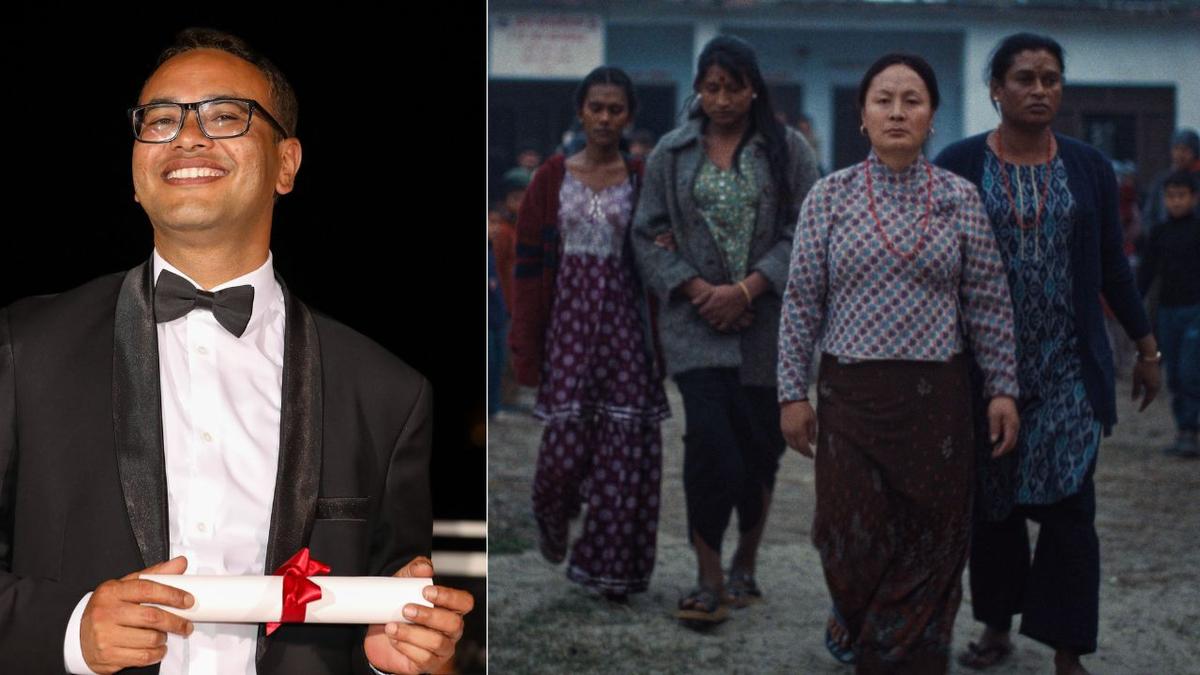
Cannes Film Festival, France – In a landmark moment for Nepalese cinema, director Abinash Bikram Shah’s debut feature film, Elephants in the Fog (Tiniharu), has made its highly anticipated premiere in the prestigious Un Certain Regard section of the Cannes Film Festival. This marks the first-ever Nepalese feature film to achieve this distinction, a testament to Shah’s burgeoning talent and his commitment to exploring the nuanced realities of marginalized communities. The film, a multi-national co-production involving five countries and ten producers, delves into the complex lives of Nepal’s transgender community, particularly the Kinnar/Hijra, offering a poignant narrative of love, dignity, and the search for belonging.
Shah, who affectionately refers to India as his "second home," draws a rich tapestry of influences from both Indian and Nepalese cinema. His formative years were soundtracked by the melodies of Mani Ratnam’s iconic films like Roja and Bombay, and the cinematic landscape of his youth was shaped by Bollywood blockbusters experienced through VCRs and the state-run Doordarshan channel. "My friends call me pretentious when I say I love Mahesh Bhatt’s Arth and Dimple Kapadia’s Rudaali," Shah admits with a wry smile, hinting at a deep appreciation for the emotional depth and social commentary often found in Indian cinema. The revelation of Satyajit Ray’s work in 2000, however, profoundly shifted his perspective, instilling a greater appreciation for cinematic artistry and storytelling. These cross-border connections extend to his personal life, with Shah cherishing deep friendships with Indians, even those who playfully tease him with "jokingly racist" remarks.
For generations, Nepal has viewed India as a multifaceted destination – a beacon for economic opportunity and spiritual solace. This dualistic perception is vividly illustrated in Elephants in the Fog, where two of the film’s characters embody these aspirations. One dreams of fleeing to Delhi to forge a new life with her lover, while the other seeks to spend her final days in the sacred city of Varanasi.
From Pandemic Pastime to Global Stage: The Genesis of Elephants in the Fog
The journey of Elephants in the Fog to the hallowed halls of Cannes began unexpectedly during the global pandemic. A "TikTok binge watch" led Shah down a rabbit hole of content that ultimately introduced him to Nepal’s transgender community. This discovery ignited a creative spark, culminating in a film that Shah hopes will resonate with audiences worldwide. "I’m looking forward to seeing how the audience will take this film, and of a man who truthfully made a movie about transwomen," he states, underscoring his intention to present an authentic portrayal.
This achievement follows Shah’s previous success at Cannes in 2022, where his short film Lori (Melancholy of my Mother’s Lullabies) garnered the prestigious Short Film Palme d’Or Special Jury Mention. The artistic lineage he now joins is significant. In 2022, Saim Sadiq made history with Joyland, the first Pakistani film to be selected and win awards in the Un Certain Regard section. This year, Shah etches his name in the annals of Nepalese cinema with Elephants in the Fog, not only as the first Nepalese feature to grace Cannes but also as a film that, like Joyland, places transwomen and their inherent right to love and dignity at its core. While Joyland offered an individual’s journey towards social equality, Elephants in the Fog delves deeper into the multifaceted and often dichotomous reality of the transgender community.
A Tapestry of Matriarchy: Kinnars, Elephants, and Chosen Families
Elephants in the Fog, a collaborative effort spanning five countries and boasting ten producers, places the mother figure at the heart of its narrative, portraying her as the cultural and moral anchor of a "chosen family." The intricate dynamics between mothers and daughters have emerged as a recurring motif in Shah’s filmmaking. In this latest work, he masterfully juxtaposes the imagery of the matriarchal Kinnar/Hijra community with that of elephants – creatures known for their tight-knit, female-led clans guided by a wise matriarch.
The film is set in the vicinity of Chitwan National Park, nestled near the India-Nepal border, a region where this unique community resides. The narrative tension escalates as Pirati (portrayed by Pushpa Thing Lama), the presumptive matriarch leader, finds herself torn between personal desires and her profound communal responsibilities. Her world is further destabilized when her daughter, Apsara, goes missing. The film’s social drama then spirals into a gripping psychological thriller, amplified by the skilled editing of veteran Andrew Bird and the insightful contribution of Paris J. Ludwig, a transwoman herself, who also worked on the film.
Crafting the Narrative: A Screenwriter’s Perspective
H2: The Dual Joys of Writing: For Oneself and for Others
Abinash Bikram Shah’s foundation in filmmaking lies in his prowess as a screenwriter. He has contributed his talents to esteemed directors such as Deepak Rauniyar (Highway, 2012) and Min Bahadur Bham (Shambhala, 2025). When asked about his preference between writing for others and for himself, Shah articulates a clear distinction: "With other people, I tend to let go of the script at some point. For me, cinema is a director’s medium. When I’m writing for myself, it’s more visual; I know what I want to do."
He elaborates on his collaborative experiences. Highway marked his debut as a feature screenwriter, where he meticulously developed a script based on a foundational story idea shared by Deepak Rauniyar. His collaboration with Min Bahadur Bham on Shambhala was a more intertwined process. While the core narrative was entirely Bham’s, Shah played a crucial role in crafting the initial draft, refining the structure, and imbuing the characters with depth. This dual experience highlights his adaptability and his ability to contribute meaningfully to diverse creative visions while retaining a distinct authorial voice for his personal projects.

Evolving Nepalese Cinema: From Imitation to Authenticity
H2: Breaking Free from Bollywood’s Shadow: The Rise of Nepalese Independent Cinema
The evolution of Nepalese mainstream cinema from its earlier days of often mimicking Bollywood trends is a subject Shah addresses with a nuanced perspective. He credits pioneering independent filmmakers like Nabin Subba and Tsering Rhitar Sherpa for imbuing Nepalese cinema with an authentic voice that has since gained international recognition. "Nabin Subba and Tsering Rhitar Sherpa’s films have this Nepali authenticity. They inspired us and took Nepali cinema to global festivals," Shah states. He cites Subba’s 2023 film, A Road to a Village, which premiered at the Toronto International Film Festival, as an example of this powerful storytelling. These filmmakers, he explains, provided the courage and the conviction to believe that audiences exist for their unique narratives, and that Nepalese stories hold inherent value on the global stage.
Shah also acknowledges his contemporaries, including Deepak Rauniyar, Min Bahadur Bham, Pooja Gurung, and Bibhushan Basnet, as crucial figures in this evolving cinematic landscape. He observes that while mainstream cinema has indeed progressed, the shift towards realism is still an ongoing process. Nischal Basnet’s 2012 film Loot is cited as a pivotal moment. While it incorporated elements of heightened drama, its freshness stemmed from its casting of raw, theatre-trained actors and its deliberate omission of song-and-dance sequences, a departure from conventional Bollywood-influenced fare. This film, Shah notes, paved the way for subsequent filmmakers to explore more authentic storytelling avenues, though true realism remains a developing aspiration.
The Metaphorical Resonance: Human-Animal Coexistence and Marginalization
H2: The Birth of a Vision: Unveiling the Kinnar Community Through TikTok
The genesis of Elephants in the Fog can be traced back to the unusual circumstances of the 2020 lockdown. Seeking respite from the deluge of pandemic news, Shah found himself immersed in online content, particularly TikTok. It was on this platform that he encountered a captivating video showcasing a group of Kinnars living as a cohesive family unit, complete with their distinct rituals and language. This glimpse into their lives sparked a profound fascination, especially in contrast to his prior limited exposure to transwomen, often confined to representations from the Blue Diamond Society or those involved in sex work, and primarily seen in Kathmandu.
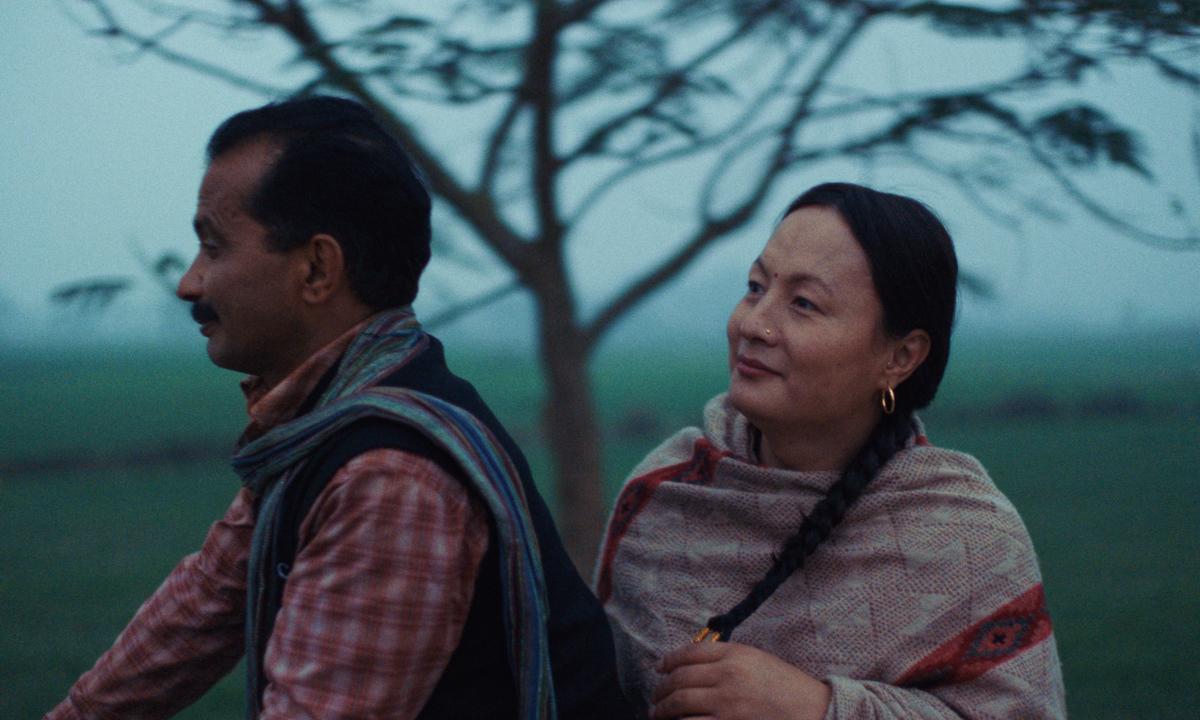
The individuals in the TikTok video hailed from the southern regions of Nepal, near the Indian border. Shah was struck by the inherent contradiction in their societal role: invited into homes to bestow blessings, yet not truly welcomed to stay. This paradox became a central theme. "In my films, I’m always drawn towards this concept of family, and to the persons who are pushed to the edge," he explains. This initial encounter laid the groundwork for exploring the community’s layered existence and their perpetual struggle for acceptance.
H3: The Elephant in the Room: Symbolism and Societal Blindness
The integration of the forest and elephants into the narrative of Elephants in the Fog is not merely an aesthetic choice but a profound metaphorical extension of the film’s thematic concerns. The Kinnars’ proximity to Chitwan National Park, a region bordering India, provided a natural backdrop for this symbolic intertwining. The inspiration for this connection emerged from a poignant conversation with one of the trans mothers in the community.
She recounted a parable about an elephant and a blind man. The blind man, unable to perceive the elephant in its entirety, touched its leg and mistook it for a pillar; he touched its tail and believed it to be a rope. This analogy resonated deeply with Shah, as the trans mother articulated, "The society doesn’t know us as a whole, either they think we are these people with magical power to bless, or we are sex workers. They don’t consider us as a whole human being." This profound statement underscored the community’s experience of being perceived through fragmented and often reductive lenses.
Shah further explains the symbolic weight of elephants: "We also have this Elephant God (Ganesha). When someone disturbs the status quo, elephants come into the villages, destroying crops and houses. It’s about that contradiction." This duality highlights the disruptive power of the marginalized when their existence is challenged, and the potential for both reverence and destruction associated with these powerful beings, mirroring the complex relationship between the Kinnar community and the society they inhabit. The "ecological conservation metaphor" thus becomes a powerful lens through which to examine the societal marginalization and the inherent forces of nature, both human and animal, that shape their lives.

Visualizing Authenticity: The Cinematographic Approach
H2: A Palette of Intimacy and Rawness: Capturing the Transgender Experience
The visual language of Elephants in the Fog is as crucial to its narrative as the script itself. The film’s aesthetic is characterized by striking close-ups, a muted blue-grey palette, and foggy, dark frames, all meticulously crafted to evoke a sense of intimacy and emotional depth. Shah’s brief to his cinematographer, Noé Bach, was deeply rooted in the visual poetry of Nan Goldin’s photography.
"We chose the stills from [American photographer] Nan Goldin’s photographs [documenting LGBTQ+ communities], which are so raw, intimate, and real, and worked in that direction," Shah reveals. This directive aimed to imbue the film with a similar sense of unvarnished truth and personal connection. Bach, a French cinematographer with an impressive four films at Cannes this year, was particularly struck by the "magical power of the [transwomen] community," a sentiment that clearly influenced his visual interpretation.
The collaborative synergy extended to the production design, spearheaded by Indian designer Mausam Aggarwal, whose work on films like Ajitpal Singh’s Fire in the Mountains (2021) had deeply impressed Shah. "We three together designed the film’s mood and scenes’ looks," Shah notes, highlighting the shared vision that shaped the film’s distinctive visual identity. This multi-national creative team, including editors from Germany and a transwoman editor from Paris, underscores the global ambition and the intricate craftsmanship behind Elephants in the Fog.
Navigating the ‘Other’: Empathy and Authenticity in Storytelling
H2: The Outsider’s Gaze, Transformed: Bridging Divides Through Empathy
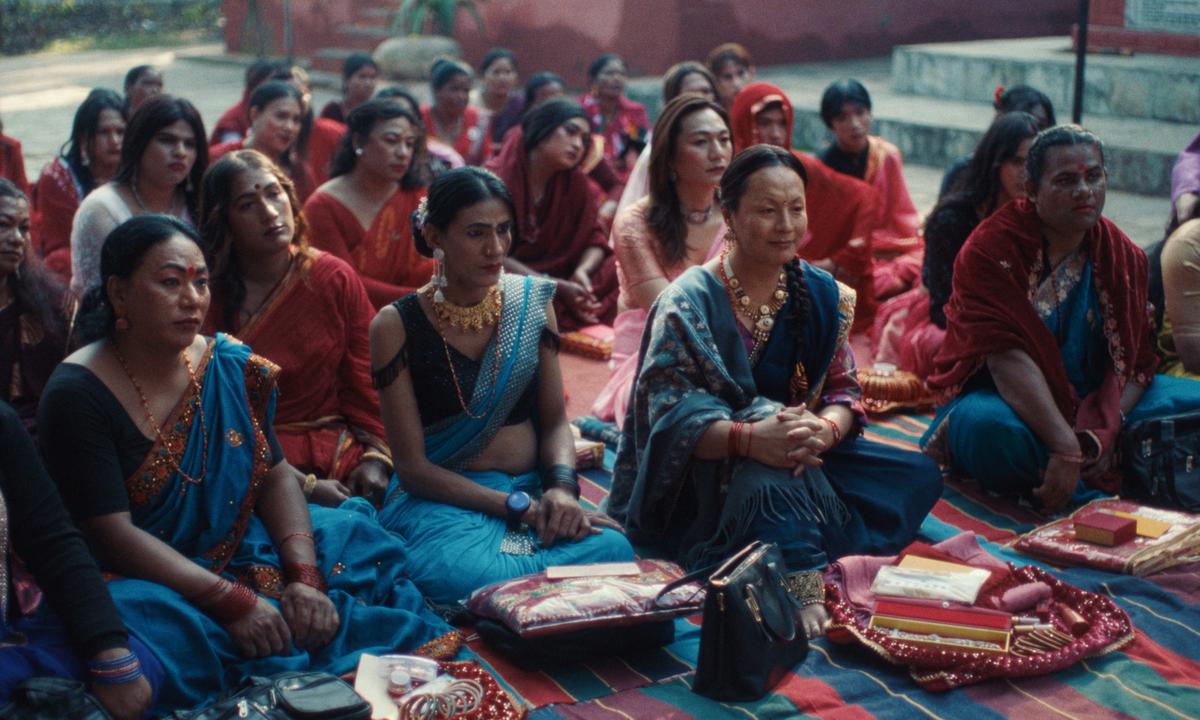
Shah candidly addresses the inherent complexities of his position as a non-transgender man telling the story of the Kinnar community and the profound bond between mothers and daughters. He acknowledges the validity of the "outsider gaze" critique, especially given his previous short film, Lori, also explored mother-daughter relationships. This exploration, he explains, stems from his personal experience of living with and caring for his aging single mother.
However, Shah firmly believes in the power of empathy to transcend identity boundaries. "I believe we must go where our empathy leads us, otherwise if we create these rigid boundaries where a man can only tell the man’s story, we are again reinforcing the same wall that my film is suppressing," he argues. This philosophy underscores his commitment to dismantling restrictive narrative silos.
The Nepalese title of the film, Tiniharu, meaning "them," encapsulates Shah’s overarching goal: to transition from an ‘othering’ perspective to one of inclusion. "My goal is to move from ‘them’ to ‘us’," he declares. This aspiration guided his approach to research and development. He deliberately eschewed a pre-conceived script, opting instead for an immersive, two-year process of engaging directly with the community. "I went to their community without a script. Just for research, to look for stories," he states.
The authenticity he strives for is rooted in building genuine connections. "The authenticity comes when you spend time with them, understand them from their perspective, and then the final story emerges." This commitment is further solidified by the casting of individuals from the community itself, including the lead actress, Pirati (Pushpa Thing Lama). Shah traveled to her remote village, some 200 kilometers from Kathmandu, to facilitate her participation. He recounts the delicate process of guiding her performance, moving beyond conventional acting to embody her lived experience. "I had to make her believe that it’s her story, not someone else’s," he emphasizes, highlighting his dedication to fostering a deeply personal and authentic portrayal.
H3: Nepal’s Progressive Facade vs. Ground Realities: LGBTQ+ Rights in South Asia

The conversation inevitably turns to the broader socio-political landscape of LGBTQ+ rights in South Asia, particularly in light of India’s recent rollback of transgender individuals’ right to self-identify. Nepal, in contrast, stands out as a progressive leader in the region, having celebrated the South Asian region’s first legal trans marriage and electing a trans politician to Parliament.
Despite these advancements, Shah asserts that the ground reality often paints a more complex picture. "It’s all about the social contradiction towards them," he observes. While acknowledging Nepal’s progressive legal framework and the crucial work of organizations like the Blue Diamond Society, which has advocated for LGBT+ rights for decades, Shah points to the lingering societal conservatism. "It’s progressive, but (social) mindset isn’t quite so because we are a conservative society. Nepal and India are very similar."
The election of Bhumika Shrestha, a transwoman, as a Member of Parliament is a significant milestone, demonstrating a growing acceptance and representation. However, as Elephants in the Fog illustrates, legal progress does not always translate to immediate or widespread social acceptance. The film’s narrative, by delving into the lived experiences of the Kinnar community, serves as a vital counterpoint to official pronouncements of progress, revealing the persistent social barriers and the ongoing struggle for true equality and dignity within a deeply rooted conservative society.
Elephants in the Fog is more than just a film; it is a powerful act of cinematic advocacy, a testament to the enduring human spirit, and a crucial contribution to the global conversation on identity, acceptance, and the universal right to love and be seen. Abinash Bikram Shah’s debut at Cannes is not merely a personal triumph but a significant milestone for Nepalese cinema, heralding a new era of authentic storytelling that challenges perceptions and champions the marginalized.
