

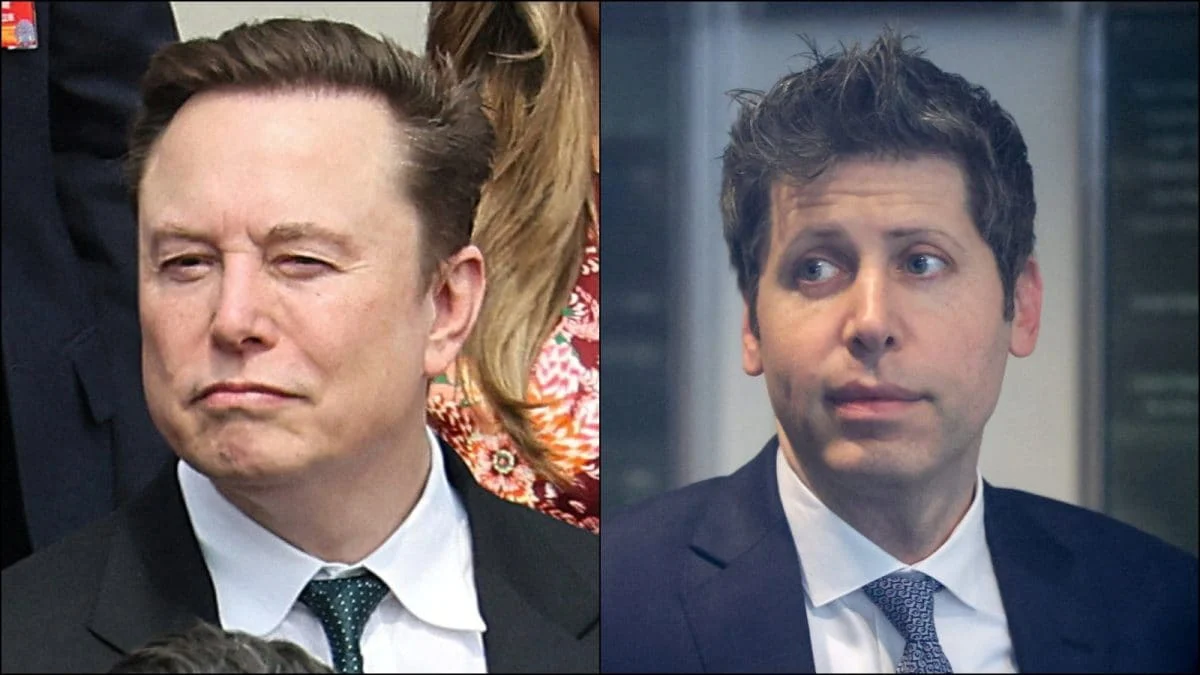
United States of America (USA) – May 19, 2026 – The high-stakes legal battle between technology titan Elon Musk and AI powerhouse OpenAI, co-founded by Sam Altman, has taken a dramatic turn. A federal jury in California on Monday delivered a verdict that, while not addressing the core allegations, dismissed Musk’s ambitious lawsuit against OpenAI and its leadership. The decision, which hinged on a "calendar technicality" rather than the merits of the case, has been met with immediate and fervent vows of appeal from the Tesla and SpaceX CEO, signaling that this intensely watched "war" over the future of artificial intelligence is far from over.
The jury’s finding asserted that Musk waited too long to file his complaint, ruling that the lawsuit fell outside the three-year statute of limitations. This procedural dismissal has left the fundamental accusations – that OpenAI deviated from its founding non-profit mission to pursue commercial gain, enriching its founders and partners – unaddressed by the initial court proceedings. However, Musk, never one to shy from a protracted fight, swiftly took to his platform X to declare his intent to appeal, asserting that the battle for what he perceives as the integrity of OpenAI’s original vision will continue in higher courts.
A Definitive Ruling, A Contentious Aftermath
The verdict, delivered in a California courtroom, brought to a temporary close the initial phase of a lawsuit that has captivated the tech world. Elon Musk’s 2024 complaint alleged that Sam Altman, OpenAI President Greg Brockman, The OpenAI Foundation, and even Microsoft – a significant investor and partner – had fundamentally betrayed the organization’s initial commitment to developing artificial general intelligence (AGI) for the benefit of humanity, rather than for profit. Musk claimed that a substantial $38 million contribution he made to OpenAI was intended solely to support non-profit AI research, a vision he argues was subsequently abandoned for commercial endeavors.
However, the jury did not delve into the substance of these weighty allegations. Instead, their decision focused squarely on the timeliness of Musk’s legal action. Jurors concluded that the billionaire’s claims were filed beyond the legally mandated three-year window, a statute of limitations designed to ensure legal disputes are brought forward within a reasonable timeframe. Judge Yvonne Gonzalez Rogers, who had solicited the jury’s recommendation on this procedural issue, promptly accepted and confirmed the verdict, effectively dismissing all claims in Musk’s suit.
This outcome, while a victory for OpenAI and its co-founders on procedural grounds, has done little to quell the underlying tensions or resolve the ideological clash at the heart of the dispute. Musk’s immediate and unequivocal response indicates that the legal skirmish is merely shifting its battleground, promising an extended period of judicial scrutiny over one of the most pivotal companies in the rapidly evolving AI landscape. The dismissal, therefore, serves less as a resolution and more as a prelude to a potentially more arduous legal confrontation, with the fundamental questions of OpenAI’s governance and ethical trajectory still hanging in the balance.
The Genesis of a Giant: OpenAI’s Founding Principles
To fully grasp the gravity of Musk’s allegations and his unyielding commitment to an appeal, it is essential to revisit the origins of OpenAI. Founded in December 2015, OpenAI emerged with a mission statement that resonated deeply within the tech community and beyond: to ensure that artificial general intelligence (AGI) benefits all of humanity. The organization was initially structured as a non-profit entity, explicitly designed to counter the perceived existential risks of powerful AI being developed by profit-driven corporations or authoritarian states.
Elon Musk was a prominent co-founder, contributing not only significant financial resources but also his considerable public profile and intellectual input. Alongside him were Sam Altman, Greg Brockman, Ilya Sutskever, and others, all driven by a shared vision of open, collaborative, and ethically guided AI research. The initial charter emphasized transparency, safety, and a commitment to public benefit over commercial incentives. This foundational promise, as Musk alleges, was the bedrock upon which his involvement and financial contributions were predicated. The very name "OpenAI" underscored its commitment to open research and public accessibility, differentiating it from more closed, proprietary AI development efforts.
The early days of OpenAI were marked by a culture of ambitious research, attracting top talent in the field. Its initial structure as a non-profit was seen as a bulwark against the inherent pressures of commercialization, allowing researchers to prioritize safety and ethical considerations without the immediate demand for generating revenue or satisfying shareholders. Musk’s involvement lent significant credibility and financial backing to this idealistic venture, positioning OpenAI as a beacon of responsible AI development in a nascent, yet rapidly accelerating, field.
The Pivot and the Parting of Ways
The ideological purity of OpenAI’s early days began to face pragmatic challenges as the costs and computational demands of cutting-edge AI research escalated dramatically. Developing sophisticated models like GPT-3, and subsequently GPT-4, required immense financial investment in hardware, computing power, and top-tier talent, far exceeding what traditional non-profit funding models could sustain. This financial reality eventually led to a controversial and pivotal restructuring of the organization.
In 2019, OpenAI announced the creation of a "capped-profit" subsidiary, OpenAI LP. This new entity was designed to attract significant capital from investors while maintaining a unique governance structure where the original non-profit board retained control and the ability to steer the overall mission. The profits for investors were "capped" at a certain multiple of their investment, theoretically ensuring that the pursuit of profit would not completely overshadow the public benefit mandate. This structural change, however, marked a clear departure from the purely non-profit model that had initially defined the organization.
Elon Musk, who had left OpenAI’s board in 2018 citing potential conflicts of interest with his AI work at Tesla, viewed this pivot as a direct breach of the original founding agreement. His departure predated the formal announcement of the capped-profit entity, but his concerns about OpenAI’s trajectory towards commercialization were evidently growing. From his perspective, the creation of a for-profit arm, and the subsequent substantial investments, particularly from Microsoft, fundamentally altered OpenAI’s DNA. He argued that the organization, once envisioned as a charity dedicated to universal benefit, had transformed into a vehicle for private enrichment, leveraging the initial goodwill and foundational research built under its non-profit guise. This transformation became the central pillar of his lawsuit, alleging a betrayal of trust and a misappropriation of the original charitable intent.
The Lawsuit: Allegations of Betrayal and Commercialization
Musk’s lawsuit, filed in 2024, was a broad and scathing indictment of OpenAI’s leadership and its strategic shift. The core of his complaint revolved around the allegation that Sam Altman and Greg Brockman had "broken a foundational promise" to keep OpenAI structured as a non-profit dedicated to the public good. He contended that the shift to a capped-profit model, and the subsequent infusion of billions of dollars from Microsoft, represented a fundamental abandonment of this pledge.
The lawsuit outlined several key claims:
- Breach of Contract: Musk argued that his initial contributions and collaboration were based on an implicit or explicit contract to maintain OpenAI as a non-profit for the benefit of humanity. The pivot to a commercial entity, he claimed, constituted a breach of this understanding.
- Breach of Fiduciary Duty: As co-founders and leaders, Altman and Brockman, according to Musk, owed a fiduciary duty to the original non-profit mission and its benefactors. Their actions, he alleged, prioritized commercial interests over these duties.
- Unfair Business Practices: The lawsuit also touched upon allegations of unfair business practices, suggesting that OpenAI’s commercial endeavors unfairly leveraged the non-profit’s initial research and reputation.
- Enrichment by "Stealing a Charity": Perhaps the most inflammatory accusation was Musk’s assertion that Altman and Brockman had "enriched themselves by stealing a charity." This charge implied a deliberate move to convert a publicly beneficial organization into a private wealth-generating enterprise, benefiting its leadership and major investors.
The inclusion of Microsoft as a defendant underscored the lawsuit’s expansive scope. Microsoft’s multi-billion dollar investment and its deep integration of OpenAI’s technologies (like ChatGPT) into its products were seen by Musk as a prime example of the commercialization he was railing against. The lawsuit sought to compel OpenAI to revert to its original non-profit mission, or at least to divest its commercial interests and ensure its technologies remained openly accessible for public benefit.
The Verdict: A Technical Knockout
The federal jury’s verdict came as a procedural blow to Elon Musk’s legal efforts. Rather than weighing the merits of his claims regarding OpenAI’s mission and alleged betrayal, the jury focused solely on the legal deadline for filing such a complaint. They found that Musk’s lawsuit, initiated in 2024, was filed outside the three-year statute of limitations for the specific claims he brought forward.
A statute of limitations is a law that sets the maximum time after an event that legal proceedings may be initiated. In California, various types of civil actions have different limitation periods, often ranging from one to several years. For contract disputes or fraud allegations, these periods typically begin when the plaintiff knew or reasonably should have known about the alleged breach or harm. The jury’s finding suggests that, in their view, Musk had sufficient knowledge of OpenAI’s shift towards commercialization and its capped-profit structure by 2021 at the latest, making his 2024 filing too late.
Judge Yvonne Gonzalez Rogers, presiding over the case, had specifically sought the jury’s recommendation on this threshold issue. Upon receiving their finding, she accepted and confirmed the verdict, leading to the immediate dismissal of Musk’s lawsuit. This "technical knockout," as it has been widely described, means that the court did not evaluate whether Altman and Brockman indeed "stole a charity" or whether OpenAI breached a foundational promise. It simply concluded that, even if such claims were potentially valid, the window for legal recourse had expired. For OpenAI, this represents a significant, albeit procedural, victory, allowing them to continue their operations without the immediate threat of a disruptive lawsuit forcing a fundamental restructuring.
Musk’s Fiery Retort: "Calendar Technicality"
Elon Musk’s reaction to the verdict was swift, defiant, and characteristic of his public persona. Taking to X, his social media platform, he immediately dismissed the ruling as a mere "calendar technicality," steadfastly refusing to acknowledge it as an exoneration of OpenAI’s leadership.
"Regarding the OpenAI case, the judge & jury never actually ruled on the merits of the case, just on a calendar technicality," Musk posted, echoing his frustration that the substantive issues he raised were not addressed. He continued, "There is no question to anyone following the case in detail that Altman & Brockman did in fact enrich themselves by stealing a charity. The only question is WHEN they did it!" This statement underscores his conviction that the core allegations remain valid, irrespective of the procedural dismissal.
His lawyer, Marc Toberoff, mirrored Musk’s resolve outside the courtroom, offering a terse, one-word comment to reporters: "Appeal." Toberoff then expanded on this, invoking historical battles to emphasize the long-term nature of their fight. "There were major losses for Americans, but who won the war? And this one is not over," he declared, framing the legal contest as a prolonged struggle with broader implications.
Musk further cemented his intent to appeal by stating that "creating a precedent to loot charities is incredibly destructive to charitable giving in America." This sentiment highlights his belief that the outcome, if allowed to stand, could have chilling effects on philanthropic endeavors, particularly in the tech sector where non-profit foundations often seed groundbreaking, yet capital-intensive, research. His public statements leave no doubt that he views the initial verdict as merely a setback in a larger crusade, one he is prepared to pursue through every available legal avenue.
OpenAI and Microsoft’s Stance (Implied Defense)
While the original article does not detail OpenAI’s explicit defense during the trial, their successful argument for the dismissal based on the statute of limitations provides strong clues about their legal strategy. OpenAI’s legal team would have robustly contended that Musk’s claims were time-barred, presenting evidence to the jury that Musk was fully aware of OpenAI’s strategic and structural changes well before 2021. This would likely include public announcements, internal communications (if admissible), and Musk’s own public statements or actions regarding OpenAI’s direction.
Beyond the procedural defense, OpenAI and its co-founders, Sam Altman and Greg Brockman, have consistently maintained that the creation of the capped-profit entity was a necessary evolution to secure the immense resources required to pursue their mission effectively. They argue that the sheer scale of investment needed for cutting-edge AI research, particularly in developing advanced models like GPT-4, far outstrips the capabilities of a pure non-profit model. They contend that the capped-profit structure allowed them to attract top talent and massive capital while still enshrining their original non-profit mission at the top of their governance structure, with the non-profit board ultimately overseeing the for-profit subsidiary.
Microsoft’s involvement as a defendant was primarily due to its significant financial investment – reportedly billions of dollars – and its deep partnership with OpenAI. Microsoft’s position would likely align with OpenAI’s, emphasizing the legitimacy of the capped-profit model as a mechanism for accelerating AI innovation. Their defense would have underscored that their investment was made in good faith, under the terms of the new structure, and was crucial for advancing AI research that ultimately benefits a wide range of industries and the public. They would have also argued that their partnership adheres to all legal and ethical standards, and that Musk’s claims were either baseless on merits or, as the jury found, simply too late to bring.
Beyond the Courtroom: The Broader AI War
The legal battle between Elon Musk and OpenAI is far more than a personal vendetta or a mere contract dispute; it represents a microcosm of the broader "AI war" unfolding across Silicon Valley and the global tech landscape. At its heart lies a fundamental tension between the idealistic pursuit of AI for universal good and the intense commercial pressures to develop and monetize the technology rapidly.
Musk’s concerns about OpenAI’s commercialization are intertwined with his broader anxieties about AI safety and governance. He has been a vocal proponent of regulating AI and has repeatedly warned about the existential risks posed by uncontrolled or profit-driven artificial intelligence. His lawsuit can be seen as an attempt to enforce a particular vision of responsible AI development, one that prioritizes ethics and public benefit over market dominance.
Meanwhile, OpenAI, with its multi-billion dollar valuation and cutting-edge models, is a central player in the global AI race. Its strategic pivot to a capped-profit model allowed it to attract the capital necessary to compete with tech giants like Google and Meta, who are also investing heavily in AI research. This competitive landscape means that decisions about funding, governance, and mission have profound implications for the direction and control of powerful AI technologies. The dispute also highlights the challenges of founders’ agreements and mission statements in rapidly evolving technological fields, where initial visions can quickly clash with market realities and the exponential costs of innovation.
The Appeal: A Prolonged Legal Battle Ahead
Elon Musk’s vow to appeal the verdict signals the start of a new, potentially lengthy, chapter in this legal saga. An appeal process in the U.S. federal court system involves challenging the lower court’s decision before a higher appellate court, typically a U.S. Court of Appeals.
What an appeal entails:
- Notice of Appeal: Musk’s legal team must file a formal notice of appeal within a specific timeframe (usually 30 days) after the final judgment.
- Appellate Briefs: Both sides will submit extensive written briefs. Musk’s team will argue that the trial judge made a legal error in applying the statute of limitations or in instructing the jury, or that the jury’s finding was not supported by the evidence. OpenAI will respond, defending the lower court’s decision.
- Oral Arguments: In some cases, the appellate court may hear oral arguments from the attorneys.
- Appellate Court Decision: A panel of judges will review the record of the trial court proceedings, the briefs, and any oral arguments. They will then issue a decision, which could:
- Affirm the lower court’s ruling (uphold the dismissal).
- Reverse the lower court’s ruling (overturn the dismissal), potentially sending the case back for a full trial on the merits.
- Remand the case for further proceedings.
Potential Outcomes:
If the appellate court reverses the decision, it would be a significant victory for Musk, allowing his core allegations against OpenAI to finally be heard in a trial. This would reopen the possibility of a court-mandated restructuring of OpenAI or other significant remedies. However, appellate courts generally defer to jury findings of fact and review legal conclusions. Overturning a jury’s finding on a statute of limitations, while possible, requires demonstrating a clear legal error or a lack of sufficient evidence to support the finding. The process could take months, if not over a year, further prolonging the legal uncertainty surrounding OpenAI’s governance and future.
Industry Reactions and Future Precedents
The verdict and Musk’s subsequent appeal have sent ripples through the tech industry, prompting discussions among legal experts, AI ethicists, and venture capitalists. Legal analysts suggest that while the initial dismissal on procedural grounds is a win for OpenAI, the impending appeal means the substantive questions raised by Musk are unlikely to fade from public discourse. "This case highlights the complexities of founder agreements and mission statements in fast-moving tech sectors," noted one prominent tech lawyer. "When billions of dollars and potentially world-changing technology are at stake, the interpretation of early promises becomes a critical point of contention."
AI ethicists have long debated the governance models for powerful AI, with many advocating for non-profit or public-benefit structures to prevent corporate greed from compromising safety or ethical development. Musk’s lawsuit, regardless of its outcome, has brought these debates into sharper focus, serving as a high-profile example of the tension between commercial imperatives and altruistic aims in AI development.
For the venture capital community and aspiring founders, the case could set important precedents. It underscores the necessity of meticulously drafted agreements, clear definitions of mission, and robust governance structures, especially when transitioning from non-profit to for-profit models. The longevity of a founder’s vision, particularly in fields as transformative as AI, will likely become a more scrutinized element in future investments and partnerships. The outcome of the appeal will be closely watched for its potential implications on how intellectual property, charitable contributions, and founding principles are legally interpreted and enforced in the rapidly evolving landscape of technological innovation.
Conclusion: An Unfinished Symphony in Silicon Valley
The federal jury’s dismissal of Elon Musk’s lawsuit against OpenAI marks a temporary pause, not a definitive end, to one of Silicon Valley’s most compelling legal dramas. While the initial verdict favored OpenAI on a procedural technicality, Musk’s immediate and resolute vow to appeal ensures that the underlying accusations of betrayal and commercialization will continue to cast a long shadow over the AI giant.
This ongoing legal "war" is more than a personal feud; it is a battle for the soul of artificial intelligence. It pits the idealism of a non-profit mission against the pragmatic demands of massive capital investment, and raises profound questions about the governance, ethics, and ultimate purpose of technologies poised to reshape humanity. As the case moves to higher courts, the tech world watches with bated breath, knowing that the final notes of this symphony in Silicon Valley could profoundly influence the future trajectory of AI development, corporate responsibility, and philanthropic endeavors for years to come. The "war," as Elon Musk emphatically states, is indeed not over.
