

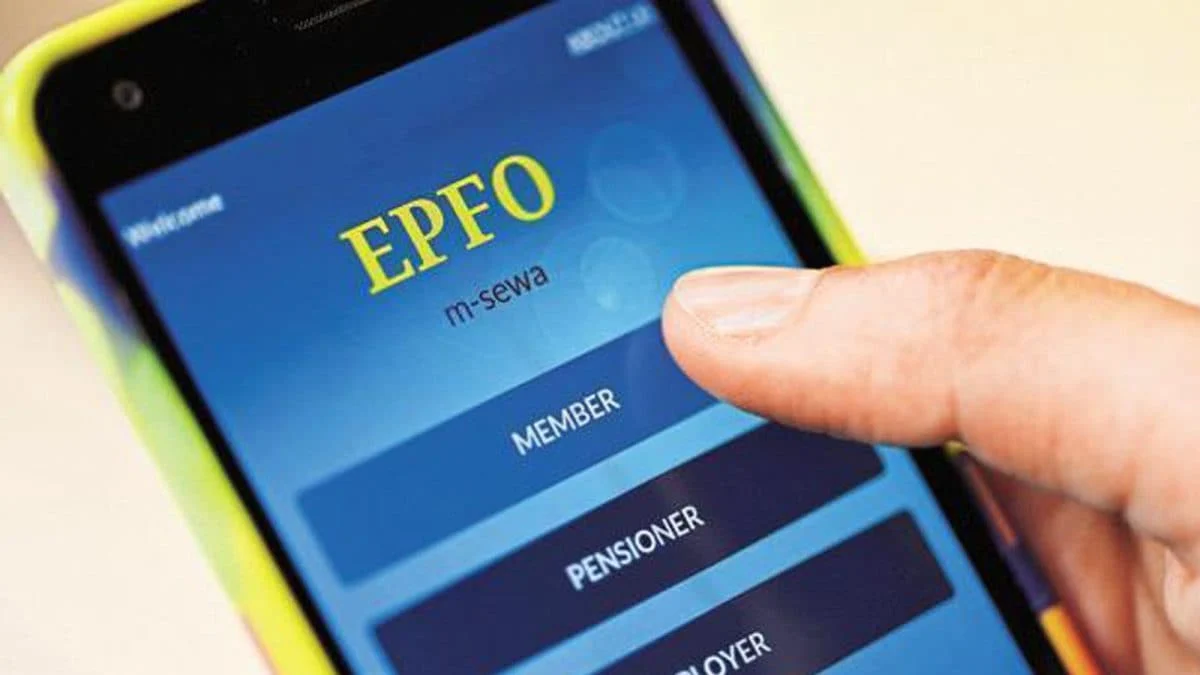
New Delhi, India – In a landmark move poised to significantly enhance the financial accessibility for millions of Indian workers, the Employees’ Provident Fund Organisation (EPFO) is on the verge of launching a groundbreaking digital withdrawal system. This new system will allow eligible EPFO members to instantly transfer their provident fund (PF) savings directly into their bank accounts using the ubiquitous Unified Payments Interface (UPI) for authentication. The government has confirmed that the testing phase for this transformative facility has been successfully completed, with an official rollout anticipated imminently.
This initiative marks a pivotal step in the government’s broader vision for ‘Digital India,’ aiming to streamline and expedite financial transactions, making them as effortless as everyday digital payments. Labour Minister Mansukh Mandaviya highlighted the successful conclusion of testing, signaling a new era of convenience for EPFO subscribers who currently navigate a multi-step online claim process often culminating in a waiting period of several days for funds to be credited. The integration of UPI is expected to drastically cut down this waiting time, offering near-instant access to eligible PF amounts and fundamentally reshaping the experience of provident fund withdrawals.
The Evolution of PF Withdrawals: A Chronological Journey Towards Digital Ease
The journey of provident fund withdrawals in India reflects a continuous effort to balance regulatory oversight with member convenience. Established under the Employees’ Provident Funds and Miscellaneous Provisions Act, 1952, the EPFO serves as a cornerstone of social security for organized sector employees, ensuring a corpus for retirement and unforeseen exigencies. For decades, PF withdrawals were a cumbersome, paper-intensive process, requiring physical applications, employer attestations, and lengthy processing times. This often led to frustration and delays for members in urgent need of funds.
Early Era: Paperwork and Bureaucracy (Pre-2000s)
In its initial decades, the EPFO relied heavily on manual processes. Members had to fill out elaborate physical forms, obtain signatures from their employers, and submit them to regional PF offices. This often involved multiple visits, significant paperwork, and processing times that could stretch into weeks or even months. The lack of centralized data and fragmented record-keeping further exacerbated these delays, making PF withdrawals a daunting task for many.
The Dawn of Digitalization: Online Claims and UAN (2000s – Early 2020s)
The advent of the internet and the government’s push for e-governance began to transform the EPFO landscape. The introduction of the Universal Account Number (UAN) in 2014 was a watershed moment. UAN provided a single, portable identifier for each EPFO member, linking all their PF accounts across different employers. This significantly simplified the process of transferring PF funds and checking balances. Following UAN, the EPFO gradually introduced online claim filing. Members could submit withdrawal requests through the EPFO portal, reducing the need for physical visits and expediting the initial stages of the process.
While online claims were a substantial improvement, they still involved a verification process by the EPFO, followed by an electronic transfer to the member’s bank account. This typically took a few days, depending on the claim type, the accuracy of member details, and the efficiency of the processing center. For urgent medical needs or other emergencies, even a few days could feel like an eternity.
Auto-Settlement: Accelerating Specific Claims (Recent Past)
Recognizing the need for even faster processing for specific critical needs, EPFO introduced and expanded its auto-settlement facility. This system leverages advanced analytics and automation to process eligible claims electronically without manual intervention. Initially set at a lower limit, the auto-settlement claim limit was recently increased from Rs 1 lakh to Rs 5 lakh for crucial categories such as medical emergencies, education, marriage, and housing-related needs. This significant enhancement has already resulted in many such claims being settled within a mere few days, dramatically cutting down the waiting period for millions.
The UPI Integration: The Next Frontier (Present and Immediate Future)
The integration of UPI for instant withdrawals represents the culmination of these continuous modernization efforts. It leverages India’s globally acclaimed real-time payment infrastructure to bring unparalleled speed and convenience to PF transactions. This move is not merely an incremental improvement but a fundamental shift towards making PF withdrawals as instantaneous and seamless as any other digital financial transaction. It underscores the EPFO’s commitment to evolving with the digital age and providing its members with state-of-the-art services.
Supporting Data: How the UPI Facility Will Function and Its Benefits
The proposed UPI-based withdrawal system is designed to be user-friendly, secure, and incredibly efficient. It will leverage the existing digital infrastructure and the widespread adoption of UPI across India.
Mechanism of Instant Withdrawal:
- Access Point: While specific details are awaited, it is anticipated that eligible EPFO members will likely initiate the withdrawal process through the EPFO’s official portal or a dedicated mobile application.
- Eligibility Check: The system will first ascertain the portion of the PF corpus that is eligible for withdrawal under current EPF rules. It is crucial to note that withdrawal restrictions applicable under EPF rules will continue to apply. This means only the permissible portion of the savings may become accessible through the instant transfer system, not the entire corpus.
- Amount Selection: Members will be presented with the eligible withdrawal amount and can select how much they wish to transfer, up to the permissible limit.
- UPI Authentication: The core of this new system lies in UPI authentication. Once the amount is selected, the member will be prompted to authorize the transfer using their UPI PIN. This PIN is linked to the bank account already seeded with their EPFO records, ensuring that funds are transferred only to the verified account of the subscriber. This acts as a robust second factor of authentication.
- Instant Credit: Upon successful UPI authentication, the chosen amount will be transferred directly and almost instantaneously into the member’s linked bank account. This eliminates the traditional multi-day waiting period, making the funds immediately available for use.
Transformative Benefits for Subscribers:
- Unprecedented Speed: The most significant advantage is the instant transfer of funds, moving from days to mere seconds. This is critical for emergencies where immediate access to funds can make a substantial difference.
- Enhanced Convenience: The process will be as simple as making any other UPI payment, reducing the mental and physical burden associated with traditional PF withdrawals.
- Reduced Bureaucracy: The need for extensive manual verification steps is minimized, leading to a more streamlined and hassle-free experience.
- Improved Liquidity: Subscribers will have quicker access to their savings when needed, improving their financial agility and planning capabilities.
- Transparency: The digital nature of the transaction is expected to enhance transparency, with clear records of the withdrawal process.
Impact on EPFO Operations:
- Reduced Workload: Automation will significantly reduce the manual workload for EPFO staff, allowing them to focus on more complex cases and member support.
- Improved Efficiency: Faster processing times across the board will lead to a more efficient and responsive organization.
- Modern Image: The adoption of cutting-edge technology like UPI solidifies EPFO’s position as a forward-thinking and member-centric organization.
- Better Resource Allocation: Resources previously tied up in manual processing can be reallocated to other critical areas, such as compliance, enforcement, and member education.
The integration of UPI for PF withdrawals is a testament to India’s leadership in digital public infrastructure. UPI, developed by the National Payments Corporation of India (NPCI), has revolutionized retail payments in the country, processing billions of transactions monthly. By leveraging this robust and secure platform, EPFO is not just modernizing its services but also contributing to the broader digital financial inclusion agenda. The security inherent in UPI, with its encrypted transactions and two-factor authentication, ensures that member funds remain safe throughout the instant withdrawal process.
Official Responses and the Digital India Imperative
The initiative to integrate UPI for PF withdrawals is a direct reflection of the Indian government’s unwavering commitment to digital transformation and improving the ease of living for its citizens. Labour Minister Mansukh Mandaviya’s affirmation regarding the completion of testing underscores the government’s proactive approach in deploying advanced technological solutions for public services.
"The successful completion of testing for UPI-based PF withdrawals marks a significant milestone in our journey towards a truly digital and accessible social security system," Minister Mandaviya stated (as per the PTI report). "Our aim is to empower every EPFO member with instant access to their hard-earned savings, particularly during times of need. This move aligns perfectly with the Prime Minister’s vision of a ‘Digital India’ where technology serves as an enabler for good governance and citizen-centric services."
This push for digitalization extends beyond mere convenience; it is a strategic imperative. The government views digital public infrastructure like UPI, Aadhaar, and the Jan Dhan accounts as pillars for financial inclusion and efficient delivery of welfare schemes. By integrating PF withdrawals with UPI, the government is not only simplifying a critical financial process but also encouraging greater adoption of digital payment methods among the workforce, including those who might traditionally be less inclined towards digital transactions.
Furthermore, the EPFO’s modernization efforts are driven by a mandate to serve its massive subscriber base effectively and transparently. With millions of active members, the volume of transactions, including withdrawals, is immense. Manual or even semi-automated processes can lead to bottlenecks and inefficiencies. By embracing automation and instant payment systems, EPFO aims to reduce grievances, enhance trust, and ensure that the benefits of social security reach the beneficiaries without undue delay. This move is also a response to the evolving expectations of a digitally native workforce that anticipates seamless online experiences for all financial interactions.
Broader Modernization Efforts: Beyond UPI
The UPI integration is part of a multi-pronged strategy by the EPFO to modernize its services and enhance member experience. The organization has been consistently investing in technology to make its operations more efficient and subscriber-friendly.
Expanded Auto-Settlement Facility:
As mentioned, the recent increase in the auto-settlement claim limit from Rs 1 lakh to Rs 5 lakh for specific categories like medical emergencies, education, marriage, and housing is a testament to EPFO’s commitment to faster processing. This facility allows for automated processing of claims that meet predefined criteria, significantly reducing human intervention and processing time. The success of this auto-settlement mechanism has paved the way for more ambitious projects like the UPI integration, demonstrating the EPFO’s capability to implement large-scale digital transformations. The categories covered by auto-settlement represent common life events where timely access to funds is crucial, making this enhancement particularly impactful for many subscribers.
Upcoming WhatsApp-Based Services:
In addition to instant PF withdrawals, EPFO is actively developing WhatsApp-based services to further improve member support and accessibility. This initiative aims to leverage the pervasive presence of WhatsApp in India to provide real-time assistance and information to subscribers.
The proposed WhatsApp services are expected to offer:
- PF Balance Checks: Subscribers will be able to quickly check their provident fund balance by sending a simple message.
- Claim Tracking: The platform will allow members to track the status of their submitted claims, providing updates without needing to log into the portal.
- Transaction Details: Access to recent transaction history and other account-related information will be available.
- Multilingual Support: To cater to India’s diverse linguistic landscape, the platform is expected to support multiple Indian languages, making it accessible to a broader audience, including those less comfortable with English.
- Automated Assistance: The service will likely feature chatbots or automated responses for frequently asked questions, providing instant solutions to common queries.
This initiative is particularly beneficial for users who may face challenges with Aadhaar authentication or Direct Benefit Transfer (DBT)-related issues, offering an alternative and user-friendly channel for support. By providing services through WhatsApp, EPFO aims to reach members who might have limited access to computers or struggle with navigating complex web portals, thereby promoting greater digital inclusion. It signifies a move towards an omnichannel support strategy, ensuring that members can access assistance through their preferred digital communication method.
Implications: A New Era for Provident Fund Management
The impending launch of UPI-based PF withdrawals carries profound implications for various stakeholders, from individual subscribers to the broader financial ecosystem.
For Individual Subscribers:
This is a game-changer for millions of workers. The immediate access to funds in emergencies, such as medical crises or unforeseen expenses, will provide a crucial safety net. It eliminates the stress and anxiety associated with waiting for funds, allowing individuals to manage urgent financial needs more effectively. The simplicity of the process will empower even those with limited digital literacy to manage their PF withdrawals with greater confidence. This enhanced financial liquidity could also aid in short-term financial planning, allowing individuals to utilize their eligible PF savings without significant delays.
For the EPFO and Government:
The move solidifies EPFO’s position as a modern, technology-driven social security organization. It enhances public trust and confidence in the institution, showcasing its commitment to member welfare. For the government, it serves as another success story in the ‘Digital India’ narrative, demonstrating how technology can be harnessed to deliver public services efficiently and transparently. It reinforces the message that the government is actively working to simplify bureaucratic processes and improve the citizen experience.
For the Indian Financial Ecosystem:
The integration further entrenches UPI as a fundamental pillar of India’s digital economy. It could potentially lead to increased adoption of digital payments among segments of the population who might primarily use cash but are now compelled to engage with digital platforms for PF withdrawals. This contributes to the formalization of the economy and the expansion of the digital financial footprint.
Potential Challenges and Considerations:
While the benefits are substantial, certain challenges and considerations need to be addressed to ensure a smooth rollout and sustained success:
- Digital Literacy and Awareness: Despite UPI’s widespread use, there might still be a segment of EPFO subscribers, particularly older individuals or those in remote areas, who may require assistance or education on how to use the new system. EPFO will need robust awareness campaigns and accessible support channels.
- Technical Stability and Scalability: With millions of subscribers, the system must be robust enough to handle high volumes of transactions without glitches or downtime. Continuous monitoring and infrastructure upgrades will be crucial.
- Fraud Prevention: While UPI is secure, user vigilance against phishing attempts and social engineering scams remains paramount. EPFO must educate members on how to protect their UPI PINs and account details.
- Dispute Resolution: A clear and efficient mechanism for resolving any disputes arising from instant withdrawals will be necessary.
- Uniform Implementation: Ensuring uniform access and service quality across all regions and for all eligible members will be a key operational challenge.
The Road Ahead: A Vision for a Fully Digital EPFO
The integration of UPI for PF withdrawals is not an endpoint but rather a significant milestone in EPFO’s ongoing digital transformation journey. The future holds the promise of even more sophisticated and integrated services. One can envision further leveraging AI and machine learning for predictive analytics in claim processing, personalized member communications, and enhanced fraud detection. The expansion of self-service options, coupled with robust digital assistance, will continue to empower members to manage their provident fund accounts with unprecedented ease.
As India progresses towards becoming a digitally empowered society, institutions like EPFO are at the forefront of this revolution. By embracing innovative technologies and prioritizing member convenience, EPFO is not just modernizing its operations but also reinforcing the social security fabric of the nation. The instant PF withdrawal via UPI is a powerful testament to this commitment, promising a future where financial security is not only assured but also instantly accessible for every hardworking Indian.
The impending rollout of this facility will undoubtedly be a moment to watch, setting a new benchmark for social security administration globally and further cementing India’s reputation as a leader in digital public infrastructure.
