

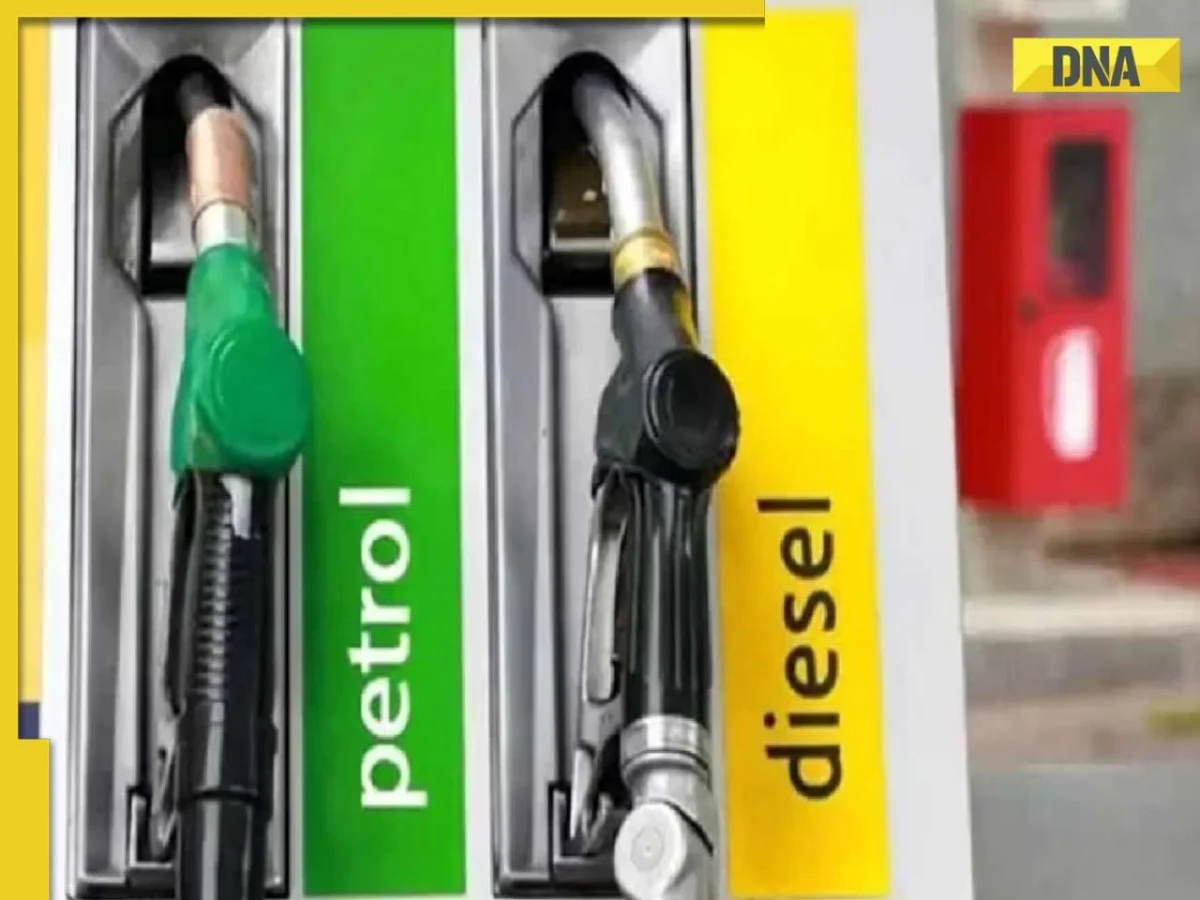
Mumbai, India – May 22, 2026 – In a notable development for Indian consumers and businesses, fuel prices across the nation remained stable on Thursday, May 22, 2026. This period of calm offers a momentary respite from the persistent volatility that has characterized the global energy market for years, influencing everything from household budgets to national economic indicators. The stability, particularly observed in major metropolitan areas, underscores a complex interplay of international crude oil benchmarks, domestic taxation policies, and the prevailing strength of the Indian Rupee against major global currencies.
On this day, Mumbai, the nation’s financial capital, reported petrol prices at ₹107.59 per litre and diesel at ₹94.08 per litre. Similar trends of price consistency were reflected in other major cities. In Delhi, petrol was priced at approximately ₹96.72/litre and diesel at ₹89.62/litre. Kolkata saw petrol at ₹106.03/litre and diesel at ₹92.76/litre, while Chennai recorded petrol at ₹102.63/litre and diesel at ₹94.24/litre. This nationwide equilibrium, while potentially temporary, provides a crucial window for economic planners and consumers to assess their financial strategies without the immediate pressure of escalating fuel costs.
The stability on May 22, 2026, arrives against a backdrop of ongoing global economic adjustments and India’s relentless pursuit of energy security. While a single day’s steadfastness might seem minor in the grand scheme of dynamic energy markets, it represents a significant moment for millions who rely on these prices for their daily commutes and livelihoods. The intricate web of factors influencing these rates – from the geopolitical machinations impacting crude oil supplies to the fiscal policies enacted by both central and state governments – ensures that the stability, when it occurs, is a finely balanced act.
The Unfolding Chronicle of India’s Fuel Pricing
India’s journey in fuel pricing has been a dynamic one, evolving significantly over the past few decades. Understanding the historical context is crucial to appreciating the current state of affairs and the significance of days like May 22, 2026, when prices hold steady.
)
From Administered Pricing to Market Dynamics
Historically, fuel prices in India were governed by an Administered Price Mechanism (APM). Under this system, the government dictated the prices of petrol and diesel, often subsidizing them to shield consumers from global market fluctuations. This approach, while providing price stability, placed a significant burden on the national exchequer and state-owned oil marketing companies (OMCs).
The early 21st century witnessed a gradual shift towards market-linked pricing. Petrol pricing was first deregulated in June 2010, followed by diesel in October 2014. This landmark reform aimed to align domestic fuel prices with international crude oil rates, reduce the government’s subsidy burden, and promote fiscal prudence. The move was heralded as a step towards greater economic liberalization and transparency.

A further significant change came in June 2017, when daily price revisions for petrol and diesel were introduced. This mechanism, adopted by OMCs like Indian Oil Corporation (IOC), Bharat Petroleum Corporation Limited (BPCL), and Hindustan Petroleum Corporation Limited (HPCL), ensures that changes in international crude oil prices and the Rupee-Dollar exchange rate are immediately reflected in retail prices. While this system promised greater efficiency and prevented large, sudden price shocks, it also introduced a new layer of daily uncertainty for consumers and businesses.
Key Periods of Volatility and Impact
The journey since deregulation has not been without its challenges. India has weathered several periods of extreme volatility in global oil markets:
)
- The 2008 Global Financial Crisis: Saw crude oil prices briefly touch unprecedented highs, straining India’s economy.
- The 2014 Crude Oil Crash: A sharp decline in global crude prices provided a significant relief to India, helping to curb inflation and improve the current account deficit.
- Post-COVID-19 Recovery: As global demand rebounded after the pandemic-induced slowdown, crude prices surged in 2021 and 2022, placing renewed pressure on Indian consumers.
- Russia-Ukraine Conflict (2022 onwards): Geopolitical tensions following the conflict sent crude oil prices spiraling upwards, forcing governments worldwide to grapple with inflationary pressures and energy security concerns. India, while diversifying its oil imports, still faced significant cost implications.
Against this backdrop, the stability observed on May 22, 2026, is a testament to either a temporary equilibrium in global markets, strategic interventions by OMCs, or a calculated pause in domestic taxation adjustments.
Deconstructing the Price Tag: Influential Factors
The retail price of petrol and diesel in India is a complex calculation, influenced by a multitude of global and domestic factors. Far from being a simple reflection of crude oil costs, it is an intricate mosaic of international market dynamics, government levies, and logistical expenses.
)
Global Crude Oil Dynamics
The most significant external factor is the price of crude oil in the international market. India imports over 85% of its crude oil requirements, making it highly susceptible to global price fluctuations.
- Benchmark Crudes: India primarily tracks benchmarks like Brent Crude and West Texas Intermediate (WTI), which are indicators of global supply and demand.
- OPEC+ Decisions: The Organization of the Petroleum Exporting Countries (OPEC) and its allies (OPEC+) play a crucial role in managing global oil supply through production quotas. Their decisions can significantly impact crude prices. For instance, a decision to cut production can drive prices up, while an increase can lead to a dip.
- Geopolitical Tensions: Conflicts in oil-producing regions (e.g., the Middle East, Eastern Europe), sanctions on major oil exporters, or disruptions to key shipping lanes can cause immediate and drastic price spikes.
- Global Demand-Supply Balance: Economic growth in major consuming nations like China, the United States, and the European Union directly influences global oil demand. A booming global economy typically translates to higher demand and potentially higher prices. Conversely, an economic slowdown can depress demand and prices.
- Inventory Levels: Reports on crude oil inventories in major economies (e.g., the U.S. Energy Information Administration reports) provide insights into supply availability and often influence market sentiment.
The Weight of Taxation: Central and State Levies
Once crude oil is imported and refined, the refined product (petrol and diesel) is subjected to a heavy layer of taxation, which constitutes a substantial portion of the final retail price.
)
- Central Excise Duty: Levied by the Union government, this duty can be fixed per litre or an ad valorem (percentage-based) tax. It often includes various cesses, such as the Road and Infrastructure Cess and the Agricultural Infrastructure and Development Cess (AIDC), which are earmarked for specific development projects. These duties are a major source of revenue for the central government.
- State Value Added Tax (VAT): Each state government imposes its own VAT on fuel. This is typically an ad valorem tax, meaning it’s a percentage of the base price plus central excise duty. This variation in VAT rates is the primary reason why fuel prices differ from one state to another, and even between cities within the same state. States rely heavily on fuel VAT as a significant revenue stream, which makes them reluctant to reduce it.
- Dealer Commission: This is a fixed component per litre paid to the petrol pump owners for their services, covering their operational costs and profit margins.
To illustrate, on a base price of ₹40 for crude, by the time it reaches the consumer, the central and state taxes can easily add another ₹50-₹60, nearly doubling the effective cost.
The Rupee-Dollar Equation
Since crude oil is traded internationally in US Dollars, the exchange rate between the Indian Rupee (INR) and the US Dollar (USD) plays a critical role.
)
- Impact of Depreciation: If the Rupee depreciates against the Dollar, India has to pay more Rupees for the same quantity of imported crude oil, leading to higher domestic fuel prices.
- Factors Influencing INR-USD: The exchange rate is influenced by a multitude of factors, including India’s current account deficit, foreign institutional investment (FII) flows, global interest rate differentials (particularly the US Federal Reserve’s policy), the country’s trade balance, and overall investor sentiment towards emerging markets. A stronger Dollar generally translates to higher import bills for India.
Beyond the Core: Refining and Dealer Costs
Several other components contribute to the final retail price:
- Freight and Transportation Costs: The cost of transporting crude oil from ports to refineries and then refined products from refineries to retail outlets adds to the overall price.
- Refining Margins: Oil marketing companies incur costs for refining crude oil into petrol and diesel. Their operational expenses and desired profit margins are factored into the price.
- Pollution Cess: In some regions, additional cess may be levied to address environmental concerns.
The stability on May 22, 2026, therefore, suggests a period where global crude prices remained relatively unchanged, the Rupee-Dollar exchange rate held steady, and crucially, neither the central nor state governments opted for any adjustments to their taxation structure.
)
Government’s Balancing Act: Policy and Projections
The Indian government faces a perpetual balancing act when it comes to fuel pricing. It must consider the welfare of its citizens, the health of its economy, and its own revenue needs, all while navigating the unpredictable waters of international energy markets.
Energy Security and Price Stability
A primary objective of the Indian government is to ensure energy security – a reliable and affordable supply of energy for its growing economy.
)
- Strategic Petroleum Reserves (SPR): India has established Strategic Petroleum Reserves in various locations to hold crude oil stocks, providing a buffer against supply disruptions and geopolitical shocks. These reserves can be released during emergencies to stabilize domestic prices.
- Diversification of Imports: India actively seeks to diversify its crude oil import sources, reducing over-reliance on any single region or supplier to mitigate geopolitical risks. This strategy has been particularly evident in recent years, with increased imports from countries like Russia.
- Policy Interventions: While the pricing mechanism is largely deregulated, the government has historically intervened during periods of extreme volatility. This could involve cutting excise duties to cushion consumers from price spikes, or urging state governments to reduce VAT. Such interventions, however, come at the cost of government revenue.
Dialogue on GST Inclusion
A long-standing debate revolves around bringing petrol and diesel under the ambit of the Goods and Services Tax (GST) regime. Currently, fuel is excluded from GST, allowing central and state governments to levy separate taxes.
- Pros of GST Inclusion:
- Uniform Pricing: A uniform GST rate across the country would lead to standardized fuel prices, eliminating state-wise variations.
- Input Tax Credit (ITC): Businesses would be able to claim input tax credit on fuel purchases, reducing their operational costs and potentially benefiting sectors like manufacturing and logistics.
- Transparency: A simplified tax structure would bring greater transparency to fuel pricing.
- Cons of GST Inclusion:
- Revenue Loss for States: State governments fear significant revenue losses if fuel is brought under GST, as their ability to levy VAT (a substantial revenue source) would be curtailed.
- Complexity of Transition: The transition would be complex, requiring consensus among all states in the GST Council and a careful calibration of tax rates to avoid massive revenue shortfalls for governments or sudden price shocks for consumers.
- Lack of Consensus: Despite discussions, a consensus among states and the central government on a suitable GST rate and compensation mechanism remains elusive.
For May 22, 2026, the absence of any immediate announcement regarding GST inclusion or tax cuts suggests that the government is maintaining its current policy stance, allowing the market dynamics to play out, albeit within certain fiscal boundaries.
)
Ripples Through the Economy: Implications of Fuel Prices
The stability or volatility of fuel prices has far-reaching implications across the Indian economy, affecting everything from individual households to large industries and the nation’s macroeconomic stability.
Impact on Households and Consumer Spending
- Direct Impact on Transport Costs: For millions of Indians, fuel is a necessity for daily commutes, personal travel, and local transportation. Stable prices mean predictable monthly budgets for fuel, while increases directly eat into disposable income.
- Indirect Impact on Goods and Services: Fuel is a critical input cost for transporting goods. Higher diesel prices directly translate to increased freight charges, which are then passed on to consumers in the form of higher prices for essential commodities, food, and manufactured goods. This fuels inflation, eroding purchasing power.
- Influence on Discretionary Spending: When a larger portion of a household’s income is spent on essential items like fuel and food (due to inflation), discretionary spending on non-essential goods and services tends to decrease, impacting sectors like retail, entertainment, and tourism.
The stable prices on May 22, 2026, therefore, offered a momentary relief, allowing households to breathe a little easier and potentially freeing up some funds for other expenses, thus subtly supporting consumer sentiment.
)
Business Operations and Economic Growth
- Logistics and Transportation Sector: This sector is most directly impacted. Trucking companies, cab services, and public transport operators face significant cost pressures with rising fuel prices. Stable prices provide predictability for their operational planning and profit margins.
- Manufacturing Sector: Fuel is an input cost for energy generation in factories, transportation of raw materials, and distribution of finished goods. Higher fuel costs can increase production expenses, making Indian goods less competitive.
- Agriculture Sector: Farmers rely on diesel for irrigation pumps, tractors, and other farm machinery. Transportation of produce from farms to markets also depends heavily on diesel. Fluctuating prices directly impact agricultural input costs and the final price of food items.
- Inflationary Pressures: Persistent increases in fuel prices are a major contributor to headline inflation. The Reserve Bank of India (RBI) closely monitors fuel prices when formulating its monetary policy, often resorting to interest rate hikes to curb inflation, which in turn can impact economic growth by making borrowing more expensive.
- Overall Economic Growth Trajectory: Sustained high fuel prices can act as a drag on economic growth by dampening consumer demand, increasing business costs, and widening the current account deficit (due to higher import bills). Conversely, stable or declining prices can provide a boost, freeing up resources for investment and consumption.
The stability on May 22, 2026, was thus a positive signal for businesses, enabling better cost forecasting and potentially supporting marginal improvements in various sector-specific indices.
The Green Transition and Future Outlook
Fuel prices also play a crucial role in shaping India’s long-term energy strategy and its commitment to a green transition.
)
- Electric Vehicle (EV) Adoption: Higher conventional fuel prices make electric vehicles (EVs) more economically attractive, accelerating their adoption. Government incentives, coupled with rising petrol/diesel costs, are key drivers for the EV revolution.
- Alternative Fuels: The push for alternative fuels like Compressed Natural Gas (CNG), ethanol blending in petrol, and exploration of hydrogen as a fuel source gains momentum when traditional fuel prices are high.
- Energy Independence Goals: India aims to reduce its reliance on fossil fuel imports and achieve energy independence, a goal that becomes more urgent when crude oil prices are volatile. Investments in renewable energy (solar, wind) are critical to achieving this.
- Future Scenarios: While May 22, 2026, offered stability, the future of fuel prices in India remains subject to global geopolitical stability, the trajectory of global economic growth, the pace of the green energy transition, and the evolution of domestic taxation policies. Long-term shifts towards cleaner energy sources are inevitable, but the journey will likely see continued periods of conventional fuel price volatility.
In conclusion, May 22, 2026, marked a day of welcome stability in India’s dynamic fuel market. While a single day’s pause does not signify an end to the complexities of global energy dynamics or domestic fiscal challenges, it offers a crucial moment for reflection and planning. The intricate interplay of international crude oil prices, government taxation, and currency valuations ensures that fuel pricing remains a central pillar of India’s economic narrative, constantly monitored by policymakers, businesses, and every citizen who fuels their daily life. As India continues its journey towards sustainable economic growth and energy security, the continuous monitoring of these critical factors will remain paramount.
