

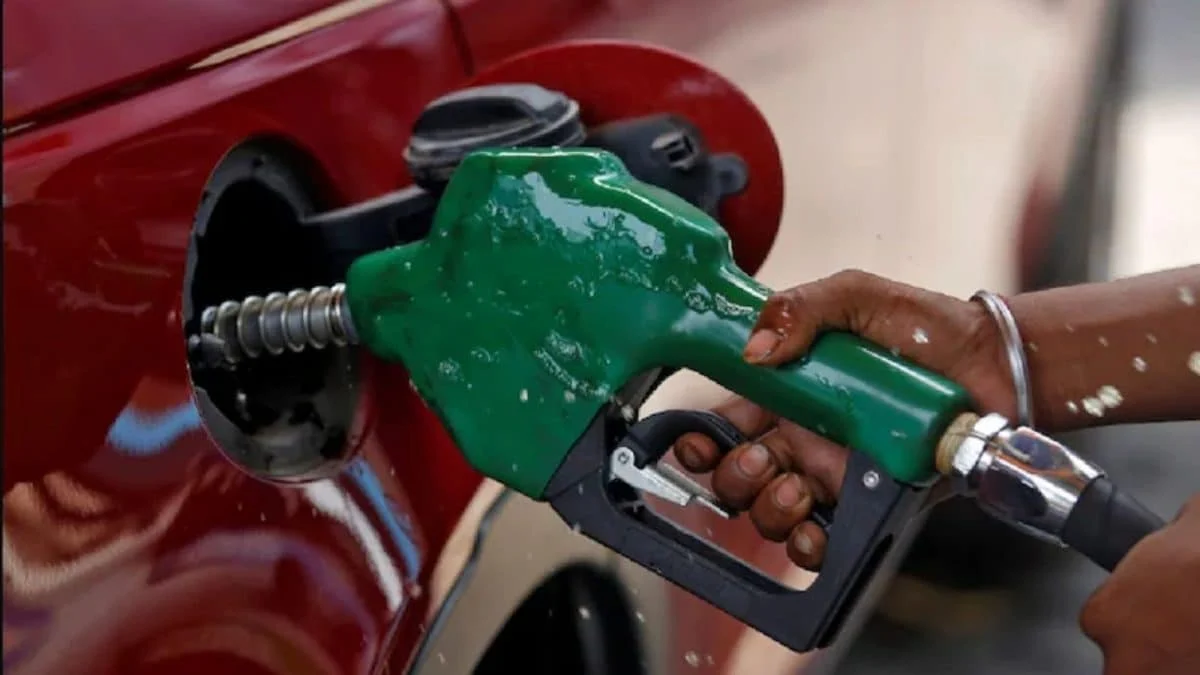
New Delhi, India – India’s fuel consumers are once again grappling with rising petrol and diesel prices, as rates were hiked for the third time this month. The latest revision, implemented on Saturday, May 23, 2026, has reignited a contentious debate between the Central government and various state administrations, particularly those led by opposition parties, over the primary drivers of these escalating costs. The Centre has squarely attributed the significant price disparities across states to the varying rates of Value Added Tax (VAT) imposed by state governments, asserting that opposition-ruled states are burdening consumers with higher levies.
Petrol prices have now crossed the Rs 112 per litre mark in states like Andhra Pradesh, Telangana, and Kerala, with the Centre specifically highlighting that Telangana and Kerala are governed by constituents of the INDIA bloc. Conversely, states under Bharatiya Janata Party (BJP) rule, such as Gujarat, Uttar Pradesh, Delhi, Haryana, Goa, and Assam, reportedly maintain petrol prices at or below Rs 102 per litre. This stark contrast underscores a deepening political divide, where the geographical map of fuel price divergence, according to the Centre, largely mirrors the political affiliations of state governments.
The Latest Price Hike and Centre’s Justification
The recent increment marks the third instance of fuel price adjustments within May 2026, pushing retail rates upwards across the nation. This latest revision, though less than Re 1 per litre (87 paise for petrol, 91 paise for diesel in Delhi), contributes to a cumulative increase that has become a significant talking point. In Delhi, petrol prices now stand at Rs 99.51 per litre, while diesel is priced at Rs 92.49 per litre.
The Central government has been quick to contextualize these hikes, stating that India had absorbed the impact of rising global crude oil prices for a substantial 76 days following the outbreak of the US-Iran conflict on February 28, 2026. During this period, the cumulative increase in domestic fuel prices was kept below Rs 5 per litre, a revision the Centre proudly claimed was the lowest globally. This assertion positions the central administration as a prudent manager of the economic fallout from international geopolitical tensions, having shielded consumers from sharper increases for an extended period.
However, the Centre’s primary argument for the current price discrepancies lies firmly with state-level taxation. In an official note, it explicitly stated that while the central excise component of petrol and diesel prices remains uniform across the Union, the pump price diverges significantly due to the VAT levied independently by each state government. This distinction forms the crux of the Centre’s narrative, shifting the onus of higher prices from federal policies to state fiscal decisions.
A Chronology of Escalation and Policy Interventions
The current fuel price scenario is a culmination of several factors, both international and domestic, unfolding over recent months.
February 28, 2026: The Iran Conflict Erupts
The catalyst for the recent surge in global crude oil prices was the outbreak of the US-Iran conflict. Geopolitical tensions in the Middle East, a vital region for global oil supply, invariably lead to market volatility and a ‘risk premium’ on crude oil futures. The conflict sparked immediate concerns over potential supply disruptions, driving up international benchmark prices like Brent crude and West Texas Intermediate (WTI).
76 Days of Absorption (February 28 – May 14, 2026):
Following the conflict’s onset, the Indian government claims to have largely absorbed the impact of rising global crude prices for 76 days. This period saw oil marketing companies (OMCs) – Indian Oil Corporation, Bharat Petroleum Corporation Ltd, and Hindustan Petroleum Corporation Ltd – holding retail prices relatively stable, despite the upward trend in international markets. This strategy, often employed to mitigate immediate consumer burden, can lead to significant under-recoveries for OMCs if global prices continue to climb unchecked.
March 27, 2026: Central Excise Duty Cut
A significant policy intervention occurred on March 27, 2026, when the Central government announced a reduction in excise duty by Rs 10 per litre on both petrol and diesel. This move was aimed at providing substantial relief to consumers nationwide. The Centre has since highlighted that BJP-ruled states promptly passed on the full benefit of this excise duty cut to consumers by adjusting their own levies accordingly. However, opposition-ruled states, according to the Centre, did not undertake a separate reduction in their VAT rates, effectively diluting the benefit for their citizens.
May 2026: Three Price Hikes
The period of absorption concluded in May, leading to a series of price revisions:
- May 15, 2026: The first significant hike since April 2022, when oil marketing companies had cumulatively increased fuel prices by Rs 10 per litre. This revision was substantial, increasing prices by Rs 3 per litre across the board.
- Earlier this week (May 20-22, 2026): Petrol and diesel prices saw another increment, rising by 87 paise and 91 paise per litre, respectively.
- May 23, 2026 (Saturday): The latest revision, again by less than Re 1 per litre (87 paise for petrol, 91 paise for diesel in Delhi), bringing the cumulative increases for the month to a noticeable level.
This chronological progression demonstrates a period of central intervention to stabilize prices, followed by a strategic shift to pass on global cost increases, coupled with a pointed blame game directed at state taxation policies.
Unpacking the Numbers: State VAT, Cesses, and the Price Disparity
At the heart of the debate is the Value Added Tax (VAT) – a consumption tax levied by state governments on goods and services, including petrol and diesel. Unlike central excise duty, which is uniform across the country, VAT rates vary significantly from state to state, leading to vastly different retail prices for the same fuel.
The Mechanics of State Taxation:
The Centre’s note elaborates on how states impose their levies: "The states with the highest VAT impose effective rates of 30% and more, layered with per-litre additions and infrastructure cesses. The states with the lowest impose rates closer to 20%, no per-litre addition, and no further cess." This layered approach means that the final price at the pump is a combination of:
- Base Price: Reflecting the cost of crude oil, refining, and marketing.
- Central Excise Duty: A fixed component levied by the Union government.
- State VAT: A percentage-based tax on the base price plus central excise.
- Additional Cesses/Levies: Many states impose extra charges like road development cess, social security cess, or fixed per-litre additions, further inflating the price.
Comparative Analysis of High-Price vs. Low-Price States:
The Centre specifically pointed out states where petrol prices have surged past Rs 112 per litre:
- Andhra Pradesh: Charges 31% VAT, plus an additional four rupees per litre, and a road development cess. This combination takes the effective tax rate close to 35%, making fuel significantly more expensive for consumers.
- Telangana: While specific VAT percentages weren’t detailed in the immediate note, the Centre stated that its taxation pushes petrol prices close to Rs 116 per litre, implying a substantial state levy structure. Telangana is governed by an INDIA bloc party.
- Kerala: Adds a social security cess on top of its base VAT rate. Like Telangana, Kerala is also governed by an INDIA bloc party, and its prices have crossed the Rs 112 mark.
In contrast, the Centre highlighted BJP-ruled states where petrol prices remain at or below Rs 102 per litre:
- Gujarat
- Uttar Pradesh
- Delhi
- Haryana
- Goa
- Assam
These states, according to the Centre, impose lower effective VAT rates, closer to 20%, and often avoid the additional per-litre additions or infrastructure cesses seen in their high-taxing counterparts. For instance, if the base price plus central excise is Rs 70, a 20% VAT would add Rs 14, while a 30% VAT would add Rs 21, creating a Rs 7 difference per litre even before additional cesses are factored in. This numerical disparity directly translates to higher out-of-pocket expenses for consumers in states with steeper taxation.
Economic Implications of Price Disparities:
These regional price differences have tangible economic consequences. Businesses, especially in the logistics and transportation sectors, face higher operational costs in states with expensive fuel. This can lead to increased prices for goods and services, contributing to localized inflation and potentially impacting inter-state trade dynamics. Consumers in these states also bear a disproportionate burden, affecting their disposable income and purchasing power. The Centre’s argument implicitly suggests that these higher state taxes are detrimental to economic activity and consumer welfare within those specific regions.
Official Stances and the Political Chessboard
The Centre’s narrative is not merely an economic analysis; it is a calculated political statement, drawing a direct link between state taxation policies and political affiliations. The official note explicitly states, "The geographical map of the divergence is, with a few exceptions, the political map of the divergence."
The Centre’s Unambiguous Stance:
The Union government’s communication is unequivocal: "The same opposition leaderships that ask the central government to cut excise duty for the relief of the consumer have at no point cut the VAT their own state governments levy on the same litre of fuel." This statement frames the opposition’s demands for central excise duty cuts as hypocritical, given their alleged unwillingness to reduce their own state-level taxes.
Furthermore, the Centre underscored the impact of the March 27, 2026, excise duty reduction. It highlighted that "When the central excise duty was cut on March 27, 2026, by Rs 10/litre on petrol and diesel, the BJP-ruled states passed the full cut through to the pump. The Congress-ruled and INDIA-bloc states did not separately reduce VAT, which means the consumer in those states still pays more than the consumer in a BJP-ruled state directly because of state taxation." This reinforces the Centre’s argument that its policy interventions are consumer-friendly, while opposition states are failing to provide similar relief.
The Centre concluded its argument with a sharp retort: "The framing that the central government overtaxes fuel collapses against the state-level data. The states that tax fuel hardest are not the centre. They are the political opponents of the Centre." This directly challenges the long-standing criticism from opposition parties that the Central government’s high excise duties are the primary cause of inflated fuel prices.
Anticipated Counter-Arguments from Opposition:
While the provided article does not contain direct quotes from opposition leaders in response to this specific Centre’s note, historical patterns and common political discourse allow for anticipation of their counter-arguments:
- High Central Excise Duty: Opposition parties often argue that despite any recent cuts, the central excise duty on fuel remains disproportionately high, accounting for a significant chunk of the retail price. They may point to the substantial revenue collected by the Centre from fuel taxation, which has historically been a major source of federal income.
- States’ Revenue Needs: State governments rely heavily on VAT from fuel sales for their own budgetary allocations, funding essential services like infrastructure, healthcare, and education. Opposition-ruled states might argue that reducing VAT would severely impact their fiscal capacity and ability to deliver public services, especially in the absence of adequate financial support or compensation from the Centre.
- Federalism and Fiscal Autonomy: States might assert their constitutional right to levy taxes as per their needs and economic conditions, viewing central dictates on VAT reduction as an infringement on their fiscal autonomy within India’s federal structure.
- Blaming OMCs: Some opposition voices might also redirect blame towards the Oil Marketing Companies, questioning their pricing mechanisms and profit margins, especially during periods of global price stability.
Role of Oil Marketing Companies (OMCs):
It’s important to note that OMCs play a crucial role in the daily pricing of petrol and diesel in India, following the deregulation of fuel prices. They benchmark domestic prices against international crude oil prices (typically the average of the last 15 days) and the rupee-dollar exchange rate. While state and central taxes are added on top of this base price, the OMCs’ decisions on base price adjustments are fundamental to the daily fluctuations. The Centre’s focus on VAT, however, shifts the scrutiny away from the OMCs’ pricing strategy and the central excise component, placing it firmly on state-level levies.
Economic Repercussions and Consumer Burden
The persistent rise in fuel prices, regardless of its primary cause, inevitably triggers a cascade of economic repercussions, disproportionately affecting various segments of society and the economy.
Inflationary Pressures:
Fuel is a fundamental input cost for almost every sector of the economy. Higher petrol and diesel prices directly translate to increased transportation costs for goods, from agricultural produce to manufactured products. This higher cost is ultimately passed on to the end-consumer, contributing to general inflation. Food prices, in particular, are highly susceptible to fuel price hikes due to the extensive logistics involved in their supply chain. This inflationary spiral erodes the purchasing power of households, especially those with fixed incomes or belonging to lower-income brackets.
Impact on Key Sectors:
- Agriculture: Farmers rely on diesel for irrigation pumps, tractors, and transporting their produce to markets. Higher diesel prices increase farming costs, potentially leading to higher food prices or reduced farmer incomes.
- Logistics and Transport: Trucking, bus, and taxi operators face significantly higher operational expenses. This can lead to increased freight charges, affecting the competitiveness of industries and the affordability of public transport.
- Manufacturing: Industries dependent on transportation for raw materials and finished goods will see their production costs rise, potentially impacting their profitability and output.
- MSMEs: Micro, Small, and Medium Enterprises, which form the backbone of the Indian economy, are particularly vulnerable to rising input costs, as they often operate on tighter margins.
Household Budgets and Purchasing Power:
For individual consumers, rising fuel prices directly impact household budgets. Commuting costs increase, leaving less disposable income for other necessities or discretionary spending. This can lead to a contraction in consumer demand, potentially slowing down economic growth. The burden is particularly acute for those in the middle and lower-middle classes, for whom fuel expenses constitute a significant portion of their monthly outgo.
Potential for Economic Slowdown:
Sustained high fuel prices, coupled with inflationary pressures and reduced consumer demand, can act as a drag on overall economic growth. Businesses may defer investment, and consumer confidence might wane, creating a challenging environment for economic expansion. The delicate balance between managing inflation and fostering growth becomes even more precarious under such circumstances.
The Political Fallout and Future Trajectory
Fuel prices have long been a politically sensitive issue in India, often becoming a rallying point for opposition parties and a major electoral concern. The Centre’s explicit linking of high fuel prices to opposition-ruled states’ taxation policies marks a clear attempt to reframe the narrative and shift political accountability.
Fuel Prices as an Election Issue:
The Centre’s assertion that "the geographical map of the divergence is, with a few exceptions, the political map of the divergence" highlights how fuel prices are deeply embedded in India’s political discourse. With state and general elections always on the horizon, this issue is likely to be wielded as a potent weapon by both sides. The BJP will undoubtedly leverage the lower prices in its governed states as proof of its consumer-friendly policies, while attacking opposition states for their "extortionate" taxes. Conversely, opposition parties will continue to demand further central excise duty cuts and accuse the Centre of imposing a heavy burden through its own levies.
Calls for Rationalization and GST Inclusion:
The recurring debates over fuel taxation often bring forth calls for bringing petrol and diesel under the ambit of the Goods and Services Tax (GST). Proponents argue that GST, with its uniform tax rates and input tax credit mechanism, would rationalize fuel prices across the country, eliminate cascading taxes, and provide greater transparency. This could potentially lead to lower and more stable prices for consumers, as well as simplify the taxation structure for businesses.
However, bringing fuel under GST is fraught with challenges:
- Revenue Loss for States and Centre: Both central and state governments derive significant revenue from fuel taxes. Integrating fuel into GST, especially at lower GST slabs, would entail substantial revenue losses for both, which neither is eager to incur without a clear compensatory mechanism.
- Fiscal Autonomy Concerns: States are reluctant to cede their power to tax fuel, as it is a crucial and elastic source of revenue.
- Complexity: The current structure of central excise, state VAT, and various cesses is deeply entrenched, making a transition to GST a complex political and administrative exercise.
Despite these hurdles, the ongoing price volatility and political wrangling keep the discussion about GST inclusion alive, as a potential long-term solution to the structural issues in fuel pricing.
Outlook on Global Crude Prices and Domestic Policy:
The future trajectory of domestic fuel prices will largely depend on two critical factors:
- Global Crude Oil Prices: The US-Iran conflict and broader geopolitical developments in oil-producing regions will continue to dictate international crude rates. Any escalation or de-escalation can significantly impact the base price of fuel.
- Government Policy: Both central and state governments will face increasing pressure to provide relief to consumers. The Centre might consider further excise duty cuts if global prices remain high, while states might be compelled to reduce VAT, particularly if public sentiment turns strongly against them. However, fiscal constraints and revenue needs will always be a counterbalancing force.
Conclusion: Navigating the Complexities of Fuel Taxation
The latest surge in petrol and diesel prices in India has brought to the forefront the intricate and often politicized nature of fuel taxation. While global crude oil prices undoubtedly play a foundational role, the Central government has skillfully directed the spotlight onto state-level Value Added Tax (VAT) and additional cesses, particularly in opposition-ruled states.
The Centre’s narrative is clear: it has absorbed global price shocks and reduced its own excise duties, while "political opponents" are burdening consumers with higher state taxes. This argument, supported by specific data on VAT rates and additional levies in states like Andhra Pradesh, Telangana, and Kerala, aims to deflect criticism and highlight the perceived fiscal irresponsibility of rival administrations. Conversely, BJP-ruled states are presented as models of consumer-friendly taxation.
However, the debate is rarely black and white. Opposition states would likely counter with arguments about the Centre’s own high excise duties and their indispensable need for revenue to fund state-specific welfare and developmental programs. The economic implications, regardless of who is to blame, are severe: inflationary pressures, increased costs for businesses, and a heavier burden on household budgets.
As India navigates these economic and political complexities, the need for a balanced approach remains paramount. Achieving a sustainable solution requires not just political will but also a collaborative framework between the Centre and states to rationalize fuel taxation, perhaps even revisiting the long-debated inclusion of fuel under the GST regime. Until then, fuel prices will continue to be a potent symbol of economic strain and a contentious battleground in India’s political landscape.
