

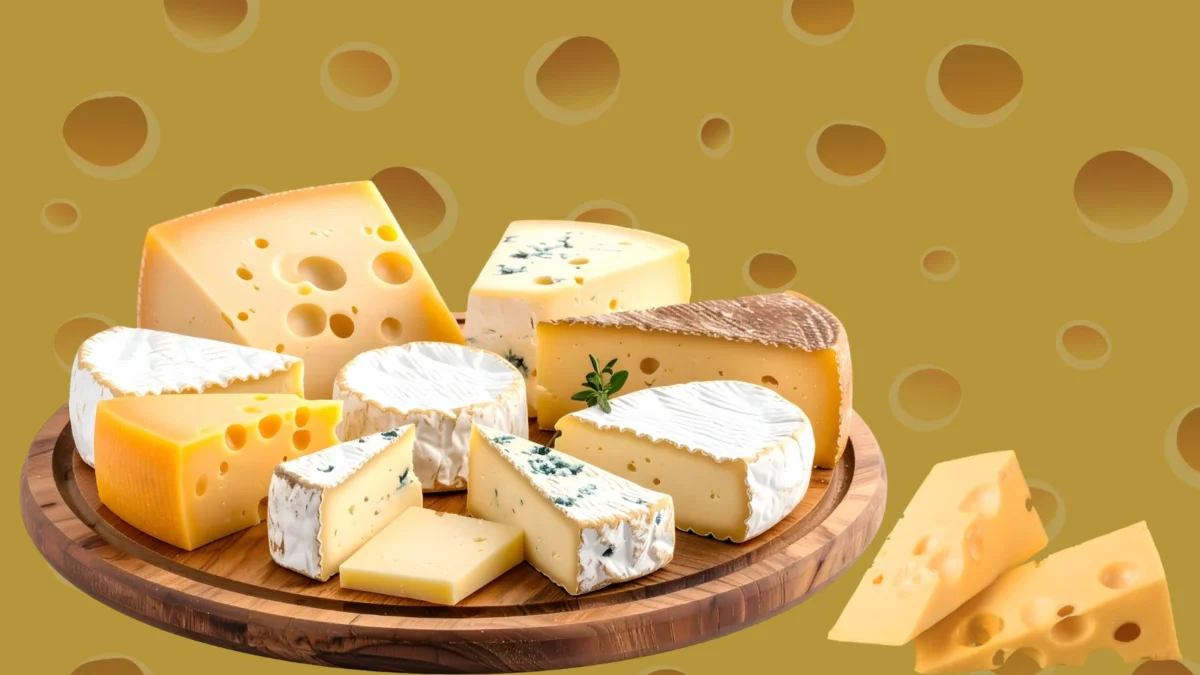
NEW DELHI — In the hallowed cellars of traditional creameries, a silent, microscopic revolution is taking place. While consumers have long celebrated cheese for its decadent textures and pungent aromas, a landmark study from the University of Reading has revealed that the complex microbial ecosystems within artisan cheeses do far more than merely create flavor. They serve as a sophisticated delivery system for probiotics and prebiotics, potentially repositioning one of the world’s oldest fermented foods as a modern "superfood" for gut health.
The research, published in the prestigious journal ACS Food Science & Technology, offers a deep dive into the biological life cycles of artisanal cheeses. By tracking the maturation of specific varieties from the Nettlebed Creamery in Oxfordshire, scientists have mapped the transition of milk from a simple liquid into a complex, living matrix of beneficial bacteria and fungal communities.
Main Facts: The Biological Complexity of the Rind and Curd
At its core, the study challenges the reductive view of cheese as a high-fat dairy product. Instead, researchers argue that artisan cheese is a dynamic ecosystem. The fundamental finding of the University of Reading team is that the microbial action responsible for the sensory profile of cheese—the "funk," the sharpness, and the creaminess—is inextricably linked to the production of health-promoting compounds.
The study focused on three distinct types of cheese produced by Nettlebed Creamery: a soft white-rind cheese, a semi-soft variety, and a semi-hard cheese aged for nine months in hay. Through advanced genomic sequencing and chemical analysis, the researchers identified that these cheeses are reservoirs for Streptococcus thermophilus and Lactococcus lactis. These are not merely "starter cultures" that disappear after the initial fermentation; they remain active and dominant throughout the aging process, reaching the consumer’s plate in high concentrations.
Furthermore, the study highlighted the role of Penicillium candidum, the white mold responsible for the velvety rind on soft cheeses like Camembert or Brie. This fungus produces chitin, a type of dietary fiber that acts as a prebiotic. This means that while the bacteria (probiotics) introduce beneficial life into the gut, the rind provides the "fuel" (prebiotics) necessary for those bacteria to thrive.
Chronology: From Farm to Lab
The investigation followed a meticulous timeline that mirrored the traditional cheesemaking calendar. To understand how microbial communities evolve, the University of Reading team partnered with Nettlebed Creamery, an organic producer known for its commitment to traditional methods.
Phase 1: The Initial Inoculation
The study began at the point of "pitching," where specific bacterial cultures are added to fresh, organic milk. At this stage, the microbial diversity is relatively low, dominated by the primary starter cultures. Researchers took baseline samples to measure the initial chemical composition of the milk.
Phase 2: Short-Term Maturation (Soft Cheeses)
For the soft white-rind cheeses, the team monitored changes over a period of several weeks. During this window, they observed a rapid proliferation of Penicillium candidum. As the mold grew, it began to break down the proteins in the cheese (proteolysis), leading to the softening of the texture. The researchers sampled these cheeses at weekly intervals, noting the emergence of bioactive peptides—small protein fragments that can have blood-pressure-lowering and antioxidant effects.
Phase 3: Long-Term Aging (Semi-Hard Cheeses)
The most intensive part of the chronology involved the semi-hard cheese, which was aged for nine months in a unique environment of hay. Over these 270 days, the microbial community underwent a "succession" process. While some early bacteria died off, others, like Streptococcus thermophilus, proved remarkably resilient. The hay-aging process introduced a unique environmental variable, contributing to a distinct chemical "fingerprint" that the researchers analyzed using gas chromatography-mass spectrometry.
Supporting Data: The Chemical and Microbial Evidence
The strength of the Reading study lies in its dual-pronged approach: analyzing both the "who" (the microbes) and the "what" (the chemicals they produce).
The Probiotic Profile
The data revealed that Lactococcus lactis—a workhorse of the dairy industry—maintained a stable presence across all three cheese types regardless of the aging duration. More significantly, Streptococcus thermophilus, often associated with the health benefits of yogurt, was found to be a dominant player in the semi-hard cheeses. These bacteria are known to survive the acidic environment of the human stomach, allowing them to reach the colon where they can influence the gut microbiome.
The Prebiotic Innovation: Chitin
One of the most significant data points emerged from the analysis of the soft cheese rinds. The researchers found that the fungal cell walls of Penicillium candidum contain chitin. In a nutritional context, chitin acts as a non-digestible fiber. The study suggests that consuming the rind of these cheeses provides a prebiotic effect that is rarely discussed in dairy science. This fiber selectively stimulates the growth of Bifidobacteria, which are crucial for maintaining a healthy intestinal barrier.
Metabolomics and Flavor
The researchers tracked the breakdown of lipids (lipolysis) and proteins. They found that as the cheeses matured, the concentration of free fatty acids and amino acids increased exponentially. These are the building blocks of flavor—responsible for the "umami" and "nutty" notes—but they also serve as metabolic precursors for compounds that can modulate the immune system.
Official Responses: Insights from the Research Team
The lead researchers have been cautious but optimistic about the implications of their work. Sabrina Longley, a PhD researcher in the Department of Food and Nutritional Sciences at the University of Reading, emphasized the bridge between culinary enjoyment and biological necessity.
"Good cheese is delicious, and the artisan varieties we studied are full of microbial life that could have benefits to your gut health," Longley told SciTechDaily. Her commentary underscores a shift in nutritional science toward "whole food" matrixes. Rather than looking at saturated fat in isolation, Longley and her colleagues are looking at how the "cheese matrix"—the structure of the cheese itself—affects how we digest and absorb nutrients.
Representatives from Nettlebed Creamery have also welcomed the findings, noting that the study validates the "slow food" movement. By allowing cheeses to age naturally and using traditional rinds, artisan producers are inadvertently preserving a microbial diversity that is often lost in mass-produced, highly processed "cheese products" that are pasteurized to the point of biological sterility.
The University of Reading has indicated that this study is merely the first step. They are currently seeking funding for clinical trials to observe how these specific artisan cheeses affect the human gut microbiome in real-time through dietary intervention studies.
Implications: The Future of Functional Dairy
The findings of this study have far-reaching implications for the food industry, public health, and the artisan economy.
1. The "Functional Food" Rebrand
For decades, cheese has been a "guilty pleasure," often demonized by nutritionists due to its sodium and saturated fat content. This research provides a framework for a more nuanced conversation. If certain cheeses can be proven to deliver probiotics as effectively as yogurt or kefir, they may be classified as "functional foods"—products that provide health benefits beyond basic nutrition.
2. Supporting Artisan Economies
Mass-produced cheeses are often made using standardized, laboratory-grown cultures and are frequently sold without rinds or with plastic coatings. The Reading study highlights that the "traditional" and "artisan" methods—using natural rinds and longer aging periods—are scientifically superior in terms of microbial diversity. This could provide a significant marketing boost to small-scale farmers and creameries who struggle to compete with industrial prices.
3. The Prebiotic Rind Revolution
The discovery of chitin in cheese rinds may change consumer behavior. While many people currently discard the white rind of a Brie or Camembert, scientific evidence of its prebiotic benefits may encourage more people to consume the cheese in its entirety. This aligns with a broader "zero-waste" food trend and a "nose-to-tail" approach to fermented products.
4. Personalised Nutrition
As the science of the gut microbiome advances, we may see a future where specific cheeses are recommended for specific gut profiles. For individuals lacking in certain beneficial bacteria, a nine-month hay-aged semi-hard cheese might be more than a snack—it might be a targeted supplement.
Conclusion: A New Lens on an Ancient Craft
The research conducted by the University of Reading serves as a vital reminder that the ancient craft of cheesemaking is, in fact, a sophisticated form of biotechnology. By examining the life within the curd, scientists are proving that the pleasure of a well-aged piece of cheese is not just a sensory delight, but a complex biological interaction that supports the very foundation of human health: the gut.
As the team continues to explore the effects of cheese consumption on the human microbiome, the message for consumers is clear: the microbes that make cheese taste so good might also be doing a world of good for the body. In the world of artisan dairy, flavor and health are not just roommates—they are partners in a microscopic dance that has sustained humanity for millennia.
