

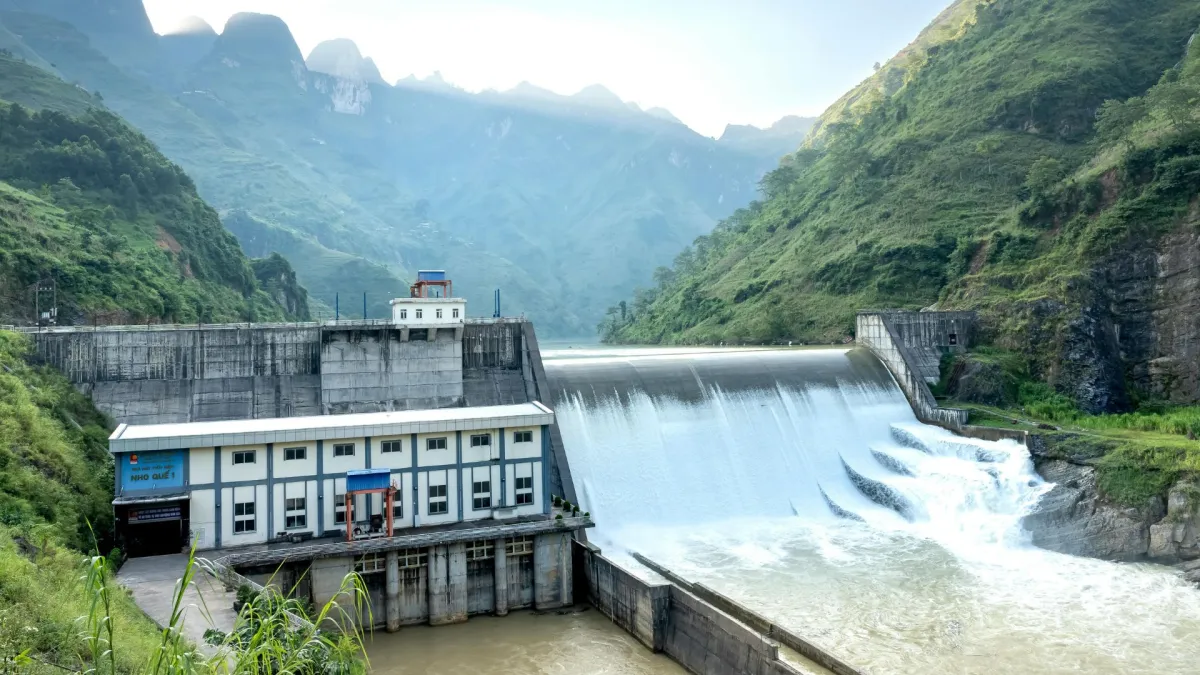
BENGALURU – In an era defined by the mounting anxieties of the "climate crisis," a groundbreaking study has emerged from the Indian Institute of Science (IISc) and the National Institute of Hydrology, offering a rare beacon of optimism for the future of renewable energy. For years, the scientific consensus has warned that the Himalayas—often referred to as the "Third Pole"—are among the most vulnerable regions on Earth to global warming. However, new research suggests that certain types of hydroelectric infrastructure are not just surviving but are poised to remain remarkably resilient through the year 2100.
The study focuses on the Kameng Hydro Electric Project in Arunachal Pradesh, a massive run-of-the-river facility. Despite projections of a future marked by 2.8 degrees Celsius of warming and a staggering 80% reduction in winter river flows, the research concludes that these high-altitude plants will continue to meet and exceed national energy targets. This finding provides a vital blueprint for energy security in South Asia and offers a profound sigh of relief for regions relying on mountain rivers for sustainable, carbon-free power.
Main Facts: The Resilience of Run-of-the-River Infrastructure
The core of the study lies in the distinction between traditional reservoir-based dams and "run-of-the-river" (RoR) facilities. While traditional dams require massive, environmentally disruptive reservoirs to store water, RoR plants like the Kameng facility utilize the natural flow and the steep, dramatic elevation drops of the Himalayan landscape.
The Kameng Hydro Electric Project, situated in the biodiversity-rich Eastern Himalayas, serves as the primary case study. Researchers found that the plant’s specific engineering design acts as a natural buffer against climate volatility. Even as the planet warms, the study predicts that the facility will maintain a steady annual energy output, exceeding national operational efficiency benchmarks in more than 80% of the years leading up to the turn of the next century.

This resilience is particularly significant given the geography. The Eastern Himalayas possess immense untapped hydropower potential but have historically suffered from a lack of granular scientific data. By proving that smart, site-specific engineering can withstand extreme climate shifts, the study provides policymakers with the empirical evidence needed to continue investing in mountain-based renewable energy.
Chronology of the Research: Modeling a Century of Change
The research was a multi-year effort that integrated historical meteorological data with cutting-edge digital simulations. To project the future of the Kameng facility, the team utilized a sophisticated computer program known as the Variable Infiltration Capacity (VIC) model.
- Baseline Data Collection: The researchers began by feeding the VIC model historical weather data, establishing a "ground truth" for how the Kameng river basin currently responds to seasonal shifts.
- Climate Scenario Integration: The team then applied seven different global climate models (GCMs) to the basin. By using an "ensemble" of models rather than relying on a single one, they were able to average out individual biases, resulting in a more robust and reliable forecast.
- The 2100 Projection: The simulations were run under two distinct warming scenarios, stretching from the present day to the year 2100. These scenarios accounted for various levels of greenhouse gas emissions and their subsequent impact on the hydrological cycle.
- Hydrological Simulation: The VIC model created a digital replica of the river basin, calculating how water moves through the landscape. It simulated complex processes, including how much snowmelt is absorbed by the soil versus how much flows over the surface to feed the turbines.
- Engineering Evaluation: Finally, the hydrological outputs were compared against the specific operational requirements of the Kameng plant’s turbines and "head" (vertical drop) capacity to determine if energy targets would be met.
Supporting Data: A Tale of Two Seasons
The data generated by the IISc and NIH team reveals a future of extreme hydrological contrasts. The Himalayas are expected to experience a "polarization" of the seasons, characterized by drastically drier winters and significantly more intense summer monsoons.
Temperature and Precipitation Shifts:
The models predict a temperature increase of up to 2.8 degrees Celsius by 2100. This warming will fundamentally alter the timing and volume of water flow. While the summer monsoons are expected to become wetter and more violent, the winter months—traditionally the lean season—will face a "drastic" drying trend.
The 80% Winter Deficit:
One of the most startling findings is that natural river flows during the dry winter season could plummet by as much as 80%. Under normal circumstances, such a drop would be catastrophic for energy production. However, the study explains why the Kameng plant survives this.

The "Head" Advantage:
The Kameng facility is designed to operate using a massive vertical drop, or "head." In physics terms, a high head means that even a relatively low volume of water can generate a significant amount of electricity due to the high pressure and velocity of the water falling from a great height.
Seasonal Offsetting:
While the plant will undoubtedly generate less power during the parched winter months, the surplus of water during the intensified summer monsoons will allow the facility to operate at its absolute maximum capacity for much longer periods than it does today. When calculated on an annual basis, the summer surplus effectively "cancels out" the winter deficit, keeping the total yearly energy output stable.
Official Context and Policy Responses
While the study is an academic triumph, its implications are being closely watched by energy planners and government bodies. India has set an ambitious goal of reaching Net Zero emissions by 2070, and hydropower is a cornerstone of that strategy.
Strategic Energy Planning:
Officials from the Ministry of Power and renewable energy advocates have long debated the viability of Himalayan hydro projects given the risks of glacial lake outburst floods (GLOFs) and shifting rainfall patterns. This study provides a scientific defense for the continued development of RoR projects, suggesting they are a "safer bet" than large-scale reservoir dams.
The Role of the National Institute of Hydrology:
The involvement of the National Institute of Hydrology ensures that the study’s findings are integrated into national water management strategies. By understanding the seasonal shifts decades in advance, plant operators can begin to adapt their maintenance schedules today.

Global Scientific Contribution:
The researchers emphasized that this study provides a "transferable blueprint." The methodology used for the Kameng project—combining ensemble climate modeling with the VIC hydrological model—can be applied to other mountain ranges, from the Andes to the Alps, helping the global community assess the climate-resilience of their own energy infrastructure.
Implications: Stability in an Uncertain Future
The findings of this research extend far beyond the borders of Arunachal Pradesh. They touch upon the core of global energy security and the transition to a green economy.
1. Grid Stability and Blackout Prevention:
As the world moves away from coal and gas, the stability of the electrical grid becomes a major concern. Hydropower provides "baseload" power that is more consistent than wind or solar. Proving that these plants can survive a 2.8-degree warming scenario ensures that grids can remain stable and "blackout-free" even in a more volatile climate.
2. Adaptation through Maintenance:
One of the most practical implications of the study is the optimization of turbine maintenance. Since the study predicts a predictable decline in winter flow and a surge in summer flow, operators can schedule heavy maintenance and repairs during the dry winter months. This ensures that every drop of the massive summer monsoon flow is captured and converted into electricity without interruption.
3. Advancing the UN Sustainable Development Goals:
The study directly supports the United Nations’ Sustainable Development Goal (SDG) 7: Clean and Affordable Energy. By confirming the long-term viability of Himalayan hydro, the research gives international investors and policymakers the confidence to fund sustainable infrastructure in developing regions.

4. Addressing the Data Gap:
The researchers were transparent about the challenges of their work. The Himalayan terrain is notoriously difficult for physical data collection; there is a severe lack of weather stations at high altitudes. This study bridges that gap using digital simulations, though the authors note that the lack of physical sensors means a degree of uncertainty remains. They also pointed out that the current model uses a simplified approach to underground water flows, an area that will require more detailed study in the future.
Conclusion
The IISc and NIH study transforms our understanding of climate vulnerability. It suggests that while the environment is changing in radical and often frightening ways, human engineering—when designed with the specific physics of the landscape in mind—can withstand the pressure. The Kameng Hydro Electric Project stands as a testament to the idea that we can build infrastructure that is not just "green," but "climate-hardened." For the millions of people who depend on the "Water Tower of Asia" for their light and heat, the future looks surprisingly bright.
