

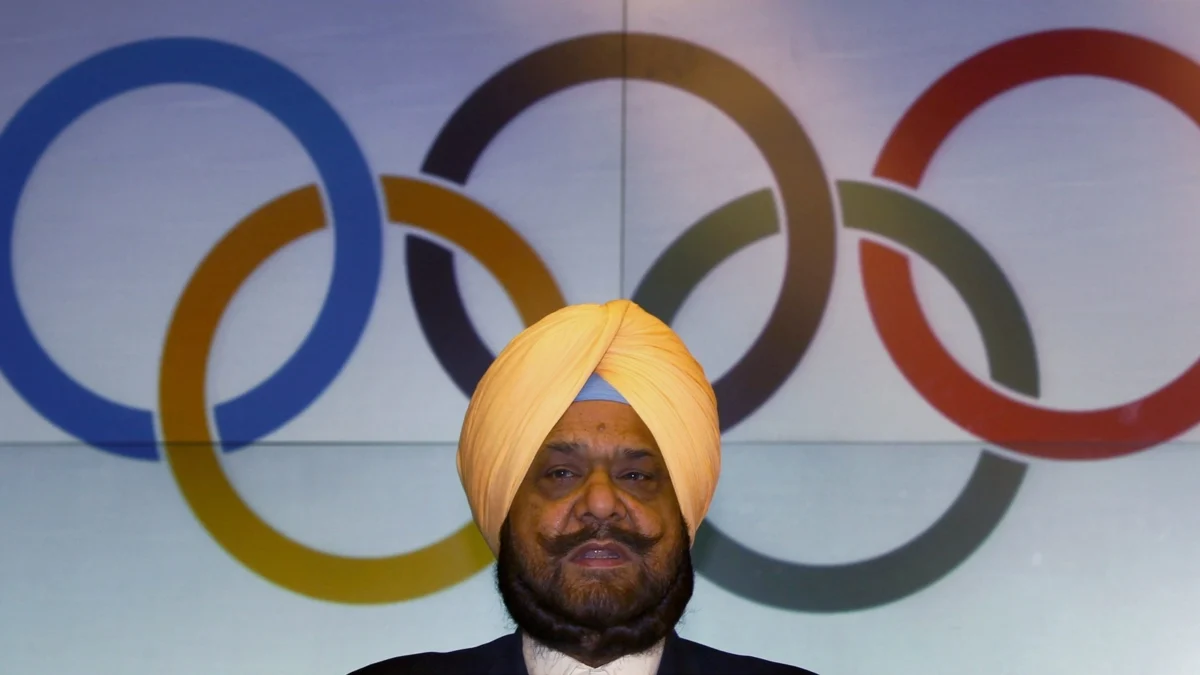
New Delhi, India – Raja Randhir Singh, a name synonymous with Indian and Asian sport for over half a century, stands as a towering figure whose journey seamlessly bridged the worlds of elite athletic competition and high-stakes international sports administration. From the royal shooting ranges of Patiala to the hallowed boardrooms of Lausanne and Kuwait, Singh’s life was an extraordinary tapestry woven with princely heritage, groundbreaking sporting achievements, and unparalleled diplomatic acumen. His recent election as the first Indian President of the Olympic Council of Asia (OCA) in 2024 served as the crowning glory to a career that profoundly shaped the trajectory of sport across the continent and beyond.
Main Facts: A Life of Distinction and Influence
Raja Randhir Singh, born on October 18, 1946, in Patiala, inherited a formidable sporting legacy. His uncle, Maharaja Yadavindra Singh, represented India in Test cricket, while his father, Raja Bhalindra Singh, was not only a first-class cricketer but also a distinguished member of the International Olympic Committee (IOC) from 1947 to 1992. This rich familial tradition laid the groundwork for Randhir’s own remarkable path.
A graduate of Delhi’s prestigious St. Stephen’s College, Randhir Singh initially explored various sports before specializing in trap shooting, an arena where he quickly established himself as a national and international force. He became one of India’s earliest and most consistent international regulars, representing the nation at an astonishing five Olympic Games – Mexico 1968, Munich 1972, Montreal 1976, Moscow 1980, and Los Angeles 1984 – having previously served as a reserve shooter at the Tokyo 1964 Games.
His athletic zenith arrived at the 1978 Bangkok Asian Games, where he etched his name into history by winning a gold medal in trap shooting, becoming the first Indian shooter ever to achieve this feat at the Asian Games. This triumph was not just a personal victory but a significant milestone for Indian sport, inspiring a generation of aspiring shooters.
However, Singh’s influence transcended his athletic prowess. He transitioned into sports administration, a field where his impact would become even more profound and enduring. His administrative career began in 1984 as the IOA joint secretary, swiftly ascending to the powerful position of IOA Secretary General from 1987 to 2014. This remarkable 27-year tenure saw him navigate Indian sport through tumultuous periods of political battles, Olympic suspensions, administrative infighting, and the complex currents of globalization.
Simultaneously, his star rose on the international stage. He served as Secretary General of the Olympic Council of Asia (OCA) from 1991 to 2015, a staggering 24-year period during which he became a pivotal figure in continental sports governance. His dedication and expertise were further recognized when he was appointed Acting President of the OCA in 2021, and ultimately, in 2024, he achieved the historic milestone of becoming the first Indian elected President of the OCA. He also served as a Member of the International Olympic Committee (IOC) from 2001 to 2014, becoming an Honorary IOC Member thereafter.
Beyond the formal titles and official duties, Randhir Singh was renowned as a master consensus-builder, a shrewd negotiator, and a warm, relationship-driven leader. His unique blend of aristocratic charm, athletic credibility, and deep understanding of Olympic politics, from Delhi to Lausanne to Kuwait, allowed him to build an extraordinary network within Asian and global sport. He was a bridge figure, connecting India’s princely past with its modern sporting aspirations, and a testament to the power of dedicated leadership in an often-turbulent world.
Chronology: A Journey Through Decades of Dedication
Raja Randhir Singh’s life unfolds as a chronological narrative of inherited passion, personal achievement, and profound institutional impact.
Early Life and Sporting Roots (1946-1960s)
Born on October 18, 1946, in Patiala, Randhir Singh was immersed in a world where sport was not merely a pastime but an integral part of his family’s identity. The Patiala royal household, known for its patronage of sports, provided an ideal environment for his early development. His paternal lineage boasted significant sporting achievements: his uncle, Maharaja Yadavindra Singh, was a Test cricketer for India, while his father, Raja Bhalindra Singh, not only played first-class cricket for Cambridge but also served as a distinguished member of the International Olympic Committee (IOC) from 1947 to 1992. This heritage instilled in young Randhir a deep appreciation and aptitude for athletic pursuits. After completing his education at Delhi’s St Stephen’s College, he honed his focus on trap shooting, recognizing it as his chosen arena for international competition.
The Olympic Athlete (1964-1984)
Randhir Singh quickly emerged as a prominent figure in Indian shooting. His remarkable consistency and skill earned him a place among India’s earliest international regulars. His Olympic journey commenced as a reserve shooter at the Tokyo 1964 Games, a formative experience that paved the way for an unparalleled run of five consecutive Olympic appearances:
- Mexico City 1968: His debut as a full participant.
- Munich 1972: Competing on the global stage amidst heightened Cold War tensions.
- Montreal 1976: Representing India in North America.
- Moscow 1980: Participating in the boycott-affected Games.
- Los Angeles 1984: Concluding his illustrious Olympic competitive career.
These five Olympic participations underscored his enduring commitment and skill, making him one of the most consistent Indian Olympians of his era.
Asian Games Glory and Transition (1978-1994)
While his Olympic journey was significant, it was at the Asian Games where Randhir Singh truly shone as a competitor.
- 1978 Bangkok Asian Games: This marked his finest hour as an athlete. He clinched the gold medal in trap shooting, an unprecedented achievement that made him the first Indian shooter to win an Asian Games gold. The victory was memorable not just for its historical significance but also for an amusing anecdote: having built an insurmountable lead, members of the Indian contingent and reporters began celebrating prematurely, distracting him. A quick, good-natured admonishment – "Keep quiet. Let me finish at least!" – perfectly captured his focus and competitive spirit.
- 1982 Delhi Asian Games: On home soil, he continued his medal-winning streak, securing a bronze medal in individual trap and a silver medal in team trap. His father, Raja Bhalindra Singh, had played a crucial role in bringing these Games to Delhi, making Randhir’s success particularly poignant.
- He continued to compete at the continental level, participating in a total of four Asian Games, with his final appearance at Hiroshima 1994. By this point, his focus had already begun to shift towards sports administration, a sphere where his influence would grow exponentially.
The Administrator’s Ascent (1984-2015)
Randhir Singh’s transition into administration was swift and impactful, mirroring the arc of Indian sport itself.
- 1984: He began his administrative journey as the IOA joint secretary.
- 1987-2014: He served as the Hon. Secretary General of the Indian Olympic Association (IOA) for a remarkable 27 years. This period was characterized by significant challenges for Indian sport, including political battles, Olympic suspensions, internal administrative infighting, and the pressures of globalization. Singh’s longevity in this demanding role became a testament to his ability to navigate complex political landscapes and maintain stability.
- 1991-2015: Concurrently, his international profile soared as he took on the role of Secretary General of the Olympic Council of Asia (OCA). For 24 years, he was a key architect of Asian sports policy, fostering continental alliances and building bridges between National Olympic Committees.
- 2001-2014: His standing in the global Olympic movement was cemented with his appointment as a Member of the International Olympic Committee (IOC). After 2014, he transitioned to an Honorary IOC Member, continuing to lend his expertise and experience.
Defining Moments and Leadership (2010-2024)
Several key moments highlighted his administrative prowess and diplomatic skill:
- 2010 Commonwealth Games, Delhi: This event, marred by controversies and logistical challenges, proved to be a critical test. Randhir Singh emerged as one of India’s principal sporting power-brokers internationally, and remarkably, was among the few who navigated the "CWG debacle" with his reputation not only intact but enhanced, a testament to his integrity and strategic thinking.
- 2015: Following his long tenure, he became a Life Vice President of the Olympic Council of Asia.
- 2021: A moment of crisis within the OCA saw Sheikh Ahmad Al-Fahad Al-Sabah step aside as President due to legal troubles. Randhir Singh was unanimously chosen as Acting President, largely due to his reputation as the organization’s senior-most institutional figure – a steady hand capable of guiding the OCA through a turbulent period.
- 2024: In a historic development, Randhir Singh was elected President of the Olympic Council of Asia, becoming the first Indian to hold this prestigious office. This election, for the term 2024-2026, marked the pinnacle of his administrative career, affirming his unparalleled network and influence within Asian sport.
Supporting Data: A Comprehensive Overview of Achievements
Raja Randhir Singh’s career is distinguished by a litany of achievements, both as an athlete and as an administrator. These accomplishments paint a clear picture of his dedication and impact.
Shooting Career Highlights:
Randhir Singh’s competitive journey was marked by consistent representation at the highest levels of international sport.
-
Olympic Games:
- Mexico City 1968
- Munich 1972
- Montreal 1976
- Moscow 1980
- Los Angeles 1984
- (Reserve shooter at Tokyo 1964)
- Significance: Five consecutive Olympic appearances underscore his longevity, skill, and commitment as one of India’s pioneering international athletes.
-
Asian Games:
- Bangkok 1978: Individual Gold Medal in trap shooting. This was a historic achievement, making him the first Indian shooter to win an Asian Games gold medal, a moment of immense national pride.
- New Delhi 1982: Individual Bronze Medal in trap shooting and Team Silver. His performance on home soil further cemented his status as a top shooter.
- Seoul 1986
- Hiroshima 1994
- Significance: His Asian Games medals were groundbreaking, demonstrating India’s potential in shooting and inspiring future generations. His participation across four Asian Games highlights his sustained competitive spirit.
-
Commonwealth Games:
- Edmonton 1978
- Significance: Competing at the Commonwealth Games added another dimension to his international competitive profile.
Administrative Career Milestones:
Singh’s transition to administration saw him occupy some of the most influential positions in Indian and Asian sport.
-
Indian Olympic Association (IOA):
- Joint Secretary: 1984
- Hon. Secretary General: 1987-2014 (a remarkable 27-year tenure, navigating significant challenges for Indian sport).
-
Olympic Council of Asia (OCA):
- Secretary General: 1991-2015 (24 years, making him a central figure in Asian sports governance).
- Life Vice President: 2015-2026
- Acting President: 2021-2024 (chosen for his seniority and steady hand during a period of leadership transition).
- President: 2024-2026 (a historic appointment as the first Indian to lead the OCA).
-
International Olympic Committee (IOC):
- Member: 2001-2014
- Honorary IOC Member: Since 2014
- Significance: His roles within the IOC and OCA placed him at the heart of global and continental sports policy-making, giving India a crucial voice in international sporting forums. His longevity in these roles is unparalleled, reflecting his deep understanding of Olympic politics and his ability to build consensus.
Awards and Recognition:
His contributions to sport were widely acknowledged and celebrated.
-
Arjuna Award: 1979
- Significance: One of India’s highest sporting honors, recognizing his excellence as an athlete.
-
OCA Award of Merit: 2005
- Significance: Acknowledging his extensive contributions to the Olympic movement in Asia.
-
Olympic Order: Silver, 2014
- Significance: Awarded by the International Olympic Committee, this is the highest honor in the Olympic Movement, signifying his extraordinary services to the Olympic cause.
These comprehensive details showcase Raja Randhir Singh as a rare individual who achieved excellence at every level of the sporting hierarchy, from the competitive field to the highest echelons of global administration.
Official Responses: A Testament to Leadership and Diplomacy
The trajectory of Raja Randhir Singh’s administrative career, particularly his ascent within the Olympic Council of Asia (OCA) and the International Olympic Committee (IOC), can be seen as a series of official responses to his unique capabilities and indispensable presence. His long tenures and significant appointments were not merely procedural but direct affirmations of his perceived value and leadership qualities.
The Long Tenure as Secretary General:
His remarkable 27-year run as IOA Secretary General and 24-year stint as OCA Secretary General speak volumes. These were periods of immense change and often turmoil in both Indian and Asian sport. The consistent re-election and retention in these demanding roles were an implicit official endorsement of his ability to:
- Navigate Complexity: He was at the helm during times of "political battles, Olympic suspensions, administrative infighting, and globalisation" within Indian sport. His survival and continued effectiveness through these challenges demonstrated a rare political acumen and resilience.
- Build Consensus: Within the IOA and OCA, Singh developed a strong reputation as a "consensus-builder." This skill was vital in federations often plagued by factionalism, allowing him to forge agreements and maintain operational stability where others might have failed.
- Master Olympic Politics: His ability to know "every corridor of Olympic politics, from Delhi to Lausanne to Kuwait," meant he was an invaluable asset in representing Indian and Asian interests on the global stage. His expertise in "lobbying and continental alliances" was an official response to the need for sophisticated diplomatic engagement in international sports.
Emerging Intact from the 2010 Commonwealth Games:
The 2010 Commonwealth Games in Delhi were fraught with controversy and criticism. That Randhir Singh "emerged from the CWG debacle with reputation intact" was a powerful official acknowledgment of his integrity and ability to distance himself from, or effectively manage, the administrative pitfalls surrounding the event. It underscored his standing as a trusted figure in a period of intense scrutiny, making him "one of India’s principal sporting power-brokers internationally."
The Acting Presidency and Historic OCA Presidency:
His appointment as Acting President of the OCA in 2021 was perhaps the most explicit official response to his institutional gravitas. When Sheikh Ahmad Al-Fahad Al-Sabah stepped aside amidst legal troubles, the OCA leadership turned to Singh. He was "chosen acting president largely because he was seen as the organisation’s senior-most institutional figure – the steady hand in a turbulent moment." This decision was a direct vote of confidence in his experience, stability, and ethical standing.
The culmination of this trust arrived in 2024 with his election as the first Indian President of the OCA. This historic appointment was a resounding official affirmation of his decades of dedicated service, his deep understanding of the continental Olympic movement, and his widely acknowledged ability to lead with authority and grace. It signaled a collective belief that Singh possessed the vision and diplomatic skill to steer Asian sport into a new era.
Recognition from the IOC:
His membership in the International Olympic Committee from 2001 to 2014, followed by his honorary status, and especially the award of the Olympic Order (Silver) in 2014, represent the highest official responses to his contributions to the global Olympic movement. These accolades are bestowed upon individuals who have rendered outstanding services to the Olympic cause, validating his profound impact far beyond national or continental boundaries.
In essence, the progression of Raja Randhir Singh’s career, marked by long tenures, critical appointments during challenging times, and prestigious awards, serves as a compelling narrative of official recognition for a leader whose blend of athletic credibility, diplomatic skill, and personal warmth made him indispensable to the world of sport.
Implications: A Lasting Legacy on Indian and Global Sport
The career and life of Raja Randhir Singh carry profound implications, not just for the organizations he led, but for the very fabric of sports administration, cultural preservation, and India’s standing on the global sporting stage.
Elevating India’s Voice in Global Sport:
Singh’s unprecedented rise to the presidency of the Olympic Council of Asia (OCA) has significant implications for India. For decades, India, despite its vast population and sporting potential, often struggled to assert its influence in the highest echelons of international sports governance. Randhir Singh’s election means that, for the first time, an Indian will preside over a continental Olympic body, giving India a direct and powerful voice in shaping Asian sports policy, resource allocation, and international sporting relations. This marks a paradigm shift, potentially opening doors for greater Indian representation in other global sports federations and enhancing the nation’s diplomatic leverage in sport.
The Athlete-Administrator Model:
One of the most crucial implications of Singh’s career is the validation of the athlete-administrator model. In a system often criticized for being dominated by career bureaucrats or political appointees, Singh’s background as a five-time Olympian lent him instant credibility with competitors. His ability to understand the challenges, aspirations, and mindset of athletes from personal experience allowed him to advocate more effectively for their welfare and development. This model implies that organizations benefit immensely from leaders who have walked the path of an athlete, fostering greater trust and more athlete-centric policies. It sets a precedent for encouraging more former athletes to transition into administrative roles, potentially leading to more enlightened and empathetic sports governance.
Stability and Consensus in Turbulent Times:
Singh’s long tenure as Secretary General of both the IOA and OCA, often through periods of significant turbulence, implies the critical value of stable, consensus-driven leadership. His reputation as a "consensus-builder" who "mastered the politics of federations" suggests that effective leadership in complex multi-national or national sporting bodies requires not just authority, but also the ability to unite disparate factions, negotiate compromises, and maintain a steady course amidst political storms. His ability to emerge from the 2010 CWG debacle with his reputation intact further implies that integrity and strategic distance from controversy are paramount for long-term influence.
Cultural Preservation Through Sport and Beyond:
The "culinary project" of archiving over 1,000 royal Patiala recipes offers a fascinating implication beyond sport. It highlights Singh’s commitment to preserving cultural inheritance, viewing it with the same meticulousness he applied to sports administration. This personal passion implies a broader understanding of heritage and the importance of documenting traditions. Furthermore, his administrative style, described as "informal, relationship-driven and built as much on personal warmth as institutional authority," suggests that cultural values of hospitality and personal connection can be effectively integrated into professional leadership, fostering more collaborative and enduring relationships.
A Bridge Across Eras:
Finally, Raja Randhir Singh’s entire life implies a powerful role as a "bridge figure across eras." He embodied the transition from princely India, with its aristocratic sporting traditions, to modern professional sport and the intricate world of international Olympic diplomacy. His journey from "shooting down clay targets to navigating Olympic boardrooms in Lausanne" symbolizes the evolution of Indian sport itself – from individual feats to complex institutional structures. His ability to seamlessly inhabit and influence these diverse worlds for such an extended period implies that true leadership transcends specific domains, rooted instead in adaptability, vision, and an unwavering commitment to the cause of sport. Few Indians have occupied so many layers of sport for so long, and fewer still carried that world with such effortless ease, leaving an indelible mark that will resonate for generations to come.
