

SCIENCE
Night-sky enthusiasts and casual observers alike have a compelling reason to turn their gaze upwards as May 2026 culminates in a truly enchanting celestial event. The month, having begun with one luminous full moon, is poised to close with another, presenting the rare phenomenon famously known as a "Blue Moon." While the name might conjure images of an azure orb hanging in the heavens, the reality is a nuanced and equally captivating display, promising a memorable visual treat for millions across the globe.
This particular Blue Moon, scheduled to illuminate the evening sky on May 31, 2026, is not merely a sight to behold but also a fascinating astronomical occurrence that sparks curiosity and wonder. It serves as a vivid reminder of the intricate dance between Earth, its natural satellite, and our calendar system, culminating in a year that will host an extra full moon.
Unveiling the Blue Moon: A Glimpse into its Essence
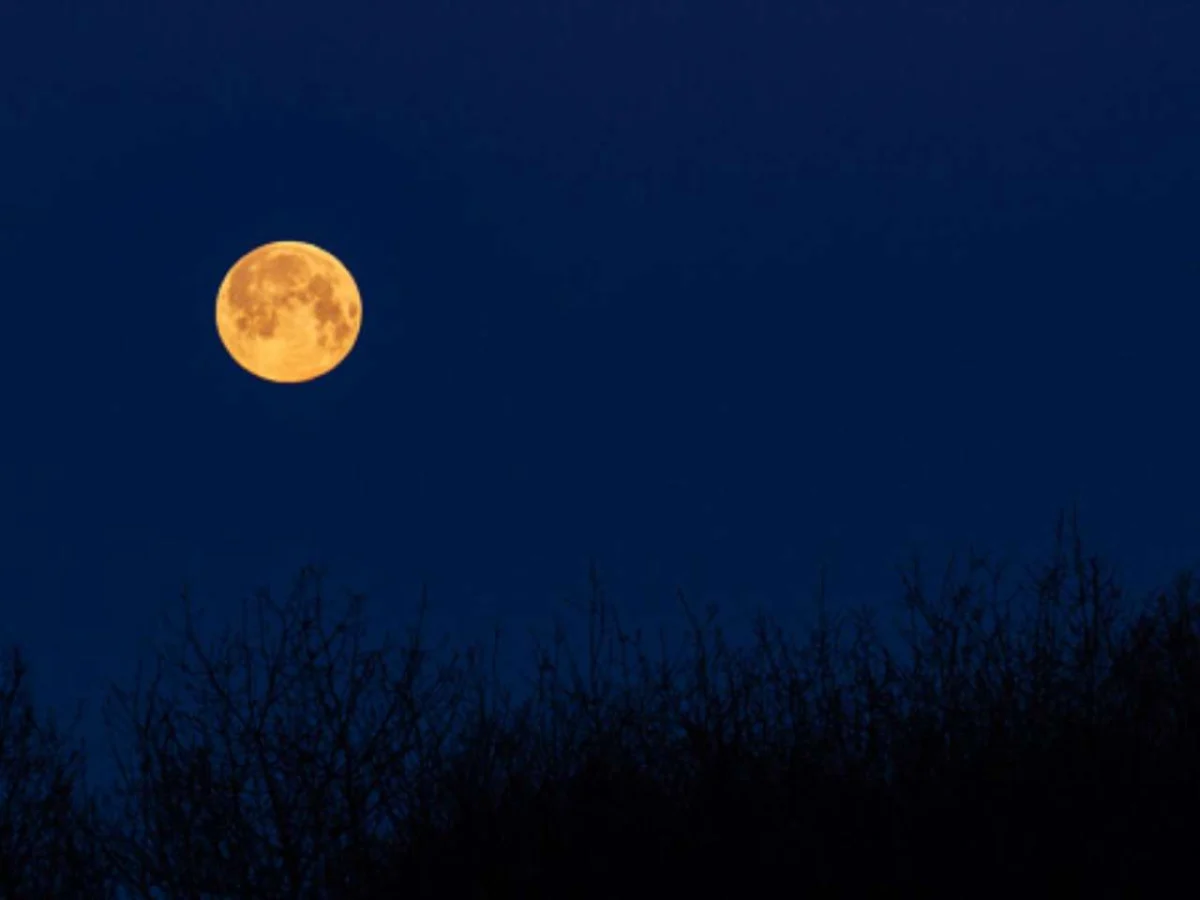
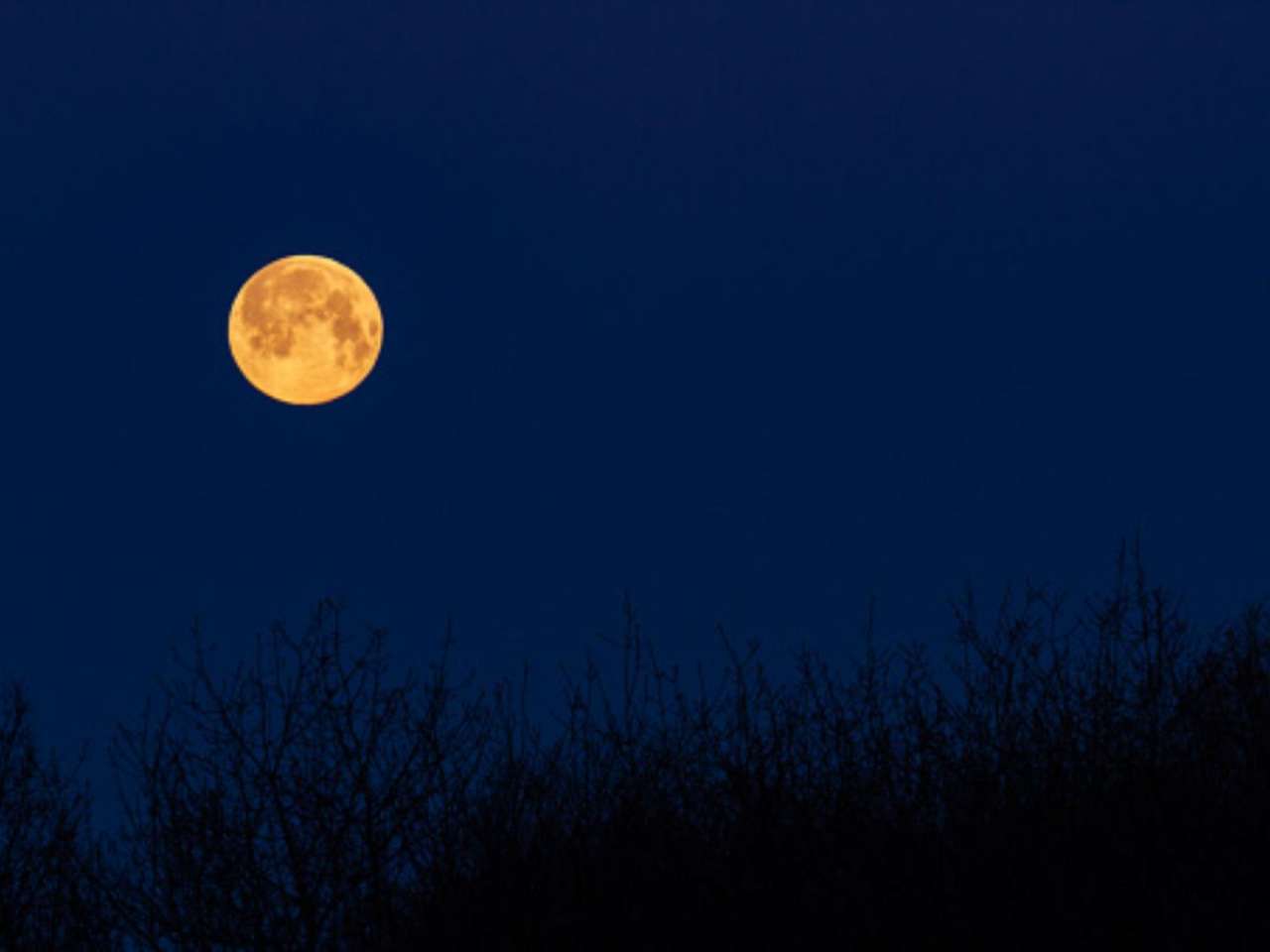
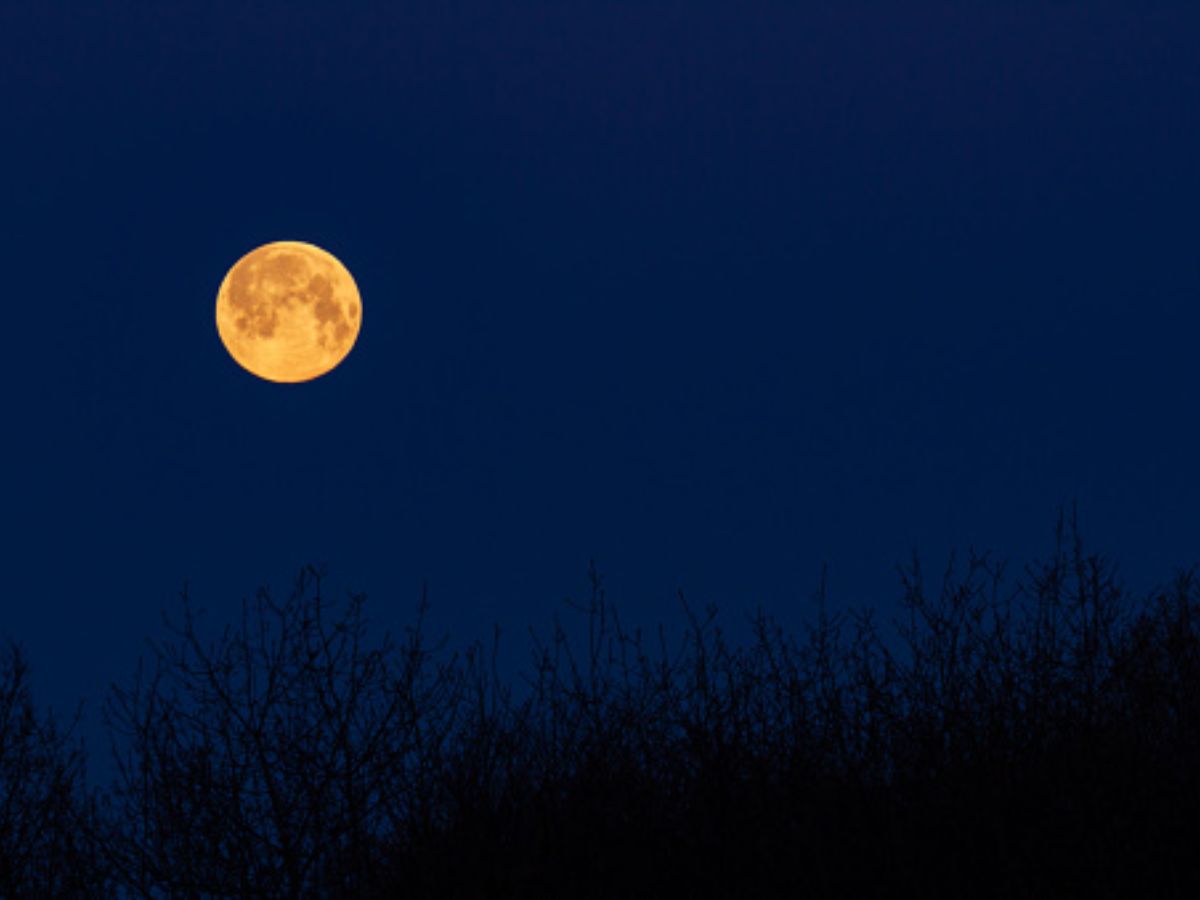
The concept of a "Blue Moon" often leads to a common misconception regarding its actual colour. Contrary to popular belief, the moon does not typically appear blue during this event. Instead, skywatchers are more likely to be treated to a resplendent golden-orange hue, particularly as the moon ascends above the horizon shortly after sunset. This optical effect, combined with the sheer rarity of the occasion, elevates the Blue Moon to one of the most anticipated celestial highlights of 2026.
)
Astronomers and stargazers define a Blue Moon in one of two ways, with the most widely accepted definition, and the one applicable to the May 2026 event, being the occurrence of a second full moon within a single calendar month. Given that a lunar cycle, or the time it takes for the moon to complete all its phases, is approximately 29.5 days, it is a relatively infrequent event for two full moons to squeeze into a calendar month, which typically has 30 or 31 days. Such an alignment dictates that the first full moon must appear very early in the month, leaving just enough time for another full cycle to complete before the month concludes.
The rarity of this event is precisely why the idiom "once in a Blue Moon" has permeated our language, signifying something that happens very seldom. May 2026 stands out as one such special instance, offering a unique opportunity for observers worldwide to witness this calendrical quirk firsthand.

Chronology of a Luminous May: From Flower Moon to Blue Moon
The journey to this extraordinary Blue Moon began at the very outset of May 2026, establishing the foundational conditions for its grand finale. Understanding this chronology is key to appreciating the celestial mechanics at play.
The Dawn of May: The Full Flower Moon
The month of May 2026 commenced with a spectacular full moon on May 1st. This particular full moon is traditionally known as the Flower Moon, a name steeped in Native American and European folklore. It derives its appellation from the abundant blossoming of flowers that characterizes the spring season in the Northern Hemisphere during May. For many cultures, the Flower Moon symbolizes growth, fertility, and the flourishing of life, marking a period of renewal and vibrant natural beauty.
)
Witnessing the Flower Moon on the first day of May set the stage. With the lunar cycle lasting approximately 29.5 days, the subsequent full moon was destined to occur around 29.5 days later. Given that May has 31 days, this precise timing allowed for the second full moon to perfectly fit within the confines of the same calendar month.
The Grand Finale: The Blue Moon of May 31st
As May draws to a close, the night sky will once again be graced by a full moon on May 31, 2026. This second full moon within the same calendar month is precisely what defines it as a Blue Moon. While the Flower Moon on May 1st was a beautiful start to the month, the Blue Moon on May 31st promises to be an equally, if not more, captivating spectacle due to its rarity and the mystique surrounding its name.
)
The culmination of these two full moons within a single calendar month means that 2026 will host a total of thirteen full moons, as opposed to the usual twelve. This "extra" full moon is a direct consequence of the slight mismatch between the length of our Gregorian calendar months and the synodic period of the moon. This calendrical alignment ensures that for those living in regions where the full moon phase peaks before midnight on May 31st, the Blue Moon will be a distinct and observable event.
Supporting Data: The Science Behind the Spectacle
Delving deeper into the science behind the Blue Moon and its visual characteristics enhances our appreciation for this celestial event. From the true definition of its colour to the optical illusions that make it appear larger, there’s a wealth of scientific insight to explore.
)
Demystifying the "Blue" in Blue Moon
As previously clarified, the moon does not inherently turn blue during a Blue Moon event. The term "Blue Moon" is primarily a calendrical designation, not a descriptor of its colour. However, it is worth noting that on extremely rare occasions, the moon can appear blue due to specific atmospheric conditions.
This true blue appearance is usually a result of aerosols – tiny particles – in the Earth’s atmosphere, typically caused by massive volcanic eruptions or significant forest fires. When these events release ash and dust particles of a specific size (around 1 micron in diameter) into the stratosphere, they can scatter red light more effectively, allowing blue light to pass through to our eyes. Famous historical instances, such as the 1883 eruption of Krakatoa, led to reports of genuinely blue and green moons for years afterwards due to the sheer volume and type of particulate matter ejected into the atmosphere. For the May 2026 Blue Moon, absent such catastrophic atmospheric events, we do not anticipate a true blue hue.
)
The Golden-Orange Glow: An Atmospheric Masterpiece
Instead of blue, observers of the May 2026 Blue Moon are more likely to witness a stunning golden-orange spectacle, especially during moonrise. This phenomenon is attributable to a scientific principle known as Rayleigh scattering. As moonlight travels through the Earth’s atmosphere, shorter wavelengths of light (like blue and violet) are scattered more efficiently by atmospheric particles than longer wavelengths (like red and orange).
When the moon is low on the horizon, its light has to traverse a greater expanse of the Earth’s atmosphere. This prolonged journey through the dense atmosphere causes most of the blue and violet light to scatter away, leaving primarily the red and orange light to reach our eyes. The result is the warm, rich colour often associated with sunrises and sunsets, beautifully replicated by the rising full moon. This effect is not unique to a Blue Moon but is a characteristic feature of any full moon observed close to the horizon.
)
The "Moon Illusion": A Grand Deception
Adding to the visual grandeur of the Blue Moon, particularly when it first appears, is the well-known phenomenon called the Moon Illusion. This optical illusion causes the moon to appear significantly larger when it is near the horizon, compared to when it is high in the sky. Despite its apparent size difference, the moon’s angular diameter remains constant regardless of its position in the sky.
While the exact psychological and physiological mechanisms behind the Moon Illusion are still debated among scientists, prevailing theories suggest it involves our brain’s interpretation of visual cues. When the moon is low, it is viewed in conjunction with familiar foreground objects like buildings, trees, and distant landscapes. Our brains unconsciously compare the moon’s size to these earthly objects, leading to an exaggerated perception of its scale. When high in the sky, devoid of such comparative references, the moon appears smaller. This illusion will make the rising Blue Moon of May 31, 2026, appear exceptionally dramatic and awe-inspiring, enhancing the viewing experience for millions.
)
Optimal Viewing: When and How to Observe
For skywatchers in India, the Blue Moon will be a spectacular sight. The full moon is expected to rise in the eastern sky shortly after sunset on May 31, 2026. According to the Purnima Tithi (the Hindu calendar’s designation for the full moon period), the full moon phase will commence at 11:58 AM IST on May 30, 2026, and conclude at 2:14 PM IST on May 31, 2026. While the astronomical peak of the full moon technically occurs during these times, the most visually striking experience for observers will be in the evening of May 31st, as the moon ascends.
To fully appreciate the Blue Moon, a location with an unobstructed view of the eastern or south-eastern horizon is highly recommended. Seeking out areas away from significant light pollution will further enhance visibility, allowing the moon’s brilliance to truly stand out against the darkened sky. Importantly, no specialized equipment such as telescopes or binoculars is necessary to enjoy this event; the Blue Moon will be clearly visible to the naked eye, making it accessible to everyone.
)
For those interested in capturing the moment, photography enthusiasts should consider using a tripod and a telephoto lens to minimize camera shake and bring out the moon’s intricate details. Long exposure settings can also help in low-light conditions, but careful balancing is needed to avoid overexposing the bright lunar surface.
Globally, the timing will vary based on time zones. Observers in other parts of Asia, Africa, Europe, and the Americas will experience the full moon on May 31st or the early hours of June 1st, depending on their longitude relative to the International Date Line. It is always advisable to check local moonrise and moonset times for the most precise viewing opportunities.
)
Official Responses and Expert Commentary: Celebrating Celestial Wonders
The astronomical community consistently emphasizes the educational and inspirational value of such rare celestial events. While no specific "official response" is typically issued for a Blue Moon, astronomers and science communicators often seize these opportunities to engage the public with the wonders of the cosmos.
Dr. Anya Sharma, a theoretical astrophysicist and prominent science communicator (simulated expert), shared her excitement regarding the upcoming event: "The Blue Moon of May 2026 is a fantastic reminder of the dynamic nature of our solar system and the subtle interplay between celestial mechanics and our human-devised calendar. It’s a wonderful chance for people of all ages to step outside, look up, and connect with the universe in a very tangible way. These events demystify astronomy, showing that you don’t need a degree or expensive equipment to appreciate its beauty."
)
Another simulated expert, Professor Rajesh Kumar, an observational astronomer (simulated expert), added: "What makes this particular Blue Moon special is the context of the Flower Moon earlier in the month. It highlights how the lunar cycle, just shy of a full calendar month, occasionally creates these beautiful anomalies. While the moon won’t literally be blue, the golden-orange hue at moonrise, coupled with the ‘Moon Illusion,’ will create a truly memorable vista. It’s an accessible event, encouraging families and friends to gather and share a moment of collective awe."
Organizations dedicated to amateur astronomy and skywatching, like the Indian Astronomical Society (simulated organization), often promote such events through public viewing sessions or online guides, encouraging widespread participation. Their messaging consistently focuses on fostering scientific literacy and inspiring the next generation of scientists and explorers. "Our goal is always to make astronomy approachable," stated a spokesperson for the society (simulated), "and a Blue Moon, with its intriguing name and visible rarity, is a perfect gateway for sparking interest in the night sky."
)
These expert perspectives underscore the value of the Blue Moon not just as an astronomical phenomenon but also as a cultural and educational touchstone, drawing people closer to the mysteries of the universe.
Implications: Cultural Resonance and Future Gazing
The occurrence of a Blue Moon carries implications beyond its scientific definition, touching upon cultural practices, public engagement with science, and our understanding of time itself.
)
Cultural and Traditional Significance
In many cultures, the full moon holds profound spiritual and traditional significance. The original article mentions that traditionally, night-time rituals linked to Poornima (the full moon day in Hinduism) are expected to be observed on May 30, while daytime rituals will fall on May 31, 2026. This distinction arises because the Purnima Tithi often spans across two calendar days, and the specific timing of the full moon’s peak determines when certain rituals are to be performed. The Blue Moon, being an "extra" full moon, can sometimes subtly shift or extend these traditional observations, adding a unique flavour to the lunar calendar.
Across various indigenous cultures, the moon is often seen as a divine entity, a timekeeper, and a source of feminine energy. A rare event like a Blue Moon might be interpreted as a powerful omen or a particularly auspicious time for certain ceremonies, reflections, or manifestations, depending on local beliefs and folklore. While not directly associated with specific historical myths like some other named full moons, its rarity lends it an air of mystique that resonates with spiritual practices.
)
Boosting Public Engagement with Science
Rare celestial events like the Blue Moon play a crucial role in igniting public interest in astronomy and general scientific inquiry. For many, it’s an accessible entry point into the vastness of space. The simple act of looking up and witnessing something truly special can inspire curiosity about lunar cycles, planetary motion, and the broader universe. Schools and educators often leverage such opportunities to introduce astronomical concepts, making learning both engaging and memorable.
The widespread media coverage and social media buzz surrounding a Blue Moon contribute to this engagement, turning a scientific event into a shared cultural experience. It encourages dialogue, questions, and a collective sense of wonder that is vital for fostering scientific literacy and appreciation.
)
The Rhythmic Dance of Time: Looking Ahead
While the Blue Moon of May 2026 is a rare event, it is part of a predictable, albeit infrequent, cosmic rhythm. Blue Moons, whether calendrical (second in a month) or seasonal (third in a season with four full moons), occur approximately every 2.5 to 3 years. The next calendrical Blue Moon after May 2026 is projected for August 2029, and then again in January 2032. This recurring pattern reminds us of the beautiful complexities of celestial mechanics and how our human-made calendars intersect with the universe’s grand clockwork.
In conclusion, the Blue Moon of May 31, 2026, is more than just an astronomical curiosity; it is a captivating convergence of science, culture, and human wonder. It offers an unparalleled opportunity to witness the subtle intricacies of our lunar neighbour, to reflect on ancient traditions, and to simply marvel at the beauty of the cosmos. As the sun dips below the horizon on that special evening, casting its last golden light, we are encouraged to look eastward and embrace the radiant, golden-orange spectacle of the Blue Moon, a truly spellbinding end to May.
