Updated: Jun 3, 2026 10:59 PM IST
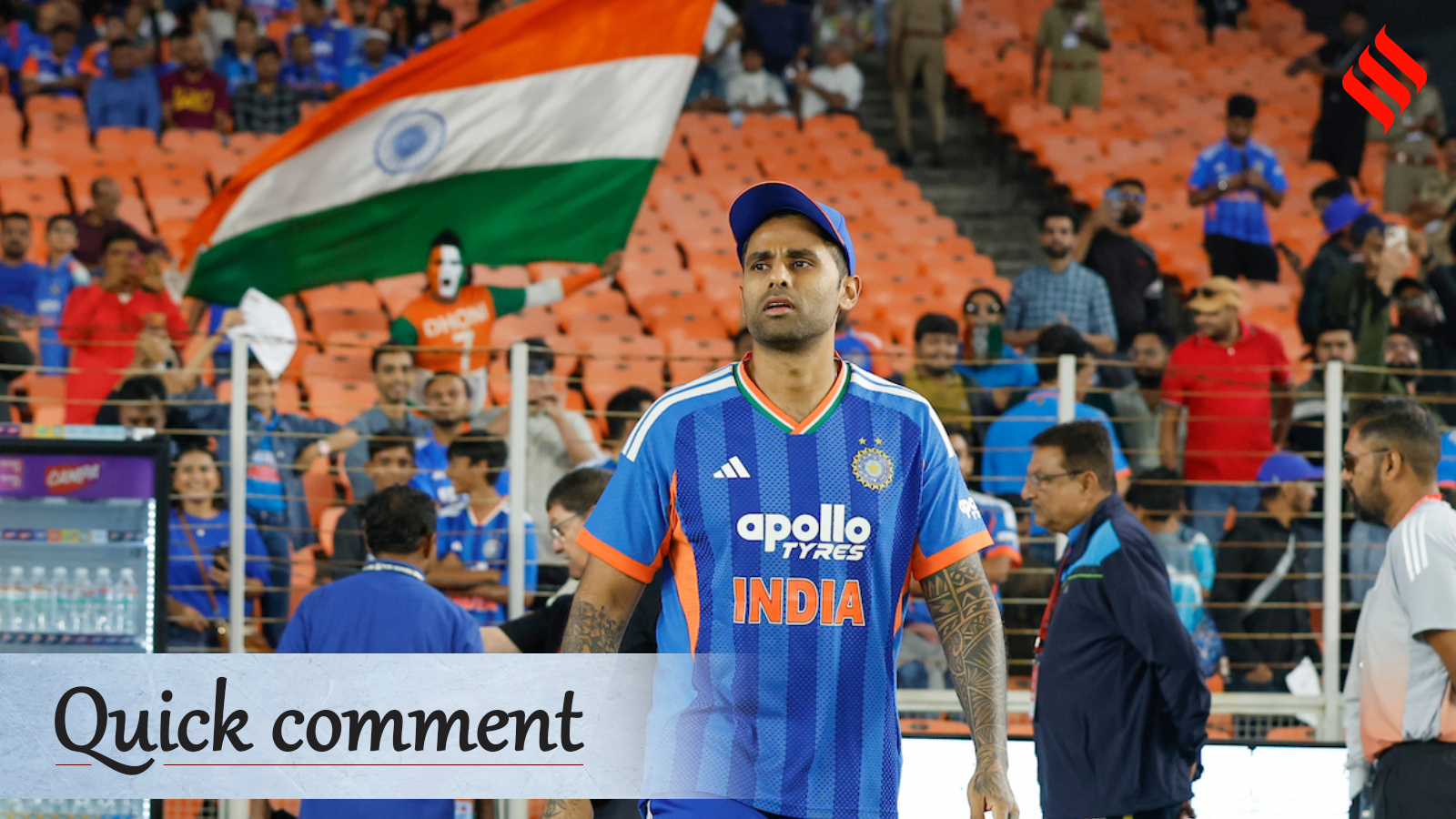
(Even before the T20 World Cup at home earlier this year, Suryakumar was struggling to find big scores before he hit three fifties in the series against New Zealand to turn a corner. His batting during the World Cup was nothing to write home about. CREIMAS)
The Swift Unravelling: From World Cup Glory to Ostracization
Just three months after leading India to a historic T20 World Cup title on home soil in Ahmedabad, the cricketing world has been left stunned by the dramatic downfall of Suryakumar Yadav. The 35-year-old batting sensation, once hailed as India’s "Mr. 360" for his audacious strokeplay, has not only been stripped of his captaincy but is also reportedly unlikely to secure a place in the national squad when selectors next convene. This seismic decision, delivered with characteristic swiftness by the Ajit Agarkar-led selection committee, underscores a new, uncompromising era in Indian cricket where current form and long-term vision unequivocally trump past laurels and star power.
The abrupt removal of a World Cup-winning captain, especially one who brought home a coveted ICC trophy, is virtually unprecedented in modern cricket. It speaks volumes about the ruthless pragmatism now embedded within the Indian selection philosophy. While the move may raise eyebrows and spark intense debate among fans and pundits, it aligns perfectly with the committee’s established trend of decisive action, refusing to let underperformance linger or shy away from making the toughest of calls, even when it involves the biggest names in the sport.
Suryakumar’s recent trajectory has been a stark contrast to his meteoric rise. A devastating slump in form, particularly evident during the recent Indian Premier League (IPL) season and even preceding the T20 World Cup triumph, appears to have sealed his fate. The selectors, it seems, are committed to building a formidable, future-proofed squad, and no individual, regardless of their past contributions, is deemed indispensable in this ambitious new blueprint for global dominance.
A Chronology of Rise and Fall
Suryakumar Yadav’s journey to the pinnacle of Indian cricket was marked by perseverance and a late bloomer’s explosive impact. His unique ability to hit boundaries across the park, coupled with an aggressive mindset, made him a T20 phenomenon. However, the narrative has taken a dramatic turn, culminating in his recent demotion.
July 2024: The Ascension to Captaincy
The seeds of Suryakumar’s leadership were sown in July 2024. Following India’s triumphant 2024 World Cup campaign under Rohit Sharma, the selectors faced a crucial decision regarding the future of T20 captaincy. Many expected Hardik Pandya, Rohit’s vice-captain during the victorious campaign and a proven leader, to be the natural successor. However, concerns over Pandya’s persistent injury struggles and his availability for all matches led the selection committee to look elsewhere. In a surprising move, Suryakumar Yadav was appointed as India’s T20 captain for the series against Sri Lanka. His dynamic batting and reputation as a match-winner in the format seemed to align with the committee’s vision for an aggressive, fearless side. At the same meeting, Shubman Gill, already the Test captain, was named Suryakumar Yadav’s deputy in the T20 setup, signalling a potential future leadership transition.
Pre-T20 World Cup 2026: A Glimmer of Hope Amid Struggles
Even before the T20 World Cup, which India hosted earlier this year, Suryakumar’s form had begun to fluctuate. He was struggling to convert starts into significant scores, a worrying sign for a player whose primary role was to provide rapid acceleration in the middle overs. However, a crucial three-match series against New Zealand offered a temporary reprieve. Suryakumar rediscovered some of his vintage touch, smashing three fifties that not only helped India clinch the series but also provided a much-needed boost to his confidence just ahead of the global showpiece event. This brief resurgence, however, proved to be a fleeting one, a false dawn before a deeper slump.
T20 World Cup 2026: A Triumphant Captain, A Subdued Batter
The T20 World Cup on home soil was a mixed bag for Suryakumar. As captain, he excelled, marshalling his troops effectively and guiding India to an emotional title victory in Ahmedabad. His tactical decisions and leadership from the front were widely praised. However, his personal batting performance during the tournament was, as the original report bluntly put it, "nothing to write home about." While the euphoria of the World Cup win overshadowed individual shortcomings, his inability to make a significant impact with the bat did not go unnoticed by those scrutinizing performances for long-term implications. The struggles hinted at a deeper malaise that the pressure of captaincy and the weight of expectation may have exacerbated.
Post-World Cup & IPL 2026: The Irreversible Decline
The period immediately following the T20 World Cup saw Suryakumar’s form plummet further. His participation in the subsequent IPL season was particularly disappointing for a player of his calibre. Across 13 innings, he managed a paltry 10 sixes, a stark contrast to his reputation as a power-hitter capable of dismantling any bowling attack. Crucially, he was often overshadowed by a new crop of "young guns" who displayed greater boundary-hitting prowess and maintained superior strike rates, exposing a significant drop in his impact and efficiency. This sustained dip in performance, extending from before the World Cup through to the IPL, made his position increasingly untenable. The selectors, it became clear, were watching closely, and the numbers were not in his favour.
June 2026: The Verdict Delivered
Now, just three months after hoisting the T20 World Cup trophy, Suryakumar Yadav finds himself at a significant crossroads. The selection committee’s decision to remove him from captaincy and indicate his likely exclusion from the squad marks the culmination of a performance-based assessment. The journey from being a T20 icon and World Cup-winning captain to potentially being outside the national setup has been astonishingly swift, underscoring the cut-throat nature of elite international cricket and the uncompromising stance of the current selection panel.
Supporting Data: The Numbers Behind the Decision
The decision to move on from Suryakumar Yadav is not merely anecdotal; it is firmly rooted in a detailed analysis of his recent performance data, coupled with a strategic long-term outlook.
Suryakumar’s IPL Woes and Diminished Impact
The most damning evidence against Suryakumar’s retention comes from his performances in the 2026 IPL. Once a consistent chart-topper in terms of strike rate and boundary hitting, his statistics painted a grim picture:
- Sixes: A mere 10 sixes in 13 innings. For a player renowned for his explosive power and 360-degree hitting, this figure is alarmingly low and indicates a significant reduction in his attacking output.
- Boundary Count: While specific boundary counts are not provided, the article highlights that he was "overshadowed by the young guns in terms of boundaries." This suggests a general decline in his ability to find the ropes and clear the fence, impacting his overall scoring rate.
- Strike Rate: Although not explicitly stated, being overshadowed in terms of boundaries and sixes strongly implies a suboptimal strike rate, especially when compared to the aggressive benchmarks set by emerging talents. In T20 cricket, where rapid scoring is paramount, a lower strike rate for a middle-order batter can be detrimental to team momentum.
This downturn in the IPL was not an isolated incident but rather a continuation of a trend observed during the T20 World Cup, where his batting contributions were deemed "nothing to write home about." Despite the team’s triumph, his individual batting impact was minimal, a stark contrast to the expectations associated with his reputation.
The Precedent Set by Veterans and Emerging Talents
The Agarkar-led selection committee has consistently demonstrated its willingness to make tough calls, even when it involves legendary figures. This firm stance has created a culture where performance is the ultimate currency, regardless of stature.
- Rohit Sharma and Virat Kohli: The article explicitly states, "Even Rohit Sharma and Virat Kohli were not spared when form deserted them." After a challenging series loss in Australia and a subsequent drubbing at home against New Zealand, Rohit Sharma reportedly "got the message and called it a day." Similarly, Virat Kohli, also a stalwart, retired before India’s away tour to England, paving the way for Shubman Gill to be named Test captain for the first time. These high-profile retirements, while framed as voluntary, were widely understood to be influenced by the selectors’ clear signals about the team’s future direction and the need for fresh blood.
- Shubman Gill’s Prior Exclusion: Even Shubman Gill, now tipped for all-format captaincy, was not immune. He was "dropped from the T20 team when form deserted him before the T20 World Cup even though he was the vice-captain." This incident serves as a potent reminder that no player, irrespective of their leadership role or potential, is guaranteed a spot if their performance dips. Ishan Kishan, who had made quick runs up the order and captained Jharkhand to a domestic T20 title, was brought in as his replacement, highlighting the committee’s emphasis on immediate form and domestic success.
The Age Factor and Long-Term Vision
At 35, Suryakumar Yadav is not getting any younger. With the next T20 World Cup more than two years away (in 2028), the selectors are clearly looking to invest in younger talent that can provide sustained performance over the next cycle. The decision to drop an experienced player like Suryakumar, despite his past heroics, underscores a strategic shift towards building a core group that can represent India for years to come. The emphasis is on long-term continuity and future-proofing the squad, especially with significant events like the 2028 Olympics (where cricket returns after over a century) and the pursuit of a T20 World Cup hat-trick on the horizon.
Shubman Gill’s Resurgent Form: A Counterpoint
In stark contrast to Suryakumar’s struggles, Shubman Gill’s recent form provides a compelling argument for his elevation. His performance in the 2026 IPL was exceptional:
- Runs Scored: 732 runs. This is a testament to his consistency and ability to accumulate big scores.
- Strike Rate: 163.02. This is a significant improvement and demonstrates his evolution into a truly destructive T20 batter, addressing previous concerns about his strike rate in the format.
- Ranking: Only "wonderkid Vaibhav Sooryavanshi" scored more runs, placing Gill firmly among the league’s elite performers.
Gill’s resurgence has not only solidified his place as a premier batter but also made him an undeniable candidate for leadership across formats, offering the stability and long-term vision that the selection committee evidently prioritizes. The data thus paints a clear picture: Suryakumar’s decline was undeniable, and the committee’s actions are consistent with their established performance-based, future-oriented approach.
Official Responses and Selection Committee’s Philosophy
While no direct quotes from Ajit Agarkar or other selectors are provided in the original report, the article strongly infers the official stance and the overarching philosophy guiding the current selection committee. This approach is characterized by decisiveness, a ruthless focus on current form, and an unwavering commitment to a long-term vision for Indian cricket.
The Agarkar Committee’s Uncompromising Stance
The article explicitly states that the decision regarding Suryakumar "goes with this selection committee’s trend of not letting things drift or shying away from making tough calls." This is the bedrock of their operational philosophy. Under Ajit Agarkar’s leadership, the committee has instilled a culture where sentimentality has no place, and past glories do not guarantee future selections.
- Performance Over Reputation: The committee’s actions with Rohit Sharma, Virat Kohli, and Shubman Gill himself demonstrate that no player, however iconic, is immune to scrutiny based on their current output. This sends a powerful message throughout the cricketing fraternity in India: perform or risk being replaced.
- Proactive Decision-Making: Instead of allowing slumps to fester and potentially impact team morale or results over an extended period, the committee prefers to act swiftly. The prompt removal of Suryakumar, just months after a major triumph, exemplifies this proactive approach. They are not waiting for a complete collapse but are intervening at the first signs of sustained underperformance, especially when alternative talent is available.
- "Clean Slate" Approach: The report highlights that the committee "wants to start on a clean slate when India travels to England for a five-match T20 series, which is preceded by a two-match series in Ireland." This signifies a desire to build a team without historical baggage, focusing purely on players who are in peak form and align with the strategic goals for the upcoming international assignments and beyond. This ‘clean slate’ implies a fresh leadership, fresh combinations, and a fresh mindset for the next competitive cycle.
Long-Term Vision: 2028 Olympics and T20 World Cup Hat-Trick
The decisions made by the committee are not just about immediate results; they are deeply intertwined with a grander, long-term vision for Indian cricket.
- Strategic Planning for 2028: The article notes that "2028 is a year in which cricket returns to the Olympics after over a century, and India has the opportunity to be the first team to win a hat-trick of T20 World Cup titles." This context is crucial. The committee is clearly laying the groundwork for these monumental events. Building a stable, high-performing core group now, with a captain who can provide continuity, is seen as essential for achieving these ambitious targets. Suryakumar’s age (35) and recent form likely led the committee to conclude he might not be the ideal long-term captain or even a key player for these future challenges.
- Continuity in Leadership: The strong inclination towards Shubman Gill for T20 captaincy, potentially alongside his Test leadership, is driven by the desire for "long-term continuity" and "stability, as India will have one captain in all three formats for the first time since Rohit Sharma’s reign." This unified leadership across formats is believed to foster greater cohesion, consistency in strategy, and a clearer pathway for player development. The committee sees Gill, still in his mid-20s, as the ideal candidate to lead this new era.
In essence, the selection committee’s "official response" is communicated through its actions. It’s a message of unwavering commitment to excellence, strategic foresight, and a willingness to make unpopular but necessary decisions for the sustained success of Indian cricket on the global stage.
Implications: A New Era Dawns for Indian Cricket
The decision to remove Suryakumar Yadav from captaincy and potentially from the squad carries profound implications, not just for the player himself, but for the trajectory of Indian cricket in the coming years. It signals a definitive shift in philosophy, prioritizing long-term stability and performance-driven selections above all else.
For Suryakumar Yadav: A Career Crossroads
For Suryakumar Yadav, this is undoubtedly the most challenging phase of his career. Having reached the zenith of T20 cricket and even led his nation to a World Cup triumph, his sudden demotion is a bitter pill to swallow.
- The Road to Redemption: His immediate future in international cricket is uncertain. To regain his place, he will have to go back to the domestic circuit, perform exceptionally well in tournaments like the Syed Mushtaq Ali Trophy and the IPL, and demonstrate a sustained return to his explosive form. This would require immense mental fortitude and a complete overhaul of his recent batting approach.
- Age Factor: At 35, time is not on his side. While players have made comebacks at this age, the demands of T20 cricket, coupled with the selection committee’s youth-first approach, make his path significantly harder. The next T20 World Cup is over two years away, and by then, he would be approaching 38.
- Legacy: Despite the abrupt end to his captaincy, his role in India’s T20 World Cup 2026 victory will remain etched in history. However, this recent slump and removal might temper the narrative of his overall T20 career.
For Shubman Gill: The Dawn of an All-Format Captaincy Era
The most significant implication for Indian cricket is the likely anointing of Shubman Gill as the undisputed, all-format captain.
- Unified Leadership: If Gill takes the reins of the T20 team, India will finally achieve the coveted "one captain in all three formats" scenario, a stability last seen during Rohit Sharma’s initial reign. This move is expected to foster greater synergy, consistency in team selection, and a unified vision across Test, ODI, and T20 cricket.
- Immense Responsibility: At a relatively young age (mid-20s), Gill will bear the immense responsibility of leading India across all formats, navigating packed international schedules, and managing a diverse squad. His temperament, tactical acumen (already seen in Tests), and ability to lead from the front will be under intense scrutiny.
- Building for the Future: Gill will have the opportunity to build a team in his own image, shaping the squad for the next T20 World Cup in 2028 and the highly anticipated return of cricket to the Olympics. His strong recent IPL form provides a solid foundation for his batting, allowing him to focus on his leadership duties.
For the Indian T20 Squad: A Youth Movement and Renewed Competition
The removal of a seasoned campaigner like Suryakumar opens up a valuable middle-order slot, intensifying competition and accelerating the integration of younger talent.
- Emphasis on Current Form: This decision sends an unequivocal message to every player: only current, sustained performance will guarantee a spot. It will push players to deliver consistently in domestic and franchise cricket.
- New Faces and Combinations: The committee’s desire for a "clean slate" suggests an openness to experimenting with new combinations and giving extended runs to promising youngsters. Ishan Kishan, who replaced Gill before the last T20 World Cup, could be a strong contender for a permanent spot, alongside other dynamic middle-order batters who excel in strike rate and boundary hitting.
- Strategic Depth: The focus will shift towards building a squad with strategic depth, ensuring that replacements are readily available and capable of stepping up when needed, particularly given the packed international calendar.
For Indian Cricket’s Strategic Vision: Global Ambitions
This bold move by the selection committee reinforces India’s commitment to global dominance and long-term planning.
- 2028 Olympics: With cricket making its return to the Olympics, India aims to be a leading force. Building a strong, stable T20 unit now is crucial for preparing for this prestigious event.
- T20 World Cup Hat-Trick: The ambition to be the first team to win a hat-trick of T20 World Cup titles underscores the strategic importance of the shortest format. The current decisions are clearly geared towards creating a formidable squad capable of achieving this historic feat.
- Performance-Driven Culture: The Agarkar committee is cementing a performance-driven culture where tough calls are the norm, and the team’s long-term success takes precedence over individual legacies. This approach, while sometimes controversial, is seen as essential for sustained excellence in the highly competitive world of international cricket.
In conclusion, Suryakumar Yadav’s dramatic fall from grace marks the end of an era but simultaneously heralds the beginning of a new one for Indian cricket. It’s an era defined by bold decisions, a relentless pursuit of excellence, and a clear vision for the future, with Shubman Gill likely at its helm, steering the nation towards new cricketing horizons. The cricketing world will be watching closely as India embarks on this renewed journey, aiming for unprecedented success on the global stage.