


Kolkata, India – In the heart of Kolkata’s bustling Park Street, amidst the relentless rhythm of taxis and the hurried footsteps of a city perpetually in motion, lies an oasis of tranquility. Flurys, a tearoom that has become synonymous with heritage and refined indulgence, offers a sanctuary where time seems to gently steep, much like the delicate leaves of its signature tea. For nearly a century, the clinking of teaspoons against porcelain and the solemn procession of waiters bearing steaming teapots have echoed within its walls, a testament to an enduring legacy that predates the very existence of modern India.
Founded in 1927 by the Swiss expatriate couple, Mr. and Mrs. J. Flurys, this iconic establishment has been a custodian of erstwhile Calcutta’s nostalgia. Served alongside classic delicacies like patties, baba cakes, and rum balls, the tea at Flurys is more than just a beverage; it’s an experience, a tangible link to a bygone era. As International Tea Day approaches, we delve into the world of Flurys and, more importantly, the exquisite brew that has captivated connoisseurs for generations: Darjeeling tea.
The Art of the Perfect Steep: Insights from a Flurys Maestro
At Flurys, the brewing of Darjeeling tea is approached with a reverence that borders on the ceremonial. Dhrubojyoti Das, a senior Food & Beverage executive with over twelve years of dedicated service at the tearoom, embodies this meticulous approach. For him, the creation of a perfect cup of Darjeeling tea is not merely a process, but an art form, demanding precision and an intimate understanding of the leaf’s delicate nature.

"The water is paramount," Das emphasizes, his voice resonating with the quiet authority of experience. "For Darjeeling tea, the water must be allowed to rest for a few seconds after boiling. It needs to calm itself before meeting the leaves." This seemingly small detail is crucial, preventing the scorching of the delicate leaves and allowing them to unfurl gracefully, releasing their nuanced flavors.
Flurys sources its Darjeeling tea leaves from its own gardens, nestled in the verdant slopes of Pankhabari in Darjeeling, owned by the esteemed Apeejay group. This direct connection ensures a consistent supply of high-quality, GI-tagged Darjeeling tea. For a single, generous cup, Das recommends precisely one tablespoon of loose leaf tea. The water, heated just below boiling point, is then steeped for a precise three minutes. The resulting infusion, a delicate golden to deep amber hue, is strained and served without the addition of milk.
"The leaves are incredibly delicate," Das explains, gesturing with a serene calmness. "One has to allow them to open slowly, to unfurl their essence until the concoction assumes that beautiful golden to deep amber shade. That, for me, is the true mark of a well-brewed cup of tea." This deliberate process allows the complex aromas and subtle flavors of Darjeeling tea to fully express themselves, unmasked by the additions often associated with other tea traditions.

A Symphony of Flavors: Understanding the Nuances of Darjeeling Tea
Darjeeling tea, often hailed as the "Champagne of Teas," boasts a complexity that sets it apart from its more robust counterparts. Its unique character is a direct result of its terroir – the specific geographical, climatic, and geological factors of the Darjeeling region. Grown at elevations often exceeding 6,000 feet, amidst mist-laden hills, the tea plants absorb the distinct peculiarities of the mountain weather, much like grapes absorb the essence of their vineyard.
The tea itself is categorized into four distinct seasonal flushes, each offering a unique sensory experience:
- First Flush: Harvested in spring, this flush is characterized by its delicate, floral notes and a vibrant, pale green liquor. It is often described as light and refreshing, mirroring the burgeoning greenery of its season.
- Second Flush: This is arguably the most prized flush, celebrated for its fuller body and distinctive muscatel flavor. The liquor is a brighter amber, carrying the rich, grape-like notes that have earned Darjeeling tea its esteemed reputation.
- Monsoon Flush: Harvested during the monsoon season, this flush tends to be stronger and more robust, offering a deeper color and a more assertive flavor profile.
- Autumnal Flush: The final flush of the year, it presents a mellow and smooth character, often with a more rounded flavor and a reddish-amber hue.
The markers of a premium Darjeeling tea are manifold. Its fragrance is a key indicator, often carrying subtle floral or fruity undertones. The appearance of the leaves should be whole, indicating careful plucking and processing. The flavor profile is layered and complex, evolving on the palate, and crucially, it should possess an absence of bitterness.
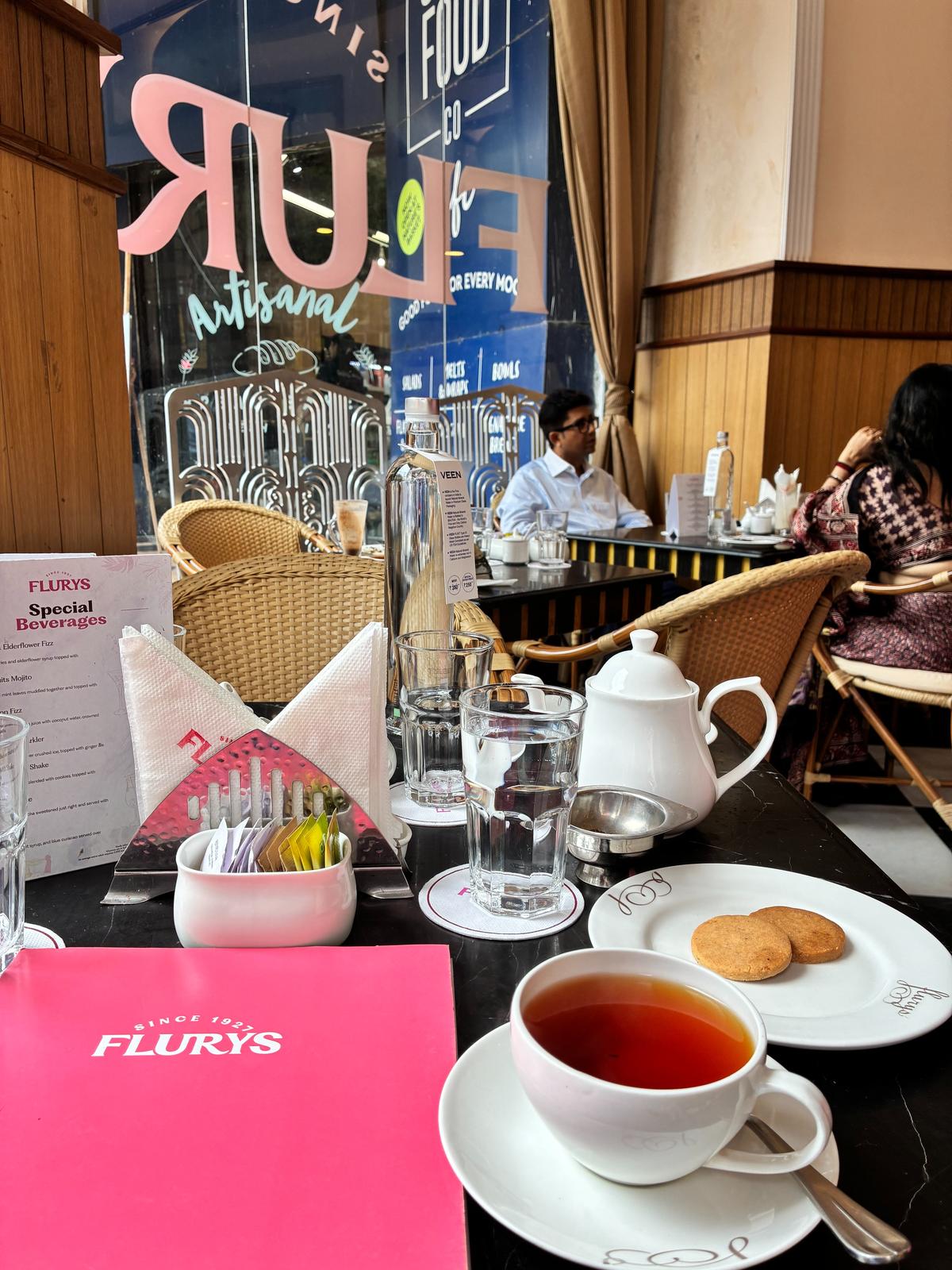
This stands in stark contrast to the thick, malty, and tannic chai commonly brewed in Kolkata and across Eastern India. This "masala chai" is typically made using fannings or CTC (Crush, Tear, Curl) tea. CTC processing, which results in small, granular tea particles, brews quickly, yielding a dark, strong flavor that is ideally suited for pairing with boiled milk, sugar, ginger, cardamom, and other spices. While a beloved staple for many, it represents a fundamentally different approach to tea consumption than the delicate appreciation of Darjeeling.
A Historical Journey: From Chinese Origins to Indian Soil
The story of tea is a fascinating tapestry woven through centuries of global exploration and cultural exchange. Acclaimed tea taster Dilip Kumar Banerji, in his seminal work I am Tea (1933), meticulously outlines the origins of this beloved beverage. Tea plants, belonging to the Camellia group, first originated in China around the 5th century. From there, their cultivation and consumption spread to neighboring regions like Burma and Japan.
It was the intrepid explorers of the East India Company who, driven by burgeoning trade interests, successfully introduced and cultivated tea plants on Indian soil. This marked a pivotal moment, laying the foundation for India’s rise as one of the world’s largest tea producers.

Banerji further elucidates that Darjeeling tea occupies a distinct emotional and qualitative space within this global narrative. The moniker "Champagne of Teas" is not merely an affectionate nickname; it reflects a shared exclusivity and a refined character. Just as the Champagne region in France holds geographical exclusivity for its namesake sparkling wine, Darjeeling enjoys a unique status for its tea. This exclusivity, coupled with its inherent qualities – bright, crisp, delicate, with a muscatel flavor, floral aroma, and light-golden color – elevates it to a league of its own. The tea’s delicate lightness, its complex body, and its enchanting floral aroma are all intrinsically linked to its unique growing environment.
Kolkata’s Intimate Relationship with Tea
Kolkata, a city where conversations often begin with "cha" and invariably end with another cup, possesses an almost innate understanding of tea’s social significance. Tea in this metropolis is far more than a simple beverage; it is a fundamental pillar of social interaction, the very nucleus of "adda" – the cherished Bengali tradition of informal, spirited conversation.
Deals are brokered over steaming cups, heartbreaks are soothed by its warmth, and political theories are honed and debated beside tea stalls precariously balanced on street corners. Yet, within this pervasive tea culture, Darjeeling tea occupies a more rarefied, almost aristocratic, niche. It is less hurried, less heavily sweetened, and perhaps, less overtly democratic in its consumption compared to the ubiquitous CTC chai.
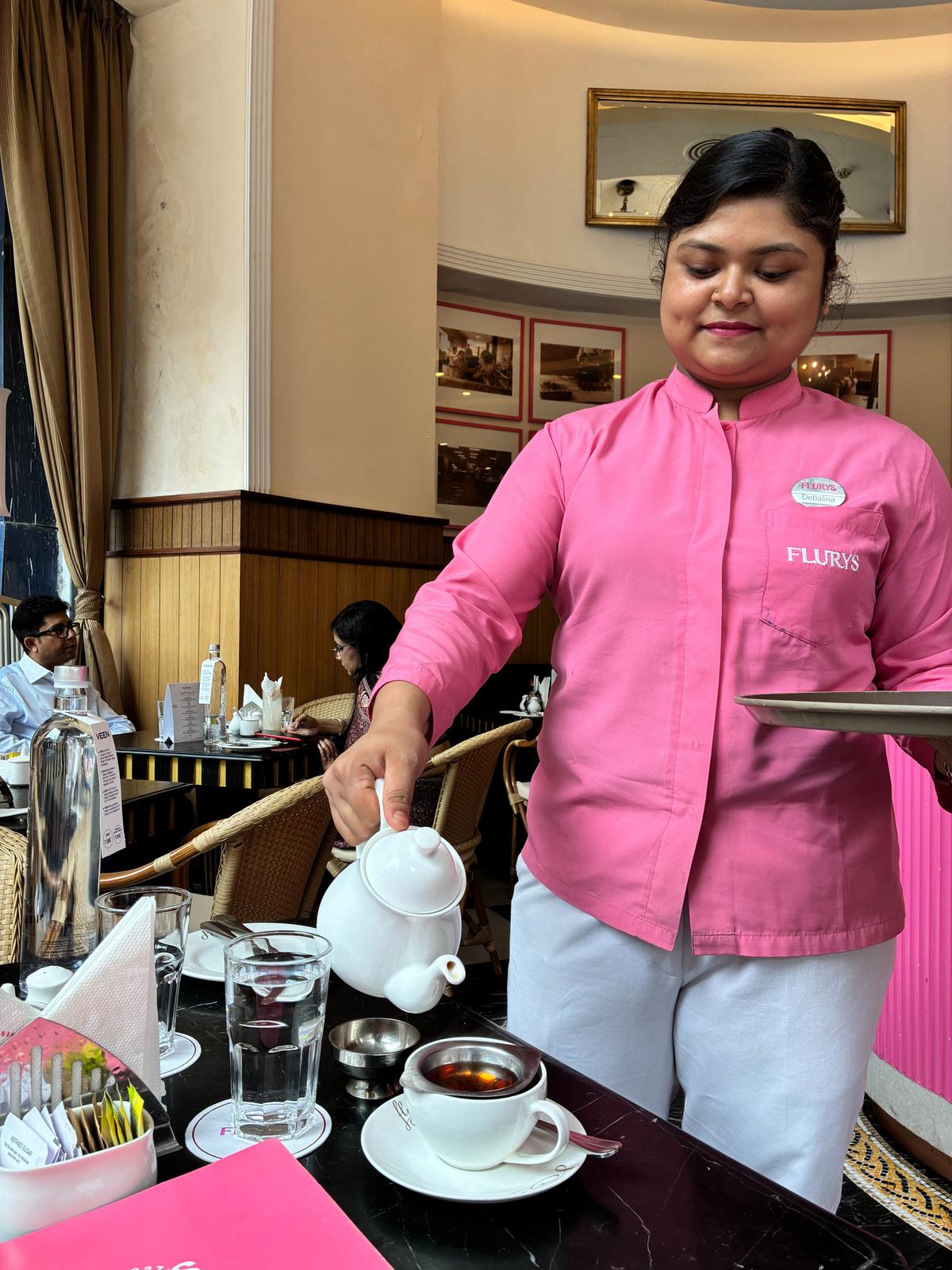
Darjeeling tea evokes images of hushed conversations in old clubs, the contemplative quiet of long train journeys to the hills, the serene ambiance of monsoon afternoons, and the gentle chime of porcelain cups placed carefully on saucers. It is a tea for moments of reflection, for refined appreciation, a quiet indulgence that complements the city’s intellectual and cultural dynamism.
The Flurys Experience: A Timeless Sanctuary
Stepping into Flurys is akin to stepping back in time. The iconic black-and-white marble flooring, inspired by European cafés, sets a sophisticated tone. The ambiance is one of understated elegance, where the hurried world outside fades into a distant hum. The service is attentive yet unobtrusive, with waiters moving with a quiet grace, embodying the tradition of hospitality that has defined Flurys for decades.
As a freshly brewed cup of Darjeeling tea is poured into a delicate porcelain cup, the amber-toned liquor catches the ambient light, shimmering like burnished gold. The aroma, a fragile perfume of the hills trapped within the leaves, gently wafts upwards. This is a moment to be savored, a testament to the meticulous brewing process and the inherent quality of the tea. No milk, no ginger, no cardamom – nothing to interrupt the pure, unadulterated essence of Darjeeling.

In this sanctuary, amidst the gentle clinking of cups and the hushed murmur of conversations, Kolkata offers a reminder that even in a city that never truly sleeps, there are moments of profound peace and refined pleasure to be found. And often, these moments are best experienced with a perfectly brewed cup of Darjeeling tea, a timeless brew that continues to enchant and endure.
