

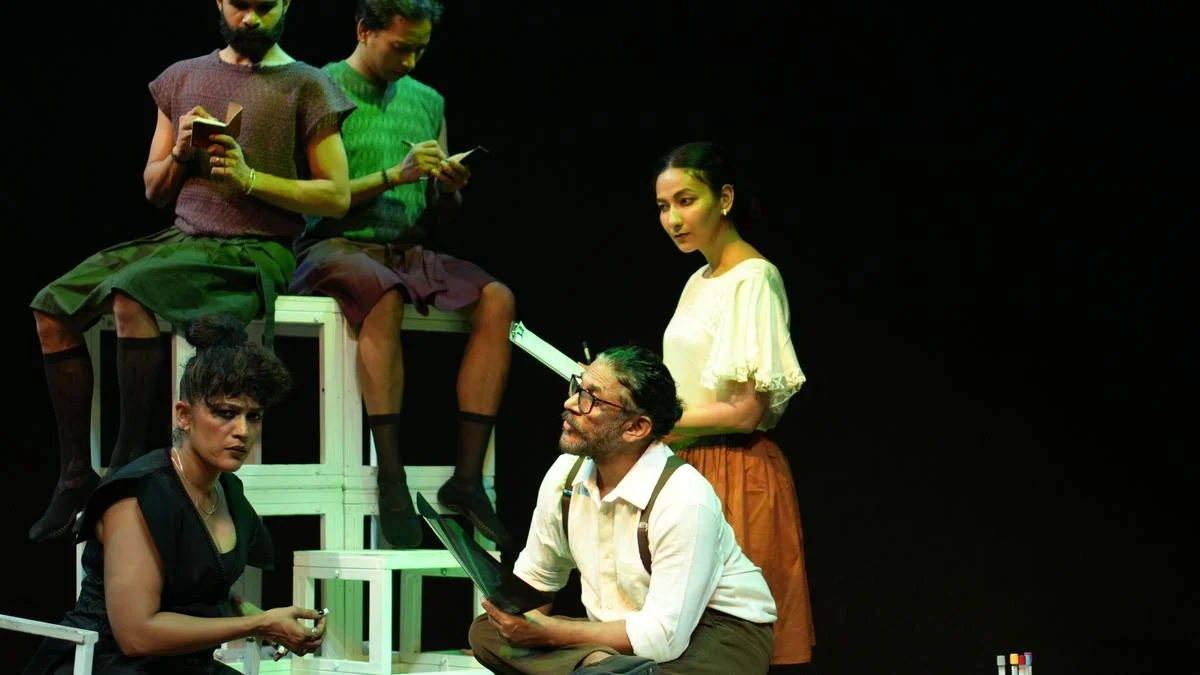
Chennai, India – Over four centuries after William Shakespeare’s Hamlet first grappled with the profound question of existence, Adishakti Theatre’s compelling new production, “A Woman or Not To Be,” is poised to ignite contemporary dialogues by posing a radical reimagining: What if Hamlet were a woman? This thought-provoking play, penned and directed by Vinay Kumar, promises to dissect the timeless tragedy through a modern, feminist perspective, challenging ingrained societal norms and exploring the multifaceted experience of womanhood in a world still grappling with gender equality.
The production, set to premiere at the Alliance Française of Madras on June 6th, transports Shakespeare’s Danish court to a realm where the iconic prince is reborn as Princess Hamlet. This reimagined protagonist navigates the treacherous currents of grief, rage, suspicion, and an unyielding quest for justice, mirroring the original’s dramatic arc but infusing it with a distinctly female experience. In an era where the struggle for women’s rights remains a pressing global concern, “A Woman or Not To Be” artfully employs Hamlet’s narrative to probe deeper questions surrounding male privilege, the complexities of revenge, the pursuit of emotional liberation, and society’s often disparate reactions to women who dare to express anger.
The Genesis of a Gendered Hamlet
The seed for “A Woman or Not To Be” was sown from a deeply disturbing real-world incident that resonated profoundly with director Vinay Kumar. He recounts encountering news of a young woman who suffered a brutal attack after rejecting a man’s advances. This tragic event served as a poignant catalyst, compelling him to revisit Shakespeare’s seminal work and explore its enduring relevance in the context of contemporary gender dynamics.
“When I looked at Hamlet and other canonical works, I began asking what ethical difference exists between these acts and the violence we continue to see around us today,” Vinay Kumar explains, highlighting the play’s genesis. He was particularly struck by the potential for a gendered interpretation of Hamlet’s actions and agency. “If Hamlet is a princess instead of a prince, will she get the same agency that the male Hamlet gets? Will she be allowed to brood, seek revenge, and pursue justice in the same way?” he muses, posing the central questions that drive the production.
A Modern Princess in a Timeless Predicament
In this contemporary adaptation, Princess Hamlet is envisioned not as a figure from a bygone era, but as a relatable young woman of today, with a penchant for modern cultural touchstones like manga and anime. Her world is shattered by devastating news from home: the murder of her mother, the Queen, followed swiftly by her aunt’s hasty marriage to her father. The weight of these events propresses her, but a spectral visitation from her mother offers a different path. Instead of urging revenge, the ghostly apparition implores Princess Hamlet to prioritize her own safety and to complete her education, a stark contrast to the original play’s imperative for vengeance.
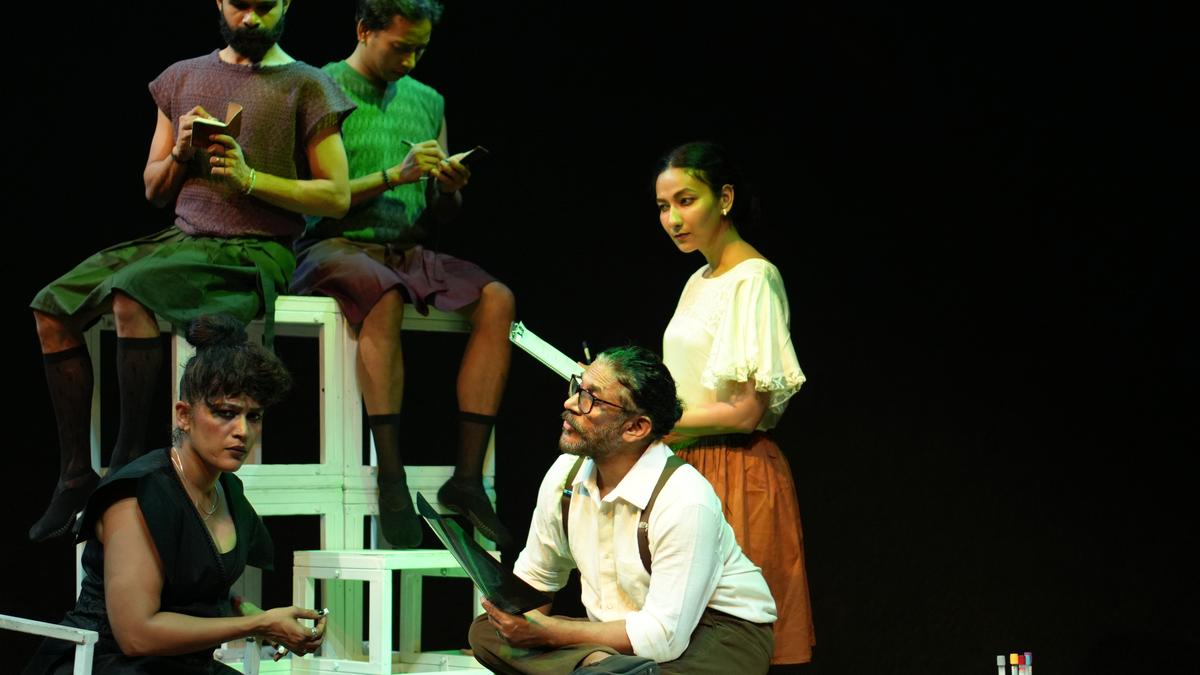
This subtle yet significant shift in the maternal counsel underscores the play’s feminist underpinnings. It suggests a societal conditioning that often prioritizes a woman’s self-preservation and education over her pursuit of retribution, even in the face of profound injustice. The production thus becomes a powerful exploration of how societal expectations and gender roles can shape an individual’s response to trauma and their capacity for agency.
Deconstructing Gendered Responses to Anger and Revenge
A central tenet of “A Woman or Not To Be” is its examination of how society perceives and reacts to women expressing anger. Vinay Kumar observes, “If Hamlet is a princess instead of a prince, will she get the same agency that the male Hamlet gets? Will she be allowed to brood, seek revenge, and pursue justice in the same way?” This question probes the inherent biases embedded within societal structures, where male assertiveness is often celebrated or tolerated, while female anger can be readily dismissed as irrational or hysterical.
The play aims to dismantle these preconceived notions by presenting Princess Hamlet’s emotional turmoil and her quest for justice through a lens that acknowledges and validates her experience. The production’s geographical ambiguity, deliberately moving away from a fixed Danish setting, further amplifies this universality. It seeks to represent women from all corners of the globe, emphasizing that the struggles with gender, power, and justice are not confined to any single nation or culture.
The Collaborative Crucible: Adishakti’s Laboratory Process
The creation of “A Woman or Not To Be” is deeply rooted in Adishakti Theatre’s renowned collaborative laboratory process. This approach involves actors immersing themselves in the work long before a definitive script emerges, fostering a deep understanding and co-creation of the narrative. Nimmy Raphael, who embodies the challenging role of Princess Hamlet, has been an integral part of this developmental journey from its inception.
“In the process itself, you get a glimpse of where the script is going, and we keep having discussions on what character we are going to be playing,” Raphael shares, describing the organic evolution of the production. This immersive methodology allows for a nuanced portrayal of complex characters and themes, as actors contribute their insights and interpretations to shape the final performance.

Navigating the Emotional Landscape of a Female Hamlet
For Nimmy Raphael, stepping into the shoes of Princess Hamlet presented a unique set of challenges, demanding the creation of an entirely new emotional landscape. “Her concerns are different. Her outlook towards life is different,” she explains. The primary hurdle, she elaborates, was finding the delicate equilibrium of emotion that would allow her character’s voice to be heard and respected, rather than being marginalized as irrational or hysterical.
Raphael emphasizes the crucial distinction between external freedoms and the profound significance of emotional freedom. “As much as we aspire towards economic freedom and other forms of equality, true freedom also comes from emotional freedom, the freedom to express what you feel,” she asserts. Princess Hamlet’s struggle, therefore, becomes a microcosm of the broader societal constraints placed upon women, who are often taught to suppress or moderate their emotions to conform to patriarchal expectations.
The Power of Music and the Art of Questioning
Music plays a pivotal role in “A Woman or Not To Be,” woven intrinsically into the fabric of the storytelling. The score, a dynamic fusion of genres ranging from heavy metal to jazz, serves as a powerful conduit for emotional shifts within the narrative. These musical passages are not mere embellishments but are integral to driving the emotional arc of the play, amplifying the characters’ internal struggles and external conflicts.
Ultimately, the production eschews didacticism, aiming instead to provoke thought and encourage audience introspection. “We are not telling audiences what to think,” Raphael clarifies. “The play asks questions about revenge, emotional freedom, and how society shapes our responses to both. We present those questions and allow people to arrive at their own conclusions.” This approach empowers the audience to engage critically with the themes presented, fostering a more profound and personal connection with the play’s message.
A Contemporary Reckoning with Power and Gender
“A Woman or Not To Be” transcends a mere theatrical adaptation; it is a contemporary reckoning with the enduring power dynamics that shape our world. By transposing Shakespeare’s iconic tragedy into a feminist framework, Adishakti Theatre offers a vital and timely exploration of gender, agency, and the societal constructs that dictate how we perceive and respond to human emotions, particularly those of women. The play ultimately transforms one of literature’s most profound tragedies into a catalyst for urgent, contemporary conversations about who holds power, who defines justice, and who truly possesses the agency to shape their own destiny.

Performance Details:
“A Woman or Not To Be” will be staged at the Alliance Française of Madras on June 6th, with two performance slots available from 5:00 PM to 7:30 PM. Tickets are priced at ₹250 and can be purchased online at shreyanagarajansingh.com. This production promises to be an unforgettable theatrical experience, offering a fresh and vital perspective on a classic tale, and sparking essential dialogues for our times.
