

By [Your Name/Journalist Name]
Published: September 8, 2026
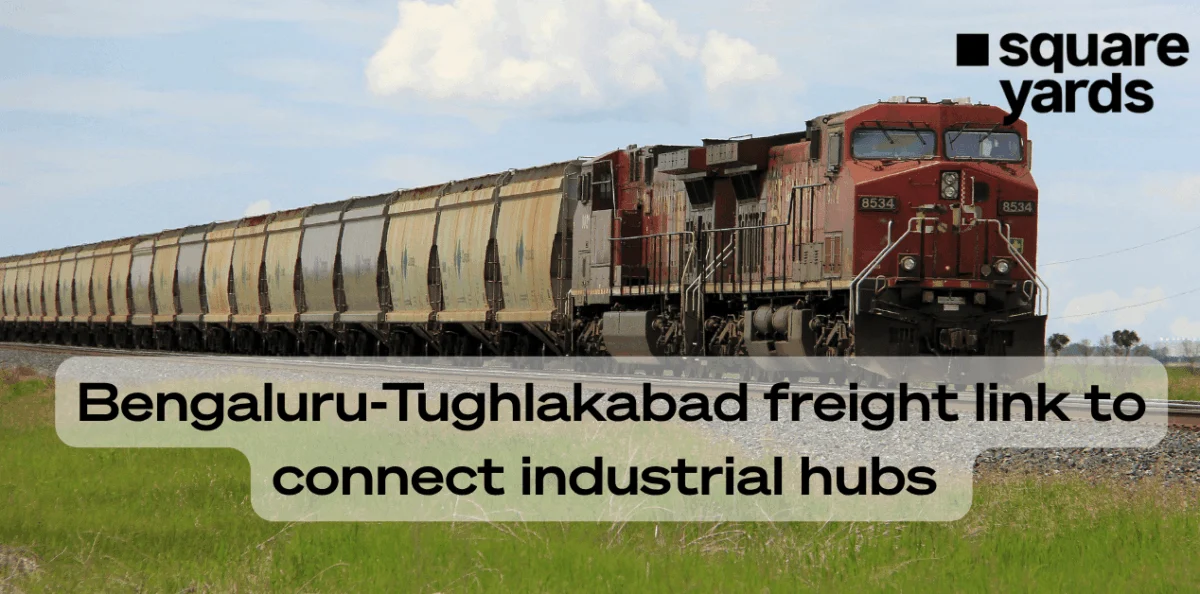
The logistical landscape of India is witnessing a tectonic shift as the gap between the nation’s southern manufacturing powerhouses and the northern consumption hubs continues to narrow. On September 5, 2026, a milestone was reached with the flagging off of the Bengaluru-Tughlakabad freight corridor. This dedicated, scheduled rail service—a collaborative venture between the Container Corporation of India (CONCOR) and Indian Railways—aims to revolutionize the movement of domestic cargo across a 2,500-km expanse.
By connecting the Whitefield Inland Container Depot (ICD) in Bengaluru to the Tughlakabad ICD in Delhi-NCR, with a strategic aggregation stop in Chennai, this service is set to redefine supply chain efficiency. With a promised 30% reduction in transit time and a transition toward more sustainable rail-based logistics, the implications for the industrial and real estate sectors in South and North India are profound.
1. Main Facts: The Blueprint of the Corridor
The Bengaluru-Tughlakabad freight link is not merely a new train service; it is a meticulously planned logistical artery. Designed to provide a "time-tabled" reliability that has historically been missing from Indian freight rail, the service addresses the long-standing grievances of manufacturers regarding the unpredictability of goods movement.
Technical Specifications and Schedule
The service operates on a weekly frequency, departing from Bengaluru every Saturday. The journey spans approximately 2,500 kilometers, traversing several states to reach the heart of the National Capital Region.
| Feature | Detailed Specification |
|---|---|
| Primary Origin | Whitefield Inland Container Depot (ICD), Bengaluru |
| Primary Destination | Tughlakabad ICD, Delhi-NCR |
| Intermediate Hub | Tondiarpet ICD, Chennai (Aggregation Hub) |
| Service Frequency | Weekly (Every Saturday) |
| Target Transit Time | 166 Hours (approx. 6.9 days) |
| Total Distance | ~2,500 Kilometers |
| Operator | CONCOR in partnership with Indian Railways |
| Cargo Type | Domestic cargo in high-capacity CONCOR containers |
| Efficiency Gain | 30% reduction in average transit time |
The "Aggregation Hub" Strategy
One of the most innovative aspects of this route is the role of Chennai. Unlike traditional point-to-point services, this corridor utilizes the Tondiarpet ICD in Chennai as a consolidation point. This allows for cargo from various parts of Tamil Nadu and the broader southern peninsula to be integrated into the Delhi-bound rake, ensuring maximum capacity utilization and lower costs for smaller shippers.
2. Chronology: From Concept to Commencement
The launch of the Whitefield-Tughlakabad service is the culmination of years of infrastructure planning under the broader umbrella of the National Logistics Policy and the PM Gati Shakti Master Plan.
- Phase 1: Infrastructure Upgrading (2023–2025): Significant investments were made in the South Western Railway and Southern Railway zones to improve track speeds and modernize the signaling systems. The expansion of the Whitefield ICD was prioritized to handle higher volumes of domestic cargo.
- Phase 2: Pilot Testing (Early 2026): Trial runs were conducted to assess the feasibility of the 166-hour schedule. These trials identified the Tondiarpet ICD as the most viable "buffer" and aggregation point to balance the load between Bengaluru and Chennai.
- Phase 3: The Official Launch (September 5, 2026): The inaugural train was flagged off, marking the official start of the weekly Saturday service.
- Future Phase: Expansion (Late 2026 onwards): Plans are already in motion to increase the frequency to bi-weekly and eventually daily, depending on the absorption of Grade-A warehousing space in the Hoskote and Tumakuru belts.
3. Supporting Data: The Economic and Logistics Context
To understand the necessity of this corridor, one must look at the shifting dynamics of Indian logistics. In 2026, the demand for Grade-A warehousing in Bengaluru reached record highs, with a significant portion of this demand coming from the e-commerce, automotive, and electronics manufacturing sectors.
Transit Efficiency
Before this scheduled service, road transport was the primary mode for moving goods from Bengaluru to Delhi. While road transport offers door-to-door connectivity, it is plagued by:
- Variable Costs: Fluctuating fuel prices and interstate tolls.
- Unpredictability: Traffic congestion and state-border checks leading to transit times ranging from 8 to 11 days.
- Environmental Impact: High carbon emissions per ton of cargo.
The new rail service’s 166-hour (less than 7 days) guarantee provides a 30% time saving and a significant reduction in the logistics cost-to-GDP ratio, which the Indian government aims to bring down to 8% from the current 13-14%.
Regional Absorption Rates
In the first half of 2026, the Hoskote and Tumkur Road clusters in Bengaluru accounted for nearly 45% of the city’s total industrial and logistics (I&L) leasing activity. The availability of large land parcels and proximity to the Chennai-Bengaluru Industrial Corridor (CBIC) has made these areas magnets for institutional investors.
4. Official Responses: Industry and Government Perspectives
The launch has been met with optimism from both public officials and private sector stakeholders.
A Senior Official from CONCOR stated:
"Our goal is to provide ‘Precision Logistics.’ By introducing a scheduled service, we are giving manufacturers the confidence to reduce their inventory carrying costs. They no longer need to ‘guess’ when their components will arrive in Delhi; they can plan their production cycles around the Saturday departure."
Industry Analysts at Real Estate Consultancies:
Experts suggest that this corridor is a "game-changer" for the Eastern Bengaluru belt. "We are seeing a shift where Whitefield is no longer just an IT hub; it is the gateway for South-to-North trade. This will inevitably lead to a premium on warehousing rentals in the vicinity of the Whitefield and Malur terminals," noted a lead researcher at a global property firm.
Logistics Providers:
Third-party logistics (3PL) players have welcomed the Chennai aggregation model. By allowing cargo to be consolidated at Tondiarpet, the service becomes accessible to the MSME (Micro, Small, and Medium Enterprises) sector, which previously found dedicated rail rakes too expensive.
5. Implications: A Deep Dive into Real Estate and Regional Growth
The impact of the Bengaluru-Tughlakabad freight link extends far beyond the tracks. It acts as a catalyst for real estate development and industrial clustering across three major metropolitan regions.
Bengaluru: The Emergence of the Eastern Logistics Powerhouse
The primary beneficiaries in Karnataka are the clusters of Whitefield, Hoskote, and Malur.
- Industrial Sheds and Warehousing: These areas are seeing a surge in demand for Grade-A facilities. Developers are pivoting toward "multi-user" warehouses that can feed small consignments into the weekly CONCOR train.
- The Satellite Influence: Areas like Bommasandra, Electronic City, and Attibele—traditionally manufacturing bases for electronics and precision engineering—now have a reliable outlet to the North Indian market.
- The Tumakuru Factor: While the train starts at Whitefield, the industrial clusters of Vasanthanarasapura and Kunigal are using "road bridging" to reach the terminal. The proposed container terminal at Thimmanahalli is expected to eventually link this belt directly to the Tughlakabad line.
Chennai: Tondiarpet as the Strategic Pivot
Chennai’s role is unique. It serves as the "lungs" of the corridor.
- Logistics Infrastructure: The Tondiarpet ICD is expected to see increased investment in container handling equipment and cold storage facilities.
- North Chennai Real Estate: Traditionally an industrial zone, North Chennai will likely see a revitalization of its warehouse stock, as it becomes the primary consolidation point for goods moving from the Chennai port and nearby automotive clusters toward Delhi.
Delhi-NCR: Strengthening the Tughlakabad-Okhla Belt
At the northern terminus, the impact is concentrated on the existing industrial ecosystem of South Delhi and the adjacent Haryana border.
- Demand for Last-Mile Hubs: With a steady influx of cargo arriving every week, there is a growing need for "break-bulk" centers in Okhla and Tekhand.
- Commercial Synergy: The predictability of the rail service allows retail and manufacturing businesses in Okhla to maintain leaner inventories, potentially freeing up capital for commercial expansion.
Environmental and ESG Implications
In an era where Environmental, Social, and Governance (ESG) scores determine institutional investment, the shift from road to rail is significant. Rail transport emits approximately 75-80% less particulate matter and significantly less CO2 per ton-km compared to heavy-duty trucks. This makes the corridor an attractive option for multinational corporations (MNCs) looking to green their supply chains.
Conclusion: The Road (and Rail) Ahead
The Bengaluru-Tughlakabad freight link is more than a logistical achievement; it is an economic multiplier. By slashing transit times by 30% and providing a reliable, scheduled alternative to road transport, the corridor is set to bolster the manufacturing sectors of Karnataka and Tamil Nadu while ensuring the Delhi-NCR market remains well-supplied.
For the real estate sector, the message is clear: the future of industrial growth lies along these high-speed freight arteries. As Bengaluru’s eastern belt and Delhi’s southern industrial clusters become more integrated, we can expect a sustained rise in the demand for sophisticated, tech-enabled logistics infrastructure. The "Saturday Express" is not just carrying cargo; it is carrying the momentum of India’s industrial future.
