

Introduction
India’s urban landscape is undergoing a fundamental transformation, driven not by the densification of its historic cores, but by the rapid expansion of its periphery. As central business districts (CBDs) reach a saturation point in terms of both space and pricing, the focus has shifted toward the "suburban frontier." This shift is being catalyzed by a massive wave of infrastructure investment—comprising high-speed expressways, twin-tube tunnels, regional ring roads, and suburban rail networks—that is effectively shrinking the distance between remote residential pockets and major employment hubs.
The integration of these peripheral areas into the economic mainstream is not merely a matter of convenience; it is a strategic realignment of the real estate market. From the Mumbai Metropolitan Region (MMR) to the tech corridors of Bengaluru and the industrial belts of Chennai, infrastructure is the new currency of property valuation.
1. Main Facts: The Infrastructure-Led Growth Engine
The current surge in suburban real estate is anchored by several multi-billion-dollar projects designed to bypass urban bottlenecks. The core philosophy driving these developments is "connectivity-led appreciation."
Key takeaways from the current landscape include:
- Time Compression: Projects like the Thane-Borivali Twin Tunnel are set to reduce travel times from 90 minutes to just 15, instantly making distant suburbs viable for daily commuters.
- Market Maturity: Infrastructure is no longer just creating "new" markets; it is reinforcing "established" ones. For instance, Ghodbunder Road in Thane is seeing prices stabilize at high levels (Rs 14,500 per sq. ft.) as it transitions from an emerging zone to a premium residential hub.
- Diversification of Demand: While Mumbai and Bengaluru focus on residential ease, cities like Chennai and Hyderabad are leveraging infrastructure to bolster industrial and logistics sectors, which in turn creates a secondary demand for affordable housing.
- The "Second Home" Transition: Peripheral regions like Karjat are evolving from weekend getaway spots into primary residential markets due to improved rail connectivity.
2. Regional Chronology and Development Milestones
The rollout of these projects follows a phased timeline, with some nearing completion while others remain in the critical land-acquisition stage.
Mumbai Metropolitan Region (MMR): Closing the East-West Gap
For decades, Mumbai’s geography—a narrow peninsula—has restricted east-west movement. Two major projects are now addressing this:
- The Thane-Borivali Twin Tunnel: This 11.84-km engineering marvel, featuring 10.25 km of tunnels beneath the Sanjay Gandhi National Park (SGNP), is moving toward a construction phase that promises to link the Eastern and Western Express Highways.
- Goregaon-Mulund Link Road (GMLR): This 12.2-km project is the fourth major east-west link in the city. By tunneling under SGNP, it bypasses the congested JVLR and Ghodbunder routes, aiming to cut the Mulund-Goregaon commute from 80 minutes to 20 minutes.
- Panvel-Karjat Rail Link: Currently in its final stages of construction, this 29.6-km suburban corridor is expected to be operational shortly, providing a lifeline to the extended suburbs of Navi Mumbai.
Bengaluru: The Northward Push
Bengaluru’s infrastructure story is dominated by the Suburban Rail Project, a 148-km network. While the KSR Bengaluru City-Devanahalli corridor is the most anticipated, the project has seen its timeline shifted from 2026 to 2028. Despite these delays, the anticipation has already baked in significant price hikes in the North Bengaluru corridor.
Hyderabad and Pune: The Ring Road Strategy
- Hyderabad RRR: The Regional Ring Road (RRR) is currently in the planning and land acquisition phase. In July 2026, the Central Government reaffirmed that investment would follow the final Detailed Project Report (DPR).
- Pune’s Dual Rings: Pune is working on two fronts—the 173-km Pune Ring Road and the 83.12-km PMRDA Inner Ring Road. These projects aim to connect the IT hub of Hinjewadi with the industrial belt of Chakan and the airport.
3. Supporting Data: Property Valuations and Economic Impact
Infrastructure projects act as a price floor for real estate, ensuring that even during market lulls, well-connected areas retain value.
| Region | Key Project | Current Avg. Property Rate (per sq. ft.) | Impact Type |
|---|---|---|---|
| Thane (Ghodbunder) | Twin Tunnel | Rs 14,500 | Market Strengthening |
| North Bengaluru | Suburban Rail | Rs 9,250 | Speculative Growth |
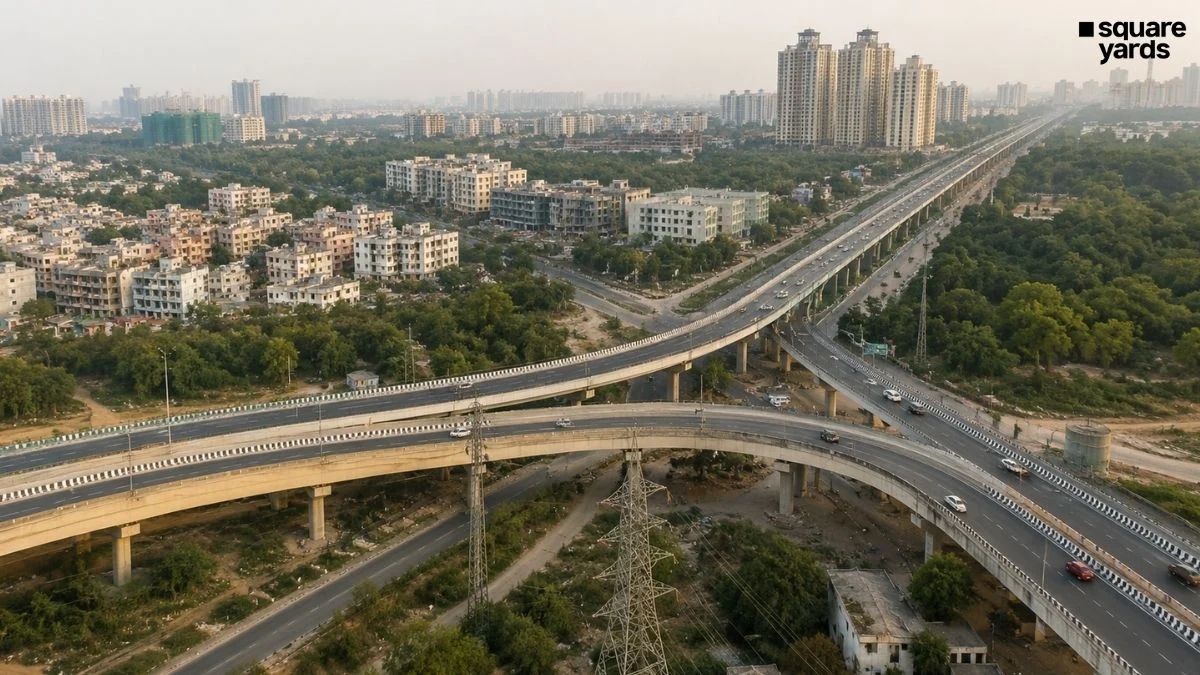
| Gurugram (SPR) | Cloverleaf/Elevated Road | High (Variable) | Commercial & Luxury Res. |
| Karjat | Suburban Rail Link | Affordable/Mid-segment | Second-to-First Home Shift |
Travel Time Reductions:
- Mulund to Goregaon: 80 mins $rightarrow$ 25 mins (GMLR)
- Thane to Borivali: 90 mins $rightarrow$ 15 mins (Twin Tunnel)
- Peripheral Chennai: Logistics costs expected to drop by 10-12% due to the Peripheral Ring Road.
In Pune’s Wagholi, data shows a cautionary tale: while infrastructure drove prices up, a lack of "last-mile" social infrastructure led to a recent dip in annual transactions, suggesting that mega-projects must be supported by local municipal development to sustain growth.
4. Official Responses and Policy Framework
The execution of these projects involves complex coordination between State Governments, Central Agencies, and Urban Planning bodies.
- Telangana’s Cost-Sharing Model: The Telangana government has officially committed to sharing 50% of the land acquisition costs for the Hyderabad RRR. This move has been hailed by industry experts as a proactive step to de-risk the project for central funding.
- HMDA Expansion: The Hyderabad Metropolitan Development Authority (HMDA) has strategically expanded the metropolitan region’s boundaries up to the RRR, including a 2-km buffer zone. This allows for controlled, planned development rather than the haphazard urban sprawl seen in older city fringes.
- PMRDA’s Connectivity Focus: The Pune Metropolitan Region Development Authority (PMRDA) has emphasized that the Inner Ring Road is designed specifically to link the city’s economic "engines"—Hinjewadi (IT) and Chakan (Manufacturing)—to ensure that the road serves a functional economic purpose rather than just easing traffic.
- Haryana’s "Signal-Free" Vision: In Gurugram, the GMDA (Gurugram Metropolitan Development Authority) has approved a cloverleaf interchange at Vatika Chowk. This is part of a broader policy to make the Southern Peripheral Road (SPR) a signal-free corridor, aligning it with the standards of the Delhi-Mumbai Expressway.
5. Implications: The Future of Suburban Living
The massive scale of these infrastructure projects points toward three major shifts in India’s real estate future:
H3: From "Bed-Towns" to Self-Sustaining Hubs
Historically, suburbs were "bed-towns" where people only slept, commuting to the city for work. With the Goregaon-Mulund Link Road and the Pune Ring Road, we are seeing the rise of polycentric cities. These roads allow businesses to move closer to where the workforce lives, creating new commercial nodes in places like Mulund and Sohna Road.
H3: The Industrial-Residential Ripple Effect
In Chennai, the Peripheral Ring Road is a logistics play. By connecting the northern ports to the industrial clusters of Sriperumbudur and Oragadam, the government is facilitating a manufacturing boom. This will inevitably lead to a surge in demand for affordable housing for the industrial workforce, shifting the real estate focus toward "workforce housing" rather than just luxury apartments.
H3: Realism Over Speculation
The data from Bengaluru and Pune suggests that the "announcement effect" of infrastructure is no longer enough to sustain long-term price growth. Investors and end-users are becoming more discerning. In North Bengaluru (Devanahalli), the market is currently in a "wait-and-watch" mode due to rail delays. For developers, this means that the quality of the project and the immediate social infrastructure (schools, hospitals) are becoming just as important as the proximity to a future highway.
Conclusion
India’s suburban real estate is no longer an "alternative" to city living; it is becoming the primary choice for a new generation of homeowners. The multi-modal infrastructure push—tunnels in Mumbai, rails in Bengaluru, and ring roads in Hyderabad—is effectively redrawing the boundaries of what we consider "the city." As these projects move from blueprints to bitumen, the strongest mark will be left on the viability of these regions, turning once-remote outposts into the new heart of India’s urban economy.
