

New Delhi | May 26, 2026, 6:27 PM IST
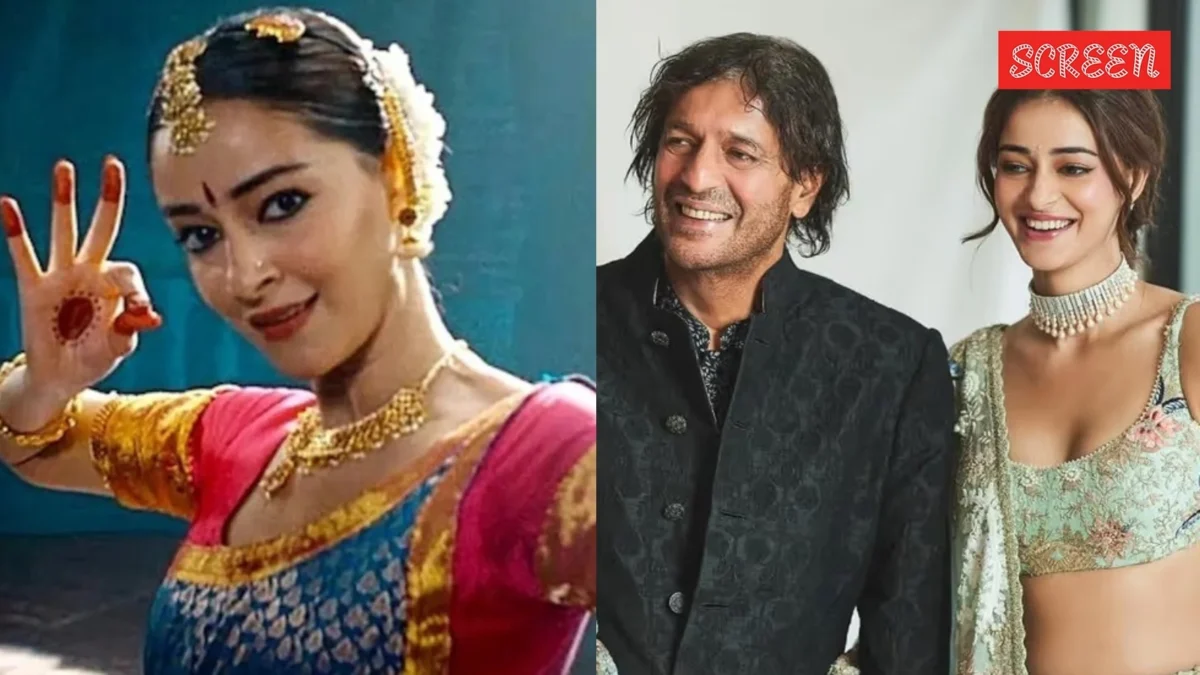
A vibrant scene from the recently released Bollywood film "Chand Mera Dil" has inadvertently sparked a fervent discussion, not about its box office performance or romantic narrative, but about the very essence of classical Indian dance. Ananya Panday, the film’s lead actress, finds herself at the center of a social media storm, with clips of her performing what is described as "fusion Bharatanatyam" going viral. While the performance was intended as a contemporary interpretation within the film’s context, it has drawn sharp criticism from seasoned Bharatanatyam dancers and enthusiasts, who accuse it of misrepresenting and disrespecting the classical art form. In the wake of this online backlash, Ananya’s father, veteran actor Chunky Panday, has stepped forward to defend his daughter’s portrayal, emphasizing the experimental nature of the dance and urging viewers to understand its artistic intent.
The Genesis of the Controversy: A Fusion Performance Under Scrutiny
The controversy erupted following the release of "Chand Mera Dil," a romantic drama directed by Vivek Soni and co-written by Soni and Tushar Paranjape. The film stars Ananya Panday as Chandni, the daughter of a Bharatanatyam dancer, and Lakshya in the lead role. A particular scene features Ananya performing a dance sequence that attempts to blend the intricate movements of Bharatanatyam with elements of modern dance forms like hip-hop and locking.
The intention, as explained by those involved in the film’s production, was to showcase a contemporary artist’s interpretation, a style often seen in college festivals or experimental art spaces. However, the visual representation has been perceived by many as a dilution, if not a distortion, of the rigorous discipline and profound spiritual depth associated with classical Bharatanatyam. Social media platforms, particularly X (formerly Twitter), became a battleground for opinions, with many dance practitioners and connoisseurs expressing their dismay.
A Father’s Defense: Context Over Classical Purity
In an interview with Etimes, Chunky Panday addressed the widespread criticism, attributing it to a fundamental misunderstanding of the dance sequence’s purpose. He asserted that the performance was never intended to be a pure, traditional Bharatanatyam recital.
"People have completely misunderstood Ananya’s dance," Chunky stated, articulating his perspective on the controversy. "It was never meant to be pure Bharatanatyam. It was a fusion performance, an experimental dance form, something you might see college students perform at social or cultural events."
He appealed to the public to adopt a more nuanced perspective. "I would request people to stop assuming and view the dance from another lens," he urged. Chunky acknowledged the immense dedication required for mastering classical Bharatanatyam, recognizing that "pure Bharatanatyam takes years of rigorous training, discipline, and precision."
Expanding on the artistic vision behind the scene, Chunky explained, "This is a fusion of futuristic, advanced dance forms with elements of traditional dance. It’s a creative blend, not a classical recital. I would request people to watch the film and understand the context before reacting." His defense highlights a crucial distinction between artistic interpretation and adherence to strict classical traditions, suggesting that the filmmakers were aiming for a modern, expressive rendition rather than a faithful replication of a centuries-old art form.
Voices from Within: The Assistant Choreographer’s Perspective
Adding a layer of insider perspective, Ananya R Kurup, the assistant choreographer responsible for Ananya Panday’s Bharatanatyam fusion dance in "Chand Mera Dil," shared her experience and appreciation for the actress’s efforts. She posted a behind-the-scenes glimpse on her Instagram handle, featuring a picture with Ananya and a video of her name in the film’s credits.
" @ananyapanday you are truly one of the sweetest persons I know!!" Kurup wrote in her post. "It was such a lovely experience teaching you Bharatanatyam, and you’ve absolutely nailed your performance in Chand Mera Dil." Ananya Panday responded with affectionate heart emoticons in the comments section, indicating a positive working relationship.
Kurup’s endorsement suggests that Panday dedicated effort to learning and executing the choreography, even if the final output has been met with criticism from external observers. Her words underscore the collaborative nature of filmmaking and the efforts made by the cast and crew to bring the envisioned scene to life.
The Critics’ Stand: Accusations of Insensitivity and Mockery
The backlash against Ananya Panday’s performance has been vocal and sharp, with several prominent figures in the Bharatanatyam community articulating their concerns. The criticism centers on the perceived lack of foundational technique, the appropriation of a revered art form for commercial purposes, and the potential for such portrayals to misinform the audience about classical dance.
Popular dancer and Sangeet Natak Akademi Award recipient, Anita R Ratnam, known for her innovative "Neo Bharatam" dance form, expressed her disappointment in a widely shared post on X. "Watching this clip felt like Bharatanatyam being held hostage by a catastrophic misunderstanding of the form," Ratnam wrote. "Somewhere between the flailing arms and random camera moves, the dance quietly packed its bags and exited the building. Bharatanatyam is built on technique, control…" Her critique points to a perceived fundamental flaw in the execution, suggesting a departure from the core principles of Bharatanatyam.
Another dancer, Krithika Sivaswamy, echoed these sentiments, criticizing the film industry’s approach to classical arts. "Ananya pandey’s ‘Bharatnatyam’ shows how the industry is insensitive to classical arts, how they mock it and the audacity to put it up publicly on a screen," she tweeted. Sivaswamy lamented the lack of recourse against such perceived misrepresentations in India, stating, "Unfortunately in India there is no mechanism to sue those who mock classical arts. Its very fluid which makes anyone do any crap with it." Her statement highlights a broader concern about the protection and respectful portrayal of traditional art forms in popular media.
A third X user, under the handle "Incognito," directly questioned the audacity of the performance, especially in the context of the film’s setting. "Someone needs to stop Ananya Pandey ji before she further destroys Bharatanatyam," the user posted, accompanying a clip of the performance. "That audacity to have Nataraja idol in the background and perform like this…" This comment specifically targets the visual elements of the scene, suggesting a lack of reverence for the deities and symbols associated with Bharatanatyam.
These critiques underscore a deep-seated concern among traditionalists that commercial cinema, in its pursuit of spectacle and mass appeal, often trivializes or distorts revered cultural heritage. The debate raises questions about artistic freedom versus cultural responsibility, and the impact of popular media on the perception and preservation of classical arts.
The Film: "Chand Mera Dil" and its Artistic Ambitions
"Chand Mera Dil," directed by Vivek Soni, is a romantic drama that has positioned itself as a contemporary love story. The film, co-written by Soni and Tushar Paranjape, explores the dynamics of relationships against a backdrop that evidently incorporates elements of Indian culture. The inclusion of a Bharatanatyam sequence, even a fusion one, suggests an attempt by the filmmakers to weave traditional artistic expressions into the narrative fabric of a modern film.
The film’s release date was May 22, with Dharma Productions serving as the producer. While the critical reception of the film itself is yet to be fully established, the dance sequence has undeniably generated significant pre-release buzz, albeit for reasons unintended by the promotional strategies.
Broader Implications: The Interplay of Tradition and Modernity in Cinema
The controversy surrounding Ananya Panday’s "fusion Bharatanatyam" in "Chand Mera Dil" is not an isolated incident. It reflects a recurring tension in Indian cinema: the delicate balance between artistic innovation and the preservation of cultural heritage.
On one hand, filmmakers often seek to incorporate traditional art forms to add depth, authenticity, or visual appeal to their narratives. Fusion dance, in particular, has become a popular way to bridge generational and stylistic divides, making classical arts more accessible to younger audiences. This approach can be seen as a form of evolution, allowing traditional art forms to adapt and remain relevant in a rapidly changing world.
On the other hand, purists argue that such adaptations, when not executed with deep understanding and respect, can dilute the essence of the original art form, leading to misinterpretations and a loss of its inherent value. The rigorous training, spiritual underpinnings, and historical context of classical dances like Bharatanatyam are often overlooked in the pursuit of commercial appeal.
Chunky Panday’s defense, emphasizing context and artistic experimentation, aligns with the notion that cinema is a medium for creative expression and interpretation. However, the strong reactions from seasoned dancers highlight the importance of cultural sensitivity and the need for accurate representation when engaging with deeply rooted traditions.
The debate also brings to the fore the power of social media in amplifying both praise and criticism. What might have once been a localized discussion within dance circles can now quickly become a national conversation, influencing public perception and potentially impacting the careers of artists involved.
As "Chand Mera Dil" continues its theatrical run, the discourse surrounding its dance sequences is likely to persist. It serves as a reminder that while artistic liberties are essential for creativity, they must be navigated with a mindful awareness of the cultural heritage they draw upon. The conversation initiated by Ananya Panday’s performance will undoubtedly fuel further discussions on how Bollywood and other popular media can engage with India’s rich artistic traditions in a way that is both innovative and respectful.
