

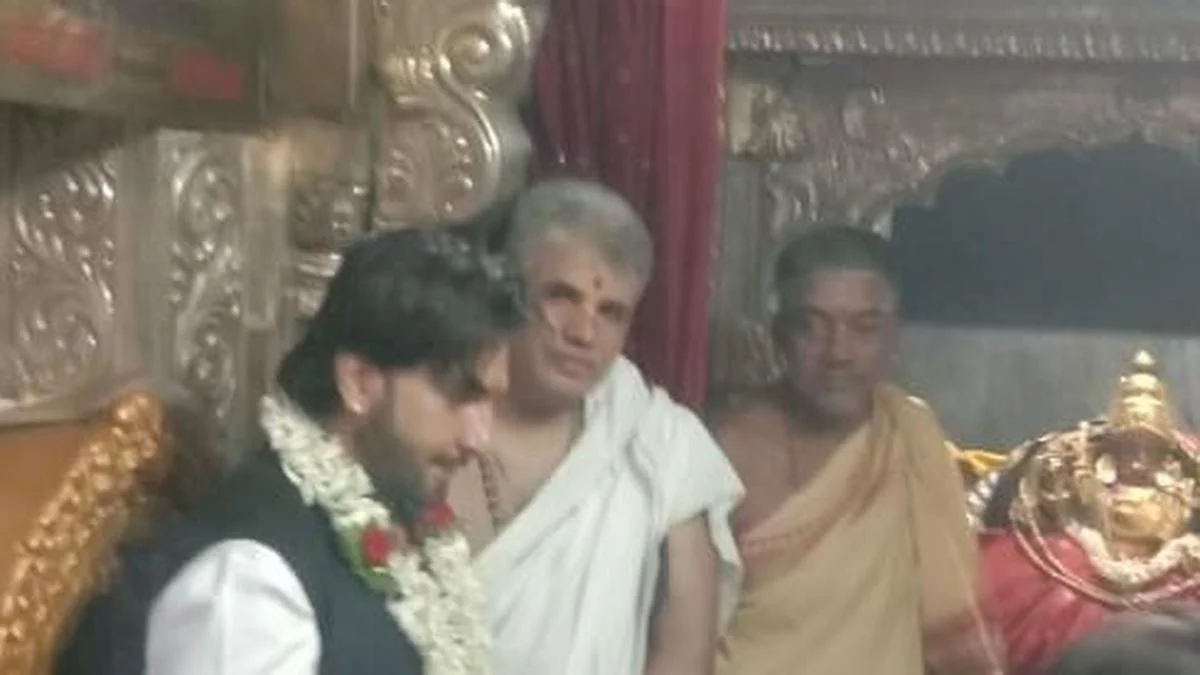
Mysuru, Karnataka – May 26, 2026 – In a significant move aimed at appeasing religious sentiments and adhering to a judicial directive, acclaimed Bollywood actor Ranveer Singh made a discreet visit to the revered Chamundeshwari Temple atop the Chamundi Hills in Mysuru on Tuesday morning. The actor offered prayers and sought divine forgiveness, a pilgrimage undertaken as per his assurance to the Karnataka High Court, stemming from a controversy surrounding remarks he allegedly made about the sacred "daiva" tradition depicted in the recently released film, Kantara Chapter-1.
The visit, executed with a deliberate effort to maintain privacy, saw Singh arrive at the hill shrine in the pre-dawn hours, prior to the usual influx of devotees. According to M.J. Roopa, the Executive Officer of the Chamundeshwari Temple, the actor’s presence was unexpected. "He came unannounced without intimating us. He came wearing a mask like any ordinary devotee when not many people were around," Roopa stated, highlighting the actor’s attempt to blend in with the general populace.
Singh reportedly arrived at the temple premises around 7:30 a.m. He introduced himself to Sunil, the temple priest, and communicated his purpose: to offer apologies to the presiding deity. The priest then guided the actor to the Garbha Gudi, the sanctum sanctorum, where Singh partook in special prayers. His solemn visit concluded shortly after the prayers, and he departed the premises before the morning crowds began to gather, further underscoring his desire for a low-profile observance.
The Genesis of the Controversy: A Remark and its Repercussions
The controversy that precipitated Ranveer Singh’s pilgrimage to Mysuru originated from alleged remarks made by the actor at a prominent film awards ceremony in Goa. While discussing the critically acclaimed film Kantara Chapter-1, which delves deeply into the rich cultural and spiritual traditions of coastal Karnataka, Singh is accused of imitating a ‘Daiva’ – a divine spirit or deity revered in the region – and reportedly referring to it in a manner that was perceived as disrespectful.
This incident sparked widespread outrage among certain sections of the public and religious groups who felt their deeply held beliefs and cultural heritage had been trivialized. A lawyer, citing hurt religious sentiments, filed a formal complaint, which subsequently led to the registration of a First Information Report (FIR) against the actor. The FIR accused Singh of offences under relevant sections of the Indian Penal Code, pertaining to outraging religious feelings.
The Legal Pathway: From FIR to Court-Ordered Pilgrimage
The legal ramifications of the controversy quickly escalated. The FIR lodged against Ranveer Singh initiated a formal judicial process. However, the actor, through his legal counsel, moved the Karnataka High Court seeking to quash the proceedings initiated against him.
On May 5, 2026, the Karnataka High Court took a significant step in the case. While hearing the actor’s plea, the court acknowledged the submission of an unconditional apology by Mr. Singh. Accepting this apology as a genuine expression of remorse, the High Court quashed the FIR and all proceedings against the actor.
However, the court’s decision was not without a conditional directive. In a move that sought to ensure a more tangible act of atonement and a deeper understanding of the cultural sensitivities involved, the High Court ordered Ranveer Singh to visit the Chamundeshwari Temple in Mysuru within a stipulated period of four weeks. This pilgrimage was intended as a personal act of making amends for his perceived transgression and demonstrating respect for the religious and cultural traditions he had inadvertently offended. The court’s intervention aimed to strike a balance between upholding freedom of expression and safeguarding the sanctity of religious sentiments.
Supporting Data and Context: The Significance of Daiva Tradition and ‘Kantara’
The film Kantara Chapter-1, and by extension the controversy, shines a light on the profound cultural and spiritual significance of the "Daiva" tradition, particularly prevalent in the coastal districts of Karnataka. Daivas are believed to be divine spirits that protect the community and dispense justice. The worship of Daivas is an integral part of the local ethos, involving elaborate rituals, elaborate costumes, and often, trance-like performances where individuals embodying the Daiva communicate with the divine and offer guidance.
The film Kantara, and its prequel Kantara Chapter-1, have been lauded for their authentic portrayal of these traditions, bringing them to a wider national and international audience. The success of the film was largely attributed to its ability to connect with audiences on a deep emotional and spiritual level, resonating with the cultural roots it so vividly depicted. Therefore, any perceived disrespect towards this sacred tradition was met with a strong and emotional response from those who hold it dear.

The context of Ranveer Singh’s alleged remarks, as reported, suggests a misunderstanding or an insensitive portrayal of a practice that is deeply revered. The High Court’s directive for him to visit the Chamundeshwari Temple, a prominent Shakti Peetha and a significant pilgrimage site dedicated to Goddess Chamundeshwari, further emphasizes the court’s intent to ensure a profound and respectful acknowledgment of the religious and cultural values at play. The Chamundeshwari Temple itself holds immense religious importance in the region, drawing millions of devotees annually.
Official Responses and Judicial Pronouncements
The judicial pronouncements from the Karnataka High Court have been central to the resolution of this controversy. The court’s initial decision to quash the FIR was contingent on the actor’s unconditional apology. This demonstrated a willingness on the part of the judiciary to consider genuine remorse and to guide individuals towards more constructive forms of reconciliation when religious sentiments are involved.
The directive to visit the Chamundeshwari Temple was a novel approach, moving beyond a mere legal resolution to encourage a personal and spiritual act of amends. This directive underscores the court’s recognition of the deeply entrenched nature of religious beliefs in Indian society and the importance of addressing such matters with sensitivity and respect.
The Executive Officer of the Chamundeshwari Temple, M.J. Roopa, provided a factual account of the actor’s visit, emphasizing the discreet nature of his presence. Her statement, "He came unannounced without intimating us. He came wearing a mask like any ordinary devotee when not many people were around," serves as a testament to Singh’s effort to fulfill the court’s directive without seeking undue publicity.
Implications and Broader Significance
Ranveer Singh’s visit to the Chamundeshwari Temple carries several broader implications. Firstly, it highlights the significant influence that religious and cultural sentiments hold in contemporary India and the potential for public figures to become inadvertent focal points of such sentiments. The power of social media and the rapid dissemination of information mean that even a seemingly minor remark can snowball into a national conversation, necessitating careful consideration of public pronouncements, especially by celebrities.

Secondly, the judicial intervention, particularly the order for a pilgrimage, points towards an evolving approach by the courts in addressing cases involving religious sensitivities. It suggests a willingness to explore avenues that go beyond traditional legal penalties, encouraging acts of atonement and fostering a deeper understanding and respect for diverse cultural and religious practices. This approach can be seen as an attempt to achieve restorative justice, where the focus is on repairing harm and fostering reconciliation.
Thirdly, the actor’s compliance with the court’s directive, albeit discreetly, demonstrates the respect that public figures are expected to show towards judicial orders and the cultural fabric of the nation. His visit, though private, fulfills a judicial mandate and, in doing so, potentially mends bridges with the communities whose sentiments were perceived to be hurt.
Finally, this incident serves as a reminder for all individuals, particularly those in the public eye, about the importance of cultural sensitivity and the need for thorough research and understanding before commenting on or portraying traditions that are deeply rooted and sacred to specific communities. The narrative around Kantara and its cultural significance underscores the power of cinema to both celebrate and inadvertently offend, making dialogue, respect, and understanding paramount in navigating the intersection of art, culture, and religion. Ranveer Singh’s pilgrimage, therefore, is not just a personal act of contrition but a broader commentary on the delicate balance required in a diverse and culturally rich society.
