

New Delhi | Updated: May 16, 2026, 08:39 PM IST
A pivotal new study has finally unraveled one of the most perplexing mysteries in contemporary climate science: the dramatic and sudden collapse of Antarctic sea ice after decades of unexpected stability. Researchers now pinpoint a complex interplay of strengthening winds and disrupted ocean currents as the critical trigger, revealing a self-reinforcing feedback loop that has transformed the icy continent into an entirely "new system" vulnerable to accelerating climate change.
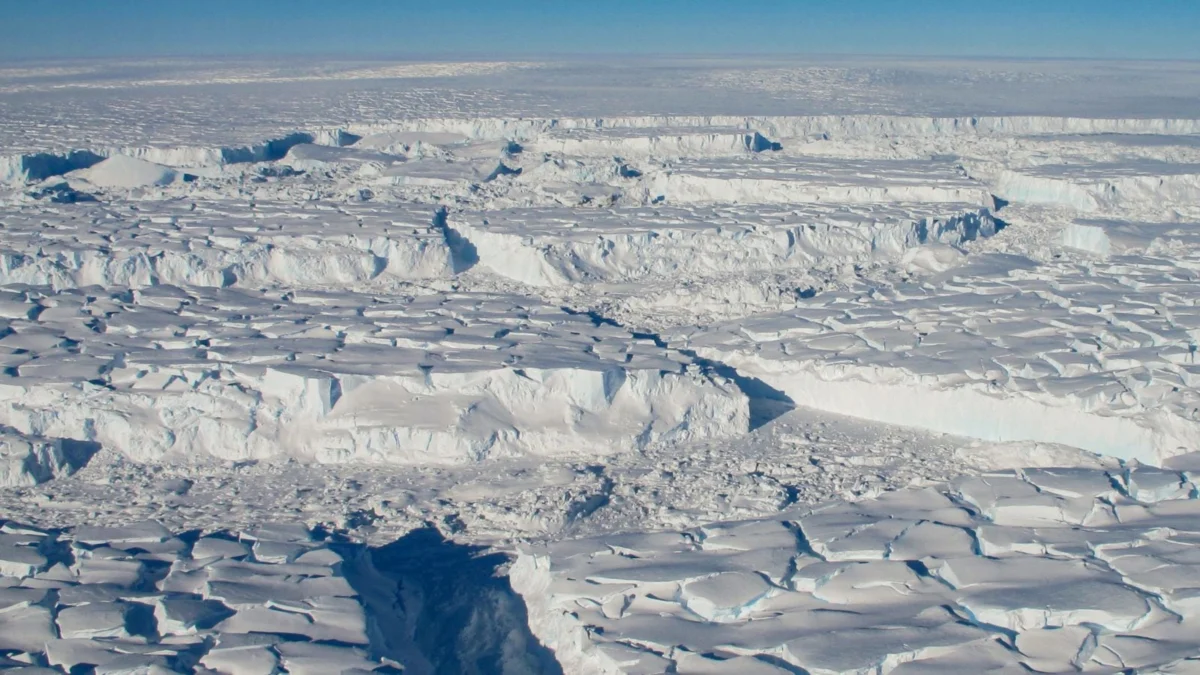
(Image: New York Times – Over time, the warmer deep water eroded a protective layer of cold water known as the “winter water layer,” which had previously insulated Antarctic sea ice from heat trapped deeper in the ocean.)
A Decades-Long Enigma Unraveled
For years, Antarctica stood as an anomaly in the global climate narrative. While the Arctic experienced undeniable and rapid melting, its southern counterpart seemed to defy the warming trends, with its vast expanse of sea ice remaining comparatively stable, and in some periods, even showing slight expansion. This puzzling resilience offered a glimmer of hope to some, and a significant challenge to climate models for others, creating a substantial gap in our understanding of Earth’s complex climate system. However, this period of apparent immunity abruptly ended around 2015. What followed was a precipitous decline, culminating in record-low sea ice extents in 2023 that shocked scientists worldwide.
The scientific community has since been racing to understand this sudden reversal. Was it a natural fluctuation, or a delayed response to global warming? A groundbreaking study, recently published in the prestigious journal Science Advances, now offers a comprehensive explanation, detailing the precise chain of events that triggered this rapid and alarming collapse. The findings not only resolve a major climatic mystery but also carry profound implications for global climate regulation, ocean ecosystems, and the future trajectory of our planet’s warming climate.
Antarctica’s Shifting Icy Fortunes: A Chronology
The story of Antarctic sea ice is one of two distinct chapters: a period of puzzling stability, followed by an abrupt and dramatic decline. Understanding this chronology is crucial to grasping the significance of the new research.
The Era of Apparent Resilience (2000s to Early 2010s)
Throughout the 2000s and into the early 2010s, global attention was largely focused on the Arctic, where satellite imagery consistently documented a rapid and undeniable retreat of sea ice. Melting glaciers, disappearing ice caps, and shrinking summer sea ice extent became stark symbols of accelerating climate change in the northern hemisphere. Meanwhile, Antarctica presented a stark contrast. Despite rising global temperatures, the frozen continent’s sea ice extent appeared remarkably stable. In fact, some analyses even indicated marginal increases in certain years and regions, leading to intense debate and scientific inquiry.
This apparent stability was attributed to various factors, including complex regional climate variability, changes in atmospheric circulation, and even a temporary increase in meltwater from the continent’s ice sheets, which can re-freeze on the surface. For a time, it seemed Antarctica might possess an inherent buffer against the warming world, or at least a different, slower response mechanism. This divergence fueled countless research expeditions and theoretical models, all striving to reconcile Antarctica’s behavior with the overarching narrative of anthropogenic climate change. This period inadvertently masked a dangerous undercurrent, a subtle but critical shift occurring beneath the ocean’s surface that would eventually unravel its protective layers.
The Abrupt Reversal: 2015 Onwards
The illusion of Antarctic resilience shattered around 2015. The trend of stability abruptly reversed, giving way to a dramatic and sustained decline in sea ice levels. What began as a concerning shift quickly accelerated into an unprecedented retreat. Each subsequent year brought new warnings, as the ice edge receded further from the continent, leaving vast expanses of open water where solid ice once reigned.
This sudden onset of decline signaled a fundamental change in the ocean-ice-atmosphere system surrounding Antarctica. It was clear that whatever protective mechanisms had been in place were no longer effective, or had been overwhelmed. The scientific community scrambled to identify the tipping point, the critical threshold beyond which the system transitioned from relative equilibrium to rapid degradation. The recent study published in Science Advances provides the clearest answer yet to this critical question, pinpointing the precise mechanism that initiated this dramatic reversal.
Record Lows and Alarming Trends (2023 Focus)
The consequences of this accelerating decline became starkly evident in 2023. That year, Antarctica recorded the lowest sea ice extent since satellite monitoring began in the late 1970s. The sheer scale of the loss was staggering, with researchers estimating that the continent temporarily lost an area of sea ice larger than the combined landmass of several Western European nations. This unprecedented reduction was not merely a statistical anomaly; it represented a profound environmental shift, triggering alarm bells across the globe.
The images broadcast from research vessels and satellites depicted a dramatically altered Antarctic landscape. Regions that historically remained ice-bound throughout the winter months were now open water, exposing fragile coastal ecosystems and altering critical marine habitats. The record lows of 2023 served as a powerful, undeniable testament to the severity of the ongoing changes, transforming Antarctica from a climate enigma into a front-line indicator of global warming’s escalating impact. This catastrophic year underscored the urgency of understanding the underlying drivers and the potential for long-term, irreversible consequences.
The Mechanics of Collapse: A Deep Dive into the Southern Ocean
The new research meticulously details a complex interplay of atmospheric and oceanic forces, revealing how intensified winds gradually dismantled the Southern Ocean’s delicate layering system, ultimately exposing Antarctic sea ice to the warmth of the deep ocean.
The Role of Intensified Westerly Winds
At the heart of this collapse are the powerful westerly winds that encircle Antarctica, known as the Southern Annular Mode (SAM). These winds are not static; their intensity and position fluctuate, driven by both natural variability and anthropogenic factors. The study highlights that these winds have significantly strengthened and shifted poleward over recent decades. This intensification is largely attributed to two major influences: the depletion of the ozone layer over Antarctica, which created a colder stratosphere and pulled the atmospheric circulation closer to the pole, and critically, the escalating levels of greenhouse gas emissions from human activity, which continue to warm the planet and intensify atmospheric circulation patterns.
These stronger, more persistent winds act like a giant stirrer on the Southern Ocean. They exert increased drag on the ocean’s surface, fundamentally altering its dynamics. Specifically, they push surface waters—particularly the cold, relatively fresh waters adjacent to the continent—northward, away from the Antarctic landmass. This displacement is the critical first step in a cascade of events that ultimately leads to the demise of the sea ice.
Disrupting the Ocean’s Stratification
The Southern Ocean is naturally stratified, meaning it’s layered by density. Colder, fresher water typically sits atop warmer, saltier, denser water. This stratification is crucial for insulating the surface from the vast heat reservoir of the deep ocean. However, the intensified westerly winds disrupt this delicate layering system. As cold surface water is pushed northward, it creates a void near the continent. To fill this void, water from below begins to upwell, or rise, towards the surface.
This upwelling brings warmer, saltier water from the deeper reaches of the Southern Ocean closer to the surface. This deep water, often referred to as Circumpolar Deep Water (CDW), is a massive reservoir of heat, warmed by global ocean currents and insulated for centuries. While initially this upwelling might seem minor, its long-term effects are profound. The mixing process gradually weakens the thermal barriers that traditionally protected the sea ice.
The Silent Erosion of the ‘Winter Water Layer’
For decades, Antarctic sea ice was shielded by a critical intermediary layer known as the "winter water layer." This layer, characterized by very cold, relatively fresh water, acted as a protective buffer, effectively insulating the overlying sea ice from the warmer, saltier Circumpolar Deep Water beneath. It was the linchpin of Antarctica’s resilience, preventing the deep ocean’s heat from reaching the surface and initiating widespread melting.
The study reveals that as the warmer, saltier deep water slowly rose due to the wind-driven upwelling, it began a stealthy, prolonged attack on this protective winter water layer. Over many years, the warmer water gradually eroded, thinned, and weakened this crucial barrier from below. This process was initially insidious and largely undetectable from surface observations, which is why the sea ice appeared stable for so long. The initial displacement of cold surface water even contributed to some localized sea ice expansion, further masking the more dangerous long-term shift occurring beneath the waves. This period, from the early 2000s to 2015, was essentially a slow-motion dismantling of Antarctica’s natural defense mechanism.
The Breaching Point and Accelerated Melting
The critical turning point, according to the researchers, arrived around 2015. By this time, the sustained erosion by the rising warm deep water finally breached the winter water layer. Once this protective barrier was compromised, the warmer, saltier water from the deep ocean could directly interact with the base of the sea ice. This direct contact initiated a rapid and dramatic acceleration of melting.
The impact was immediate and profound. The heat from the deep ocean, now unimpeded, began to melt the sea ice from below, a process far more efficient and destructive than surface melting alone. This breaching point represents the moment Antarctica’s "new system" truly emerged, no longer buffered by its historical cold-water defenses.
The Self-Reinforcing Feedback Loop
Once the warmer deep water reached the surface and melting accelerated, a dangerous self-reinforcing feedback loop was triggered. This loop is central to the continued rapid decline of Antarctic sea ice:
- Destabilization of Ocean Structure: The influx of warmer, saltier water at the surface further destabilizes the ocean’s stratification. Warmer, saltier water is denser, and its presence near the surface makes it easier for even more deep-ocean heat to rise upward, creating a more efficient pathway for heat transfer.
- Reduced Albedo: As sea ice melts, it exposes the darker ocean surface beneath. Ice is highly reflective (high albedo), bouncing up to 80% of incoming solar radiation back into space. Open ocean water, however, is much darker and absorbs significantly more solar energy.
- Increased Heat Absorption: With less ice and more open water, the Southern Ocean absorbs a greater proportion of sunlight. This absorbed heat further warms the surface waters.
- Delayed Ice Formation: The warmer surface waters delay the formation of new sea ice during the winter months. A warmer ocean takes longer to cool sufficiently for ice to begin forming, leading to a shorter ice-growing season and less extensive winter ice cover.
- Perpetuation of the Cycle: Less new ice formation in winter means even less ice cover for the following summer, perpetuating the cycle of reduced albedo, increased heat absorption, and accelerated melting year after year.
This feedback loop explains the dramatic acceleration of sea ice loss observed since 2015 and highlights the potential for the decline to continue rapidly even if atmospheric warming were to stabilize. The ocean itself has become an active participant in its own warming.
Unpacking the Evidence: Supporting Data and Attribution
The rigorous methodology and comprehensive data analysis underpinning this new study lend significant weight to its conclusions, providing a robust framework for understanding the mechanisms at play.
The Landmark Study in Science Advances
The findings are detailed in a comprehensive study published in Science Advances, a highly respected peer-reviewed scientific journal. The research involved an international team of oceanographers, atmospheric scientists, and climate modelers who utilized a combination of historical oceanographic data, satellite observations, and sophisticated climate models. By synthesizing decades of measurements and running complex simulations, the scientists were able to reconstruct the subtle changes in ocean circulation and stratification that preceded the dramatic sea ice collapse. The models demonstrated that the observed changes in wind patterns and subsurface ocean temperatures were consistent with the mechanisms proposed, providing strong evidence for the chain of events described. The peer-review process ensures that the methodologies are sound and the conclusions are well-supported by the evidence.
Quantifying the Loss: Satellite Data and Scale
The quantification of Antarctic sea ice extent relies heavily on continuous satellite monitoring, which began in 1979. This invaluable dataset provides an uninterrupted, high-resolution record of sea ice coverage, allowing scientists to track changes over time with precision. The study’s conclusion regarding the unprecedented nature of the 2023 sea ice lows is directly supported by this long-term satellite record, which clearly shows that the extent of ice loss that year far exceeded any previously observed minimum.
The comparison to "an area larger than Western Europe" is not merely illustrative; it is a stark representation of the immense scale of the change. To put this into perspective, Western Europe encompasses countries like France, Germany, Spain, and Italy. Losing an equivalent area of sea ice has profound implications for global energy balance, ocean ecosystems, and regional climate patterns. This tangible quantification helps communicate the severity of the situation to a broader audience and underscores the urgency of the findings.
The Dual Drivers: Ozone Hole and Greenhouse Gases
A crucial aspect of the study is its attribution of the strengthening westerly winds to a combination of factors. The Antarctic ozone hole, a phenomenon caused by human-made chlorofluorocarbons (CFCs), has significantly influenced atmospheric circulation over the Southern Ocean since its discovery. By cooling the stratosphere, the ozone hole intensified and shifted the SAM poleward, thus strengthening the westerly winds. While the Montreal Protocol has led to a slow recovery of the ozone layer, its historical impact on the winds has set a precedent.
More recently, and increasingly dominant, is the role of human-driven climate change through rising greenhouse gas emissions. As the planet warms, the energy balance of the atmosphere shifts, further intensifying and poleward-shifting the atmospheric circulation around Antarctica. This means that even as the ozone hole slowly heals, the continued accumulation of greenhouse gases in the atmosphere ensures that the strong westerly winds persist, maintaining the conditions conducive to the disruption of the Southern Ocean’s layering and the continued erosion of sea ice. This dual attribution highlights the complex, interconnected nature of global environmental challenges and the persistent human fingerprint on Earth’s climate system.
The Scientific Community Responds: Warnings and Consensus
The findings of this study have been met with a combination of relief at solving a long-standing mystery and profound concern regarding the implications for the future. The scientific community views this as a significant breakthrough, offering clarity on a previously perplexing aspect of climate change.
A Breakthrough in Climate Understanding
Leading climate scientists and oceanographers are hailing this research as a pivotal moment in understanding Earth’s climate system. For years, the divergent behavior of Arctic and Antarctic sea ice complicated global climate models and fueled debates about the specific regional impacts of global warming. This study provides a coherent, physically plausible mechanism that explains Antarctica’s abrupt shift, allowing for more accurate projections and a more complete picture of how different parts of the planet are responding to anthropogenic climate change. It confirms that Antarctica is not immune to warming but rather had a delayed and complex response, now fully unleashed.
Experts emphasize that this understanding is critical for refining climate models, which can now incorporate these newly identified ocean-atmosphere interactions with greater precision. This improved modeling capacity will enhance our ability to predict future changes in Antarctic sea ice and its cascading effects on global climate. The consensus emerging from the scientific community is that this work closes a significant knowledge gap, moving from speculation to a robust, evidence-based explanation for one of the most dramatic environmental shifts of our time.
Beyond the Antarctic Circle: Global Ramifications
The warnings from scientists extend far beyond the immediate vicinity of the South Pole. They underscore that the collapse of Antarctic sea ice is not an isolated event but a critical indicator of broader global climate instability. Researchers stress that the Southern Ocean plays an outsized role in regulating the planet’s climate, and any disruption there will inevitably send ripples across the globe.
The findings reinforce the interconnectedness of Earth’s systems and the pervasive influence of human activities. Scientists are urging policymakers and the public to recognize that the implications of this research are global in scope, affecting everything from sea level rise to global weather patterns and the ocean’s ability to buffer climate change. The clarity provided by this study serves as a renewed call to action, emphasizing the urgency of mitigating greenhouse gas emissions to prevent further irreversible changes to our planet.
Far-Reaching Implications: A Planet in Peril
The implications of the Antarctic sea ice collapse are profound and far-reaching, affecting not only the delicate polar environment but also the entire global climate system and the biodiversity it supports.
Global Climate Regulation: The Southern Ocean’s Critical Role
Antarctic sea ice and the Southern Ocean are crucial components of Earth’s climate regulation system. The Southern Ocean is one of the most significant heat and carbon sinks on the planet, absorbing vast amounts of excess heat and carbon dioxide generated by human activities. This absorption helps to slow the pace of global warming, acting as a vital buffer.
The formation of sea ice also plays a key role in driving global ocean circulation patterns, particularly the deep ocean currents known as the overturning circulation. As sea ice forms, it expels salt, making the surrounding water denser. This dense, cold, salty water sinks to the ocean floor and flows northward, transporting heat and carbon into the deep ocean. This process is fundamental to regulating global climate and distributing heat around the planet.
If sea ice loss continues unchecked, researchers fear that the Southern Ocean’s capacity to absorb and store heat and carbon dioxide will diminish significantly. A less effective carbon sink would mean more CO2 remaining in the atmosphere, potentially accelerating global warming. Furthermore, changes to the ocean’s overturning circulation could have unpredictable but severe consequences for marine ecosystems worldwide, affecting nutrient distribution and the health of oceans globally.
Threats to Antarctic Biodiversity and Ecosystems
The decline in Antarctic sea ice poses an existential threat to the continent’s unique and fragile ecosystems. Sea ice is not merely frozen water; it is a dynamic habitat, providing critical breeding, feeding, and resting grounds for a multitude of species.
- Krill: Antarctic krill, small crustaceans that form the base of the Antarctic food web, are particularly vulnerable. Krill depend heavily on sea ice algae for food, especially during the winter months, and use the underside of the ice as a refuge from predators. A reduction in sea ice directly impacts krill populations, with cascading effects throughout the entire ecosystem.
- Penguins: Species like Adélie and Emperor penguins rely on sea ice for nesting, foraging, and access to krill-rich feeding grounds. Less ice means longer distances to forage, reduced breeding success, and increased exposure to predators.
- Seals and Whales: Crabeater seals, Weddell seals, and various whale species, including baleen whales, also depend on sea ice for breeding, resting, and hunting. The loss of this critical habitat disrupts their life cycles and threatens their long-term survival.
The interconnectedness of these species means that a decline in one population, such as krill, can have devastating ripple effects throughout the entire food chain, potentially leading to ecosystem collapse in parts of Antarctica.
Navigating the ‘New System’: Tipping Points and Future Projections
While scientists are cautious about definitively stating that Antarctica has crossed an irreversible "tipping point," the study strongly suggests that the continent is now behaving like what researchers describe as an entirely "new system." This implies that the mechanisms currently driving sea ice loss are self-reinforcing and may not easily revert to their previous state, even if external forcing (like global warming) were to stabilize.
The implications for future projections are stark. Climate models will need to rapidly integrate these new understandings to provide more accurate forecasts for Antarctic sea ice and its global impacts. The concept of a "new system" suggests that the future trajectory of Antarctic sea ice may be fundamentally different from its past, characterized by increased volatility and a tendency towards lower extents. This presents significant challenges for conservation efforts, resource management, and global climate mitigation strategies. The uncertainty lies in how quickly and how extensively this new system will manifest and whether there are still opportunities to slow or halt its progression through aggressive climate action.
Conclusion: An Urgent Call to Action
The unraveling of the Antarctic sea ice mystery marks a critical juncture in our understanding of climate change. The Science Advances study not only provides a definitive answer to a long-standing enigma but also issues a profound warning: Antarctica, once thought to be relatively resilient, is now demonstrably vulnerable and actively participating in global warming through a dangerous feedback loop.
The implications are clear and urgent. The Southern Ocean’s capacity to absorb heat and carbon dioxide, a vital service for the entire planet, is at risk. The unique biodiversity of Antarctica, from microscopic krill to majestic whales, faces unprecedented threats. The transformation of Antarctica into a "new system" underscores the increasing unpredictability and severity of climate change impacts.
This breakthrough in scientific understanding must serve as an unequivocal call to action. It reinforces the critical need for immediate and drastic reductions in global greenhouse gas emissions. While the ozone hole is slowly recovering, the relentless accumulation of carbon dioxide continues to drive the very atmospheric and oceanic changes now melting the ice. The fate of Antarctic sea ice, and by extension, a significant portion of Earth’s climate stability, hinges on humanity’s collective response to this pressing global challenge. Ignoring these warnings risks accelerating irreversible changes that will reshape our planet for generations to come.
© IE Online Media Services Pvt Ltd
