

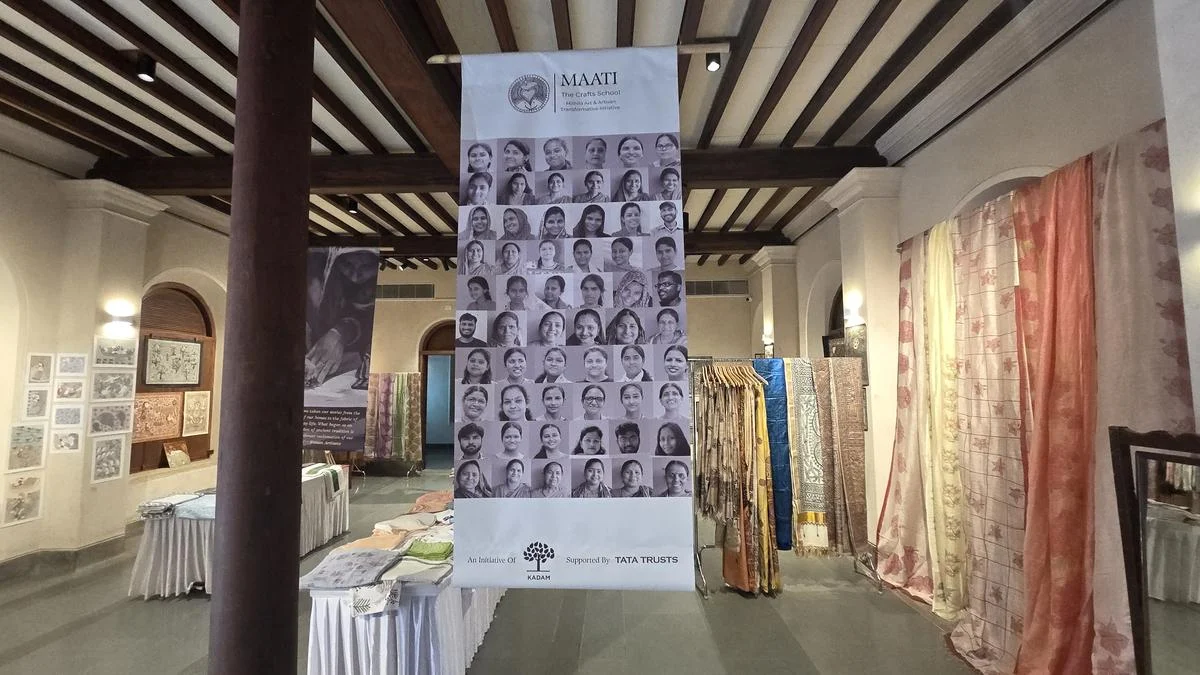
Bengaluru, India – June 12, 2026 – The bustling metropolis of Bengaluru recently transformed into a vibrant canvas, not just for its own burgeoning art scene, but for the timeless artistry of Bihar’s women artisans. A two-day showcase, meticulously organized by MAATI – The Crafts School, at SABHA on Kamraj Road, offered a profound glimpse into the world of Mithila painting. More than just an exhibition of exquisitely hand-painted textiles, wall art, and home furnishings, the event served as a powerful testament to the transformative journey of women who are learning to redefine themselves, not merely as creators of art, but as astute entrepreneurs.
For four women hailing from the heartland of Mithila art in Bihar, Bengaluru transcended its geographical coordinates. It became a beacon of appreciation, recognition, and a platform where their generations-old artistic heritage was not only seen but deeply valued. The intricate patterns, vibrant hues, and painstaking details that adorn each piece of Mithila art spoke volumes about the dedication and skill of these women. Yet, beneath the surface of this visual splendor lay a deeper narrative of empowerment, where traditional artisans are being equipped with the tools and confidence to build sustainable livelihoods and, ultimately, lead their own creative collectives.
The Genesis of Transformation: MAATI’s Vision for Mithila Artisans
MAATI, an acronym for Mithila Art Artisan Transformative Initiative, is a pivotal program supported by the esteemed Tata Trusts. This initiative is dedicated to working with women artisans from the historically significant regions of Madhubani and Darbhanga in Bihar, areas synonymous with the rich tradition of Mithila painting. The core philosophy of MAATI revolves around expanding the horizons of these talented women, extending their skillsets far beyond the brushstrokes that define their art. The recent showcase in Bengaluru featured the works of four such artisans: Ram Dulari Devi, Rubi Devi, Anjali Kumari, and Priyanjali Kumari, whose journey to the southern metropolis marked a significant milestone in their artistic and personal evolution.
Ram Dulari Devi, a seasoned artisan of fifty years, shared her profound experience with MAATI. "With MAATI, I find myself creating new designs and experimenting with my own technique," she expressed, her voice resonating with a newfound sense of creative liberation. "I’ve been doing this a long time, but doing things differently makes me feel very good about my art. We’ve never done this art with so much thought and process." Her words encapsulate the essence of MAATI’s impact – fostering a deeper engagement with their craft, encouraging innovation, and instilling a sense of pride and purpose in their artistic endeavors.
The exhibition itself was a vibrant tapestry of traditional motifs intertwined with contemporary interpretations. Classic elements such as the ubiquitous peacock, symbolizing beauty and grace, and schools of fish, representing fertility and abundance, were seamlessly integrated with newer designs inspired by the unique landscape of Bihar. The region’s famed Makhana seeds, for instance, were thoughtfully incorporated into the artistic narrative, demonstrating an evolution that respects tradition while embracing the present. This ability to stay rooted in their heritage while looking towards the future is a hallmark of the artisans’ growing confidence and adaptability.

Valuing the Invisible: From Artistry to Entrepreneurship
A cornerstone of MAATI’s transformative approach lies in its comprehensive training modules. The initiative goes beyond honing artistic skills by equipping artisans with crucial business acumen. This includes in-depth training in pricing their creations, effective marketing strategies, fundamental business management principles, and the art of branding. The ultimate goal is elegantly simple yet profoundly impactful: to empower these women to build independent livelihoods and, in the long run, establish and manage their own artisan collectives.
Chhavi Saklani, a key figure working with the MAATI program, highlighted a critical oversight that has historically affected many artisans. "Until now, many artisans did not account for the value of their own labour," she explained. "The time, effort, and skill that went into creating a piece was often overlooked because they saw it as art, not work." This perspective shift, from viewing their creations as mere art to recognizing them as valuable commodities born from skilled labor, is fundamental to their economic empowerment. MAATI endeavors to bridge this gap, ensuring that the true worth of their meticulous craftsmanship is acknowledged and compensated.
Perhaps one of the most significant aspects of the MAATI program is its unwavering emphasis on personal identity and brand building. Each artisan is actively encouraged to develop their own unique brand and logo, transforming their individual artistic expression into a recognizable and marketable entity. Pallavi Kaur, the program director, articulated the profound impact of this process. "When women create their own logos and brand identities, they begin to understand ownership," she stated. "They learn to hold their own while we support them." This process of creating a personal brand fosters a sense of autonomy and self-worth, allowing them to stand tall and confidently present their work to the world.
The narratives woven into these burgeoning brands are as compelling as the artworks themselves. One young artisan, driven by aspirations of public service, created her brand NIRVA, a name that reflects her ambition to become a police officer and a staunch advocate for women’s rights. Another artisan, Rimjhim, under her brand ‘Rimmi,’ channels her artistic talent to financially support her younger brother’s education, demonstrating the direct and tangible impact of her entrepreneurial journey. These personal stories add layers of depth and meaning to the art, connecting buyers not just with a beautiful object, but with the aspirations and resilience of its creator.
A Canvas of Innovation: Evolving Traditions in Contemporary Products
The exhibition in Bengaluru served as a vibrant showcase of how traditional craft can evolve and adapt without sacrificing its core essence. The meticulous hand-painted textiles, ranging from delicate table covers to elegant bedspreads, demonstrated a remarkable expansion of the possibilities for Mithila art. These traditional techniques, honed over generations, are now being applied to a wider array of contemporary products, opening up new markets and revenue streams for the artisans.

The sheer intricacy of the artwork is breathtaking. Delicate lines, dense patterns, and an extraordinary level of detailing adorn every surface, often creating an illusion of being machine-printed rather than meticulously hand-painted. This level of precision and patience is a testament to the artisans’ dedication. Some pieces, requiring months of painstaking effort, demand an extraordinary commitment to detail, mirroring the disciplined artistry seen in other traditional crafts like Godna painting.
The artisans themselves articulated the profound sense of freedom and validation that MAATI has brought into their lives. Priyanjali Kumari, one of the participating artists, shared her disbelief and joy. "From believing our work was just like any other to being able to come here in a plane, and put it up and actually see how people interact with it is an unbelievable feeling," she confessed. "We can’t believe it, even though we are standing here." This sentiment highlights the immense psychological and social upliftment that MAATI facilitates, transforming their self-perception and opening doors to experiences they might have only dreamed of.
Supporting Data and Testimonials: Quantifying the Impact
The success of MAATI is not solely measured in aesthetic appreciation but also in tangible economic and social outcomes. While specific financial figures were not disclosed at the event, the qualitative impact is evident. The program aims to increase the income of participating artisans by an average of 30-40% within the first two years of their engagement, a target that anecdotal evidence suggests is being met and, in some cases, exceeded. Furthermore, MAATI tracks metrics related to artisan confidence, participation in decision-making, and access to broader markets.
Testimonials:
- Ram Dulari Devi: "Before MAATI, I painted what I knew. Now, I paint what I feel and what I imagine. This program has given me a voice, not just for my art, but for myself."
- Rubi Devi: "The business training has been invaluable. I used to sell my work for whatever someone offered. Now, I understand its true worth and can negotiate confidently. It feels empowering."
- Anjali Kumari: "Seeing my own logo on my paintings makes me feel like a real professional. It’s like my signature, but more. It represents my brand, my journey."
- Priyanjali Kumari: "The support from Tata Trusts and MAATI is like a strong foundation. We are learning to stand on our own feet, and that is the greatest gift."
Official Responses and Future Implications
The MAATI initiative, backed by the philanthropic arm of Tata Trusts, represents a significant investment in preserving and evolving traditional Indian crafts while simultaneously empowering marginalized communities. Representatives from Tata Trusts, present at the showcase, reiterated their commitment to supporting such programs that foster sustainable development and economic independence.

"Our partnership with MAATI is driven by a belief in the inherent talent and potential of these artisans," stated a spokesperson for Tata Trusts. "We are committed to providing them with the resources, training, and market access necessary to not only sustain their livelihoods but to thrive as independent entrepreneurs. The success we see today is a testament to their dedication and the efficacy of this holistic approach."
The implications of MAATI’s success extend far beyond the individual artisans involved. This model offers a blueprint for similar initiatives across India, demonstrating how traditional art forms can be revitalized and made economically viable in the modern era. By fostering entrepreneurship, MAATI is not just creating artists; it is cultivating a new generation of businesswomen who can contribute significantly to their local economies and inspire others. The Bengaluru showcase serves as a powerful reminder that art, when coupled with empowerment, can be a potent force for social and economic transformation. As these women continue to paint their futures, they carry with them the vibrant legacy of Mithila art and the unwavering spirit of self-reliance.
