

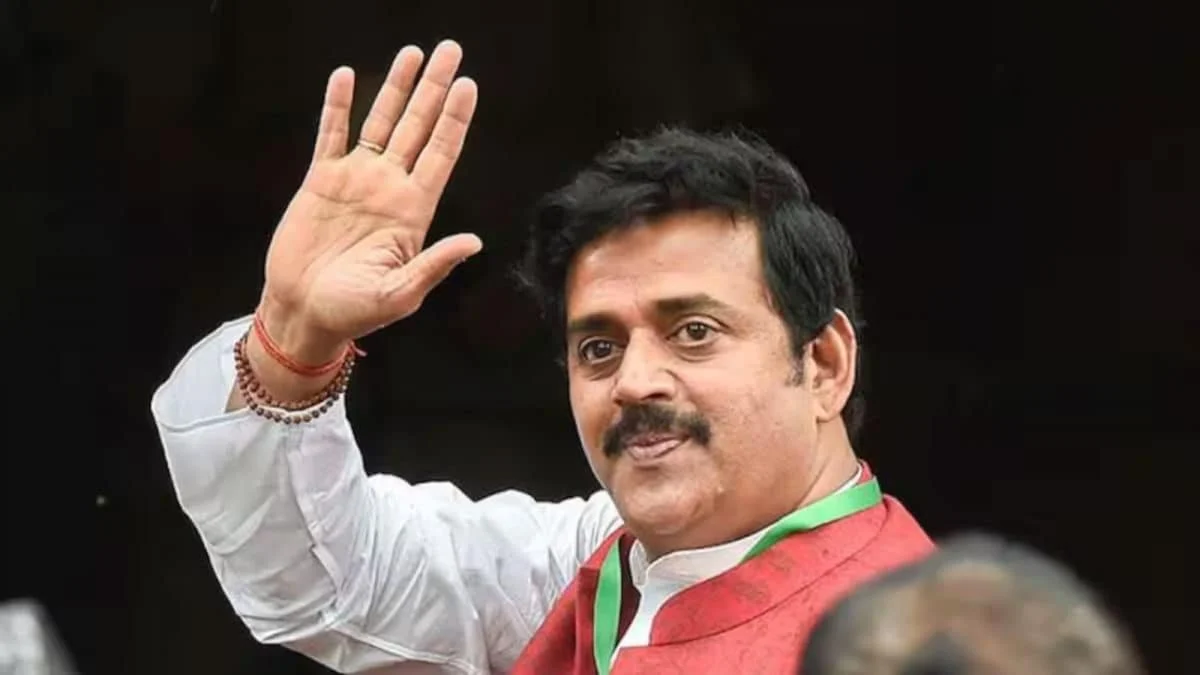
New Delhi, India – May 20, 2026 – In a moment that swiftly captured the nation’s attention and ignited a flurry of online commentary, Bharatiya Janata Party (BJP) Member of Parliament Ravi Kishan found himself at the centre of a social media storm after a notable slip of the tongue. While attempting to advocate for Prime Minister Narendra Modi’s urgent appeal to conserve fuel amidst escalating global energy concerns, the actor-turned-politician inadvertently inverted the widely understood phrase "work from home," instead declaring that "home from work is very important rather than work from home."
The comment, made during an interview with the Press Trust of India (PTI), quickly detached itself from its intended serious context and ricocheted across digital platforms. Social media users, quick to spot the linguistic misstep, widely shared clips of the statement, transforming a potential endorsement of a critical national initiative into a source of widespread amusement, memes, and satirical observations. The incident underscores the unforgiving nature of political communication in the digital age, where even minor linguistic errors can overshadow substantive policy discussions and become viral sensations overnight.
The Unfolding of a Digital Phenomenon: A Chronology
The events leading to the viral moment began with Prime Minister Narendra Modi’s earnest call for national fuel conservation. Faced with persistent disruptions in global energy markets, particularly those stemming from ongoing geopolitical tensions in West Asia, the Prime Minister had urged citizens and institutions alike to adopt various measures to reduce fuel consumption. These suggestions included increased reliance on public transport, promotion of carpooling initiatives, adoption of electric vehicles, and crucially, encouraging "work from home" arrangements where feasible. This comprehensive appeal aimed not only to mitigate the economic impact of rising fuel prices but also to bolster India’s energy security in an unpredictable international landscape.
It was within this serious and nationally significant context that BJP MP Ravi Kishan, known for his charismatic public persona and successful career in regional cinema before entering politics, sought to lend his support to the Prime Minister’s initiative. Speaking to PTI, Kishan was articulating the government’s broader strategy, specifically referencing the emphasis on flexible work arrangements as a key component of reducing daily commutes and, consequently, fuel usage.
However, in what appeared to be an unintentional linguistic reversal, Kishan uttered the phrase "home from work is very important rather than work from home." The immediate aftermath of the interview saw the clip being isolated and shared with remarkable speed across various social media platforms. The brevity and distinct nature of the error made it instantly shareable, bypassing traditional news cycles to directly engage a vast online audience. Within hours, the comment transcended its original media outlet, becoming a standalone snippet that fueled discussions, debates, and, most prominently, a wave of comedic reactions.
The rapid dissemination highlighted the power of micro-content in contemporary digital communication, where soundbites and video snippets can define public discourse, often independently of the broader message they were intended to convey. For many online observers, the gaffe became a focal point, momentarily overshadowing the very important message of fuel conservation that Kishan had aimed to champion.
The Digital Aftermath: A Meme Storm and Public Discourse
The social media reaction to Ravi Kishan’s "home from work" comment was immediate, widespread, and overwhelmingly humorous. The clip, concise and ripe for interpretation, became the raw material for an extensive array of memes, jokes, and satirical commentary, dominating trending topics across platforms like X (formerly Twitter), Instagram, Facebook, and various messaging applications.
Users quickly pounced on the phrasing error, finding endless comedic potential in the inversion of a universally understood modern work concept. One user’s witty observation, "2×3=3×2, in the same way work from home = home from work according to him," encapsulated the lighthearted, yet pointed, nature of much of the initial commentary. This mathematical analogy perfectly captured the essence of the slip, suggesting a simple rearrangement of words, yet fundamentally altering the meaning.
Other jokes played on the literal interpretation of Kishan’s statement, with one widely circulated quip humorously stating, "Yeah, we come home from work every day… get home and eat dinner." This comment highlighted the inherent absurdity of the phrase when taken literally, drawing a chuckle from those who commute daily. Another viral remark, simply "Tongue of slip," became a succinct and self-aware acknowledgement of the gaffe, resonating with users who understood the common human experience of verbal missteps.
Beyond simple jokes, a significant portion of the online discourse adopted a more satirical tone, often layering political critique onto the humor. Comments such as "Media – TRP nahi aa rahi. Ravi Kishan – Me hu naa," ("Media – TRP isn’t coming. Ravi Kishan – I’m here, aren’t I?") suggested that the MP’s gaffe inadvertently provided fodder for news channels seeking engagement, implying a cynical view of media priorities. Another satirical take, "He means to shift family to workplace," imagined an extreme and impractical interpretation of Kishan’s words, serving as a subtle jab at potentially unrealistic expectations from public figures.
Perhaps one of the more cutting remarks observed, "Those who used to demand milk and rose petals in their bathtubs are now giving this advice to the masses!" This comment introduced a layer of socio-political critique, contrasting the perceived lavish lifestyles of some political figures with the practical, often challenging, advice given to the general public regarding resource conservation. It tapped into a broader sentiment about perceived disconnects between the political elite and everyday citizens.
The rapid virality of the comment can be attributed to several factors. Firstly, the phrase "work from home" is universally understood and relatable in the post-pandemic era, making any distortion of it instantly recognizable and humorous. Secondly, the gaffe came from a prominent public figure, adding a layer of newsworthiness and spectacle. Lastly, the inherent human tendency to find humor in linguistic errors, especially when they come from figures in authority, played a significant role in its widespread sharing. The collective experience of laughter served as a temporary relief from the serious underlying context of global energy crises, transforming a policy endorsement into a shared comedic event across the digital landscape.
Contextualizing Prime Minister Modi’s Fuel Conservation Appeal
The comedic aftermath of Ravi Kishan’s statement, while diverting, must be understood within the gravity of the national appeal it intended to support. Prime Minister Narendra Modi’s call for fuel conservation is not merely an advisory; it is a strategic response to a complex and volatile global energy scenario that has significant implications for India’s economy and its citizens.
The primary driver behind the Prime Minister’s appeal is the persistent disruption in international energy markets. Tensions in West Asia, a region critical for global oil supplies, have consistently led to volatility in crude oil prices. India, as one of the world’s largest importers of crude oil, is particularly vulnerable to these fluctuations. Rising international oil prices directly impact domestic fuel prices, leading to increased costs for transportation, manufacturing, and ultimately, higher inflation for everyday goods and services. This ripple effect places a substantial burden on household budgets and can impede economic growth.
Prime Minister Modi’s appeal outlined a multi-pronged approach to mitigate these challenges. Key measures include:
- Increased Use of Public Transport: Encouraging citizens to opt for buses, trains, and metros reduces the number of private vehicles on the road, thereby cutting down on individual fuel consumption.
- Carpooling Initiatives: Promoting shared rides among commuters for daily travel, which can significantly decrease the per-person fuel usage.
- Adoption of Electric Vehicles (EVs): Accelerating the transition to EVs is a long-term strategy to reduce dependency on fossil fuels, enhance energy security, and contribute to environmental sustainability. The government has been actively promoting EV manufacturing and infrastructure development.
- Working from Home (WFH) where feasible: This measure, directly referenced by Ravi Kishan, aims to reduce daily commuting, thereby lowering fuel consumption for millions of office-goers. The WFH model, largely adopted during the COVID-19 pandemic, proved its efficacy in maintaining productivity while significantly cutting down on travel-related energy expenditure.
India’s energy security is a paramount concern. The nation imports over 80% of its crude oil requirements, making it highly susceptible to global price shocks and supply chain disruptions. Diversifying energy sources, investing in renewable energy, and promoting energy efficiency through such conservation appeals are crucial strategies for India to safeguard its economic stability and ensure sustainable development. Ravi Kishan’s original intent was to reinforce this critical message, albeit his delivery inadvertently created an unexpected public relations challenge.
"Work From Home" in the Indian Context: Evolution and Relevance
The phrase "work from home" (WFH) holds a unique place in the contemporary Indian professional landscape, particularly in the aftermath of the global COVID-19 pandemic. Before 2020, WFH was largely a niche concept, primarily adopted by specific sectors like IT and certain freelance professions. However, the pandemic forced an unprecedented and rapid shift, pushing millions of employees across diverse industries into remote working arrangements. This exigency demonstrated the viability of WFH on a massive scale, proving that productivity could be maintained, and in some cases even enhanced, outside traditional office environments.
Post-pandemic, while many companies have embraced hybrid models combining office and remote work, WFH remains a significant component of the modern employment ecosystem. Its benefits are manifold:
- Reduced Commuting Stress and Time: Employees save hours previously spent battling traffic, leading to better work-life balance.
- Cost Savings for Employees: Reduced expenditure on fuel, public transport fares, and even office attire.
- Environmental Benefits: A direct correlation exists between reduced commuting and lower carbon emissions, contributing to cleaner air in urban centres.
- Cost Savings for Employers: Companies can save on office space, utilities, and other overheads.
- Increased Flexibility: Offers greater autonomy to employees, potentially boosting job satisfaction and retention.
From the perspective of fuel conservation, WFH is an incredibly potent tool. Each day an employee works from home translates directly into a day where their vehicle remains parked, or they do not use public transport that consumes fuel. When scaled across millions of urban professionals, the cumulative effect on national fuel consumption can be substantial. Therefore, Prime Minister Modi’s inclusion of WFH in his appeal was not merely a suggestion but a recognition of a proven mechanism for energy efficiency. Ravi Kishan’s attempt to champion this specific aspect, despite his verbal misstep, was aimed at reinforcing a highly relevant and impactful policy measure for national fuel savings.
Official Responses and the Art of Political Silence
In the immediate aftermath of the viral clip, there was a noticeable absence of any official clarification or retraction from Ravi Kishan himself or from the BJP party apparatus. This silence, while sometimes interpreted as an admission of error, is often a calculated strategy in political communication. Engaging directly with a gaffe, especially one that has become a widespread meme, can sometimes prolong its lifespan and inadvertently amplify its reach, giving it more legitimacy than intended. By not responding, political figures and parties often hope that the news cycle will move on, allowing the moment of amusement to fade without official validation.
However, this strategy also comes with its own set of implications. For some, the lack of an immediate clarification might be seen as a missed opportunity to redirect the narrative back to the important message of fuel conservation. An official statement, even a brief, lighthearted acknowledgment of a "slip of the tongue" followed by a re-emphasis on the Prime Minister’s appeal, could have potentially diffused the situation and reinforced the original intent.
The BJP, as a party, typically employs a disciplined approach to public statements. Unless a gaffe directly undermines a core party principle or creates significant political damage, individual slip-ups are often allowed to run their course without official party intervention. The focus remains on the broader policy agenda, which, in this case, is the critical issue of national energy security and fuel conservation. While the MP’s comment provided a moment of levity, the government’s stance on promoting energy efficiency through measures like WFH remains unwavering, irrespective of the unintended comedic interlude.
The incident highlights the tightrope walk that political communicators face in the age of instant information. Every word uttered by a public figure is subject to immediate scrutiny, deconstruction, and recontextualization by a vast and diverse online audience. The decision to respond or remain silent is a critical one, weighing the potential for further amplification against the risk of appearing unresponsive or detached.
Implications and Broader Significance
Ravi Kishan’s "home from work" gaffe, while seemingly minor, carries several broader implications for political communication, public perception, and the evolving nature of political discourse in India.
Firstly, it serves as a potent reminder of the challenges of political communication in the digital age. In an era dominated by soundbites, short video clips, and instant virality, even the most carefully crafted messages can be derailed by a single linguistic misstep. The incident demonstrates how easily the medium can become the message, with the manner of delivery or a minor error overshadowing the substantive content. For politicians, this necessitates an even greater emphasis on precision and clarity in public statements, understanding that every word is subject to immediate and often unforgiving scrutiny.
Secondly, the incident underscores the power of humor and satire in political discourse. While the gaffe was unintentional, the public’s reaction to it — through memes, jokes, and witty comments — reflects a prevalent cultural phenomenon in India where humor is often used as a tool for commentary, critique, and collective engagement with political events. This lighthearted approach can sometimes make complex issues more accessible to the public, though it also risks trivializing serious national concerns.
Thirdly, the episode touches upon public perception and the human element in politics. Despite their official roles, politicians are human and prone to errors. Such incidents, while potentially embarrassing, can sometimes inadvertently humanize public figures, reminding the electorate of their fallibility. However, repeated gaffes or perceived insensitivity can also erode public trust and credibility. The public’s reaction, in this case, seemed to lean more towards amusement than outright condemnation, suggesting a degree of leniency for what was clearly an accidental slip.
Fourthly, the incident, despite its comedic turn, inadvertently drew more attention to the Prime Minister’s fuel conservation appeal. While the initial focus was on the gaffe itself, the extensive online discussions inevitably brought the underlying message of "work from home" and fuel conservation into broader public consciousness. In a paradoxical way, the gaffe might have even amplified awareness, albeit through an unconventional route, about the government’s initiatives to address global energy challenges.
Finally, the incident highlights the importance of language and nuance in public life. In an increasingly interconnected and globally aware society, the precise use of language by public representatives is crucial. Misunderstandings, whether intentional or accidental, can have far-reaching consequences, shaping public opinion and influencing policy implementation.
In conclusion, Ravi Kishan’s "home from work" comment transcended a simple verbal error to become a significant cultural moment in India’s digital landscape. It offered a comedic interlude amidst serious national discussions, yet also served as a powerful illustration of the complexities of modern political communication, the pervasive influence of social media, and the delicate balance between seriousness and levity in public discourse. As India continues to grapple with global energy challenges, the message of fuel conservation remains paramount, even as the memorable phrase "home from work" might linger as a humorous anecdote in the annals of political gaffes.
