The global automotive landscape is currently witnessing a significant recalibration. As the initial fervor for pure battery electric vehicles (BEVs) faces the realities of infrastructure limitations and shifting consumer sentiments, manufacturers are increasingly looking toward hybrid solutions as a pragmatic bridge to the future. At the forefront of this movement is Build Your Dreams (BYD), the Chinese automotive titan that has recently signaled a major strategic shift in its international roadmap.
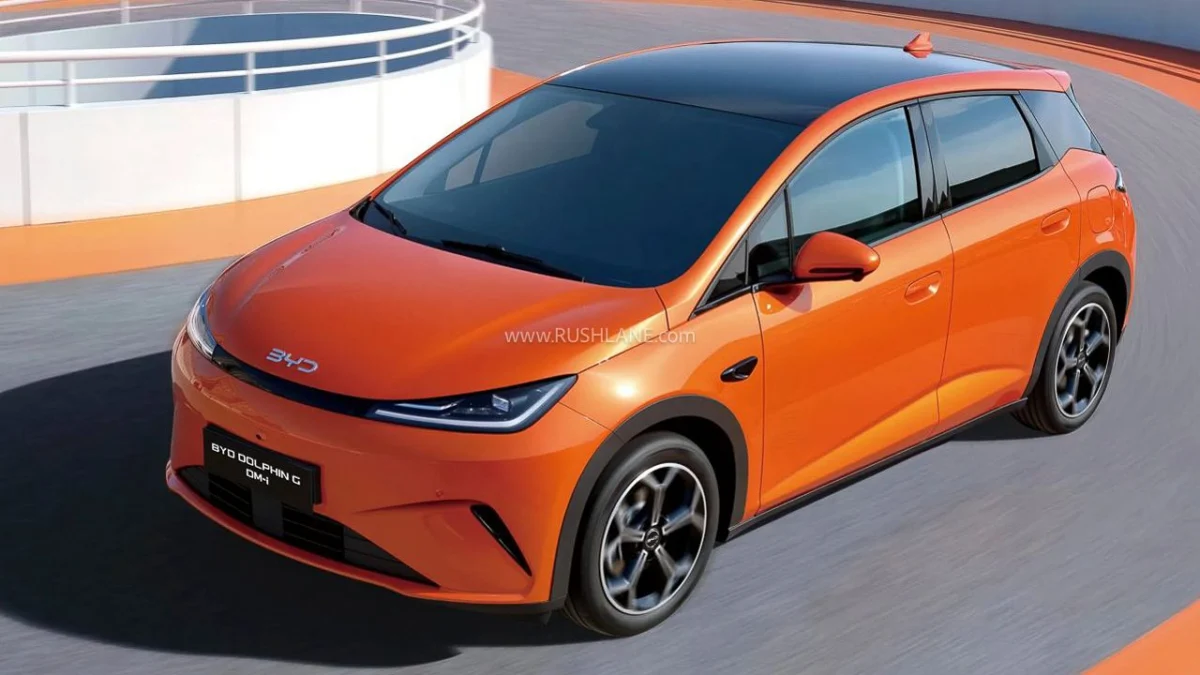
The official unveiling of the BYD Dolphin G DM-i, a compact plug-in hybrid (PHEV) hatchback designed specifically for the European market, marks a watershed moment. This is not merely an adaptation of a domestic Chinese model; it is a vehicle engineered from the ground up to satisfy the stringent demands and unique tastes of European drivers. Simultaneously, the ripples of this launch are being felt as far as India, where BYD has begun teasing its "Super Plug-in Hybrid" technology, hinting at a multi-continental assault on the internal combustion engine (ICE) and traditional hybrid segments.
Main Facts: The Dolphin G DM-i at a Glance
The BYD Dolphin G DM-i is a B-segment hatchback that measures approximately 4,160 mm in length. While it shares a nameplate with the existing Dolphin EV, the "G" designation and the "DM-i" (Dual Mode-intelligent) powertrain represent a distinct evolution in the brand’s philosophy.
Key Specifications and Features:
- Powertrain Architecture: The vehicle utilizes BYD’s proprietary DM-i system, which prioritizes electric propulsion. The system typically pairs a high-efficiency 1.5-liter naturally aspirated petrol engine with a front-mounted electric motor and the company’s renowned "Blade Battery" (Lithium Iron Phosphate).
- Exceptional Range: One of the most striking claims made by BYD is a combined driving range exceeding 1,000 kilometers (approximately 621 miles). This figure positions the Dolphin G as a formidable long-distance cruiser, effectively eliminating the "range anxiety" often associated with compact electric cars.
- Electric-Only Capability: While full technical specifications remain under wraps, the system is expected to offer an EV-only range between 40 km and 90 km, depending on the battery configuration (likely 7.8 kWh or 18 kWh options).
- Performance: Based on global iterations of this powertrain, power outputs are expected to range between 164 PS and 212 PS, ensuring the hatchback remains competitive in the spirited driving conditions common on European motorways.
Chronology: From Domestic Dominance to Global Engineering
The journey of the Dolphin G DM-i reflects BYD’s rapid maturation as a global OEM.
- The Rise of DM-i (2021-2023): BYD perfected its Dual Mode technology in the Chinese domestic market, where PHEVs began outselling traditional hybrids due to their ability to offer "EV-like" driving with the safety net of a petrol engine.
- The European Entry (2023): BYD entered Europe initially with a pure EV lineup, including the Atto 3, Han, and Tang. However, the company quickly realized that European B-segment buyers—those who typically purchase the VW Polo or Renault Clio—often lack dedicated home charging, making PHEVs a more attractive proposition.
- The "Europe-First" Mandate (2024-2025): Recognizing the need for localized engineering, BYD’s R&D centers began work on the Dolphin G. Unlike previous models that were "globalized" after their Chinese launch, the Dolphin G was developed with European suspension tuning, safety standards, and ergonomic preferences as primary objectives.
- The Unveiling and Indian Tease (May 2024): In a coordinated effort, BYD unveiled the Dolphin G DM-i for Europe while simultaneously launching a social media campaign in India. The Indian teasers specifically highlighted "DM-i" and "Super Plug-in Hybrid EV" technology, marking the first time the brand has officially looked beyond its "EV-only" identity in the South Asian subcontinent.
Supporting Data: Positioning and Competition
The B-segment in Europe is one of the most fiercely contested arenas in the automotive world. To succeed, BYD must compete against established icons.

The Competitive Matrix
The Dolphin G DM-i enters a field dominated by:
- Volkswagen Polo: The benchmark for build quality and brand loyalty.
- Renault Clio E-Tech: A strong-hybrid favorite in Southern Europe.
- Toyota Yaris Hybrid: The gold standard for urban fuel efficiency.
- Honda Jazz (Crosstar) Hybrid: Known for its "Magic Seats" and reliability.
BYD’s strategy for disruption is twofold: Range and Price.
In the United Kingdom, the Honda Jazz Hybrid starts at approximately £28,475 (roughly Rs 36.65 lakhs). Industry analysts expect BYD to aggressively undercut this price point, potentially offering the Dolphin G DM-i at a significant margin lower, despite it offering a larger battery and plug-in capability which the Jazz lacks.
Furthermore, the 1,000 km range claim is a data point that traditional hybrids struggle to match without significantly larger fuel tanks. By utilizing the 1.5L engine primarily as a generator for the electric motor, BYD achieves thermal efficiency levels (often cited above 43%) that allow for extraordinary fuel economy even when the battery is depleted.
Official Responses and Strategic Philosophy
While BYD executives have been tight-lipped about specific regional pricing, their corporate messaging emphasizes a "Dual-Drive" strategy.

A BYD spokesperson recently noted that the DM-i technology is designed to provide "the smoothest transition for consumers who are not yet ready to go full electric but want the benefits of electric torque and quietness." The philosophy behind the DM-i system is "Electric First," meaning the petrol engine stays dormant for most urban commutes, only engaging during high-speed cruising or when the battery state-of-charge drops below a certain threshold.
In India, the official response via social media has been one of "technological education." By labeling their PHEVs as "Super Plug-in Hybrid EVs," BYD is attempting to distance its technology from the "mild hybrids" common in India (which offer negligible fuel savings) and "strong hybrids" (which cannot be plugged in).
Implications for the European Market: The Hungary Factor
The launch of the Dolphin G DM-i is inextricably linked to BYD’s manufacturing ambitions in Europe. The company is currently constructing a massive production facility in Szeged, Hungary.
Local Production vs. Tariffs
The implications of this plant are profound:
- Bypassing Tariffs: By producing the Dolphin G, Atto 2, and Atto 3 in Hungary, BYD can circumvent potential EU import tariffs on Chinese-made vehicles.
- Supply Chain Resilience: Local production allows for faster response to European market trends and reduces the logistical costs of shipping vehicles halfway across the globe.
- Economic Integration: Manufacturing in Hungary helps BYD shed the "foreign invader" label, positioning itself as a European employer and a contributor to the regional economy.
The Dolphin G DM-i is expected to be one of the first models to roll off the Hungarian assembly lines, making it a "truly European" car in the eyes of many consumers and regulators.

Implications for the Indian Market: A New Frontier
For BYD India, the introduction of DM-i technology represents a radical shift in market positioning. Currently, the brand sells the Atto 3, Seal, and eMAX 7—all pure electric vehicles. However, India’s charging infrastructure remains concentrated in Tier-1 cities.
The Candidate: Sealion 6 or Atto 2?
The recent sightings of the Sealion 6 PHEV and the Atto 2 crossover testing on Indian roads suggest that BYD is evaluating which segment to strike first.
- The Sealion 6 DM-i: A mid-size SUV that would compete with the likes of the Tata Harrier or the Mahindra XUV700. Its premium positioning and All-Wheel Drive (AWD) options make it an aspirational choice.
- The Atto 2 DM-i: A more compact offering that would likely appeal to the urban middle class, providing a premium alternative to the high-volume mid-size SUV segment.
If BYD can navigate the complex Indian tax structure—which currently favors EVs significantly over hybrids—the DM-i range could revolutionize the "executive car" segment. By offering a vehicle that can run as an EV for the daily office commute and a long-range hybrid for inter-state travel, BYD addresses the primary concern of Indian car buyers: versatility.
Conclusion: The "Goldilocks" Solution?
The unveiling of the BYD Dolphin G DM-i signifies the end of the "one-size-fits-all" approach to global electrification. By engineering a car specifically for Europe and preparing a hybrid offensive for India, BYD is demonstrating an acute understanding of regional nuances.
The Dolphin G DM-i is more than just a new car; it is a testament to the viability of the plug-in hybrid as a "Goldilocks" solution—offering enough electric range for daily use without the limitations of a charging-only lifestyle. As deliveries begin in Europe in 2026 and the DM-i technology makes its inevitable debut in India, the traditional automotive giants in both regions will find themselves facing a competitor that is no longer just "coming"—it has arrived, and it has brought a 1,000-kilometer range with it.