

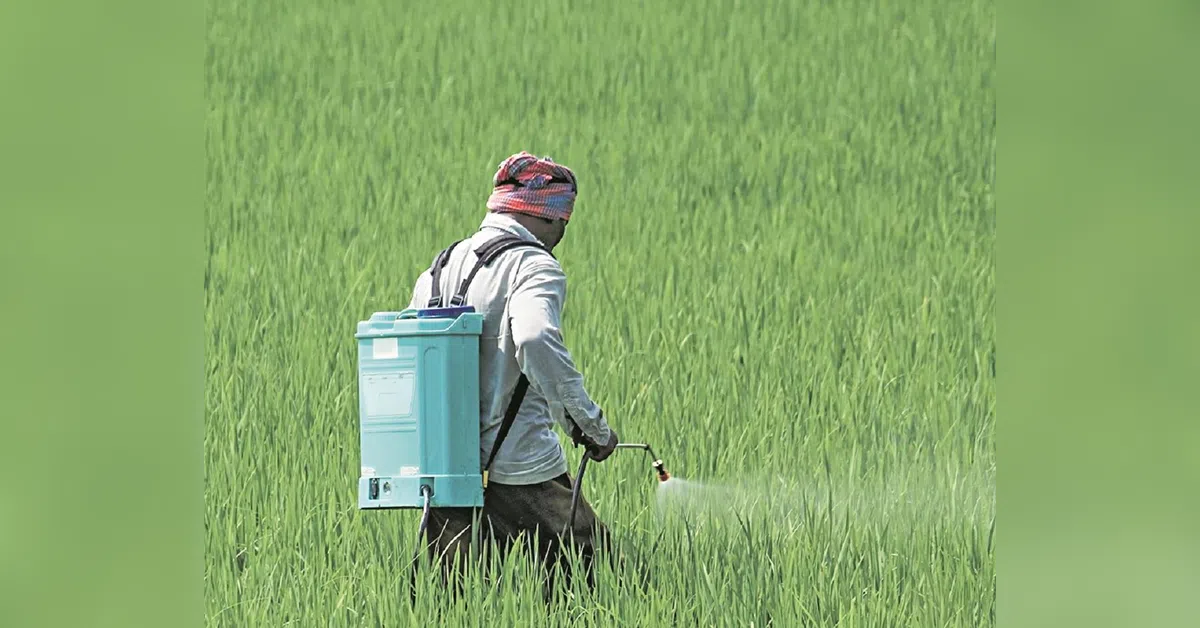
NEW DELHI, India – A high-stakes review by a government panel is currently underway, examining the continued use of two critically important plant-protection chemicals: Paraquat Dichloride and Carbosulfan. This scrutiny comes amidst mounting complaints regarding their potential toxicity and adverse impacts on human health. However, a significant segment of the agricultural chemicals industry is sounding a strong cautionary note, asserting that any abrupt restrictions could trigger a cascade of counterproductive consequences, destabilizing India’s agricultural sector, particularly ahead of the crucial Kharif season.
The debate encapsulates a complex dilemma: safeguarding public health and environmental integrity versus ensuring food security and farmer livelihoods. As the government panel deliberates, the industry is poised to present its arguments, advocating for a nuanced approach centered on enhanced safety standards and farmer education, rather than an outright ban.
The Impending Review: A Critical Juncture for Crop Protection
The government panel, whose mandate includes evaluating the safety profiles and necessity of various agrochemicals, has initiated a thorough review of Paraquat Dichloride and Carbosulfan. This move reflects a growing global and domestic concern over the long-term health and environmental repercussions associated with certain pesticides. For farmers and the agrochemical industry, the timing is particularly sensitive, occurring just before the commencement of the Kharif season, when these chemicals are extensively utilized to protect burgeoning crops.
The urgency of the situation is palpable. Decisions made now could significantly alter the agricultural landscape for millions of Indian farmers. While the specific complaints driving this review remain under wraps, they are understood to pertain to documented cases of toxicity and adverse health outcomes, prompting a rigorous re-evaluation of these widely adopted solutions.
Industry’s Stance: Averting a Potential Crisis
The plant protection industry, a vital cog in India’s agricultural machinery, is vehemently opposing an outright ban on Paraquat Dichloride and Carbosulfan. Their central argument, which they are expected to present to the government panel on Monday, posits that such a drastic measure would be ill-conceived and could precipitate a series of undesirable outcomes far outweighing the perceived benefits of a ban.
Foremost among their concerns is the potential for an exponential surge in illegal and counterfeit agrochemical products. An abrupt withdrawal of legitimate, regulated chemicals from the market, they argue, would create a vacuum that illicit trade channels would readily exploit. This not only poses significant risks to crop health due to substandard products but also escalates the danger to farmers and consumers from unregulated, potentially more hazardous formulations. The industry warns that such a scenario would inevitably lead to increased burdens on already stretched enforcement agencies, diverting resources from other critical areas.
Economically, the implications for farmers could be severe. Restricting two major plant-protection chemicals, especially before the Kharif season, would compel farmers to seek out costlier alternatives. This could involve purchasing more expensive branded products or resorting to multiple applications of less potent chemicals to achieve the same efficacy, thereby inflating their overall cultivation costs. In a sector already grappling with thin margins and climatic uncertainties, such an additional financial strain could be devastating for many.
The industry’s preferred approach, articulated through its representatives, emphasizes mitigation over prohibition. They advocate for a strategic focus on improving safety standards, implementing stricter guidelines for application, and launching extensive educational campaigns to equip farmers with the knowledge and tools to handle these chemicals responsibly. This, they believe, would allow farmers to continue leveraging the proven advantages of these chemicals while effectively minimizing potential harm.
Paraquat Dichloride: The Herbicide at the Heart of the Debate
Paraquat Dichloride is a non-selective herbicide, a cornerstone of modern weed-management systems globally and in India. Its versatility and rapid action have made it indispensable for controlling a broad spectrum of weeds and grasses across both agricultural and non-agricultural areas. In India, its application spans a vast array of economically significant crops, including tea, coffee, cotton, paddy, sugarcane, maize, rubber, grapes, and wheat, among others.
The market for Paraquat Dichloride in India is substantial, estimated at approximately ₹1,500 crore annually. As a contact herbicide, it operates by rapidly desiccating weeds, damaging plant cell membranes within hours of application. This swift action makes it particularly valuable for quick weed control and in situations requiring immediate intervention.
The technical material for Paraquat is predominantly imported in bulk consignments, typically ranging from 17,000 to 35,000 kg per shipment, from countries like Taiwan, China, and the United Kingdom. Industry estimates suggest that a single bulk consignment of Paraquat can support weed-management operations across an impressive 21,000 to 44,000 acres, underscoring its widespread utility and economic significance. Major companies involved in Paraquat formulations in India include Dhanuka Agritech, Rallis India, Crystal Crop Protection, Willowood Crop Science, and Krishi Rasayan Exports.
Beyond its primary role as a pre-plant or pre-emergence treatment, the industry highlights its utility as a post-emergence herbicide, a harvest aid, a desiccant, and a post-harvest desiccant, showcasing its multifaceted contributions to crop management.
Given its toxicity profile, Paraquat Dichloride is classified as a Restricted Use Pesticide (RUP) in India, meaning its sale and application are subject to specific regulatory controls, and it is explicitly not registered for homeowner or residential use. Industry sources staunchly contend that the majority of severe poisoning cases involving Paraquat stem from intentional ingestion, rather than from incidents related to its regulated agricultural use.
A senior industry official elaborated on the safety aspects, stating, "Although no specific antidote exists, this is not unique, as several agrochemicals rely mainly on preventive handling and supportive treatment." He further emphasized that earlier evaluations by international bodies such as the Food and Agriculture Organization (FAO) and the World Health Organization (WHO) did not establish regulated dietary exposure as a confirmed risk factor in Parkinson’s disease associated with Paraquat. Moreover, the chemical is notably not banned under the Rotterdam Convention, an international treaty on prior informed consent for certain hazardous chemicals.
Globally, the status of Paraquat is contentious. While banned in the European Union and other nations due to its toxicity, particularly its potential for accidental and intentional poisoning, it remains widely used in many developing countries, including the United States, under strict regulations. This dichotomy underscores the complex balance between agricultural efficacy and public health concerns.
Carbosulfan: An Essential Insecticide Under Threat
Carbosulfan, the second chemical under review, plays an equally critical role in protecting crops from a myriad of insect pests. Its effectiveness and affordability make it a vital component of integrated pest management strategies, particularly for small and marginal farmers who rely on cost-effective solutions.
India currently faces increasing pest pressure, the alarming development of pest resistance to existing chemicals, and a shrinking portfolio of available crop protection options. In this challenging environment, any restriction on Carbosulfan’s use would raise significant scientific, agronomic, and economic concerns, according to industry experts.
In India, Carbosulfan is commercially available in various formulations, including Carbosulfan (25 per cent EC or Emulsifiable Concentrate) and specialized seed-treatment formulations. These are extensively utilized in the cultivation of staple crops like rice and cotton, which are crucial for the nation’s food security and economy.
The recommended dosage for Carbosulfan generally ranges from 400-800 ml per acre, depending on the specific crop, the severity of pest incidence, and the formulation type. This targeted application makes it an efficient and economical option for farmers to manage pest outbreaks effectively.
Carbosulfan has demonstrated efficacy against a wide range of destructive pests. In rice cultivation, it targets gall midge, stem borer, leaf folder, white-backed plant hopper (WBPH), brown plant hopper (BPH), and green leaf hopper (GLH). For cotton, it is effective against aphids and thrips. Its utility extends to sucking pests in cumin and chilli, and shoot and fruit borers in brinjal, highlighting its broad-spectrum action across diverse horticultural and field crops.
Industry estimates suggest the domestic market value for Carbosulfan-based products, encompassing both technical and formulation sales, is a substantial ₹450-600 crore annually. Insecticides, as a category, account for a significant portion—41-55 per cent—of the overall crop-protection market in India. The widespread impact of Carbosulfan is further underscored by estimates indicating that 30-50 companies are directly or indirectly involved in its manufacturing, formulation, repacking, distribution, and marketing across the country, supporting a vast ecosystem of jobs and economic activity.
Concerns surrounding Carbosulfan often relate to its classification as a moderately hazardous pesticide by the WHO, particularly its potential impact on non-target organisms like pollinators (e.g., bees) and aquatic life if not used properly. Balancing its efficacy against these ecological considerations forms a critical part of the government panel’s review.
The Broader Context: India’s Regulatory Landscape and Past Bans
India has a history of stringent regulation and, when deemed necessary, banning certain pesticides due to evolving scientific understanding of their risks. The Central Insecticides Board and Registration Committee (CIBRC) is the primary regulatory body responsible for evaluating and registering pesticides in the country. Over the years, India has progressively phased out or banned numerous chemicals identified as posing unacceptable risks to human health or the environment.
A look at the list of major plant protection chemicals banned in India in recent years provides context to the current deliberations:
| Pesticide | Category | Common Uses |
|---|---|---|
| Alachlor | Herbicide | Pre-emergence weed control in maize, soybean, groundnut |
| Benomyl | Fungicide | Fruit & vegetable fungal disease control |
| Carbaryl | Carbamate Insecticide | Wide-spectrum insect control |
| Diazinon | Organophosphate Insecticide | Soil & household pests |
| Dichlorvos | Organophosphate Insecticide | Storage & household pests |
| Fenarimol | Fungicide | Powdery mildew control |
| Fenthion | Organophosphate Insecticide | Mosquito & livestock pests |
| Linuron | Herbicide | Broadleaf weed control |
| Methoxy Ethyl Mercury Chloride | Organo-mercury Fungicide | Seed treatment |
| Methyl Parathion | Organophosphate Insecticide | Field crop pests |
| Phorate | Organophosphate Insecticide | Soil pests in cotton, sugarcane |
| Phosphamidon | Organophosphate Insecticide | Sucking pests |
| Sodium Cyanide | Toxic fumigant | Insecticidal fumigation |
| Thiometon | Organophosphate Insecticide | Aphids, mites |
| Triazophos | Organophosphate Insecticide | Cotton, rice pests |
| Tridemorph | Fungicide | Rust & mildew control |
| Trichlorfon | Organophosphate Insecticide | Crop and livestock pests |
| Dicofol | Acaricide | Mite control |
| Dinocap | Fungicide | Powdery mildew |
| Methomyl | Carbamate Insecticide | Caterpillar control |
| Dichlorvos | Organophosphate Insecticide | Storage pests |
| Phorate | Organophosphate Insecticide | Soil pests |
| Triazophos | Organophosphate Insecticide | Rice & cotton pests |
Note: The shaded portion indicates pesticides banned for exports only.
Source: Trade and Industry players
This historical record demonstrates India’s commitment to adapting its pesticide policy based on scientific evidence and public health imperatives. However, it also highlights the delicate balancing act involved in withdrawing widely used chemicals without adequate, affordable, and accessible alternatives.
Potential Repercussions: Beyond the Farm Gate
The implications of a ban, or even severe restrictions, on Paraquat Dichloride and Carbosulfan extend far beyond the immediate concerns of the agrochemical industry.
For Farmers: The most direct impact would be on cultivation costs and potentially yields. Without these cost-effective options, farmers might face a steep learning curve with new products, increased labor for manual weeding or alternative pest control, and reduced crop protection, leading to lower productivity and income. This could disproportionately affect small and marginal farmers who lack the resources to absorb higher input costs or invest in advanced pest management technologies.
Food Security: Any significant disruption in pest and weed management could jeopardize crop yields, potentially impacting India’s overall food production and security. This is particularly concerning given India’s large and growing population.
Public Health and Environment (Paradoxical Risks): While the intent of a ban is to improve public health and environmental safety, an abrupt restriction without viable alternatives could inadvertently lead to new risks. The proliferation of illegal and counterfeit products, which are often of unknown composition and quality, poses a greater threat to both human health and the environment due to a complete lack of regulatory oversight. Farmers might also resort to using chemicals in unsafe concentrations or combining them haphazardly in desperation, escalating risks.
Economic Ripple Effects: The ban would also have significant economic repercussions for the 30-50 companies directly or indirectly associated with Carbosulfan, and the major players in the Paraquat market. This could lead to job losses, reduced investments in agricultural research and development, and a contraction of the domestic agrochemical industry.
Towards a Sustainable Future: The Path Forward
The current review presents a critical opportunity for India to re-evaluate its approach to agricultural chemicals. A balanced, evidence-based decision is paramount, one that considers the immediate needs of farmers, the long-term health of the population, and the ecological footprint of agriculture.
Industry stakeholders, public health advocates, environmental groups, and agricultural scientists must engage in a constructive dialogue. The focus should shift towards promoting Integrated Pest Management (IPM) strategies, which combine biological, cultural, physical, and chemical tools to manage pests with minimal economic, health, and environmental risks.
Furthermore, there is an urgent need for robust investment in research and development to discover and deploy safer, equally effective, and affordable alternatives to existing chemicals. Farmer education and training programs on safe handling, appropriate dosage, and protective gear must be intensified. Strengthening the enforcement mechanisms for existing regulations, rather than simply imposing bans, could also prove more effective in mitigating risks.
Ultimately, a phased approach, coupled with strong support for farmers in transitioning to sustainable practices and providing them with viable alternatives, may be a more pragmatic and less disruptive path than an immediate, sweeping ban. The challenge before the government panel is immense: to strike a delicate balance that ensures agricultural productivity while upholding the highest standards of public health and environmental stewardship. The decisions made in the coming weeks will shape the future of Indian agriculture for years to come.
