

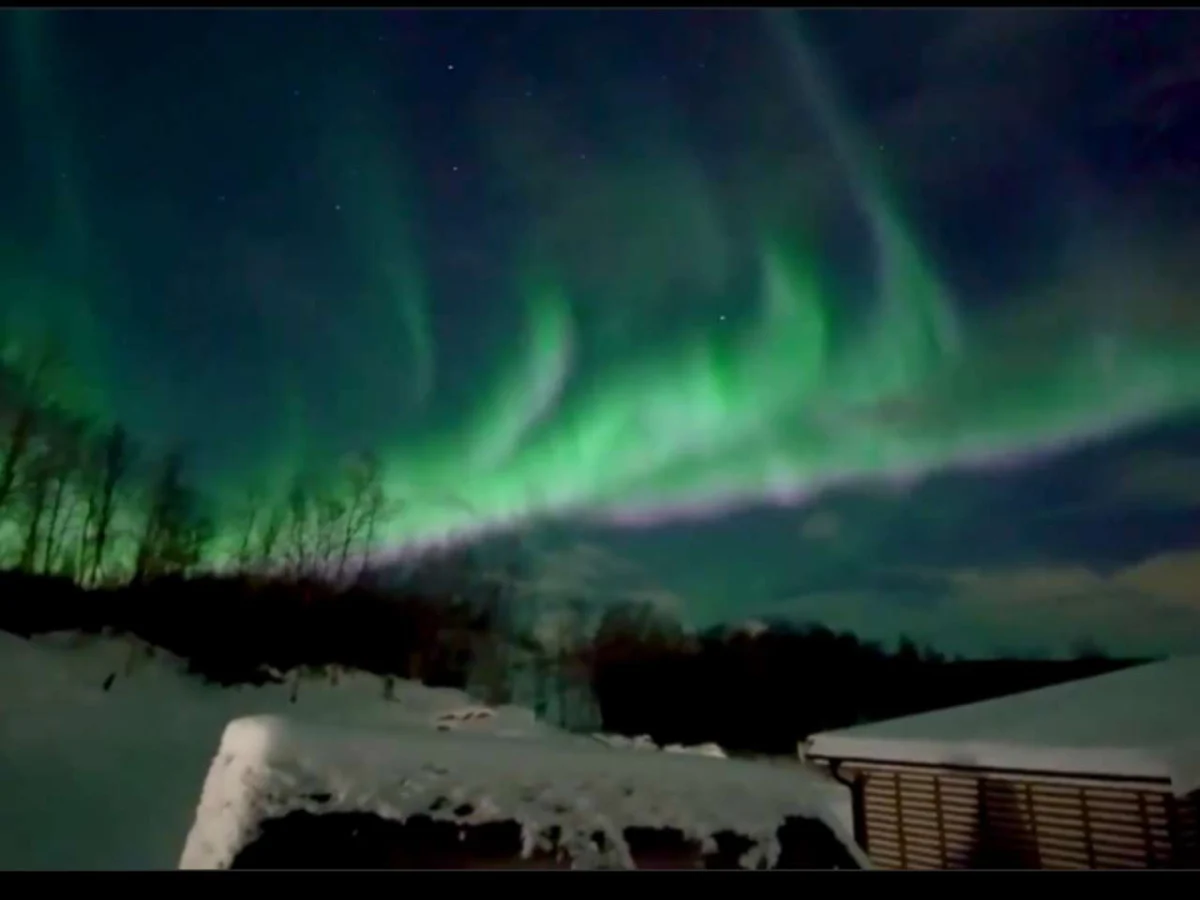
NEW DELHI, India – June 8, 2026 – The heavens are set to put on a rare spectacle today as a powerful solar eruption, hurtling through space at astonishing speeds, is poised to collide with Earth’s protective magnetic field. Space weather forecasters worldwide have issued a G3 (Strong) geomagnetic storm watch, signaling the potential for widespread auroral displays, including a tantalizingly rare chance for observers in parts of northern India to witness the ethereal glow of the Northern Lights near the horizon.
This anticipated celestial event stems from an extraordinary outburst on the Sun, specifically from an area designated Active Region 4461. While the Sun has been notably active in recent days, one particular blast on June 6 has captured the intense focus of scientists, leading to a global alert for potential disruptions to technology and a breathtaking opportunity for sky-watchers. The approaching solar material, traveling at nearly 1,400 kilometers per second, is expected to make landfall with Earth’s magnetosphere sometime today, igniting a cosmic dance between solar particles and our planet’s magnetic shield.
The implications of such a strong geomagnetic storm extend beyond beautiful light shows, posing potential challenges to critical infrastructure, from power grids to satellite communications. Experts are closely monitoring the precise magnetic orientation of the incoming solar cloud, a crucial factor that will ultimately determine the storm’s final intensity and the geographic reach of the aurora borealis and australis.
The Sun’s Tempestuous Outburst: A Chronology of Events
The genesis of this anticipated geomagnetic storm can be traced back to June 6, 2026, when Active Region 4461, a particularly volatile sunspot cluster, unleashed a significant M1.8-class solar flare. While M-class flares are considered mid-level in the hierarchy of solar eruptions (ranging from weakest A-class to strongest X-class), this particular event garnered exceptional scientific interest due to its accompanying phenomenon: the eruption of a massive, dense core filament.
Solar filaments are colossal structures of relatively cool, dense plasma, suspended above the Sun’s surface by powerful magnetic fields. Their eruption, often referred to as a Coronal Mass Ejection (CME), involves the expulsion of billions of tons of magnetized solar material into space. Unlike a "bare" solar flare, which is primarily a burst of electromagnetic radiation, a filament eruption carries a substantial amount of physical mass and embedded magnetic energy, making it a far more potent driver of geomagnetic storms when directed towards Earth.
Following the June 6 eruption, space weather observatories, utilizing advanced instruments aboard satellites like NASA’s Solar Dynamics Observatory (SDO) and the European Space Agency (ESA)’s Solar and Heliospheric Observatory (SOHO), tracked the ejected material. Calculations quickly revealed its impressive velocity—nearly 1,400 kilometers per second—indicating an imminent arrival at Earth. Based on this speed, forecasters projected the CME’s impact for today, June 8, 2026, setting the stage for the current G3 geomagnetic storm watch. The rapid approach has left space weather agencies with a narrow window to assess its precise characteristics before direct impact.
Unpacking the Solar Phenomenon: Supporting Data and Scientific Explanations
To fully grasp the significance of the impending solar storm, it’s essential to understand the underlying celestial mechanics and the intricate interactions between the Sun and Earth.
The Anatomy of a Solar Eruption: Flares, CMEs, and Filaments
Solar activity is dynamic and multifaceted.
- Solar Flares are intense bursts of radiation originating from the Sun’s surface, typically associated with sunspots. They release energy across the electromagnetic spectrum, from radio waves to X-rays and gamma rays. Flares are classified by their X-ray brightness, with A, B, C, M, and X classes, where each class is ten times more powerful than the last. The M1.8 flare observed on June 6, while not an X-class event, was significant enough to contribute to the overall energy release.
- Coronal Mass Ejections (CMEs) are colossal expulsions of plasma and magnetic field from the Sun’s corona (outer atmosphere). While often associated with solar flares, CMEs can occur independently. They are the primary drivers of severe geomagnetic storms on Earth due to the sheer volume of magnetized material they carry. The June 6 event was particularly noteworthy because the flare was accompanied by the eruption of a dense core filament, which translated into a significant CME.
- Solar Filaments are long, dark, thread-like structures seen against the bright solar disk. They are composed of cooler, denser plasma suspended in the Sun’s hot corona by complex magnetic fields. When these magnetic fields become unstable, the filament can erupt, launching its substantial mass into space as a CME. Scientists emphasize that filament eruptions often create stronger geomagnetic effects because they carry more magnetic material and are denser than many ordinary solar eruptions, leading to a more pronounced interaction with Earth’s magnetosphere.
Earth’s Shield: The Magnetosphere
Our planet is safeguarded by an invisible force field called the magnetosphere, generated by the Earth’s molten iron core. This magnetic bubble deflects most of the charged particles constantly streaming from the Sun (the solar wind), preventing them from stripping away our atmosphere and making life on Earth impossible. However, powerful CMEs, carrying their own embedded magnetic fields, can sometimes breach or compress this shield.
The Dance of Magnetic Reconnection: The Crucial Bz Factor
The severity of a geomagnetic storm hinges critically on a phenomenon called magnetic reconnection. When an incoming CME’s magnetic field aligns in a southward direction (referred to as the negative Bz component) relative to Earth’s northward-pointing magnetic field, the two fields can "reconnect." This process acts like a short circuit, allowing massive amounts of solar energy and charged particles to efficiently penetrate Earth’s magnetosphere. This influx of energy intensifies the geomagnetic storm, leading to stronger currents in the upper atmosphere and a greater likelihood of vivid and widespread auroral displays. This southward orientation of the incoming magnetic field remains the "wild card" in current forecasting, as it cannot be precisely determined until the CME is mere minutes away from Earth.
Decoding Geomagnetic Storms: The G-Scale
Geomagnetic storms are classified by the National Oceanic and Atmospheric Administration (NOAA) Space Weather Prediction Center (SWPC) on a five-point G-scale, from G1 (Minor) to G5 (Extreme), indicating increasing levels of intensity and potential impact:
- G1 (Minor): Can cause minor impacts on power systems, slight disruption to satellite operations, and faint auroras visible at high latitudes.
- G2 (Moderate): May cause voltage alarms in power systems, increase satellite drag, and expand auroras to mid-latitudes.
- G3 (Strong): The current forecast level. Can require corrective actions for power systems, cause intermittent satellite navigation problems, and disrupt high-frequency radio communication. Auroras become visible much farther from the poles.
- G4 (Severe): Poses potential widespread power system problems, severe satellite communication and navigation issues, and widespread high-frequency radio blackouts. Auroras can be seen in many temperate regions.
- G5 (Extreme): The rarest and most powerful. Can cause widespread power grid collapse, extensive satellite outages, and complete high-frequency radio blackouts. Auroras can extend to equatorial regions.
The current forecast calls for a G3 storm, though experts acknowledge that brief periods of G4-level conditions remain possible if the incoming magnetic field orientation proves particularly favorable for storm development.
The Luminous Veil: Understanding Auroras
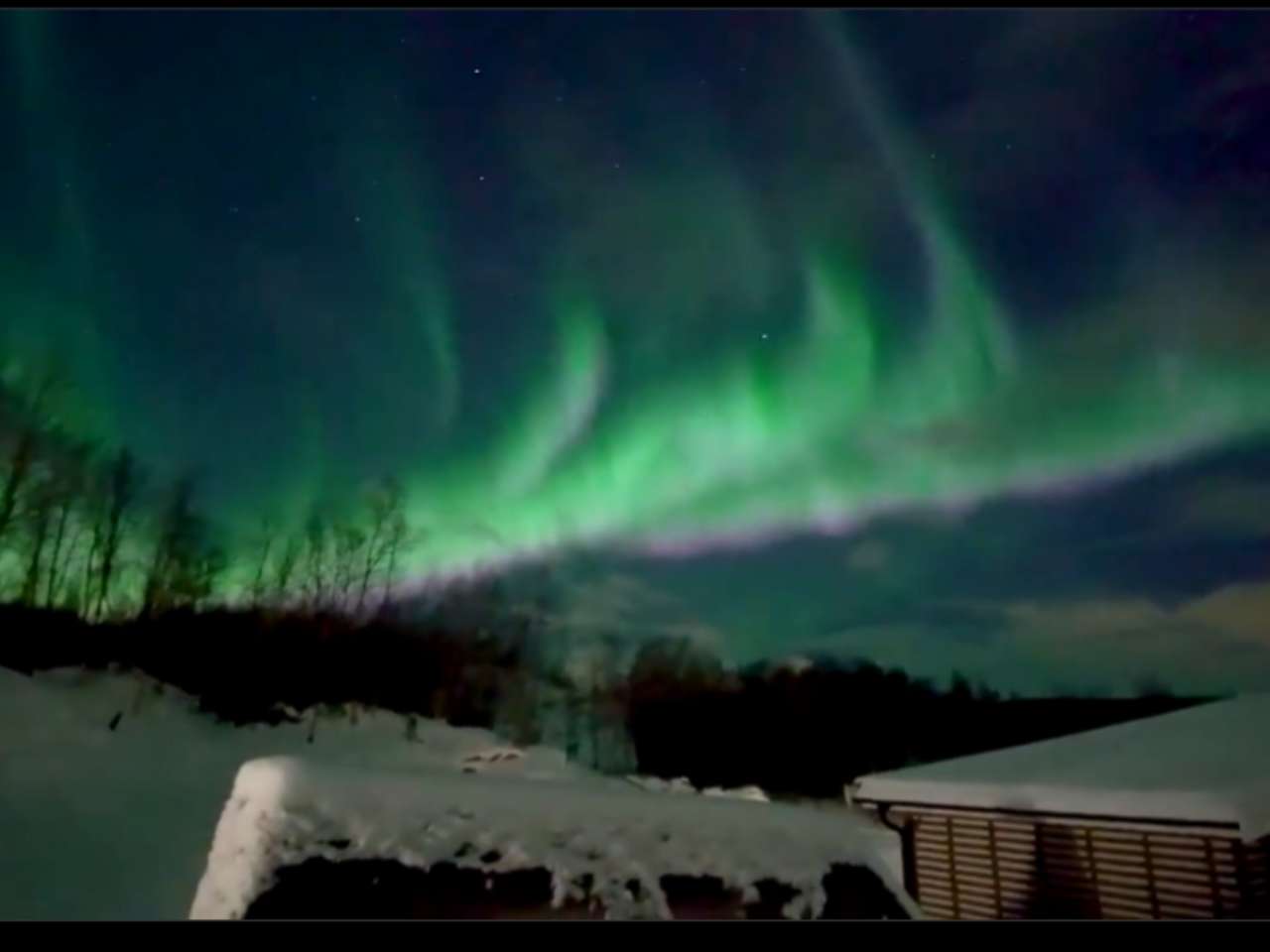
Auroras, often called the Northern Lights (aurora borealis) and Southern Lights (aurora australis), are one of nature’s most spectacular displays. They occur when charged particles from the Sun, funneled by Earth’s magnetic field, collide with atoms and molecules in our upper atmosphere (primarily oxygen and nitrogen). These collisions excite the atmospheric gases, causing them to emit light.
- Green auroras, the most common, are produced by oxygen atoms at lower altitudes.
- Red auroras result from oxygen at higher altitudes.
- Blue and purple hues are typically from nitrogen.
Normally, auroras are confined to the high-latitude "auroral ovals" around the magnetic poles. However, during strong geomagnetic storms (G3 and above), the auroral ovals expand significantly, allowing these celestial light shows to be visible from much lower latitudes than usual.
)
Official Responses and Global Vigilance
The impending solar storm has prompted a coordinated response from space weather agencies and scientific communities worldwide.
Space Weather Agencies on Alert
The NOAA Space Weather Prediction Center (SWPC) in the United States, a leading authority in space weather forecasting, has been at the forefront, issuing the G3 geomagnetic storm watch and providing continuous updates. Their alerts are critical for various sectors that rely on accurate space weather information. Similarly, the European Space Agency (ESA) Space Weather network, along with national space agencies like India’s ISRO, are actively monitoring the situation, disseminating information, and preparing for potential impacts. This global collaboration is essential, as space weather phenomena affect the entire planet.
Expert Commentary
"The combination of an M-class flare and, more significantly, a dense filament eruption from Active Region 4461 is precisely what we look for when anticipating a strong geomagnetic storm," stated a space weather expert, speaking on condition of anonymity due to ongoing observation efforts. "While the initial blast was certainly powerful, the sheer mass and embedded magnetic field of the filament material are what make this particular event so potent. We are in a very active phase of Solar Cycle 25, and events like this are becoming more frequent as we approach solar maximum."
Another solar physicist emphasized the persistent challenge: "Despite our sophisticated models and satellite observations, the exact orientation of the magnetic field within the incoming CME—what we call the Bz component—remains the critical unknown. This single factor can dramatically change a G3 storm into a G4 or even briefly G5 event, or conversely, lessen its impact. We won’t have definitive data on Bz until the solar cloud passes our upstream monitoring satellites, giving us a very short window—perhaps 15 to 60 minutes—before it reaches Earth."
The Monitoring Network
The ability to forecast and track such events relies on a robust network of space-based and ground-based observatories. Satellites like DSCOVR (Deep Space Climate Observatory) and ACE (Advanced Composition Explorer), positioned at the L1 Lagrangian point approximately 1.5 million kilometers towards the Sun, provide crucial real-time data on the solar wind and the CME’s magnetic field just before it impacts Earth. This data is indispensable for the final, precise short-term forecasts. Additionally, ground-based magnetometers continually measure changes in Earth’s magnetic field, offering immediate indicators of a geomagnetic storm’s onset and intensity.
Implications: From Sky Shows to Systemic Risks
The arrival of a powerful geomagnetic storm carries a dual nature: the breathtaking beauty of auroral displays and the potential for significant technological disruptions.
Technological Vulnerabilities
A G3-level geomagnetic storm, with the potential for brief G4 conditions, can have cascading effects on various technological systems:
)
- Power Grids: Geomagnetically Induced Currents (GICs) can flow through long conductors like power transmission lines, potentially causing voltage fluctuations, tripping of protective relays, and even permanent damage to large transformers. While modern grids have some resilience, a severe storm could lead to regional blackouts.
- Satellites: Charged particles from the storm can increase atmospheric drag on low-Earth orbit satellites, requiring more frequent re-boosting and potentially shortening their operational lifespan. Radiation can also cause "single-event upsets" (SEUs) in satellite electronics, leading to temporary malfunctions or data corruption. Communication satellites in geostationary orbit can experience signal interference.
- Navigation and Communication: Global Positioning System (GPS) signals can be degraded or lose accuracy due to disturbances in the ionosphere, affecting everything from precision agriculture to air traffic control and military operations. High-frequency (HF) radio communication, used by aviation, maritime vessels, and amateur radio operators, can experience severe blackouts or disruptions, particularly over polar routes.
- Aviation: Airlines may need to re-route flights away from polar regions to reduce passenger and crew exposure to increased radiation levels and to avoid communication disruptions.
The Allure of the Auroras
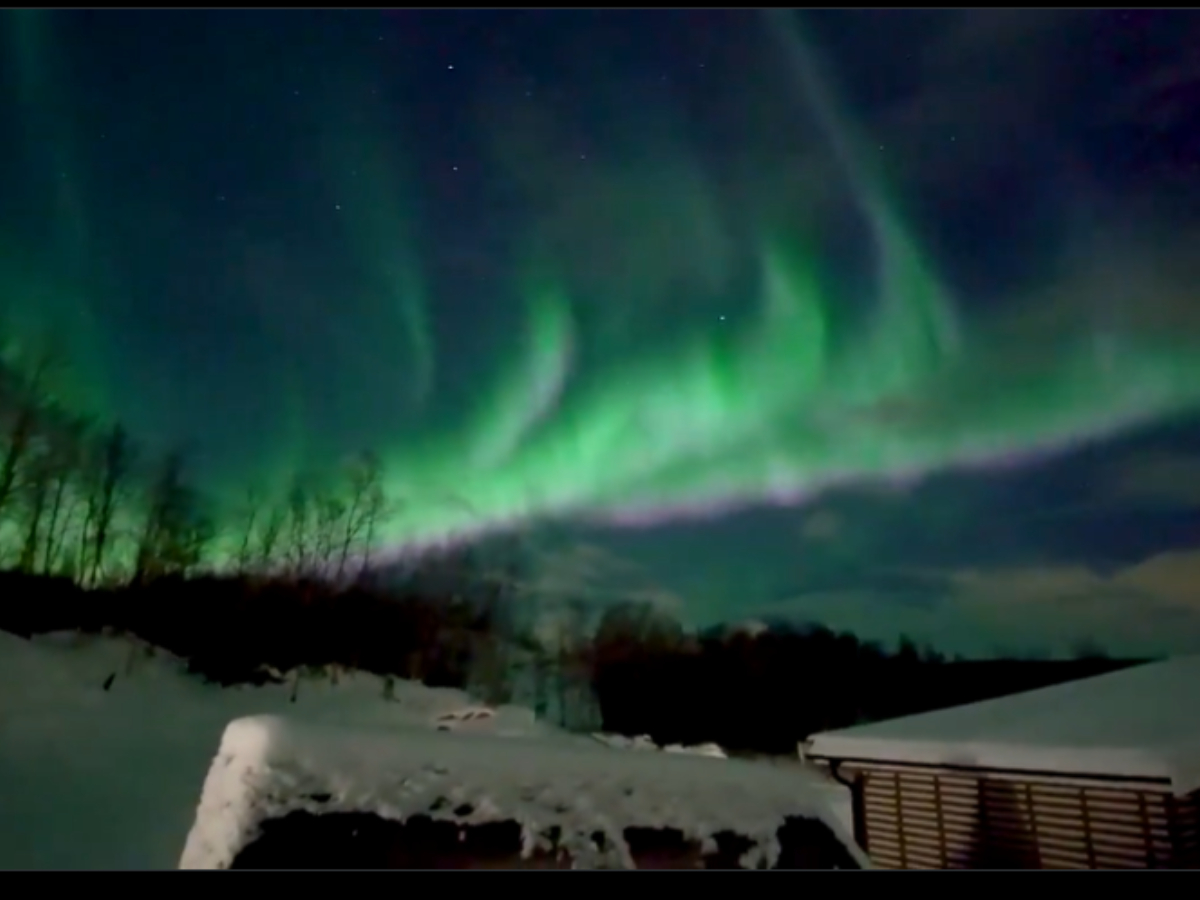
For most of the public, the primary impact of a geomagnetic storm is the potential for spectacular auroral displays. During a G3 storm, auroras typically expand to latitudes around 50 degrees geomagnetic latitude. If conditions briefly reach G4, they can extend even further, reaching mid-latitude regions.
Countries and regions most likely to witness spectacular displays include:
- North America: Canada, the northern United States (states like Michigan, Wisconsin, Minnesota, New York, and even as far south as Pennsylvania or Oregon under strong conditions).
- Europe: Scandinavia (Norway, Sweden, Finland), Iceland, Scotland, and parts of the northern UK. Under G4 conditions, auroras could be visible from central Europe.
- Southern Hemisphere: New Zealand, Tasmania, and southern Australia.
Could the Northern Lights Be Seen From India?
The prospect of auroras being visible from India is genuinely rare and exciting. India lies at relatively low geomagnetic latitudes, making aurora sightings exceptionally uncommon. However, during particularly strong geomagnetic storms that briefly reach G4 (Severe) levels, the auroral oval can expand significantly. If this expansion occurs, and provided weather conditions are perfectly clear and skies are dark (away from city light pollution), observers in parts of northern India could potentially witness a faint, reddish glow near the northern horizon. Such a sighting would be an extraordinary event, not a vibrant, overhead display typically seen in polar regions, but a subtle, distant phenomenon. While it remains a long shot, the possibility adds an intriguing dimension to this space weather event.
The Unpredictable Variable: Magnetic Orientation (Bz)
The single most significant challenge in forecasting the exact impact and visual extent of this storm is the precise orientation of the magnetic field embedded within the incoming solar cloud, particularly its north-south component (Bz). As mentioned, forecasters will only have a window of 15 to 60 minutes of lead time once the CME passes monitoring satellites at L1 before knowing definitively how strongly it will interact with Earth’s magnetosphere. This inherent uncertainty means that what is currently forecast as a G3 storm could either materialize as a more subdued G2 event or intensify into a more dramatic G4 storm, with direct consequences for both technological systems and aurora visibility.
Broader Context: Solar Cycle 25 and Space Weather Preparedness
This powerful solar eruption is not an isolated incident but rather indicative of the Sun’s increasing activity as Solar Cycle 25 progresses towards its anticipated peak, or "solar maximum," in the next year or two. During solar maximum, powerful flares and CMEs become more frequent, underscoring the growing importance of space weather forecasting and preparedness strategies. Governments, industries, and scientific institutions are investing more in understanding and mitigating the potential economic and societal impacts of severe space weather, highlighting its emergence as a critical aspect of national infrastructure resilience.
Conclusion
As the powerful solar eruption races towards Earth, the world holds its breath, balancing scientific fascination with practical concern. Today, June 8, 2026, promises to be a pivotal day for space weather. Whether it brings a spectacular, widespread celestial light show, particularly for those in unexpected latitudes like northern India, or primarily serves as a test for our technological resilience against the Sun’s raw power, the event underscores our planet’s constant interaction with the dynamic forces of our solar system. Space weather agencies remain on high alert, awaiting the final, crucial data that will determine the full drama of tonight’s cosmic encounter.
