

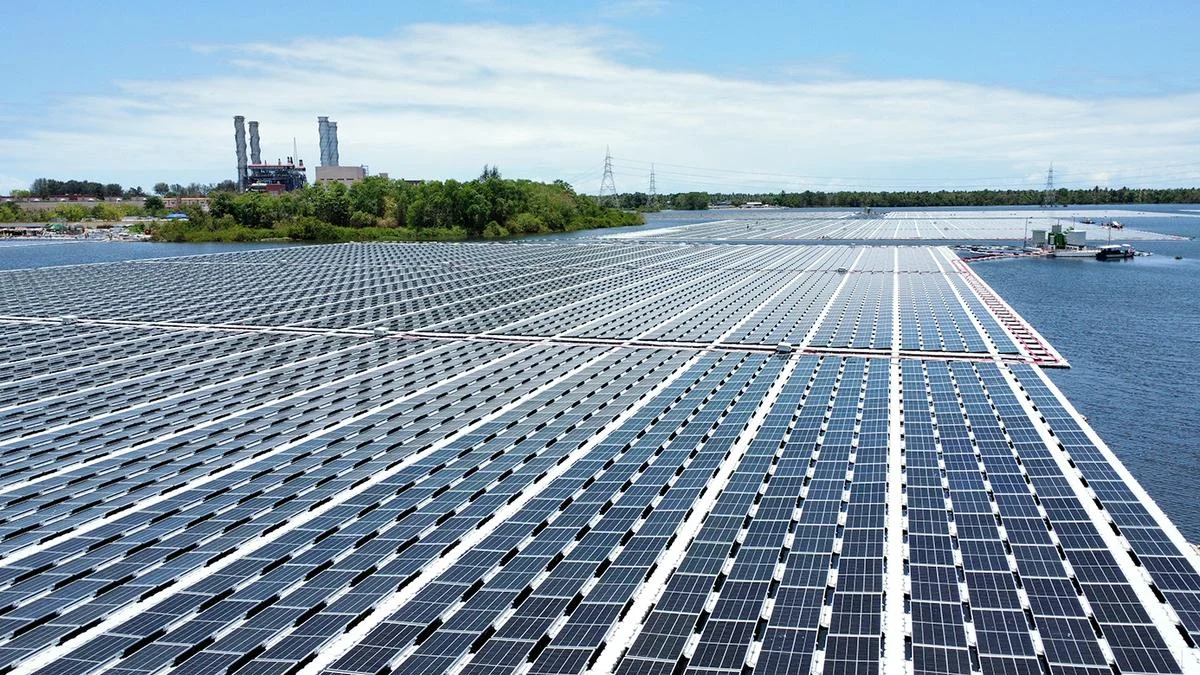
New Delhi, India – In a landmark move poised to redefine India’s renewable energy landscape, the Union Cabinet has officially approved the Pradhan Mantri Surya Sarovar Yojana (PM-SSY). This ambitious central-sector scheme is designed to establish a colossal 5,000 MW of floating solar photovoltaic (FSPV) capacity across the nation’s vast network of reservoirs and other water bodies. With a substantial total outlay of ₹5,070 crore, the initiative marks a strategic pivot towards innovative, space-efficient solutions to meet India’s escalating energy demands and ambitious climate commitments.
The PM-SSY is not merely about generating electricity; it’s a comprehensive strategy integrating cutting-edge technology with sustainable practices. A key differentiator of this scheme is the provision of Central Financial Assistance (CFA) of up to ₹1 crore per MW, disbursed only upon the successful commissioning of a plant. Crucially, every project under the PM-SSY mandates pairing with an energy storage system of at least two hours’ capacity, collectively aiming for 10,000 MWh of storage across all projects. This forward-thinking inclusion is designed to empower states to harness stored solar power to effectively meet peak demand, addressing one of the most persistent challenges of intermittent renewable energy sources.
The Solar Energy Corporation of India (SECI), a vital catalyst in India’s renewable energy journey, has been entrusted with the crucial responsibility of implementing the PM-SSY. The government anticipates that this scheme will attract significant private investment, projected to be around ₹28,500 crore, thereby stimulating economic growth and fostering a robust ecosystem for green technology. Currently, India’s installed floating solar capacity stands at a nascent approximately 0.7 GW, a stark contrast to the estimated potential of 102 GW that lies untapped across its water bodies. The PM-SSY, therefore, represents a monumental leap towards realizing this immense potential.
The Genesis of a Green Initiative: India’s Evolving Energy Strategy
India’s journey towards a sustainable energy future has been marked by aggressive targets and innovative policy frameworks. With a rapidly growing economy and a burgeoning population, the demand for energy continues to soar. For years, the focus has predominantly been on ground-mounted solar installations, which have seen remarkable growth, contributing significantly to India’s non-fossil fuel capacity. However, this growth has increasingly encountered a fundamental bottleneck: land availability.
The National Institute of Solar Energy (NISE), the technical arm of the Ministry of New and Renewable Energy (MNRE), highlighted this pressing issue in its June 2026 potential assessment. It underscored that while sunlight is abundant, suitable, contiguous land parcels for utility-scale solar projects are becoming increasingly scarce. This scarcity is exacerbated by competing demands from agriculture, urban expansion, industrial development, and forest conservation. It is against this backdrop of land constraints and the need for diversified renewable energy sources that the concept of floating solar power gained prominence, culminating in the strategic approval of the PM-SSY. The scheme is a testament to India’s adaptive approach, leveraging its natural resources – in this case, its vast network of water bodies – to propel its green energy transition forward.
Unpacking Floating Solar: A Technical Deep Dive
A floating solar plant, or FSPV, represents an ingenious adaptation of conventional solar technology. Instead of occupying valuable land, these solar arrays are strategically deployed on the surface of water bodies such as reservoirs, irrigation tanks, industrial ponds, or hydropower lakes. The fundamental principle remains the same: photovoltaic panels convert sunlight into electricity. The innovation lies in the modular flotation-and-mooring system that supports these panels.
The construction typically involves assembling modular blocks of panels onshore, which are then carefully floated out onto the water surface. These arrays are held firmly in place by a sophisticated system of anchors and mooring lines, meticulously designed to withstand environmental forces such as wind, waves, and fluctuations in water levels. Inverters, essential for converting the direct current (DC) produced by the panels into alternating current (AC) suitable for the grid, can be positioned either directly on the floats within the array or on the adjacent bank. Robust cables then run across the floats to a substation located on the shore, from where the generated electricity is evacuated into the national grid.
Beyond merely saving land, FSPV offers several operational advantages. The inherent cooling effect of the water beneath the panels can lead to a slight increase in energy yield compared to land-based installations, as solar panels operate more efficiently at lower temperatures. Additionally, the shading provided by the solar arrays helps to reduce water evaporation from the surface, a significant benefit in water-stressed regions, and can also inhibit the growth of algae, contributing to better water quality management in some contexts.
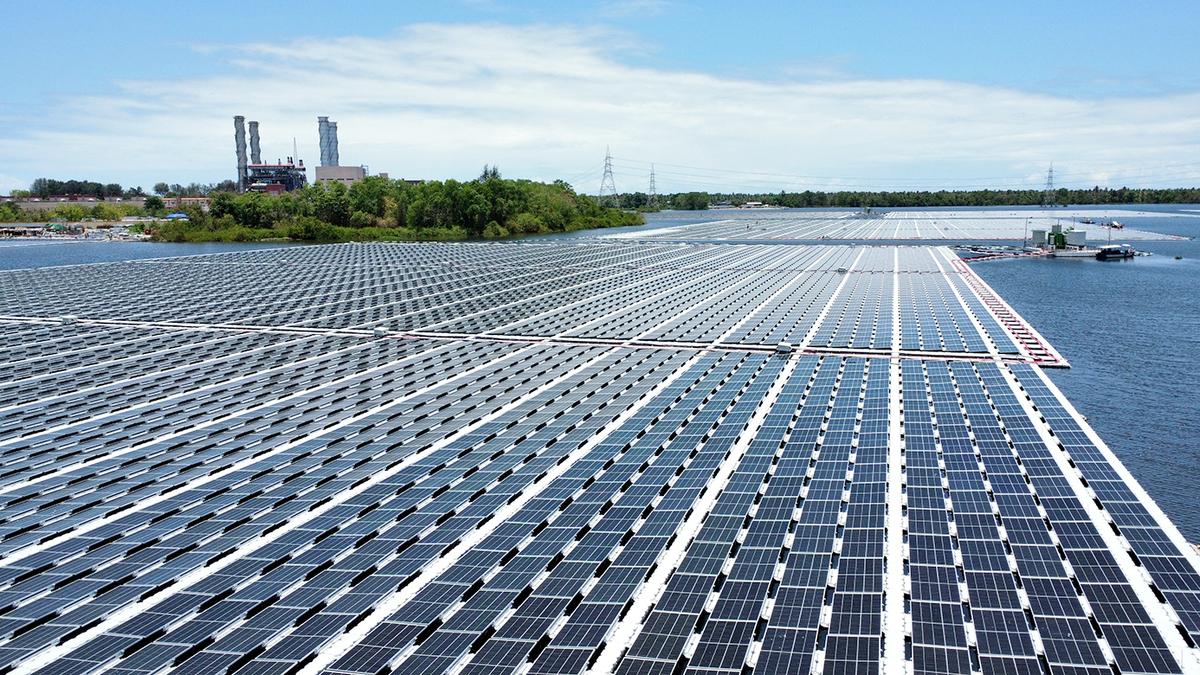
However, like any nascent technology, FSPV comes with its unique set of trade-offs and challenges, primarily mechanical. Continuous motion from waves and currents can exert wear and tear on floats, joints, and cables over time. Reports from existing projects have occasionally cited instances of DC cable breakage, highlighting the need for robust engineering and material selection. Safety is another paramount concern, with potential hazards such as slippery walkways on the floats and restricted access during monsoon seasons. These operational realities necessitate the deployment of highly trained crews and the implementation of stringent safety protocols to ensure the longevity and safe operation of these floating giants.
Addressing India’s Energy Imperatives: Why Floating Solar, Why Now?
The advent of the PM-SSY is not coincidental; it directly addresses several critical energy and environmental challenges facing India.
The Land Conundrum: A Scarce Resource
India’s dense population and rapid development have made land one of its most contested resources. The expansion of utility-scale solar power, which requires vast, contiguous parcels of land, has increasingly faced hurdles. Land acquisition processes often trigger protracted disputes over compensation, displacement of communities, and changes in land use, frequently pitting development against agricultural livelihoods or ecological preservation. These challenges can significantly slow down project timelines and escalate costs.
Floating solar technology elegantly sidesteps most of these issues. By utilizing existing water bodies, it dramatically reduces the requirement for land acquisition, needing it only for minimal onshore infrastructure such such as cabling to evacuate power to the grid and substations. This not only accelerates project development but also helps in distributing solar generation to states that might not be rich in barren or underutilized land but possess numerous large reservoirs, thereby promoting a more decentralized and equitable deployment of renewable energy capacity.
Taming the Sun’s Variability: The Role of Energy Storage
India has made impressive strides in solar capacity, nearing 100 GW. However, a significant operational challenge has emerged: the "curtailment problem." Curtailment refers to the intentional reduction or suppression of solar power output, typically during midday peaks, due to a lack of sufficient battery storage or grid flexibility. Without storage, excess solar power generated when demand is low cannot be saved and is often wasted, while conventional thermal plants must remain operational to ensure grid stability and meet evening peak demand.
The mandatory energy storage component of the PM-SSY is a game-changer. By requiring every FSPV project to be paired with at least two hours of storage, the scheme ensures that the electricity generated can be stored and strategically dispatched to meet the evening peak demand, rather than being curtailed during the day. This not only maximizes the utilization of solar power but also enhances grid stability, reduces reliance on conventional power sources during peak hours, and improves the overall economics of solar projects by providing firm, dispatchable power. This strategic integration of storage is crucial for India’s grid modernization efforts and its transition towards a higher share of renewables.
De-risking Innovation: Government’s Proactive Support
Floating solar is still a relatively nascent technology in India, and state governments often lack extensive experience in its deployment. Recognizing this, the Centre has taken a proactive approach under the PM-SSY by offering advance CFA for feasibility studies. This financial assistance, ranging from ₹30 lakh and rising to ₹50 lakh per site, is earmarked to fund crucial preparatory work. This includes detailed bathymetry (mapping the depth and contours of the waterbody) and hydrography surveys (studying water flow and characteristics), comprehensive assessments of the potential ecological impact on the waterbody, and precise solar-yield assessments.
By absorbing these upfront costs and the technical burden associated with early-stage project development, the Centre significantly de-risks the technology for state governments and potential developers. This strategic intervention aims to lower the entry barrier, making it more attractive for states to come forward with FSPV projects and accelerate the adoption of this innovative technology. The requirement for a detailed feasibility report within nine months ensures a structured and efficient project evaluation process.

Global Footprint and Learning Curve
Floating solar has rapidly transitioned from a niche application to a mainstream renewable energy solution within the span of a decade. Global cumulative capacity reached approximately 9.6 GW by 2024, with an impressive 1 to 1.2 GW being added annually through more than 500 completed projects worldwide. Asia stands at the forefront of this revolution, accounting for over 90% of global installations. China leads the pack, followed closely by countries such as India, South Korea, and Japan, where inherent land scarcity, supportive government policies, and an abundance of suitable reservoirs have been key drivers for adoption.
Europe represents a smaller but rapidly expanding market, with installations surging from a mere 10 MW in 2017 to nearly 270 MW by 2022. The Netherlands, with its intricate network of waterways and a strong commitment to renewable energy, accounts for roughly three-quarters of the continent’s capacity. Emerging players like Israel, Brazil, Chile, Ghana, and Australia are also actively exploring and investing in FSPV, demonstrating its global appeal and versatility. The World Bank has underscored the immense global potential, estimating that even partial utilization of the world’s man-made reservoirs could support several terawatts of solar power, far exceeding current deployment levels. This global experience provides a rich learning ground for India, allowing it to leverage best practices and avoid potential pitfalls.
The Economics and Logistics of Water-Based Solar
While FSPV offers compelling advantages, it also presents unique economic and logistical considerations that warrant careful attention.
Cost Comparison: A Premium for Efficiency
The Ministry of New and Renewable Energy (MNRE) estimates that ground-mounted solar projects typically cost between ₹3.9 and ₹4.2 crore per MW. In contrast, floating solar photovoltaic (FSPV) projects are estimated to be approximately 25% higher, ranging from ₹4.9 to ₹5.2 crore per MW. This higher capital expenditure is primarily attributable to the specialized components required for water-based installations, including the robust floats, anchors, and mooring systems that ensure the stability and longevity of the array. Furthermore, the mandatory battery energy storage system, a critical component of the PM-SSY, adds an additional cost of ₹0.9 to ₹1.2 crore per MWh.
Despite the higher initial investment, the long-term benefits, such as reduced land acquisition costs, potential for increased energy yield due to water cooling, and the ability to provide dispatchable power, are expected to justify this premium. The CFA provided by the Centre also helps to mitigate a portion of this additional cost, making projects more financially viable for developers and states.
Navigating Operational Challenges: The Water Level Factor
One of the significant operational risks associated with FSPV projects is fluctuating water levels in reservoirs. The PM-SSY report specifically warns that "changes in water level alter mooring line tensions and movement envelopes," which can adversely affect the stability and structural integrity of the solar array over time. Sites characterized by rapid or unpredictable water level fluctuations necessitate highly adaptive mooring designs and ongoing monitoring to ensure system resilience and prevent damage.
Beyond mechanical considerations, the ecological impact of large-scale FSPV installations on aquatic ecosystems is a subject of ongoing research. While shading can reduce evaporation and algae, it can also alter water temperature profiles, light penetration, and dissolved oxygen levels, potentially impacting aquatic flora and fauna. The feasibility studies funded by the Centre are crucial for thoroughly assessing these ecological implications and ensuring that projects are designed and operated in an environmentally responsible manner.
Identifying Potential: States Leading the Charge
An assessment of India’s potential for floating solar reveals significant opportunities across various states. Maharashtra leads with an estimated potential of 16.28 GWp (gigawatt peak), closely followed by Madhya Pradesh with 14.89 GWp. Other states with substantial potential include Karnataka, Odisha, Telangana, and Gujarat. Notably, several of these states are not traditionally considered "renewables-rich" in terms of readily available barren land or high wind speeds. This makes the PM-SSY a powerful tool for decentralized solar deployment, enabling states to diversify their energy mix and contribute to national renewable energy targets without being constrained by land availability.

Currently, India’s existing floating solar fleet is relatively small and, crucially, lacks the mandatory battery storage component that the PM-SSY now makes compulsory. The Omkareshwar park in Madhya Pradesh, operating as two distinct plants, and another project under construction in Jharkhand, represent the pioneering efforts in this domain. Their experiences will provide valuable insights, but the PM-SSY’s requirement for integrated storage marks a significant evolution in India’s FSPV strategy.
Implications for India’s Green Future
The Pradhan Mantri Surya Sarovar Yojana is more than just an energy scheme; it is a strategic pillar supporting India’s grand vision for a sustainable and self-reliant future.
Bolstering Climate Commitments
The addition of 5,000 MW of floating solar capacity directly contributes to India’s updated Nationally Determined Contribution (NDC) and its ambitious Panchamrit goals. These commitments include achieving 500 GW of non-fossil fuel electricity capacity by 2030 and reaching net-zero emissions by 2070. The government estimates that the PM-SSY alone will abate approximately 10 million tonnes of CO2 emissions annually, making a tangible impact on India’s carbon footprint and its global climate responsibilities. This reduction in greenhouse gas emissions is vital for combating climate change and transitioning to a cleaner energy economy.
Economic Growth and Job Creation
The anticipated investment of ₹28,500 crore into the floating solar sector under the PM-SSY is poised to generate significant economic activity. The scheme is projected to create between 16,000 and 17,000 jobs across the entire value chain, from manufacturing of floats and panels to project development, installation, operation, and maintenance. This influx of employment opportunities will provide a boost to local economies and foster skill development in green technologies, supporting India’s broader economic growth agenda. Moreover, it encourages domestic manufacturing capabilities for FSPV components, reducing reliance on imports and strengthening the "Make in India" initiative.
Towards Energy Security and Sustainability
By diversifying its energy sources and strategically deploying solar power on underutilized water bodies, India takes a significant step towards enhancing its energy security. The ability to generate dispatchable solar power through integrated storage reduces reliance on fossil fuels, particularly during peak demand periods, and provides greater stability to the national grid. The PM-SSY embodies a sustainable approach to energy development, minimizing environmental impact by conserving land and water, while maximizing the utilization of abundant solar resources. It marks a critical juncture in India’s quest for energy independence and environmental stewardship, positioning the nation as a leader in innovative renewable energy solutions.
In conclusion, the Pradhan Mantri Surya Sarovar Yojana is a testament to India’s unwavering commitment to a green and prosperous future. By harnessing the untapped potential of its water bodies, integrating crucial energy storage, and proactively de-risking technology for states, India is not just building power plants; it is building a resilient, sustainable, and equitable energy future for generations to come.
