

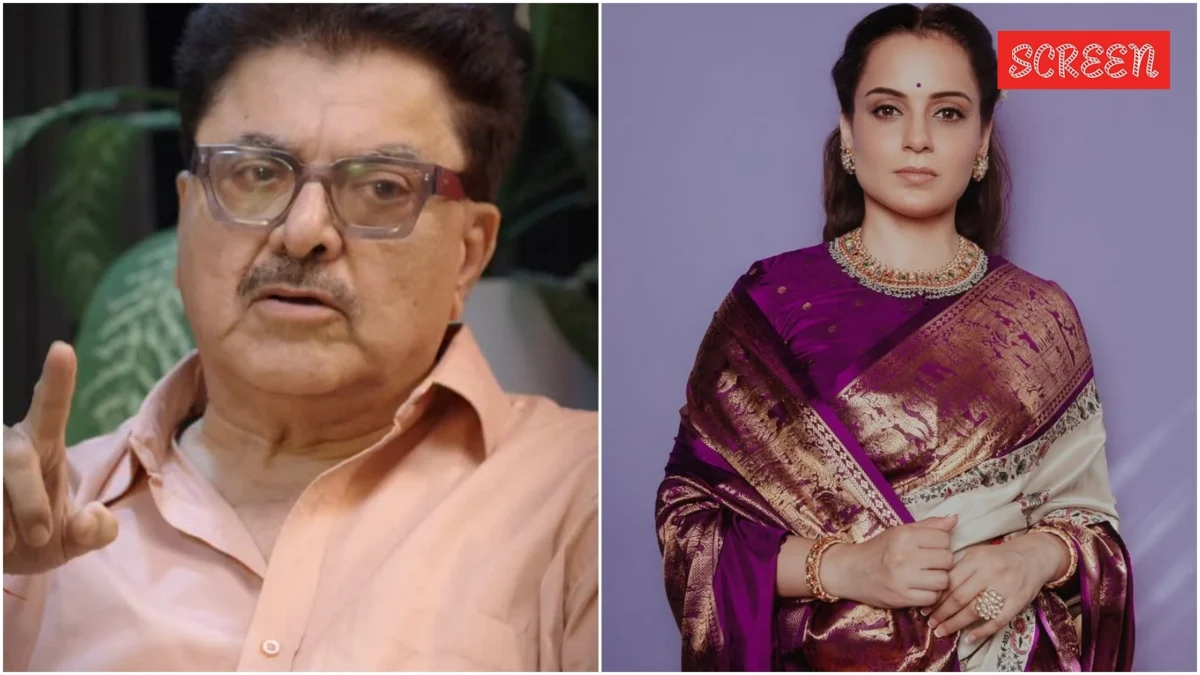
Bengaluru, June 3, 2026 – The Indian film industry finds itself at a crossroads, grappling with a burgeoning controversy surrounding actor Ranveer Singh and the highly anticipated "Don 3." The Federation of Western India Cine Employees (FWICE), a prominent industry body, recently issued a non-cooperation directive against Singh, sparking a wave of reactions and commentary from various stakeholders. In a pointed rebuttal, FWICE chief advisor Ashoke Pandit has strongly criticized actor-turned-politician Kangana Ranaut for her public remarks on the matter, emphasizing that her commentary, and that of others, appears to stem from a superficial understanding of the complex issues at play. This development comes as FWICE has now officially revoked the non-cooperation directive, signaling a potential de-escalation of the internal conflict.
The furore began following reports of Ranveer Singh’s alleged withdrawal from the highly anticipated "Don 3," a move that reportedly incurred significant financial repercussions for the film’s producers. In response to complaints lodged with FWICE, the federation took the drastic step of issuing a directive advising its members against collaborating with Singh until the dispute was resolved. This action, however, proved to be a catalyst for broader industry discussions and, as it turns out, considerable public commentary.
Kangana Ranaut’s Support and Pandit’s Sharp Retort
During a recent public appearance, Kangana Ranaut, known for her forthright opinions, offered her perspective on the developing situation. She appeared to lend her support to Ranveer Singh, articulating a sentiment often voiced in the entertainment world: "Jab haisiyat badhti hai toh dushman bhi badhte hain" (As one’s stature grows, so do their enemies). This observation implied that opposition and challenges are an inevitable consequence of success and rising prominence within the industry.
However, Ashoke Pandit, speaking to the media after announcing the revocation of the directive, did not mince words in his criticism of Ranaut’s commentary. He dismissed her observation as a mischaracterization of the core issue and questioned her grasp of the situation’s nuances. Pandit expressed his dismay at what he perceived as a trend of industry professionals reacting to sensational headlines rather than delving into the factual basis of the dispute.
"A lot of people in the industry have started abusing us," Pandit stated during a press conference. "Yesterday, Kangana also said something. They are not understanding the whole issue, and people are just commenting. Kangana also said that even I have been banned by the industry. I said, ‘You talk nonsense, that’s why I banned you.’ I don’t care. There is a big issue of the industry here. You don’t even know the issue. You are just saying things. We are not against Ranveer. We are talking about what has happened."
Pandit’s strong reaction underscores a perceived disconnect between the public pronouncements of some industry figures and the internal workings of bodies like FWICE. He argued that such commentary, while potentially well-intentioned, risks misinforming the public and exacerbating tensions without contributing to a resolution.
Clarifying FWICE’s Stance: Beyond Personal Grudges
Ashoke Pandit took pains to clarify that FWICE’s initial action was not a personal vendetta against Ranveer Singh. Instead, he emphasized that the federation’s concerns were rooted in principles of professional accountability and the broader ramifications of contractual disputes on the entire film ecosystem. He highlighted that decisions like these have a ripple effect, impacting not just the stars but also producers, technicians, and the countless workers who form the backbone of film production.
"We are not against Ranveer," Pandit reiterated. "We are talking about what has happened. People should understand the background and circumstances that prompted the federation’s action before forming opinions or reacting publicly to the controversy." This statement serves as a call for a more informed and nuanced approach to understanding industry-related disputes, urging stakeholders to look beyond superficial narratives and consider the systemic implications.
The filmmaker stressed that the federation’s primary objective is to safeguard the interests of its members and ensure ethical practices within the industry. He suggested that the swift issuance of opinions and judgments by some public figures without a thorough understanding of the facts can undermine the efforts of organizations like FWICE to maintain order and fairness.
The Genesis of the ‘Don 3’ Controversy: A Contractual Quagmire
The controversy itself originated from reports detailing Ranveer Singh’s alleged exit from "Don 3." This departure, according to the complaints received by FWICE, resulted in substantial financial losses for the film’s producers. It is a common scenario in the film industry where contractual obligations, once agreed upon, carry significant financial weight. Any deviation from these agreements can lead to substantial economic fallout for all parties involved.
Following these complaints, FWICE, as a representative body for film employees, felt compelled to investigate. The non-cooperation directive was issued as a measure to address the alleged breach of contract and its consequences. It is crucial to understand that, as Ashoke Pandit later clarified, this was not a legal ban in the strictest sense, but rather a directive advising its members against engaging with the actor until the matter was amicably resolved. This distinction is important, as it highlights the federation’s role as a mediator and enforcer of industry norms rather than a judicial body.
The "Don 3" project, envisioned as a continuation of the iconic franchise, carries immense commercial and cultural significance. Any disruption in its production process, particularly at an advanced stage or involving a leading star, can have far-reaching implications for the studio, the cast, and the crew. The financial implications of such disruptions are often complex, involving advance payments, marketing budgets, and potential revenue losses.
FWICE Revokes Directive: A Move Towards Harmony
In a significant development that signals a potential cooling of tensions, the Federation of Western India Cine Employees (FWICE) has officially withdrawn its non-cooperation directive against Ranveer Singh. This decision, made approximately a week after the initial directive was issued, comes in response to appeals from fellow industry bodies, including the Indian Motion Picture Producers’ Association (IMPPA) and the Cine and TV Artists Association (CINTAA).
The intervention of these respected organizations underscores the importance of inter-industry cooperation and the desire to maintain a harmonious working environment. FWICE’s decision to revoke the directive, while acknowledging its commitment to addressing the underlying issues, demonstrates a willingness to prioritize industry unity.
While the federation has chosen to withdraw the immediate non-cooperation directive, it has also stated that its legal team will continue to engage with the legal notices sent by Ranveer Singh’s representatives. This suggests that while the public confrontation may be de-escalated, the underlying contractual and legal aspects of the dispute may still be under discussion. The revocation of the directive, however, is a clear indication that FWICE prioritizes maintaining peace and collaborative spirit within the vibrant and interconnected world of Indian cinema.
Implications for the Industry: Accountability and Collaboration
The entire episode surrounding Ranveer Singh and "Don 3" raises critical questions about accountability, contractual obligations, and the role of industry bodies in mediating disputes. Ashoke Pandit’s firm stance, even in the face of criticism, highlights the challenges faced by federations in enforcing standards and ensuring fair practices. His emphasis on understanding the "issue" before reacting suggests a desire for a more informed and responsible discourse within the industry.
Kangana Ranaut’s comments, while perhaps intended to offer a sympathetic ear, inadvertently positioned her as an antagonist to FWICE’s position, thereby fueling the public debate. Her remarks, coupled with Pandit’s sharp rejoinder, exemplify the potential for public figures to inadvertently inflame controversies with their pronouncements, especially when the complexities of the situation are not fully grasped.
The intervention of IMPPA and CINTAA, leading to the revocation of the directive, demonstrates the power of collective action and the importance of dialogue between different industry stakeholders. It suggests that while disagreements are inevitable, a collaborative approach is often the most effective path towards resolution.
Ultimately, this controversy serves as a stark reminder of the intricate web of relationships and responsibilities that define the Indian film industry. While the allure of box office success and star power often dominates headlines, the bedrock of the industry lies in the commitment, professionalism, and ethical conduct of all its members. The events surrounding "Don 3" underscore the ongoing need for transparency, clear communication, and a shared understanding of the principles that govern this dynamic and ever-evolving creative landscape. The revocation of the directive offers a moment of respite, but the underlying lessons regarding accountability and respectful discourse remain pertinent for the future of Indian cinema.
