

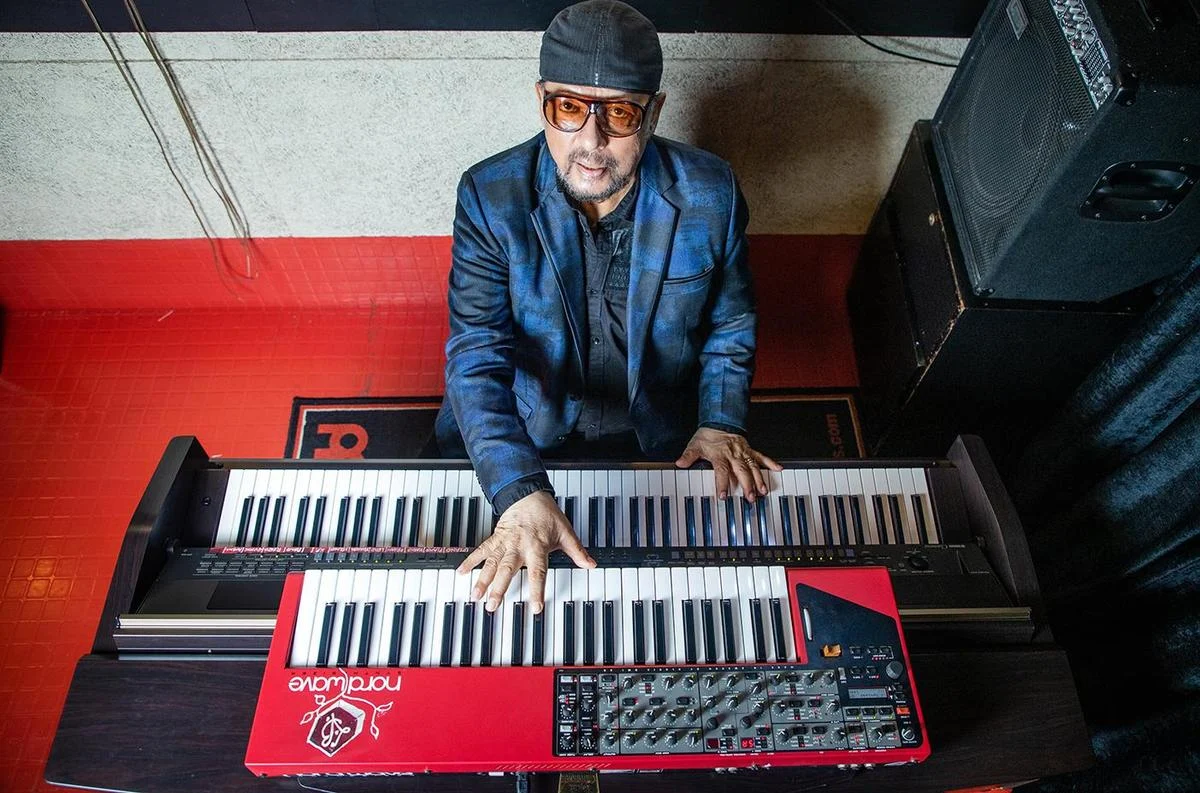
Mumbai, India – In the vibrant tapestry of Indian music, the name Banks resonates with a profound legacy, a lineage synonymous with innovation and a relentless pursuit of sonic exploration. Louiz Banks, the revered "Godfather of Indian Jazz," carved a unique path, blending Western jazz sensibilities with the rich rhythms and melodies of India. Now, his son, drummer Gino Banks, is not only upholding this illustrious heritage but is actively breathing new life into it through his ambitious "Gino Banks’ Legacy" project. This initiative, recently showcased at the prestigious Studio Theatre at the Nita Mukesh Ambani Cultural Centre in Mumbai, aims to unearth and reimagine some of Louiz Banks’ less-celebrated compositions, introducing them to a new generation of musicians and audiences.
The "Gino Banks’ Legacy" project is more than just a tribute; it’s a dynamic dialogue between generations, a testament to the enduring power of musical ideas and the transformative potential of collaboration. Gino, a seasoned drummer in his own right, has long harbored a desire to delve into his father’s extensive yet sometimes overlooked catalog. He envisioned a contemporary interpretation, one that would leverage the diverse talents of emerging Indian musicians, infusing these classic pieces with fresh perspectives and improvisational flair.
A Fusion of Tradition and Innovation
The recent presentation at the Nita Mukesh Ambani Cultural Centre was a powerful embodiment of this vision. The ensemble, a carefully curated collective of virtuosos, presented an Indo-fusion set that captivated the audience. At the heart of the rhythm section, Gino Banks commanded the drums, his percussive prowess a natural extension of his father’s groundbreaking work. He was joined by S. Akash on the ethereal bansuri, whose flute-like tones wove intricate melodies. The sharp, evocative strains of the sarod, masterfully played by Pratik Srivastava, added a distinct North Indian classical flavor.
The harmonic landscape was enriched by Deivat Tapodhan on the keyboard, whose versatile playing provided both foundational textures and intricate solo passages. The grounding force of the ensemble was Aditya Ahir on bass, his solid grooves anchoring the diverse musical elements. Adding a layer of profound rhythmic complexity and vocal prowess was Ganesh Murali Iyer, a master of Carnatic percussion and konnakol, whose intricate vocalizations and percussive artistry are a cornerstone of South Indian classical music. Rounding out the ensemble was vocalist Jyothishri Raghuram, whose voice served as a soulful conduit, interpreting the melodies with grace and emotion.
The setlist was a carefully selected journey through Louiz Banks’ oeuvre, featuring compositions that may not have received the widespread recognition of some of his more iconic works. Among the pieces that resonated through the theatre were "Raga of The Heart," a piece that likely explored the emotional depths of its titular raga; "Benaras," a composition that perhaps evoked the spiritual and cultural vibrancy of the holy city; "Leap of Faith," suggesting a bold and adventurous musical exploration; and "11 Pieces of Silver," a title that hints at a narrative or thematic depth. Gino Banks emphasized that several of these pieces had not been performed live with frequency, making their reintroduction all the more significant.
In a poignant nod to another titan of Indian fusion, the ensemble also paid homage to Ustad Zakir Hussain and the seminal fusion group Shakti by performing their influential track, "Bending the Rules." This inclusion underscored the interconnectedness of the Indian fusion landscape and the profound influence of artists like Hussain and Shakti on subsequent generations.
The Creative Process: Respecting the Melody, Embracing Improvisation
Gino Banks articulated the core philosophy behind the "Legacy" project: "With a different line-up compared to what the compositions were originally written for, the basic melody was retained, and the musicians added their own flavour in the improvised solos." This statement encapsulates the delicate balance that defines successful fusion – a deep respect for the original material coupled with the freedom for individual expression.
The original compositions of Louiz Banks, often imbued with complex melodic structures and harmonic intricacies, serve as the foundational bedrock. However, the contemporary ensemble, with its diverse instrumental palette and individual artistic voices, brings a fresh energy. The bansuri, sarod, Carnatic percussion, and the Western drum kit, bass, and keyboards are not merely juxtaposed; they are interwoven through a shared understanding of musicality. The improvisational solos, where each musician is encouraged to explore their unique voice, are where the true magic of "Gino Banks’ Legacy" unfolds. This approach ensures that the music remains vibrant, dynamic, and relevant to contemporary audiences while honoring its roots.
A Forthcoming Album and a Deepening Connection
The "Gino Banks’ Legacy" project is not confined to live performances. Gino has revealed his intention to record an album dedicated to these rediscovered compositions. This forthcoming record promises to be a significant addition to the Indian jazz and fusion discography. Adding a deeply personal touch, Louiz Banks himself is slated to contribute to a couple of tracks on the album. This intergenerational collaboration, father and son creating music together once more, is a powerful narrative in itself.
While the album will feature the core musicians from the recent live performance, Gino plans to invite guest artists to further enhance the sonic tapestry and introduce additional layers of variety. This commitment to collaborative growth and the inclusion of diverse musical perspectives will undoubtedly make the album a compelling listen.

Gino’s own musical journey is deeply intertwined with his father’s. He recounts accompanying Louiz Banks for the first time at the tender age of nine, playing percussion on tracks with the fusion band Sangam during their tours of Australia and China. This early exposure to the rigors and rewards of professional musicianship laid the groundwork for his future career. Nine years later, in 2001, he took center stage as a full-time drummer with the group Nexus at the renowned Jazz By The Bay festival, marking a significant milestone in his development as a percussionist.
Enduring Collaborations and Musical Expansions
The musical relationships Gino has cultivated over the years are a testament to his collaborative spirit and his ability to connect with musicians across different genres and generations. His early apprenticeship with bassist Sheldon D’Silva, with whom he shared similar influences and a dedication to honing their craft, forged a strong rhythmic partnership. This "drum and bass combo" foundation has been a constant throughout his musical evolution.
From his Nexus days, Gino has maintained a fruitful collaboration with guitarist Chandresh Kudwa. This partnership represents the "rock side" of Gino’s musical personality, a dimension that adds a powerful edge to his otherwise jazz and fusion-centric explorations. Their reunion for the album Free Spirit, featuring bassist Mohini Dey, and subsequent live performances, highlight the enduring creative synergy between them. Gino’s recent tour with Chandresh and his daughter, Eva, further underscores the organic and evolving nature of these musical connections.
Beyond his performance commitments, Gino Banks is also a dedicated curator and advocate for the drumming community in India. He has been instrumental in organizing the annual Mumbai Drum Day, an event that serves as a vital platform for both established and emerging drummers. This initiative showcases a diverse range of talent, providing exposure to musicians who might otherwise remain undiscovered. The event’s commitment to inclusivity, featuring artists from across India, and its willingness to incorporate a variety of percussive styles, including the fusion of Western drum sets with traditional Indian taal, make it a unique and valuable contribution to the music scene.
Furthermore, Gino has been a regular presence at Prithvi Theatre in Juhu, curating monthly shows. The Jazz@Prithvi series, conceptualized with Kunal Kapoor, leverages the intimate setting of the theatre, which famously has a "no-mic policy." While this presents a challenge for vocalists, it encourages them to refine their vocal projection and explore different expressive techniques. For many musicians, the Prithvi Theatre experience offers a distinct and rewarding artistic challenge, fostering a deeper connection with their instruments and their audience.
A Multifaceted Musical Journey
Gino’s musical endeavors extend beyond the jazz and fusion realms. Over the past year, he has contributed his drumming talents to a variety of projects. He played on keyboardist-pianist Rahul Wadhwani’s album Time Travel and guitarist Rhythm Shaw’s record Nothing To Lose. His collaboration with saxophonist Mark Hartsuch on tour further demonstrates his versatility. He also embarked on a three-city tour with the Overdrive project, a blues-hard-rock outfit featuring vocalist Sunny D’Souza, guitarist Kush Upadhyay, and bassist Shashank Das, whose new single "Tragedy" has recently been released.
While his primary focus remains on jazz and fusion, Gino has also lent his rhythmic expertise to the Bollywood music industry. He has recorded drums for songs by prominent composers such as Shreyas Puranik, Sachin-Jigar, and Vishal-Shekhar. His contribution to A.R. Rahman’s soundtrack for Main Vaapas Aaunga, specifically on the song "Ishq Mastana," highlights his ability to adapt his drumming style to suit the diverse demands of film scoring.
Passing on Wisdom to the Next Generation
Gino Banks, as an artist who has navigated the complexities of both traditional and contemporary Indian music, possesses valuable insights for aspiring young drummers. His advice centers on the importance of embracing the rich percussive heritage of India. "The drum kit basically comes from the U.S. and has been used in jazz, rock and blues," he states. "But it always helps to learn Indian drumming techniques, as one can then interact better with other percussionists and also add an Indian touch to one’s style." This emphasis on cross-cultural learning is crucial for fostering a truly integrated and innovative Indian music scene. By understanding and incorporating elements of Indian percussion, young drummers can develop a unique voice that resonates with both local and global audiences.
The Enduring Influence of a Father
Ultimately, the most profound takeaway for Gino Banks is the experience of performing and creating music with his father. Louiz Banks, a visionary artist, is described by Gino as a mentor who embodies open-mindedness and encouragement. "He’s open-minded, encouraging others to do well, even if it means taking on a lesser role himself," Gino observes. "For him, if everyone does well collectively, the music automatically succeeds." This philosophy of collective success and selfless artistry is the very essence of a lasting legacy. It is a testament to Louiz Banks’ character and his enduring impact not only as a musician but also as a human being. Gino Banks, by actively nurturing his father’s compositions and fostering a spirit of collaborative innovation, is not merely continuing a musical lineage; he is ensuring that the values and artistry of Louiz Banks will continue to inspire and resonate for generations to come. The "Gino Banks’ Legacy" project stands as a vibrant beacon, illuminating the path forward for Indian fusion music, a path paved with respect for tradition and an unyielding embrace of the future.
