

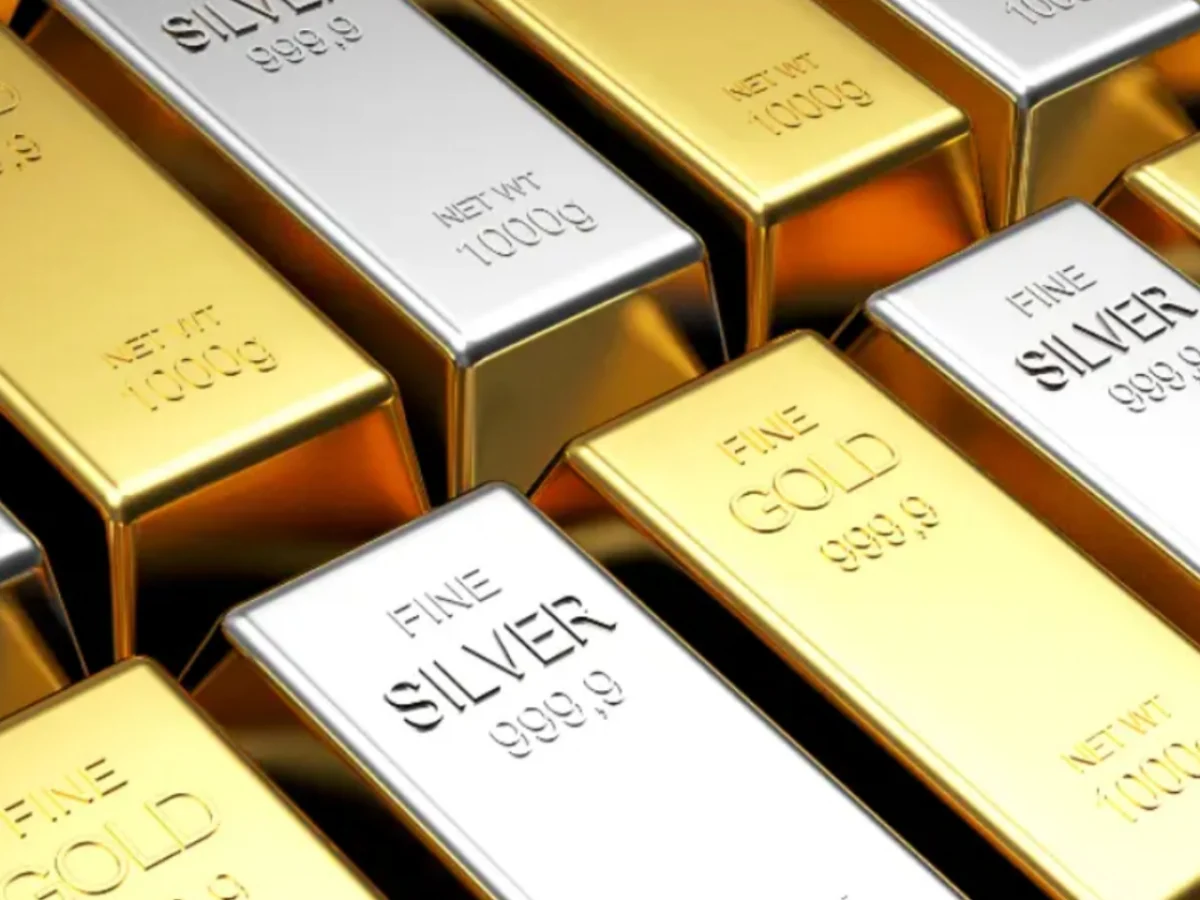
NEW DELHI – July 24, 2026 – India’s precious metals market witnessed a marginal uptick in gold and silver prices today, driven by a complex interplay of global economic trends, persistent inflationary pressures, and robust domestic demand. As of July 24, 2026, investors and consumers alike are navigating a landscape where geopolitical uncertainties, the performance of major global economies, and the fluctuating US Dollar-Indian Rupee exchange rate collectively dictate the trajectory of these ancient stores of value. The slight increase underscores the metals’ enduring appeal as both safe-haven assets and cultural cornerstones within the Indian subcontinent.
The price of 24-carat gold (999 purity) in India currently stands at Rs 14,617 per gram, with 22-carat gold (91.67% purity), commonly used in jewellery, priced at Rs 13,399 per gram. Silver, a metal with significant industrial utility alongside its investment appeal, is trading at approximately Rs 2,39,900 per kilogram for 999 purity, while Silver 925 (sterling silver) is at Rs 2,39,000 per kilogram. These figures reflect a nuanced market, responsive to both international commodity benchmarks and localised purchasing power.
A Deeper Dive into Today’s Precious Metals Market
The current pricing structure reveals a market in delicate balance. While the increases are modest, they signal underlying strengths in demand and investor confidence in precious metals as a hedge against broader economic volatility. India, being one of the world’s largest consumers of gold and a significant player in the silver market, plays a pivotal role in shaping global trends through its immense domestic consumption patterns, particularly ahead of major festive seasons.
The stability of the global financial system, coupled with regional economic developments, continues to exert significant influence. Analysts point to a scenario where persistent inflationary concerns in major economies, alongside the ongoing recalibration of interest rate policies by central banks globally, are bolstering the appeal of non-yielding assets like gold. Meanwhile, silver benefits from this sentiment, further boosted by its burgeoning industrial applications in green technologies and electronics.
)
Chronology of Influences: A Look Back at Recent Market Dynamics
The current price points for gold and silver on July 24, 2026, are not isolated figures but rather the culmination of several months of dynamic market movements. The first half of 2026 has been characterised by a series of global and domestic events that have consistently shaped the precious metals landscape.
Q1 2026: Geopolitical Tensions and Inflationary Concerns
The year began with heightened geopolitical tensions in Eastern Europe and parts of the Middle East, which traditionally serve as a strong catalyst for gold’s safe-haven demand. Investors, seeking refuge from equity market volatility and currency depreciation risks, flocked to gold, pushing prices upwards. Simultaneously, major economies, including the US and Eurozone, continued to grapple with stubbornly high inflation rates, albeit with some signs of moderation. This sustained inflationary environment provided a fundamental underpinning for gold, reinforcing its role as an inflation hedge. Central banks, notably the US Federal Reserve and the European Central Bank, maintained a cautious stance on interest rate cuts, signalling their commitment to taming inflation, which initially capped gold’s upward momentum by making yielding assets more attractive. However, the perceived long-term erosion of purchasing power kept investor interest in gold robust.

Q2 2026: Economic Data and Currency Fluctuations
As Q2 progressed, economic data from major economies became a significant driver. Stronger-than-expected economic growth figures from China initially boosted industrial demand for silver, while concerns about a potential recession in the US were mitigated, leading to some profit-taking in gold. However, a mid-quarter dip in the US Dollar Index, influenced by revised expectations regarding the Federal Reserve’s future monetary policy, provided a fresh impetus for gold prices. A weaker dollar makes dollar-denominated commodities cheaper for holders of other currencies, thus increasing demand.
Domestically, the Indian Rupee experienced periods of volatility against the US Dollar. A depreciating Rupee, often triggered by capital outflows or widening trade deficits, directly translates to higher landed costs for imported gold, consequently pushing up domestic prices. The Reserve Bank of India (RBI) intervened periodically to manage this volatility, but the overall trend saw the Rupee trading within a range that generally supported higher domestic gold prices. Local demand, though somewhat subdued immediately after the wedding season, began to pick up in anticipation of the monsoon harvest and the subsequent festive calendar.
)
Early July 2026: Anticipation and Consolidation
Leading up to July 24, the market entered a phase of consolidation. Global investors keenly awaited further cues on inflation trajectories and central bank policy actions. Reports from the World Gold Council indicated a continued, albeit moderate, increase in central bank gold purchases, signalling institutional confidence in the metal. Silver, meanwhile, saw its industrial demand forecasts revised upwards due to accelerated investments in renewable energy infrastructure, particularly solar power, and the electric vehicle sector. This period of anticipation, coupled with the inherent cultural demand in India, set the stage for the modest price increases observed today.
Supporting Data: A Granular Look at Prices and Influencing Factors
Understanding the current prices requires a detailed examination of the underlying economic forces and market dynamics specific to precious metals in India.
)
Gold Prices on July 24, 2026: Detailed Breakdown
As of today, gold prices in India reflect a slight increase driven by global demand and inflationary pressures. The specific rates are as follows:
- 24K Gold (999 Pure Gold): Rs 14,617 per gram
- 22K Gold (91.67% Pure Gold, Jewellery Standard): Rs 13,399 per gram
City-Wise Gold Rates (Source: Good Returns):
)
- Delhi:
- 24K Gold: Rs 14,632 per gram
- 22K Gold: Rs 13,414 per gram
- Mumbai:
- 24K Gold: Rs 14,617 per gram
- 22K Gold: Rs 13,399 per gram
- Kolkata:
- 24K Gold: Rs 14,617 per gram
- 22K Gold: Rs 13,399 per gram
- Chennai:
- 24K Gold: Rs 14,729 per gram
- 22K Gold: Rs 13,501 per gram
Understanding City-Wise Variations:
The slight differences in gold prices across major Indian cities can be attributed to several factors. Local taxes, transportation costs, and varying levels of regional demand play a crucial role. For instance, Chennai often exhibits slightly higher prices due to its strong cultural affinity for gold, especially in the southern states, leading to robust local demand. Mumbai and Kolkata, as major trading hubs, often reflect the national average more closely, while Delhi’s prices can be influenced by its status as a significant consumption and distribution centre.
Key Influencing Factors for Gold:
)
- Global Market Trends and Geopolitical Stability: Gold’s status as a safe-haven asset means its price is highly sensitive to global instability. Ongoing geopolitical tensions in various parts of the world, coupled with uncertainties surrounding global trade relations, prompt investors to move capital into gold. Furthermore, the performance of major global stock markets, particularly in the US and Europe, often has an inverse relationship with gold; when equities falter, gold tends to rise.
- Inflationary Pressures: The "slight increase" in gold prices today is strongly linked to persistent inflationary pressures globally. As the cost of living rises and the purchasing power of fiat currencies erodes, investors turn to gold as a store of value. Central banks’ efforts to manage inflation through monetary policy adjustments (interest rates, quantitative easing/tightening) significantly impact this dynamic. The market is constantly assessing whether central banks are "behind the curve" on inflation, which would further bolster gold’s appeal.
- US Dollar Exchange Rate (USD-INR): Since gold is internationally priced in US Dollars, the strength or weakness of the US Dollar against other major currencies, especially the Indian Rupee, directly impacts its domestic price in India. A stronger dollar makes gold more expensive for Indian buyers, potentially dampening demand, while a weaker dollar has the opposite effect. A depreciating Rupee makes imported gold more expensive, pushing up local prices even if international dollar prices remain stable.
- Domestic Demand and Festive Season: India’s cultural relationship with gold is profound. Gold jewellery and coins are integral to weddings, religious festivals (like Diwali, Akshaya Tritiya, Dhanteras), and as traditional family investments. Even though July is not peak festive season, anticipation builds for the latter half of the year, with pre-booking and stocking by jewellers influencing current demand. The current agricultural output and rural income levels also play a significant role, as a substantial portion of India’s gold demand originates from rural areas.
- Interest Rate Outlook: The future trajectory of interest rates by central banks like the US Federal Reserve and the Reserve Bank of India is a critical determinant. Higher interest rates typically increase the opportunity cost of holding non-yielding assets like gold, potentially leading to a decrease in demand. Conversely, expectations of rate cuts or a dovish stance make gold more attractive. The current environment, with central banks balancing inflation control with economic growth, creates a complex backdrop for gold’s appeal.
Silver Prices on July 24, 2026: Detailed Breakdown
As of today, silver prices in India are influenced by global markets and industrial demand, showing resilience alongside gold.
- Silver 999 (Pure Silver): Rs 2,39,900 per kilogram
- Silver 925 (Sterling Silver): Rs 2,39,000 per kilogram
City-Wise Silver Rates:
)
- Delhi: Silver 999: Rs 2399 per 10 grams
- Mumbai: Silver 999: Rs 2399 per 10 grams
- Kolkata: Silver 999: Rs 2399 per 10 grams
- Chennai: Silver 999: Rs 2449 per 10 grams
Understanding City-Wise Variations for Silver:
Similar to gold, silver prices exhibit minor regional variations. Chennai again shows a slightly higher price, reflecting strong regional demand for silver ornaments and utensils, which are particularly popular in South Indian traditions. The uniform pricing across Delhi, Mumbai, and Kolkata suggests efficient market integration and similar underlying demand-supply dynamics in these major trading centres.
Key Influencing Factors for Silver:
)
- Industrial Demand: Unlike gold, a significant portion of silver’s demand comes from industrial applications. It is critical in electronics (conductors), solar panels (photovoltaics), medical equipment, and electric vehicles (EVs). The global push towards green energy and advanced technology continues to drive robust industrial demand for silver. Any slowdown in global manufacturing or a decrease in investment in these sectors could significantly impact silver prices. By 2026, the proliferation of solar energy and EVs is expected to have further cemented silver’s industrial importance.
- Investment Demand: Silver is often referred to as "poor man’s gold" and serves as a more accessible entry point for investors seeking exposure to precious metals. It often moves in tandem with gold, benefiting from similar safe-haven and inflation-hedge sentiments. However, its higher volatility compared to gold can attract speculative investors.
- Global Market Trends: Silver is also sensitive to broader global economic health. A strong global economy generally supports industrial demand, pushing prices up. Conversely, recessionary fears can lead to a decrease in industrial activity and, subsequently, silver prices. The US Dollar exchange rate also impacts silver prices for the same reasons it affects gold.
- Supply Dynamics: Mine production and recycling rates are crucial for silver. Disruptions in mining operations (e.g., labour disputes, regulatory changes, environmental concerns) or changes in recycling efficiency can affect global supply, thereby influencing prices.
- Cultural and Jewellery Demand: While less dominant than gold, silver jewellery and articles hold significant cultural value in many parts of India, particularly in certain states and rural areas where it is more prevalent and affordable. This steady domestic demand provides a baseline for prices.
Official Responses and Expert Commentary
The current market movements have drawn varied reactions and forecasts from economic experts, industry bodies, and market analysts.
Economists’ Outlook:
Dr. Anjali Sharma, Chief Economist at Horizon Capital, commented, "The current precious metals market reflects a delicate balance. On one hand, persistent global inflation and geopolitical fragilities continue to underpin gold’s safe-haven appeal. On the other, the ongoing hawkish stance of central banks, though potentially nearing its end, creates a ceiling for aggressive price rallies. We anticipate a period of consolidation for gold, with potential for further gains if inflationary pressures resurface or if there’s a significant downturn in equity markets." She also highlighted silver’s dual nature: "Silver’s performance is more complex, intertwined with the health of global manufacturing. Its industrial demand, particularly from the burgeoning green technology sector, is a strong bullish factor. However, any signs of a global industrial slowdown could temper its upside."
)
Industry Perspectives from Jewellers and Traders:
Mr. Rajesh Mehta, President of the All India Gems and Jewellery Association, expressed cautious optimism. "Domestic demand remains robust, especially as we head towards the second half of the year, which typically sees higher wedding and festive purchases. While current prices are elevated, consumers in India view gold as an essential part of their savings and cultural practices, so demand tends to be resilient. The government’s efforts to curb illegal gold imports have also helped stabilize the market for legitimate traders." He also noted the increasing trend of digital gold investments, which are providing an alternative avenue for smaller investors.
A leading bullion trader in Mumbai, who preferred not to be named, added, "We are seeing consistent interest from high-net-worth individuals and institutional investors in both gold and silver as part of their diversified portfolios. The slight increase today is a reflection of this steady, underlying confidence. The volatility in global currencies also plays a big role; when the Rupee weakens, even marginally, we see an immediate impact on landed costs and subsequently, retail prices."
)
RBI and Government Stance (Indirect Impact):
While the Reserve Bank of India does not directly comment on daily precious metal prices, its monetary policy decisions significantly influence the market. The RBI’s focus on maintaining price stability and managing the US Dollar-Indian Rupee exchange rate has indirect but profound effects. Any changes in import duties on gold and silver by the Indian government could also dramatically alter the domestic pricing structure, though no immediate changes have been announced. The government’s push for gold monetization schemes and sovereign gold bonds also aims to channel physical gold into financial assets, potentially impacting local demand for physical metal over the long term.
Implications and Future Outlook
The current trajectory of gold and silver prices holds significant implications for various stakeholders, from individual consumers and investors to the broader Indian economy.
)
For Investors:
The modest price increase today serves as a reminder of precious metals’ role in a diversified investment portfolio. For those looking to hedge against inflation and economic uncertainty, gold and silver continue to be attractive options. However, experts advise a cautious approach. While the long-term outlook for precious metals remains positive due to sustained demand and geopolitical risks, short-term volatility is always a factor. Investors should consider their risk appetite and investment horizon. Digital gold, gold ETFs, and sovereign gold bonds offer alternative ways to invest without the complexities of physical storage and purity concerns. Silver, with its stronger industrial ties, offers potential for higher growth but also higher volatility, making it suitable for investors with a greater risk tolerance.
For Consumers:
For Indian households planning weddings or festive purchases, the current prices mean that gold and silver remain significant expenditures. Consumers are advised to purchase hallmarked gold to ensure purity and to compare prices across reputable jewellers. The slight increase might prompt some to postpone non-essential purchases, while others, anticipating further increases, might accelerate their buying decisions. The availability of instalment schemes and advance booking options from jewellers could help manage the financial burden.
)
Economic Impact:
The consistent demand for gold, even at elevated prices, has implications for India’s trade balance. As India imports a significant portion of its gold, higher prices contribute to a larger import bill, potentially widening the trade deficit. This, in turn, can put pressure on the Indian Rupee. However, the domestic recycling of gold and the government’s initiatives to promote financial instruments linked to gold can mitigate some of these effects. For silver, the increasing industrial demand could foster growth in related manufacturing sectors within India, especially if the country becomes a hub for solar panel or electronics manufacturing.
Long-Term Trends:
Looking ahead, several factors are poised to shape the long-term trajectory of precious metals. The global transition towards green energy will likely ensure sustained and growing industrial demand for silver. For gold, its role as a hedge against currency debasement and geopolitical risk is expected to endure. Central bank policies, particularly regarding inflation targeting and interest rate normalisation, will be key. Furthermore, the evolving economic relationship between major global powers and the stability of supply chains will continue to play a crucial role. The future of precious metals in India will also be significantly influenced by domestic economic growth, disposable incomes, and the continued cultural importance placed on these metals.
)
As July 24, 2026, draws to a close, the slight upward movement in gold and silver prices serves as a nuanced indicator of ongoing global economic shifts and the unwavering intrinsic value these metals hold in the Indian context. The market remains vigilant, poised to react to future developments on both the international and domestic fronts.
