

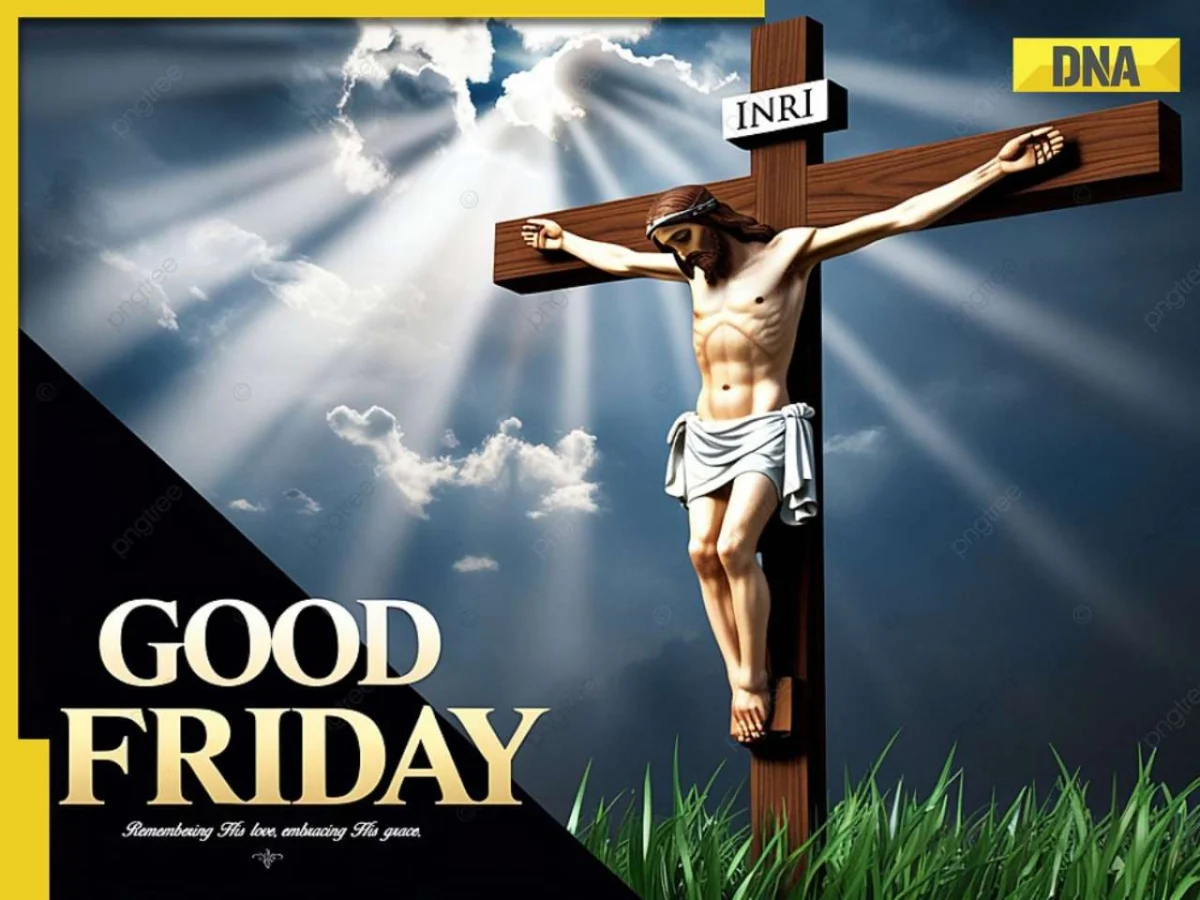
New Delhi, India – As the calendar turns towards the spring of 2026, Christians across India and the globe will prepare to observe Good Friday on Friday, April 3rd. This significant day, a solemn prelude to Easter, commemorates the crucifixion of Jesus Christ and is marked by reflection, prayer, and a deep understanding of sacrifice. While designated as a public holiday by the Central government, it is important to note that Good Friday is observed rather than celebrated, a distinction that underscores its profound spiritual significance.
The observance of Good Friday will lead to a nationwide bank holiday, with educational institutions, both governmental and private, also closing their doors to allow individuals and families to participate in the day’s solemn events. This annual observance, rooted in ancient Christian tradition, continues to hold deep meaning for millions, prompting introspection on themes of love, forgiveness, and redemption.
The Significance of Good Friday: More Than Just a Holiday
Good Friday, also known by various names such as Holy Friday or Easter Friday, is intrinsically linked to Easter Sunday. Its date fluctuates annually, dictated by the lunar calendar that governs the timing of Easter. This connection highlights the narrative arc of Christian belief: the sorrow of the crucifixion leading to the triumph of the resurrection.
The very name "Good Friday" can be a source of curiosity, given the tragic events it represents. However, the term "good" in this context carries a deeper, older meaning. It is not celebratory in the conventional sense, but rather signifies "holy" or "sacred." The day is considered "good" because, from a theological perspective, it represents the ultimate act of love and sacrifice for humanity. Believers understand that Christ’s crucifixion, though a moment of immense suffering, was a voluntary act to atone for the sins of mankind, paving the way for redemption and eternal life.
)
Unlike festive holidays, Good Friday is characterized by solemnity and introspection. Churches often fall silent, public celebrations are eschewed, and the focus shifts to prayer, fasting, and acts of penance. This deliberate abstention from revelry emphasizes the gravity of Christ’s sacrifice and the profound spiritual implications of his death.
A Glimpse into the History of Good Friday Observance
The historical roots of Good Friday observance stretch back to the early days of Christianity. Following Christ’s crucifixion and resurrection, the events of Holy Week became central to Christian liturgy and theology. The crucifixion, as the climax of Christ’s earthly suffering, naturally became a day of profound mourning and remembrance.

Early Christian communities would have gathered to commemorate the events of the Passion, with the practice of solemn remembrance and prayer evolving over centuries. The theological interpretations of Christ’s sacrifice have been a cornerstone of Christian doctrine, shaping the way Good Friday is understood and observed. The concept of atonement, where Christ’s death is seen as a propitiatory offering for the sins of humanity, is central to this understanding.
The nomenclature of "Good Friday" itself has been a subject of scholarly discussion. While the "good" as "holy" or "sacred" explanation is widely accepted, some historical linguistic analyses suggest it may also stem from an older English usage where "good" could imply "pious" or "just." Regardless of the precise etymological origin, the overarching sentiment remains: the day is "good" because of the redemptive outcome it represents for believers.
)
The Meaning of Sacrifice: A Cornerstone of Faith
At its core, Good Friday is a day dedicated to contemplating the immense sacrifice made by Jesus Christ. According to Christian belief, Christ willingly laid down his life on the cross, enduring unimaginable pain and suffering, to bear the burden of humanity’s sins. This act of selfless love is considered the ultimate demonstration of God’s love for humankind.
For Christians, the crucifixion is not merely a historical event but a profound theological reality. It is the moment when the chasm between humanity and God, created by sin, was bridged. The sacrifice is seen as a pivotal act that offers reconciliation, forgiveness, and the possibility of a renewed relationship with the divine.
)
The observance of Good Friday encourages believers to reflect on the nature of sacrifice in their own lives. It prompts questions about personal commitment, selflessness, and the willingness to put the needs of others before one’s own. The day serves as a powerful reminder of the Christian call to follow Christ’s example of love and service.
Expressing Faith and Hope: Good Friday Wishes
While Good Friday is a day of solemn reflection, it also serves as an opportunity to share messages of faith, hope, and peace. Believers often exchange greetings that encapsulate the spirit of the day, focusing on the enduring power of Christ’s sacrifice and the blessings it bestows.
)
These messages, often referred to as "Good Friday wishes," typically emphasize themes such as:
- Grace and Blessings: Wishing for divine grace to fill hearts and homes, bringing happiness and peace.
- Faith and Resilience: Hoping that faith remains a guiding force, providing strength and direction through life’s challenges.
- Peace and Reflection: Encouraging a day of quiet contemplation and inner peace, drawing strength from the spiritual significance of the occasion.
- Love and Forgiveness: Recalling the core tenets of Christ’s teachings and the importance of extending love and forgiveness to others.
- Redemption and Hope: Acknowledging the transformative power of Christ’s sacrifice, which offers the promise of redemption and a hopeful future.
Examples of such sentiments include:
)
- "Happy Good Friday! May the grace of Jesus bless your heart and your home with enduring happiness and peace."
- "On this Good Friday, may the profound sacrifice of Jesus inspire love, kindness, and unwavering faith in your life."
- "Wishing you a day of deep reflection and spiritual peace. May the message of Good Friday resonate within you."
- "May the sacrifice of Christ bring you solace, strength, and the hope of new beginnings. Have a blessed Good Friday."
These messages, shared among friends, family, and fellow congregants, serve to reinforce the communal aspect of faith and the shared understanding of Good Friday’s significance.
Chronology of Observance: Leading Up to Easter
Good Friday is part of Holy Week, a period of intense spiritual significance for Christians. The week begins with Palm Sunday, commemorating Jesus’ triumphal entry into Jerusalem. This is followed by Maundy Thursday, which recalls the Last Supper, Jesus’ final meal with his disciples, and the institution of the Eucharist.
)
The events of Holy Week unfold in a dramatic narrative:
- Palm Sunday: Celebrates Jesus’ arrival in Jerusalem, where crowds welcomed him with palm branches, hailing him as king.
- Maundy Thursday: Marks the Last Supper, where Jesus shared a meal with his disciples, washed their feet as an act of humility, and instituted the sacrament of communion. It also commemorates Jesus’ arrest in the Garden of Gethsemane.
- Good Friday: The most solemn day of Holy Week, commemorating Jesus’ crucifixion and death on the cross. Services on this day often involve readings from the Passion narrative, solemn prayers, and sometimes the veneration of the cross.
- Holy Saturday: A day of waiting and quiet anticipation, bridging the sorrow of Good Friday with the joy of Easter Sunday. It is often observed with fasting and prayer.
- Easter Sunday: The culmination of Holy Week, celebrating the resurrection of Jesus Christ from the dead, signifying victory over sin and death, and offering the promise of eternal life.
The progression through these days mirrors the Christian narrative of suffering, death, and ultimate triumph, with Good Friday serving as the crucial, somber pivot point.
)
Supporting Data and Broader Implications
The observance of Good Friday has tangible implications beyond its religious significance. As a declared public holiday, it impacts economic activity, with businesses and financial institutions closing for the day. This closure, while necessary for observance, can have short-term economic consequences. However, these are generally accepted as part of a society that accommodates diverse cultural and religious practices.
The widespread closure of schools and banks underscores the deep integration of this religious observance into the fabric of Indian society. While not a "national holiday" in the strictest sense of universal mandatory observance across all sectors, its designation as a public holiday by the Central government reflects its importance and broad recognition.
)
The continuity of this observance year after year highlights the enduring relevance of its core themes. In an increasingly fast-paced and often secular world, Good Friday provides a dedicated pause for reflection on values such as sacrifice, compassion, and the pursuit of spiritual meaning. Its observance encourages individuals to step back from the daily grind and consider deeper existential questions.
Furthermore, the theological underpinnings of Good Friday – atonement, redemption, and the redemptive power of suffering – continue to be subjects of theological discourse and personal contemplation. For billions, the events commemorated on this day are not merely historical footnotes but form the bedrock of their faith and worldview.
)
Official Responses and Societal Integration
The Central government’s declaration of Good Friday as a public holiday signifies an official acknowledgment of its importance within India’s multicultural landscape. This aligns with India’s constitutional commitment to secularism, which entails respecting and accommodating the religious practices of its diverse citizenry.
The consistent observance of this holiday across government bodies, banks, and educational institutions demonstrates a societal consensus on its significance. While debates may arise regarding the extent of religious observances in public life, Good Friday has established itself as a recognized and respected day of solemn observance.
)
The inclusion of Good Friday within the calendar of public holidays allows for a shared experience of this solemn occasion, enabling individuals to participate in religious services, spend time with family, and engage in personal reflection without the pressures of daily work or study. This societal integration ensures that the spiritual and cultural significance of the day is preserved and passed on to future generations.
In conclusion, Good Friday 2026, falling on April 3rd, will be a day marked by quiet devotion and profound contemplation across India. It is a day that transcends mere calendrical notation, offering a timeless opportunity to reflect on sacrifice, love, and the enduring hope of redemption, woven into the spiritual tapestry of millions.
