

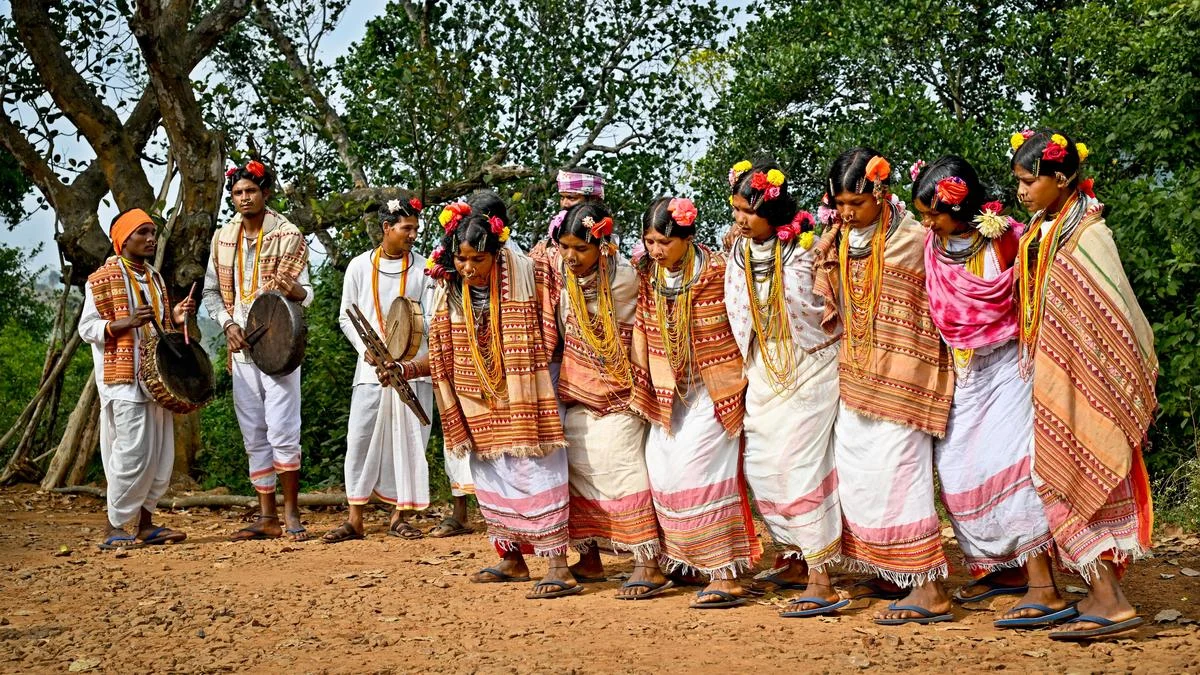
The Monday santha (weekly market) at Kalyansingpur is not merely a place of commerce; it is a sensory immersion into the heart of one of India’s most storied landscapes. Located at the foothills of Odisha’s Niyamgiri range, the town serves as a vital bridge between the secluded hill-dwelling Dongria Kondh tribe and the wider economic world. Here, the air is thick with the scent of sun-dried mangoes and the rhythmic hum of a dozen simultaneous negotiations.
The Dongria Kondh, designated as one of India’s Particularly Vulnerable Tribal Groups (PVTGs), have long been the focus of international attention, primarily due to their fierce and successful resistance against industrial mining. However, beyond the headlines of environmental activism lies a community deeply rooted in a sophisticated horticultural tradition and a spiritual worldview that defines their every interaction with the land.

Main Facts: A Market Driven by the Forest
At the Kalyansingpur santha, the primary currency of the season is the dried wild mango. By 10:00 AM, the market square is transformed into a patchwork of tarpaulin sheets and towering sacks. Traders, many having traveled from as far as Andhra Pradesh or Chhattisgarh, sift through the slices with practiced hands, checking for texture and moisture content.
The Dongria Kondh families descend from the hills, having traveled since dawn. The women are the most visible figures in this landscape. Their cultural identity is worn with pride: strands of vibrant beads drape across their chests, multiple metal earrings frame their faces, and a small, traditional dagger—the kapi—is tucked discreetly into a tightly coiled hair bun. This dagger is more than an ornament; it is a tool for daily survival in the rugged terrain and a symbol of their protective relationship with the hills.

The trade is swift. Native varieties of tur dal, ragi (finger millet), and black gram are exchanged for essential goods or cash. This year, however, the market reflects the volatility of an agricultural economy. A bumper harvest has led to a significant price drop. While dried mango fetched approximately ₹85 per kilogram last year, the current season sees prices hovering around ₹45. Despite the lower returns, the volume of trade remains high, with June being the critical window before the monsoon rains make drying and transport impossible.
Chronology: From Resistance to Recognition
The contemporary history of the Dongria Kondh is inextricably linked to their struggle to protect the Niyamgiri hills from bauxite mining. The timeline of this struggle represents a landmark in Indian jurisprudence and tribal rights.

- Early 2000s: Global mining conglomerate Vedanta Resources sought to mine bauxite from the Niyamgiri hills to feed its refinery at Lanjigarh. The hills, rich in mineral deposits, were also the sacred home of the Dongria Kondh.
- 2004–2012: A decade of protests ensued. The tribe argued that mining would destroy the perennial springs that feed their crops and desecrate the abode of their supreme deity, Niyam Raja. The movement gained international support, with human rights groups highlighting the threat to the tribe’s unique culture.
- April 2013: In a historic verdict, the Supreme Court of India ruled that the local Gram Sabhas (village councils) must decide whether mining would infringe upon their religious and cultural rights. This was the first time the "right to worship" was legally linked to the protection of a physical landscape in a mining dispute.
- July–August 2013: In a series of 12 Gram Sabhas held across the Rayagada and Kalahandi districts, the Dongria Kondh unanimously rejected the mining proposal.
- Present Day: More than a decade later, the hills remain unmined. The victory has empowered the community, but the pressure of "development" remains a constant backdrop to their daily lives.
Supporting Data: The Ecology of Livelihood
The Niyamgiri hills are a biodiversity hotspot, and the Dongria Kondh’s survival is a testament to their ecological intelligence. Their economy is built on a "forest-to-market" model that is both sustainable and diverse.
Horticultural Diversity
Unlike many tribal groups that rely solely on subsistence farming, the Dongria Kondh are master horticulturists. The slopes of Niyamgiri are dotted with:

- Wild Mango and Jackfruit: Primary cash crops and food stabilizers.
- Tamarind and Pineapple: Cultivated in orchards that blend seamlessly into the natural forest.
- Millets (Ragi): The staple grain, resilient to the fluctuating rainfall of the Eastern Ghats.
- Native Pulses: Tur dal and black gram, which are prized in regional markets for their organic quality.
Economic Reach
The produce sold at the Kalyansingpur market does not stay local. The logistical chain extends far beyond Odisha:
- Distribution: Consignments are trucked to major hubs like Raipur, Vishakhapatnam, and Mumbai.
- The June Window: The entire annual trade of wild mango is condensed into a four-week period, making the Monday santha a high-stakes environment for the tribal sellers.
Official Responses and the Legal Framework
The 2013 Supreme Court judgment remains the cornerstone of the tribe’s legal protection. By invoking the Forest Rights Act (FRA) of 2006, the court recognized that the Dongria Kondh’s relationship with the land was not merely economic but "sacred and sacrosanct."

Legal experts often cite the Niyamgiri case as a shift in how the Indian state views Particularly Vulnerable Tribal Groups. The Ministry of Tribal Affairs has since emphasized the need for "Free, Prior, and Informed Consent" (FPIC) in projects affecting tribal lands. However, local leaders like Babula of Phakeri village remain vigilant. "Our fields and streams give us everything," he says. "The government talks about development, but for us, development is the health of the Niyam Raja."
The state government has attempted to bridge the gap through the Dongria Kondh Development Agency (DKDA), which focuses on education and healthcare. While concrete houses and solar panels have appeared in villages like Parsali, the community’s insistence on maintaining their traditional farming practices suggests a selective adoption of modernity rather than a wholesale abandonment of tradition.

Implications: Tradition in a Changing World
The story of the Dongria Kondh at the Kalyansingpur market is one of successful adaptation. They are not a "lost tribe" frozen in time; they are active participants in the regional economy who use mobile phones to check market prices and motorcycles to transport their goods. Yet, the core of their identity remains unchanged.
The Culinary Heritage
The preservation of their food culture is perhaps the strongest indicator of their resilience. A typical meal in a Dongria village—served on hand-stitched leaf plates—consists of ragi porridge, native dal cooked with wild brinjal, and a variety of forest fruits like kala jamun and berries. This diet, rich in biodiversity, provides a level of nutritional security that is often lost in tribal areas that have shifted to government-subsidized rice.

The Threat of Encroachment
While the mining threat has subsided for now, other challenges loom. Climate change is affecting the predictability of the "mango season," and the younger generation is increasingly caught between the traditional life of the hills and the lure of the plains.
The Tourism Paradox
The growing interest in Niyamgiri has led to an increase in "culture tourism." Establishments like the Anija Golf Resort in Rayagada now offer guided day trips into the hills. While these excursions provide an income stream and an opportunity for cultural exchange, they also raise questions about the "commodification" of tribal life. The challenge for the future lies in ensuring that tourism remains respectful and that the benefits flow directly back to the Gram Sabhas.

Conclusion: The Enduring Spirit of Niyam Raja
As the afternoon sun begins to dip behind the ridges of Niyamgiri, the Kalyansingpur market winds down. The sacks are loaded onto trucks, and the Dongria Kondh begin their long trek back up the slopes. They return to a world where the hills are not just a source of bauxite or timber, but a living deity.
The resilience of the Dongria Kondh offers a vital lesson in the age of climate crisis. Their ability to maintain a thriving, independent economy based on biodiversity rather than extraction is a model of sustainable living. As long as the Monday santha continues to thrive and the daggers remain tucked in the hair buns of the Niyamgiri women, the spirit of Niyam Raja remains the undisputed guardian of these hills. The market is not just where they sell their produce; it is where they assert their presence in a world that once tried to erase them.
