

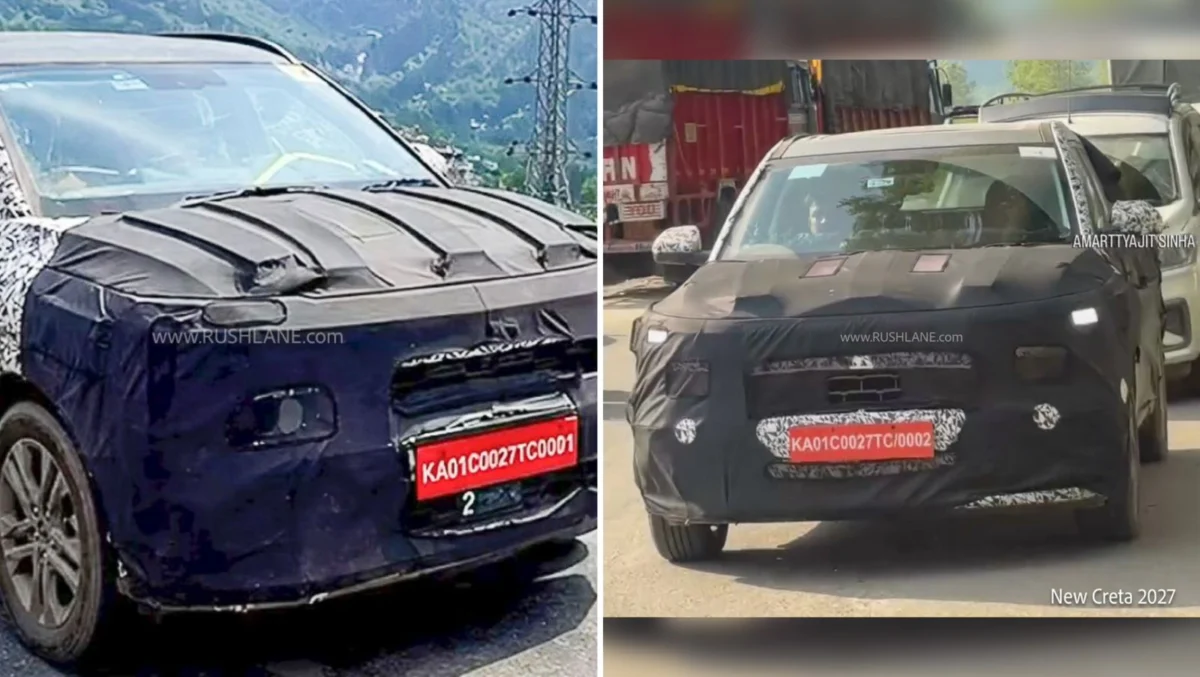
MANALI, INDIA – In a significant development for the Indian automotive landscape, the next generation of India’s most popular SUVs—the Kia Sonet and the Hyundai Creta—have been spotted undergoing joint high-altitude validation. The sightings, captured by automotive enthusiasts Amarttyajit Sinha and Dhanushree, provide the most comprehensive look yet at the strategic direction Hyundai Motor Group (HMG) is taking for its upcoming 2027 portfolio.
The dual-testing of these vehicles in the challenging terrains of Manali signals an advanced stage of development. While both SUVs cater to different price brackets and size segments, their simultaneous presence suggests a shared technological backbone, particularly in the realms of software-defined vehicle (SDV) architecture and next-generation safety systems.

Main Facts: A Glimpse into the Future of HMG’s SUV Dominance
The recent spy shots reveal a calculated evolution for both the sub-compact Sonet and the mid-size Creta. For the 2027 Kia Sonet, the focus appears to be on a more premium, "mini-Telluride" aesthetic, whereas the third-generation Hyundai Creta is set for a substantial growth spurt in both dimensions and technological sophistication.
Key Highlights of the 2027 Kia Sonet:
- Design Language: Adoption of Kia’s global "Opposites United" philosophy, featuring vertically-oriented LED tail lamp clusters and a prominent full-width light bar.
- Platform Migration: Transitioning to the newer K1 platform (shared with the upcoming Kia Syros), aimed at enhancing structural integrity and cabin packaging.
- Safety Focus: Engineered to meet more stringent Bharat NCAP safety standards with a reinforced chassis and expanded ADAS (Advanced Driver Assistance Systems) capabilities.
- Tech Overhaul: Expected to feature larger, high-resolution dual-screen setups and advanced Over-the-Air (OTA) update functionality.
Key Highlights of the Third-Gen Hyundai Creta:
- Dimensional Growth: Expected to be approximately 100mm longer than the current iteration, positioning it more aggressively against larger mid-size competitors.
- Pleos Connect System: Introduction of a revolutionary software architecture and a massive, centrally-mounted infotainment display.
- Electrification: The inclusion of a strong-hybrid powertrain option to compete with the Maruti Grand Vitara and Toyota Hyryder.
- AWD Capabilities: Indications of an All-Wheel Drive (AWD) variant for the top-tier trims, a feature long requested by Indian enthusiasts.
Chronology: The Road to the 2027 Market Launch
The development of these SUVs has been a meticulously planned journey, reflecting Hyundai Motor Group’s long-term commitment to the Indian market.

- Early 2024: Internal development for the "QY2E" (Sonet) and "SU3" (Creta) projects began in South Korea, focusing on the integration of the Pleos software architecture.
- June 2024: The first prototypes of the 2027 Sonet were spotted in Southern India, revealing the initial silhouette and lighting signatures.
- Late 2024: Third-generation Creta test mules were seen in international markets, including South Korea and Brazil, showcasing the boxier, more upright stance.
- June 2025 (Present Sighting): The high-altitude testing in Manali represents the "Validation Phase." Testing in the Himalayas is a critical milestone where engineers calibrate engine performance, braking systems, and cooling efficiency in thin air and low-temperature environments.
- Late 2025 – Early 2026: Expected global debut of the third-generation Creta.
- 2027: Official market launch of the next-generation Kia Sonet in India.
Supporting Data: Engineering and Powertrain Specifications
While the camouflage remains heavy, industry insiders and the physical characteristics of the test mules provide a clear picture of the technical specifications.
The Sonet’s Structural Shift
The migration to the K1 platform is the most significant technical update for the Sonet. This platform allows for a flatter floor, which will address one of the current Sonet’s few criticisms: rear-seat legroom. By optimizing the wheelbase, Kia aims to offer a more "big-car" feel within the sub-4-meter constraints.

| Expected Powertrain Options for Sonet: | Engine Type | Displacement | Estimated Power | Transmission Options |
|---|---|---|---|---|
| Smartstream Petrol | 1.2-litre | 83 PS | 5-speed MT | |
| Turbocharged Petrol | 1.0-litre | 120 PS | 6-speed iMT / 7-speed DCT | |
| CRDi Diesel | 1.5-litre | 116 PS | 6-speed MT / 6-speed AT |
The Creta’s Hybrid Revolution
For the Hyundai Creta, the biggest news is the shift toward electrification. With the Indian market showing a strong preference for hybrids over pure EVs in the mid-size segment, Hyundai is expected to introduce a 1.5-litre strong hybrid system. This move is projected to offer fuel efficiency figures exceeding 22-25 kmpl, a vital metric for Indian consumers.
Anticipated Dimensions (3rd Gen Creta):

- Length: ~4430mm (an increase from 4330mm)
- Width: ~1810mm
- Wheelbase: ~2670mm (providing superior cabin space)
Official Responses and Industry Sentiment
While Hyundai and Kia India have officially maintained a "no comment" policy regarding future product specifics, their global corporate strategy provides ample context.
During the recent "Hyundai Motor Way" investor presentation, the group emphasized the transition toward Software Defined Vehicles (SDVs). The "Pleos" architecture mentioned in recent leaks is a cornerstone of this strategy. A senior industry analyst noted, "The simultaneous testing of the Sonet and Creta in Manali isn’t just about engines; it’s about validating the shared electronic architecture. They are testing how the new sensors, ADAS radars, and central processing units handle extreme vibrations and temperature fluctuations."

Furthermore, Kia’s recent focus on the "Syros" SUV suggests that the 2027 Sonet will share many premium features with its sibling, ensuring that Kia remains the "tech-leader" in the sub-compact category.
Implications: A Shifting Competitive Landscape
The arrival of these two powerhouses will have far-reaching consequences for the Indian automotive industry.

1. The Death of the "Budget" Interior
The spy shots of the Creta’s interior reveal a move away from the traditional dual-screen setup toward a singular, massive command center. This indicates that HMG is pushing the mid-size SUV segment into the luxury territory currently occupied by brands like Mercedes-Benz (with their MBUX Hyperscreen concepts). This will force competitors like Tata Motors and Mahindra to accelerate their own infotainment and software development.
2. Safety as a Standard, Not an Option
With the 2027 Sonet targeting a high Bharat NCAP rating, the sub-4-meter segment is no longer just about features and fuel economy. The inclusion of an updated ADAS suite in the Sonet—likely including lane-keep assist, autonomous emergency braking, and adaptive cruise control—will set a new benchmark for safety in affordable cars.

3. The Hybrid vs. EV Debate
By introducing a hybrid Creta, Hyundai is making a strategic bet. While they are also developing a Creta EV, the hybrid variant ensures they capture the massive volume of buyers who are not yet ready to commit to a full-electric infrastructure. This "multi-pathway" approach could potentially consolidate Hyundai’s position as the number two carmaker in India, fending off the rising challenge from Tata Motors.
4. Software-Defined Everything
The "Pleos Connect" system is more than just a new UI. It represents a shift toward subscription-based features and deeper vehicle integration. Future owners might be able to "unlock" performance upgrades or new lighting patterns via the app, creating a new revenue stream for the manufacturers and a more personalized experience for the drivers.

Conclusion: The New Benchmark
The sighting of the 2027 Kia Sonet and the third-generation Hyundai Creta in the high-altitude reaches of Manali is a clear warning shot to the rest of the industry. Hyundai Motor Group is not resting on its laurels. By combining rugged mechanical testing with cutting-edge software development, they are ensuring that their two most important models remain the "gold standard" of Indian SUVs.
As 2027 approaches, the Indian consumer can expect vehicles that are larger, safer, more connected, and significantly more efficient. The battle for the Indian road is moving from the showroom floor to the software cloud, and HMG appears to be leading the charge.
