

MARANELLO, ITALY — For over eight decades, the name Ferrari has been synonymous with the visceral scream of internal combustion, the smell of high-octane fuel, and a design language that captures the aggressive elegance of a predator in mid-leap. However, the unveiling of the Ferrari Luce in Rome has signaled a seismic shift that transcends mere product evolution. As the Prancing Horse’s first foray into the world of battery electric vehicles (BEVs), the Luce is not just a car; it is a profound reimagining of what a Ferrari can be in a post-carbon world.
With a staggering 1,050 horsepower, a four-door grand tourer silhouette, and a design philosophy born from a collaboration with Apple’s former design czar Sir Jony Ive, the Luce has immediately become the most polarizing vehicle in the company’s history. While it promises performance that eclipses almost everything in Maranello’s current stable, it has also sparked a fierce debate: Can a Ferrari without a piston still possess a soul?
Main Facts: A Technical Tour de Force
The Ferrari Luce is a five-seat, four-door grand tourer that marks the definitive start of the company’s "multi-energy" era. Built on a completely bespoke electric architecture—rather than a modified version of an existing platform—the Luce is a ground-up exercise in maximizing the potential of electric propulsion.
At the heart of the Luce are four independent electric motors, one dedicated to each wheel. This configuration produces a combined output of 1,050 horsepower. The performance figures are, predictably, breathtaking: 0 to 100 km/h is dispatched in a mere 2.5 seconds, while the 200 km/h mark is crossed in 6.8 seconds. The car continues to pull until it exceeds a top speed of 310 km/h.
Power is supplied by a massive 122 kWh battery pack, which is integrated structurally into the chassis to lower the center of gravity and improve torsional rigidity. Ferrari claims a range of over 530 kilometers (WLTP), supported by a 350 kW fast-charging system capable of adding 70 kWh of energy in approximately 20 minutes.
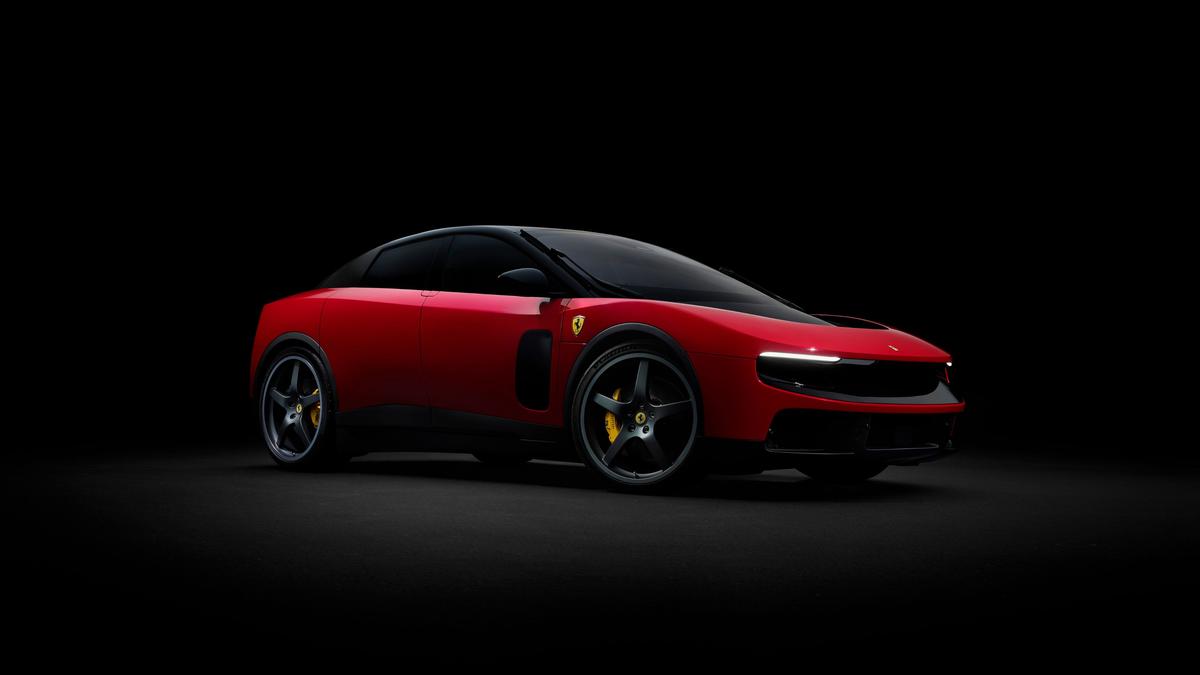
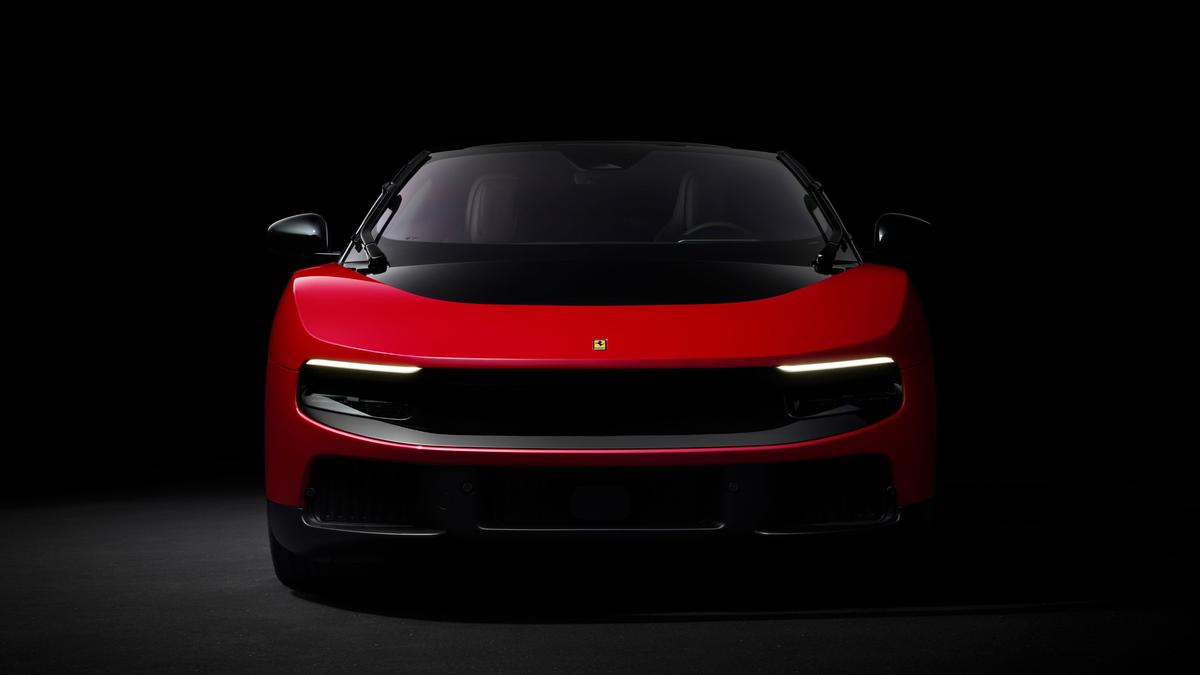
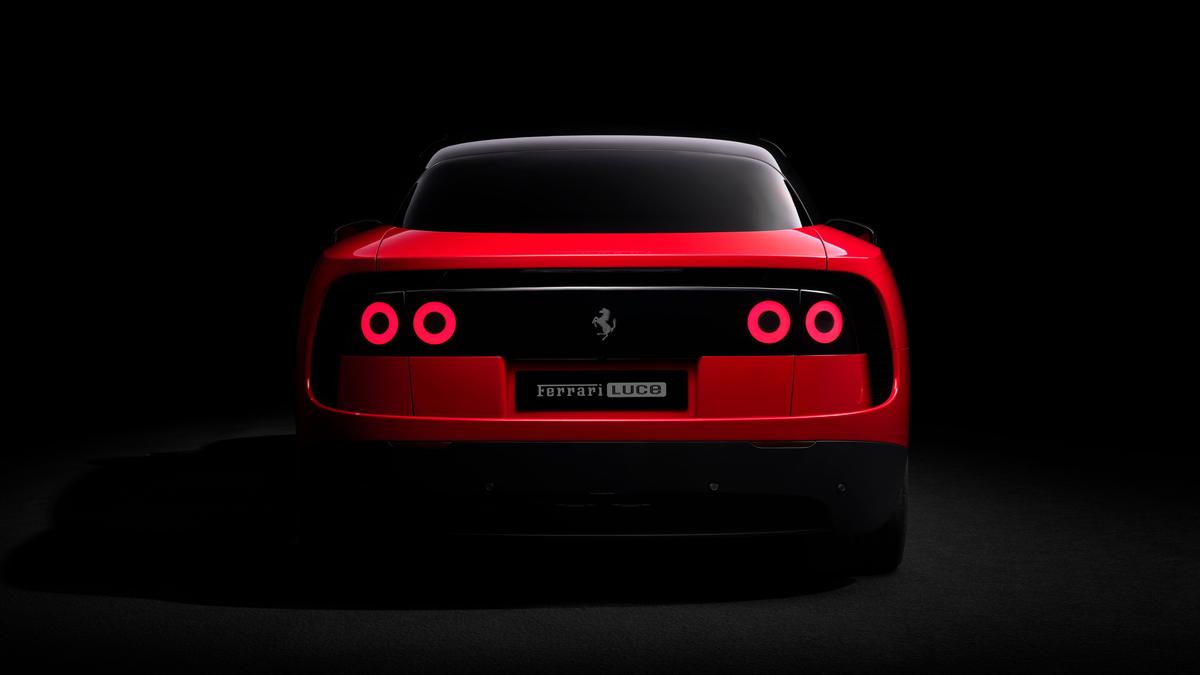
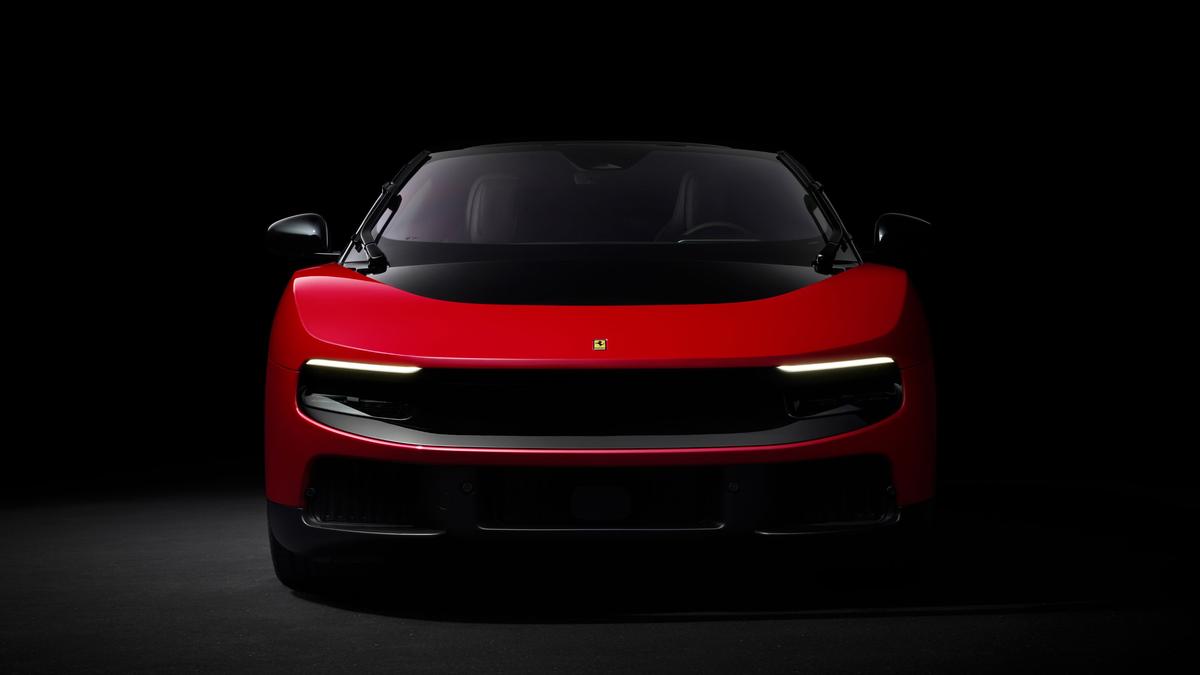
However, the Luce is more than just a collection of numbers. It represents a radical departure in aesthetics. Eschewing the traditional scoops, vents, and muscular haunches of the "Manzoni era," the Luce features "shell-like" surfacing, a massive glasshouse, and a minimalist exterior designed in collaboration with LoveFrom, the creative collective led by Sir Jony Ive and Marc Newson.
Chronology: From Secret Project to Global Controversy
The road to the Luce began several years ago as Ferrari recognized the tightening noose of global emissions regulations and the shifting tastes of the ultra-high-net-worth demographic. Unlike competitors who pivoted early to EVs, Ferrari took a cautious approach, first mastering hybridization with the LaFerrari and later the SF90 Stradale and 296 GTB.
The development of the Luce was shrouded in unprecedented secrecy. Rumors of a "Jony Ive Ferrari" began circulating in 2021 when Ferrari announced a multi-year partnership with LoveFrom. This was a clear signal that the company’s first EV would not follow the established design rules of the Purosangue or the 12Cilindri.

The official unveiling took place in Rome, a city chosen for its blend of ancient heritage and modern luxury. However, the "new chapter" Ferrari promised was met with immediate friction. Within hours of the debut, the automotive world was split. Traditionalists, or "Tifosi," took to social media to decry the car’s "clinical" and "tech-gadget" appearance.
The financial markets reacted with similar trepidation. Following the reveal, Ferrari’s stock (RACE) reportedly fell by nearly seven percent. Analysts attributed this not to a lack of technical merit, but to the perceived risk of brand dilution. Investors expressed concern that by moving toward a minimalist, tech-heavy identity, Ferrari might be surrendering the "emotional premium" that allows it to command such high margins.
Supporting Data: Engineering the "Ferrari Feeling"
To combat the inherent "soullessness" often attributed to electric vehicles, Ferrari’s engineers at Maranello have introduced several proprietary technologies aimed at preserving driver engagement.
1. The Weight Challenge
At 2,260 kilograms, the Luce is undeniably heavy. To mask this mass, Ferrari has employed an arsenal of chassis technology:
- Active Suspension: A high-bandwidth system that counters body roll and pitch in real-time.
- Four-Wheel Steering: Enhances agility at low speeds and stability at high speeds.
- Torque Vectoring: With four independent motors, the Luce can distribute torque with millisecond precision, effectively "rotating" the car into corners.
2. The Sound Philosophy
Ferrari has avoided the "spaceship" synthesizers used by brands like BMW or Mercedes-Benz. Instead, they have developed a system that captures authentic vibrations from the electric motors and drivetrain. These vibrations are amplified and transmitted into the cabin, creating a soundscape that is mechanically tied to the car’s actual workload.
3. The Interior Experience
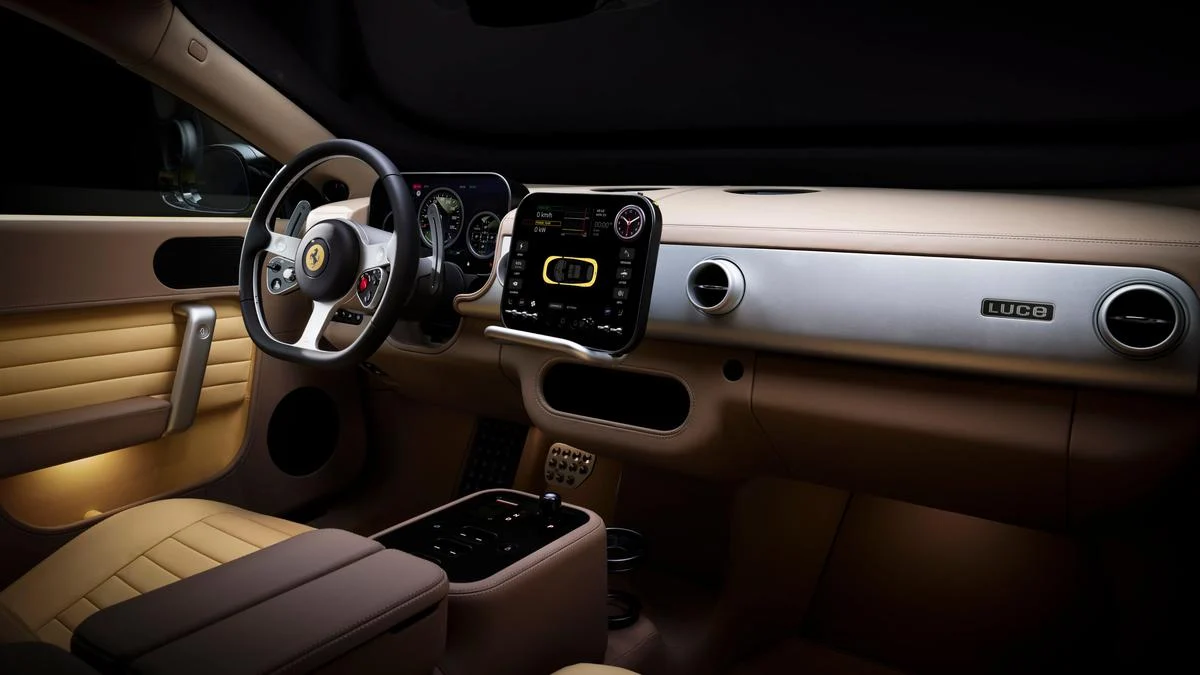
The cabin is perhaps the most advanced ever seen in a production car. Key data points include:
- Displays: Developed in partnership with Samsung, featuring ultra-high-contrast OLED screens.
- Materials: Extensive use of Corning Gorilla Glass and tactile aluminum switches.
- Audio: A 21-speaker, 3,000-watt system designed to provide an immersive acoustic environment.
- User Interface: An E Ink-integrated key that changes its display based on the car’s status and driver preferences.
Official Responses: Maranello’s Defense
Ferrari leadership has been quick to frame the Luce not as a replacement for their internal combustion engines (ICE), but as an expansion of the brand’s "ecosystem."
A spokesperson for Ferrari emphasized that the company remains committed to "multi-energy" solutions. "The Luce was never intended to be an electric version of an 812 or a Purosangue," the company stated. "It is a new interpretation of performance luxury made possible only through electric propulsion. It allows us to explore a different kind of beauty and a different kind of interaction."
Regarding the collaboration with LoveFrom, Ferrari’s design team noted that stepping outside the traditional automotive framework was necessary to create a "pure" EV. They argued that because electric cars do not require the same cooling apertures as ICE cars, the "aggressive" aesthetic of the past is no longer functionally required. The Luce’s "shell-like" design is, in their view, a more honest reflection of the technology beneath the skin.
Ferrari also addressed the "emotional gap" of EVs, stating that the Luce’s torque management system—controlled via steering wheel-mounted paddles—allows the driver to feel the "build-up" of power, mimicking the crescendo of a high-revving petrol engine rather than the instant, flat delivery of a typical EV.
Implications: A High-Stakes Gamble on the Future
The Luce represents the biggest gamble in Ferrari’s history since Enzo Ferrari begrudgingly moved the engine from the front to the middle of his race cars. The implications of this model are three-fold:
1. Redefining the Customer Base
The Luce is clearly aimed at a new generation of buyers—those who may have grown up with iPhones rather than posters of the F40. These "digital natives" value sustainability, minimalist design, and technological integration. By targeting this demographic, Ferrari is attempting to future-proof its brand. However, the risk is that they may alienate the loyal collectors who view Ferrari as a bastion of mechanical, analog passion.
2. The Luxury Tech Convergence
The involvement of Jony Ive suggests that the line between "automotive" and "high-end consumer technology" is blurring. If the Luce is successful, it could signal a shift where car manufacturers compete more on software, UI/UX, and industrial design purity than on mechanical engineering. This moves Ferrari into a competitive set that includes not just Lamborghini and Aston Martin, but also high-end tech-lifestyle brands.
3. Economic and Industrial Precedent
The 7% dip in stock price is a warning shot from the financial sector. It suggests that the market is wary of "brand stretch." If the Luce fails to find an audience, it could force Ferrari to retreat to its ICE roots, potentially putting it at odds with future European and global regulations. Conversely, if it succeeds, it will provide Ferrari with the capital and the mandate to continue its "multi-energy" strategy, ensuring the brand’s survival in a zero-emission future.
As it stands, the Ferrari Luce is priced at approximately €500,000 (roughly ₹5 crore in India before the inevitable and heavy duties). At this price point, it is not just a car; it is a statement of intent. Whether it represents the "Light" (Luce) of a new era or a departure from the "fire" that made Ferrari famous remains to be seen. For now, the Luce stands as a beautiful, clinical, and deeply controversial monument to a brand in transition.
