

NEW DELHI, June 17, 2026 – In a contentious move sparking widespread criticism, the Indian government has temporarily restricted access to the popular messaging application Telegram across the nation. The unprecedented decision, implemented just days before the crucial NEET-UG re-examination on June 21, 2026, aims to curb potential cheating and the dissemination of leaked exam materials. However, the action has been vehemently denounced by opposition leaders, digital rights advocates, and even Telegram’s CEO, who argue it punishes millions of legitimate users while failing to address the root causes of India’s recurring paper leak crisis.
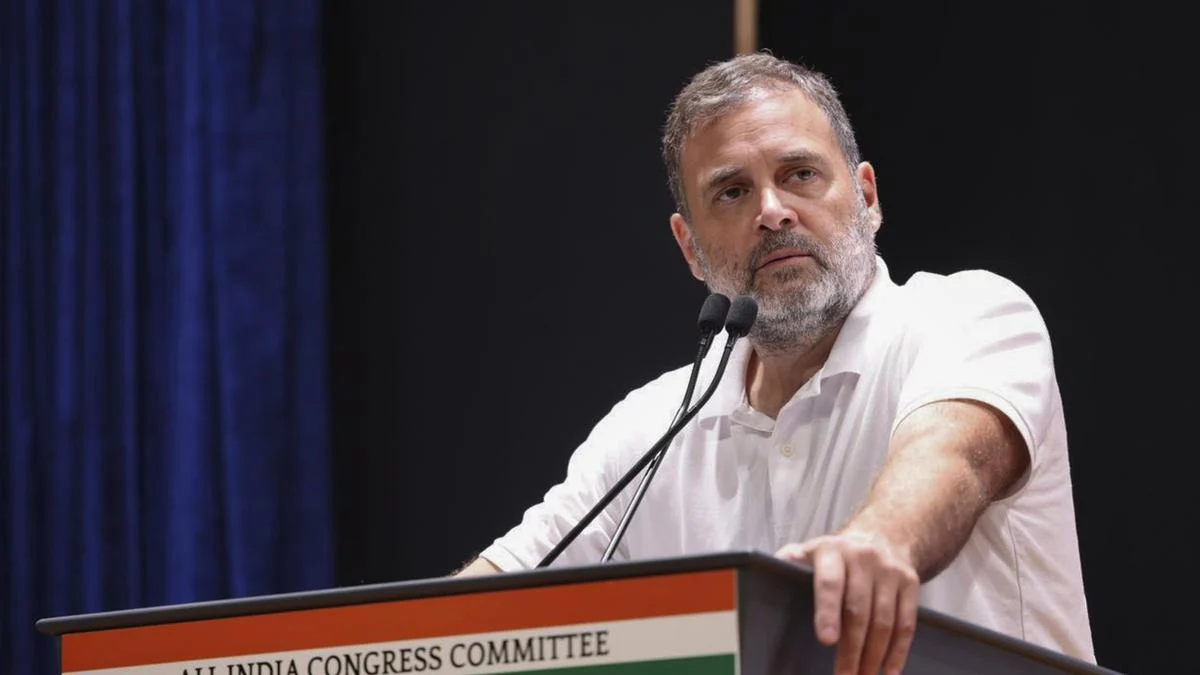
The temporary ban, effective until June 22, has drawn the ire of prominent figures, most notably Congress leader Rahul Gandhi. On Wednesday, June 17, Gandhi launched a scathing attack on the government, describing the restriction as a "new trick" akin to "putting a lock on the victim’s house instead of catching the thief." His remarks underscored a growing frustration with what critics perceive as reactive, superficial measures that bypass fundamental systemic issues. The incident has thrust the integrity of India’s examination system and the broader landscape of digital governance into an intense national debate.
Main Facts of the Telegram Restriction
The core of the controversy revolves around the Indian government’s directive to temporarily block access to Telegram, a widely used messaging platform, across the country. This measure was enacted in the lead-up to the National Eligibility cum Entrance Test (NEET-UG) re-examination, scheduled for June 21, 2026. The National Testing Agency (NTA), the body responsible for conducting the exam, stated that the restriction is a preventative step designed to combat organized cheating rackets and the spread of misinformation related to the examination.
However, the implementation of this ban has not been without significant friction. On Tuesday, June 16, 2026, tech giants Google and Apple complied with the government order, delisting Telegram from their respective app stores (Google Play Store and Apple App Store) in India. This made the application unavailable for new downloads and updates for existing users through official channels. While the government’s intention was to completely restrict access, many existing users have found ways to circumvent the ban, primarily by utilizing Virtual Private Networks (VPNs), which mask a user’s geographical location and allow access to blocked content. This workaround has raised questions about the efficacy of the temporary restriction.
The decision immediately drew sharp rebukes from various quarters. Congress leader Rahul Gandhi was among the first and most vocal critics, asserting that the ban was a misguided attempt to address the symptoms rather than the disease of paper leaks. His "lock on the victim’s house" analogy resonated with many who felt that millions of students, who legitimately use Telegram for study groups, notes, and discussions, were being unfairly penalized. Echoing this sentiment, Pavel Durov, the CEO of Telegram, also publicly criticized the Indian government’s action. In a post on X (formerly Twitter), Durov stated that "Banning it, even temporarily, is a mistake," highlighting that the ban punishes over 150 million ordinary Indian users and that the "leaks just moved to other apps," suggesting the measure was both disproportionate and ineffective. The controversy has thus escalated beyond a mere technical blockade, morphing into a heated debate about governmental overreach, student welfare, and digital freedom.
Chronology of Events Leading to the Ban
The temporary restriction of Telegram is the latest development in a series of events that have cast a long shadow over India’s crucial competitive examination system, particularly the NEET-UG. The timeline below details the critical junctures:
Prior to June 2026 (Ongoing Concerns): India has grappled with a persistent issue of paper leaks in competitive examinations for several years. These incidents, often orchestrated by organized mafias, have repeatedly undermined the credibility of national exams, causing immense distress and uncertainty for lakhs of aspiring students. The NEET-UG examination, being the gateway to medical colleges, is particularly susceptible due to its high stakes. Reports of malpractices, including question paper leaks and fraudulent admissions, have frequently surfaced, leading to calls for systemic reforms.
Early June 2026 (Initial NEET-UG Examination and Subsequent Crisis): The initial NEET-UG examination was conducted, but was soon embroiled in controversy. Widespread allegations of question paper leaks and irregularities emerged, leading to widespread student protests and public outrage. The gravity of the situation prompted a review by the National Testing Agency (NTA) and the Ministry of Education.
Mid-June 2026 (Cancellation and Re-examination Announcement): Following mounting pressure and concrete evidence of irregularities, the government took the drastic step of cancelling the initial NEET-UG examination. A re-examination was promptly announced, scheduled for June 21, 2026, to ensure fairness and maintain the integrity of the selection process. This decision, while necessary, added further stress and uncertainty for the millions of students who had already appeared for the exam. The NTA vowed to implement stringent measures to prevent any recurrence of leaks or malpractices during the re-examination.
June 16, 2026 (Government Order and App Delisting): In a bid to fulfill its promise of a leak-proof re-examination, the Indian government issued an order to temporarily restrict access to Telegram. The rationale provided was to prevent the use of the platform by unscrupulous elements to share leaked papers or coordinate cheating activities. In compliance with this directive, Google delisted Telegram from its Play Store on Tuesday, making it inaccessible for new downloads and updates. Apple’s App Store followed suit, removing the application. For existing users, the app ceased to function normally within India without the use of a VPN.
June 17, 2026 (Political and International Outcry): The government’s decision immediately triggered a fierce backlash. On Wednesday, Rahul Gandhi, a prominent opposition leader, took to X to lambast the move, likening it to punishing the victim. He articulated the sentiment of many students who rely on Telegram for legitimate study purposes, questioning the effectiveness and fairness of the ban. Simultaneously, Pavel Durov, the founder and CEO of Telegram, expressed his strong disapproval on X, arguing that the ban was a misguided and ineffective measure that unfairly penalized millions of users and failed to stop the actual perpetrators.
June 21, 2026 (NEET-UG Re-examination): The re-examination is scheduled to take place across the country under heightened security and surveillance. The temporary Telegram ban is intended to be in effect until after this critical examination.
June 22, 2026 (Anticipated End of Restriction): The temporary restriction on Telegram is slated to be lifted, though the long-term implications and the debate surrounding digital access and examination integrity are expected to continue.
This chronological sequence highlights the escalating crisis surrounding the NEET-UG examination and the government’s response, which has now become a focal point for wider discussions on digital rights and governance in India.
Supporting Data and Context: The Broader Landscape
The temporary ban on Telegram cannot be viewed in isolation; it is intricately linked to several broader issues impacting India’s education system and digital landscape. Understanding these contextual elements is crucial for a comprehensive analysis.

The Shadow of the NEET-UG Examination Crisis
The National Eligibility cum Entrance Test (NEET-UG) is arguably one of the most high-stakes competitive examinations in India, serving as the sole gateway for admissions to undergraduate medical courses across the country. Each year, millions of aspiring doctors dedicate years to rigorous preparation, investing significant financial and emotional resources. The examination’s integrity is paramount, as it determines the future of countless young individuals and, by extension, the quality of India’s healthcare system.
The recent crisis, leading to the cancellation of the initial exam and the subsequent re-examination, has plunged these students into a vortex of anxiety, uncertainty, and despair. Reports of paper leaks, often involving sophisticated networks and significant sums of money, erode public trust in institutions and create a sense of profound injustice among meritorious students. The psychological toll on students, already under immense pressure, is immeasurable. The suicides of Umesh in Sikar and Riya in Dehradun, both under the pressure of the Re-NEET, as highlighted by Rahul Gandhi, tragically underscore the extreme mental burden placed on these young individuals by a system perceived as flawed and corrupt. These incidents are not isolated; they reflect a systemic vulnerability that successive governments have struggled to address effectively. The government’s response, therefore, is under intense scrutiny, with every measure weighed against the backdrop of student welfare and institutional credibility.
Telegram’s Dual Role: Educational Hub and Potential Conduit for Malpractice
Telegram, with its robust group chat features, channel broadcasts, and ability to share large files, has evolved into a significant platform for educational purposes in India. Millions of students, particularly those preparing for competitive exams like NEET-UG, rely on Telegram channels and groups for:
- Study Materials: Sharing notes, textbooks, and supplementary reading materials.
- Test Series: Accessing mock tests, previous year’s papers, and practice questions.
- Discussions and Doubt Clearing: Engaging with peers and mentors to clarify concepts and discuss strategies.
- Updates and Announcements: Receiving timely information regarding exam schedules, syllabus changes, and results.
The platform’s encryption and ease of use have made it a preferred choice for large-scale academic collaboration. Rahul Gandhi’s assertion that "Lakhs of students have been studying on Telegram for years – notes, test series, discussions, preparation" accurately reflects its widespread utility. However, these very features also make it attractive to those seeking to exploit the system. The ease of anonymous file sharing and large group communication can be misused by organized cheating rackets to disseminate leaked question papers or answer keys, often close to exam time. This dual nature of Telegram presents a complex challenge for authorities attempting to crack down on malpractices without disrupting legitimate educational activities.
The VPN Loophole and the "Whack-a-Mole" Problem
A significant challenge to the effectiveness of the Telegram ban is the widespread use of Virtual Private Networks (VPNs). As the original article notes, Telegram "continues to remain operational through the Virtual Protocol Network (VPN)." VPNs allow users to bypass geographical restrictions by routing their internet connection through servers in other countries, thereby masking their actual location. This means that while Telegram is officially blocked by Indian internet service providers and removed from local app stores, tech-savvy students and, crucially, the "paper leak mafia" can still access the platform with relative ease.
This phenomenon highlights what experts refer to as the "whack-a-mole" problem in content moderation and internet censorship. When one platform is blocked, illicit activities often simply migrate to another unblocked platform or utilize tools like VPNs to circumvent the ban. Telegram CEO Pavel Durov explicitly pointed this out, stating, "And the ban hasn’t stopped anything. The leaks just moved to other apps." This raises critical questions about the practical utility of such bans and whether they genuinely deter criminal activity or merely inconvenience the general public while pushing illicit actors further underground.
Precedent and Digital Rights Concerns
India has a history of implementing internet shutdowns and app bans, often citing concerns related to national security, public order, or, as in this case, preventing examination malpractices. While the government maintains that these are necessary measures, they frequently draw criticism from digital rights advocates who argue that such actions can infringe upon fundamental rights, including freedom of speech and access to information. The temporary Telegram ban reignites debates about the balance between state control and individual digital freedoms. Critics argue that blanket bans are a blunt instrument that disproportionately affect innocent users and can set a dangerous precedent for future restrictions on digital communication. The discussion extends to whether governments should focus more on robust law enforcement and technological solutions to identify and prosecute perpetrators rather than resorting to broad-stroke restrictions on platforms.
This broader context underscores that the Telegram ban is not merely an administrative decision but a reflection of deeper societal challenges, technological complexities, and ongoing debates about governance in the digital age.
Official Responses and Counter-Arguments
The decision to temporarily restrict Telegram has elicited a range of responses from government officials, opposition leaders, and the platform’s own leadership, each articulating their perspective on the controversial measure.
Government and National Testing Agency (NTA) Justification
The primary official stance comes from the National Testing Agency (NTA), the body mandated with conducting the NEET-UG examination, and implicitly, the Ministry of Education. NTA Director General Abhishek Singh articulated the government’s rationale, stating that the measure is "aimed at tackling cheating rackets and misinformation." He emphasized that the restriction on Telegram, slated to last until June 22, is part of a broader effort "to ensure that the June 21 retest is conducted without malpractice." Singh underscored the government’s commitment to a fair examination, telling PTI, "We will not let anything go wrong. We will take all possible actions to ensure that the examination is conducted without any malpractice."
This official narrative portrays the ban as a necessary, albeit temporary, surgical strike to safeguard the integrity of the examination system. It reflects a government under immense pressure to restore confidence in national competitive exams following previous widespread irregularities. The authorities argue that extraordinary circumstances, such as the scale of the previous paper leak and the high stakes of NEET-UG, necessitate extraordinary measures. They maintain that the disruption caused to legitimate users is a regrettable but unavoidable consequence in the larger interest of ensuring fairness for millions of aspiring students and preventing further exploitation by criminal elements. The government’s position is to prioritize the sanctity of the examination process over the temporary inconvenience to digital communication.
Opposition’s Vehement Criticism
The government’s justification has been met with fierce opposition, particularly from the Congress party. Rahul Gandhi, the party leader, has been the most vocal critic, employing strong metaphors to convey his disapproval. In a Hindi post on X, he termed the "Telegram Ban" as "Modi government’s new trick to stop paper leaks," adding, "Meaning, instead of catching the thief, just put a lock on the victim’s door." This analogy powerfully frames the ban as a misdirected and unjust punishment for ordinary citizens.
Gandhi further highlighted the adverse impact on students, stating, "Lakhs of students have been studying on Telegram for years – notes, test series, discussions, preparation. How does snatching that facility become the solution to paper leaks?" He questioned the efficacy of the ban, calling it "not even foolproof" and predicting that the "paper leak mafia" would simply migrate to other platforms. He prophetically asked, "So, who will the next ban be on? WhatsApp?" This line of questioning challenges the government’s problem-solving approach, suggesting it is superficial and reactive rather than addressing underlying issues.
His criticism escalated into a broader indictment of the government’s handling of the entire examination crisis. Gandhi accused the government of resorting to "theatrics" – such as frisking students, cutting pockets with scissors, and sending question papers via the Air Force – instead of striking "at the root of the disease." He alleged that "the paper leak mafia is thriving under this very government’s watch and making the youth weep tears of blood." He concluded with a powerful appeal: "Modi Ji – drop the theatrics. Strike at the mafia, not the students."
Rahul Gandhi’s impassioned plea extended to the tragic human cost of the exam system’s failures. He shared his emotional journey to Kota, a major coaching hub, and spoke of "Umesh in Sikar and Riya in Dehradun – both ended their lives under the pressure of Re-NEET." He blamed the "broken, corrupt system" and directly held the "Modi government and Education Minister Dharmendra Pradhan" responsible for "repeatedly shielded paper leaks, exam mismanagement, and the destroyers of futures." His vow to start a fight from Kota with the goal that "no child’s dreams shatter like this again" and that "every family’s pain will now echo across the country as the ‘chhatron ki goonj’ (echo of students)" transforms the issue from a policy debate into a deeply emotional and humanitarian concern.

Priyanka Gandhi Vadra, Congress general secretary, echoed her brother’s sentiments, asserting that Rahul Gandhi had "rightly stated that there is a need to strike not against students, but against mafias." She further called for comprehensive reform, stating, "Today, there are many such things in the country’s education system and the entire examination system will need to be reformed." This suggests the opposition views the Telegram ban as a symptom of a much larger, systemic problem that requires fundamental overhaul rather than piecemeal solutions.
Telegram CEO’s Direct Rebuttal
Adding an international dimension to the criticism, Pavel Durov, the founder and CEO of Telegram, directly challenged the Indian government’s decision. In a post on X, Durov minced no words: "Banning it, even temporarily, is a mistake." He presented a clear counter-argument to the government’s stated aim, explaining, "India’s IT ministry banned Telegram for one week because some users shared leaked exam questions. This punishes 150M+ ordinary Telegram users in India – not the insiders who leaked the exam materials. And the ban hasn’t stopped anything. The leaks just moved to other apps."
Durov’s statement aligns with Rahul Gandhi’s "whack-a-mole" criticism, suggesting that the ban is ineffective in its primary goal of stopping leaks and instead inflicts collateral damage on a vast user base. He emphasized the disproportionate impact on innocent users compared to the actual perpetrators, who, according to him, would simply find alternative channels. This global criticism from the platform’s creator adds significant weight to the argument against the ban’s effectiveness and fairness. The original article also mentions that Telegram has "challenged Centre’s order that temporarily blocks its use," indicating a legal battle may be unfolding or has already been initiated against the government’s directive.
Implications and Broader Analysis
The temporary restriction of Telegram in India, ostensibly a measure to ensure the sanctity of a critical national examination, carries far-reaching implications that extend beyond the immediate context of the NEET-UG re-examination. It touches upon issues of digital governance, student welfare, the effectiveness of state interventions, and the future of online communication in a rapidly digitizing nation.
The Effectiveness of the Ban: A Question of Strategy
One of the most immediate and critical implications concerns the actual effectiveness of the ban. Critics, including Telegram CEO Pavel Durov and Rahul Gandhi, argue vehemently that such a measure is a blunt instrument, largely ineffective against sophisticated criminal enterprises. Durov’s assertion that "the leaks just moved to other apps" highlights the "whack-a-mole" phenomenon, where blocking one platform merely redirects illicit activities to another, potentially less monitored, channel. The fact that Telegram "continues to remain operational through the Virtual Protocol Network (VPN)" further undermines the ban’s absolute impact. This suggests that determined individuals, particularly those involved in organized paper leaks, possess the technical know-how to circumvent such restrictions.
If the ban primarily inconveniences legitimate users while failing to deter the actual perpetrators, its strategic value becomes questionable. It raises a crucial policy debate: should governments focus on robust intelligence gathering, cyber-forensics, and law enforcement to target the "paper leak mafia" directly, or rely on broad-stroke digital restrictions that affect millions? Many argue that the former approach, though more challenging, offers a more sustainable and less intrusive solution to the problem.
Impact on Students: Collateral Damage and Heightened Stress
The ban’s most direct and poignant impact is on the millions of students preparing for the NEET-UG re-examination. While the government intends to protect them from unfair practices, the restriction inadvertently disrupts their legitimate study routines. For many, Telegram serves as a vital resource for collaborative learning, accessing study materials, participating in mock tests, and clarifying doubts. Suddenly losing access to these established channels adds another layer of stress to an already intensely anxious period. Students, already reeling from the cancellation of the initial exam and the pressure of a re-test, now face the added hurdle of adapting to disrupted information flows.
Beyond the logistical inconvenience, there is a psychological toll. The government’s action, intended to instill confidence, might inadvertently fuel a sense of distrust and frustration among students who feel they are being penalized for the actions of a few. Rahul Gandhi’s poignant mention of Umesh and Riya, who tragically ended their lives, underscores the extreme mental vulnerability of students caught in this high-pressure, often corrupt, system. Any measure that adds to their burden, even if well-intentioned, must be critically evaluated for its human cost.
Government’s Digital Policy and Freedom of Information
The Telegram ban is also a significant moment for India’s digital policy landscape. It highlights the ongoing tension between the state’s perceived need to maintain order and security, and citizens’ rights to freedom of speech and access to information in the digital realm. Critics argue that temporary bans on widely used communication platforms, even for specific purposes like exam integrity, set a concerning precedent. Such actions can be seen as forms of digital censorship, potentially paving the way for similar restrictions in other contexts.
The government’s challenge lies in striking a delicate balance. While the need to ensure fair examinations is undeniable, the methods employed must be proportionate, effective, and minimally intrusive. A blanket ban, affecting 150 million users, raises questions about proportionality, especially when alternative, more targeted enforcement mechanisms might exist. This incident will undoubtedly fuel further debates about digital rights, internet governance, and the regulatory framework for online platforms in India.
Calls for Systemic Reform vs. Reactive Measures
The overarching implication of this controversy is the renewed and intensified call for fundamental systemic reform of India’s examination ecosystem. Opposition leaders and educational experts argue that the Telegram ban is a reactive, symptomatic treatment rather than a cure for the chronic disease of paper leaks. The "paper leak mafia," as Gandhi termed them, operate through deep-rooted networks involving multiple stakeholders. Tackling this requires comprehensive reforms encompassing:
- Enhanced Security Protocols: Fortifying the entire chain of question paper creation, printing, distribution, and storage with advanced technological and human oversight.
- Robust Surveillance and Intelligence: Strengthening intelligence gathering to identify and dismantle leak networks before they can act.
- Harsher Penalties: Implementing stringent laws and swift prosecution for those involved in exam malpractices.
- Transparency and Accountability: Increasing transparency in the NTA’s operations and holding officials accountable for lapses.
- Technological Solutions: Exploring secure digital delivery systems for exams that are less susceptible to physical leaks.
Without such foundational reforms, critics argue that bans on individual apps will remain temporary patches, merely shifting the problem rather than solving it. The "chhatron ki goonj" (echo of students) that Rahul Gandhi invoked is a powerful reminder that millions of futures depend on a system that is not only secure but also fundamentally just and equitable.
Future Outlook: A Continuing Debate
Looking ahead, the Telegram ban, even if temporary, will likely leave a lasting imprint on the discourse surrounding digital freedom and educational governance in India. The NEET-UG re-examination on June 21 will be closely watched, not just for its logistical execution but also for any further reports of malpractices, which would further undermine the government’s justification for the ban.
The political ramifications are also significant. The opposition has found a potent issue to rally around, connecting the Telegram ban to broader failures in governance and student welfare. This could become a key talking point in future political campaigns, particularly given the youth demographic’s strong engagement with competitive exams and digital platforms. The incident serves as a stark reminder that in an increasingly connected world, decisions regarding digital access have profound societal, economic, and political consequences. The debate over how India balances technological advancement with regulatory control, and how it safeguards its educational integrity without stifling digital freedoms, is far from over.
