

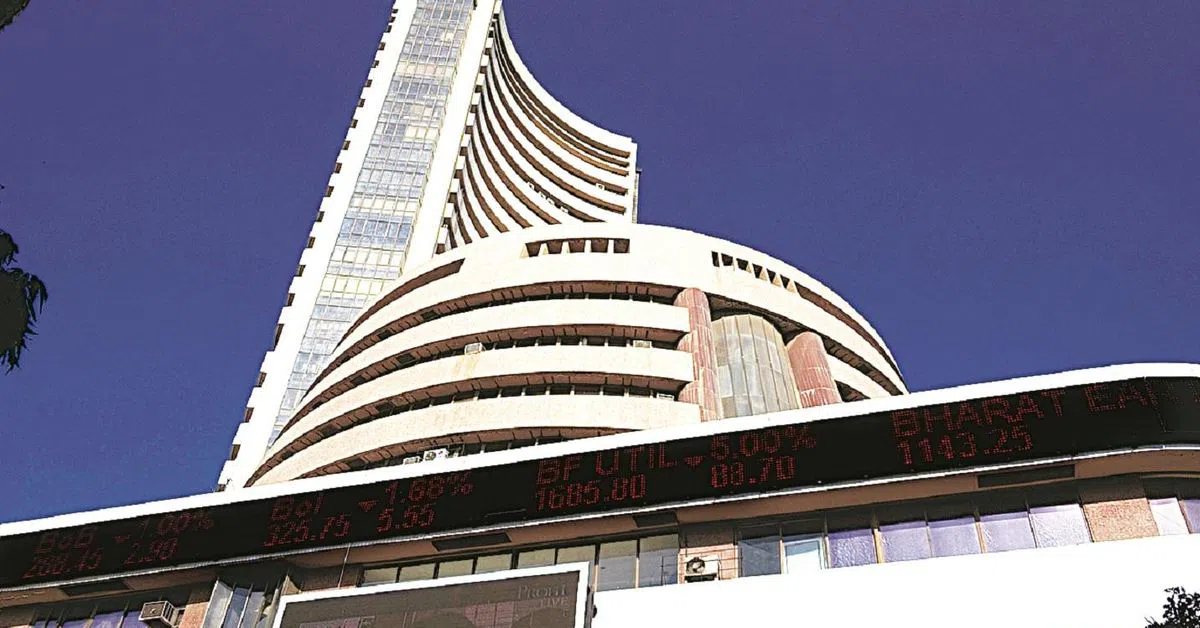
The Indian equity markets witnessed a flurry of activity on Wednesday, May 15, as investors navigated a high-stakes earnings season characterized by heavyweight financial disclosures and a significant divergence in sectoral performance. With the benchmark Nifty50 and the S&P BSE Sensex scaling new heights in early trade, the spotlight remained firmly fixed on the corporate sector, where a long list of blue-chip companies prepared to unveil their fourth-quarter (Q4FY26) results.
The narrative of the day was undeniably dominated by JSW Steel’s monumental profit leap and a broader market sentiment that leaned toward cautious optimism. As the financial year 2025-26 draws to a close, these earnings reports are being viewed by analysts as the ultimate barometer for the health of the Indian economy, reflecting the impact of global supply chain shifts, domestic consumption patterns, and infrastructure spending.
Main Facts: A Landmark Day for Corporate India
The primary driver of market discussions on May 15 was the sheer volume of earnings reports scheduled for release. Over thirty-five prominent entities, ranging from public sector undertakings (PSUs) like Power Grid and NHPC to private giants like Tata Steel and ITC Hotels, were set to disclose their financial performance.
JSW Steel’s Exceptional Performance
The most striking figure of the morning came from JSW Steel. The company reported a consolidated net profit of ₹16,370 crore for the fourth quarter. This represents a staggering multifold increase compared to the ₹1,503 crore recorded in the same quarter of the previous fiscal year. However, it is essential to note that this surge was primarily driven by an exceptional gain resulting from the slump sale of Bhushan Power and Steel.
Excluding these one-time gains, the company’s normalized profit after tax (PAT) stood at ₹3,475 crore for the quarter, bringing the total normalized PAT for the full fiscal year (FY26) to ₹8,698 crore. This distinction between "headline" profit and "operational" profit has become a focal point for institutional investors assessing the core sustainability of the steel giant’s growth.
Market Momentum at a Glance
As of 10:00 am on May 15, the domestic indices showed robust strength:
- Nifty50: Traded at 23,826.60, up 144.55 points or 0.61%.
- Sensex: Gained 427.19 points or 0.57%, reaching 75,832.46.
- Top Gainers: The rally was spearheaded by Tata Motors Passenger Vehicles, Infosys, and Tech Mahindra, signaling a resurgence in the IT and automotive sectors.
Chronology of Market Events: May 15 Morning Session
The trading day began with a positive bias, influenced by a mix of global cues and domestic expectations.
09:15 AM – The Opening Bell:
The markets opened with a gap-up, reflecting investor confidence following a period of consolidation. The initial surge was fueled by the anticipation of strong quarterly numbers from the energy and pharmaceutical sectors.
09:45 AM – Sectoral Divergence Emerges:
While the frontline indices (Sensex and Nifty) continued to climb, a disconnect became apparent in the broader market. The Nifty MidCap index dipped by 0.20%, while the Nifty SmallCap index saw a more pronounced decline of 0.55%. This suggested that while "big money" was flowing into large-cap stability, retail and mid-tier investors were booking profits or rotating out of riskier assets.
10:00 AM – Peak Morning Gains:
By mid-morning, the Nifty IT index emerged as the undisputed leader, gaining traction on the back of improved deal pipelines and a stabilizing global macroeconomic environment. Simultaneously, the Nifty Auto index found support from Tata Motors, which has been riding a wave of premiumization in the passenger vehicle segment.
11:00 AM – The "Steel" Drag:
Despite the positive headline numbers from JSW Steel, the Nifty Metal index lagged behind other sectors. Analysts attributed this to "sell-on-news" behavior and concerns over fluctuating global commodity prices, which may impact margins in the upcoming quarters.
Supporting Data: The Earnings Calendar and Sectoral Breakdown
The depth of the current earnings season is evidenced by the diversity of the firms reporting today. The following companies are scheduled to release their Q4FY26 results, categorized by their economic impact:
Heavy Industry and Infrastructure
- Power & Energy: Power Grid Corporation of India, NHPC, SJVN.
- Metals & Mining: Tata Steel, Steel Authority of India (SAIL), Hindustan Copper.
- Shipbuilding & Engineering: Cochin Shipyard, NCC, Azad Engineering.
Consumer Goods and Services
- FMCG & Hospitality: ITC Hotels, Balrampur Chini Mills, Godfrey Phillips India.
- Consumer Durables: Symphony, VIP Industries, Bajaj Electricals, Amber Enterprises India.
- Textiles: Arvind, Welspun Living.
Healthcare and Chemicals
- Pharmaceuticals: Gland Pharma, Alembic Pharmaceuticals, Aarti Drugs.
- Specialty Chemicals: Deepak Nitrite, Solar Industries India, Aether Industries, Fineotex Chemical.
Financials and Real Estate
- Market Services: Monarch Networth Capital.
- Real Estate: Omaxe.
The JSW Steel Deep-Dive (Data Comparison)
| Metric | Q4 FY26 (Reported) | Q4 FY25 (Reported) | Growth (%) |
|---|---|---|---|
| Consolidated Net Profit | ₹16,370 Crore | ₹1,503 Crore | ~989% |
| Normalized PAT | ₹3,475 Crore | N/A | – |
| Full Year FY26 PAT | ₹8,698 Crore | N/A | – |
Official Responses and Corporate Strategy
While official press conferences for many of these firms are scheduled for the post-market hours, early statements from JSW Steel provide clarity on their financial engineering.
A spokesperson for JSW Steel emphasized that the "exceptional gain" from the Bhushan Power and Steel slump sale was a strategic move to streamline the company’s balance sheet and consolidate its position as a market leader in the Indian steel landscape. The company’s focus remains on "capacity expansion and operational efficiency" to mitigate the volatility of raw material costs.
In the broader market, analysts from leading brokerages have noted that the "mixed global cues" mentioned in the morning reports refer to the ongoing debate over interest rate cuts by the US Federal Reserve and the varying economic recovery speeds in China and Europe. Domestic institutional investors (DIIs) continue to remain net buyers, providing a cushion against the intermittent selling by Foreign Institutional Investors (FIIs).
Implications for Investors and the Economy
The events of May 15 carry significant implications for the Indian financial ecosystem as it transitions into the new fiscal year.
1. The Large-Cap vs. Small-Cap Divide
The underperformance of the MidCap and SmallCap indices despite the Sensex hitting highs suggests a "flight to quality." Investors are increasingly wary of high valuations in smaller stocks and are seeking refuge in the earnings visibility provided by Nifty50 giants. This trend is likely to persist until there is more clarity on the monsoon forecast and the full impact of recent policy changes.
2. Resilience of the IT and Auto Sectors
The leadership of the Nifty IT index indicates that the worst of the "tech winter" may be over. As global enterprises resume digital transformation spending, Indian IT firms are seeing a revival in sentiment. Similarly, the Auto sector’s performance—led by Tata Motors—reflects robust domestic demand for both SUVs and electric vehicles, suggesting that the Indian consumer’s purchasing power remains resilient despite inflationary pressures.
3. Steel and Infrastructure Outlook
With Tata Steel and SAIL also on the reporting list, the metal sector is at a crossroads. JSW Steel’s massive profit, though inflated by one-time gains, points to a consolidation phase in the industry. The government’s continued push for infrastructure development (Gati Shakti) is expected to keep steel demand high, but global price parity will be the key factor determining future profitability.
4. PSU Performance
The reports from Power Grid and NHPC will be closely watched. As India ramps up its renewable energy targets and grid modernization, these PSUs are no longer just "dividend plays" but are being re-rated as growth stocks. Their ability to execute projects on time will be critical for the country’s energy security.
5. Hospitality and the "Premiumization" Trend
The inclusion of ITC Hotels in the earnings list highlights the post-pandemic boom in the travel and luxury segment. As the company prepares for its eventual demerger and listing, its Q4 performance will set the tone for the valuation of the hospitality business in India.
Conclusion
The May 15 trading session serves as a microcosm of the current Indian economic landscape: a mixture of extraordinary corporate maneuvers (as seen with JSW Steel), sectoral rotations, and a steady climb for benchmark indices. While the "headline" numbers are impressive, the underlying data suggests a market that is becoming increasingly discerning, rewarding operational efficiency and large-cap stability over speculative growth. As the remaining firms on the list announce their results, the trajectory for the first half of FY27 will become significantly clearer for the global investment community.
