

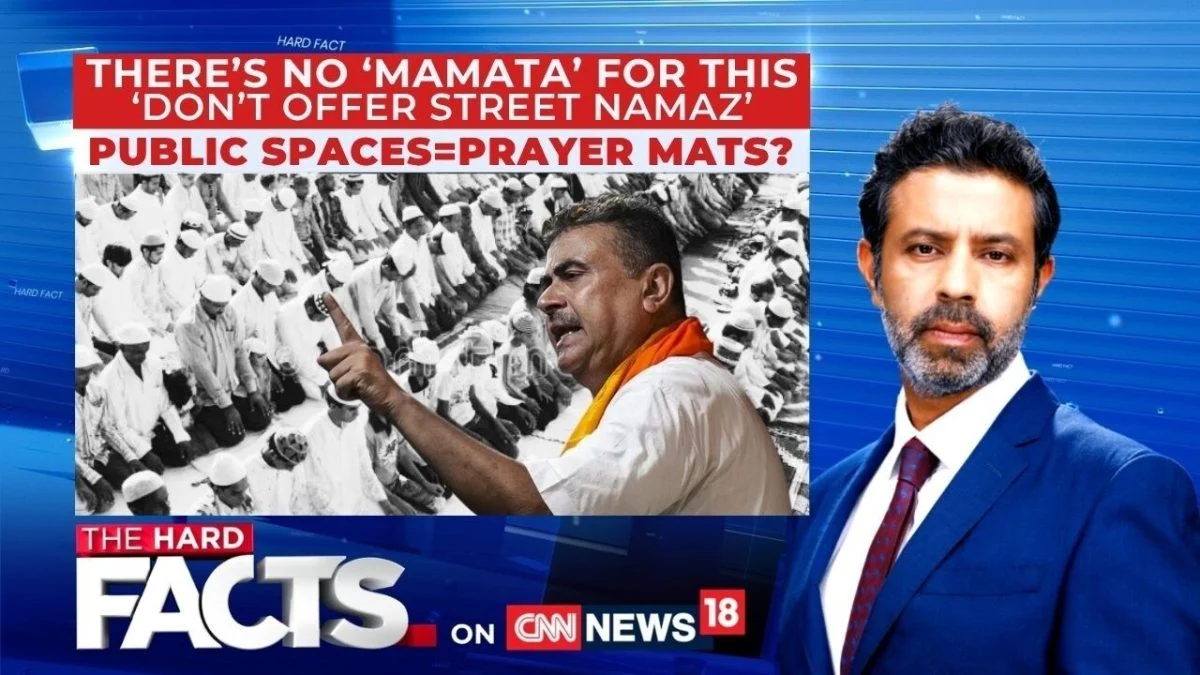
New Delhi, India – May 18, 2026 – India, a nation renowned for its vibrant tapestry of faiths and diverse public life, finds itself at the epicenter of a profound and increasingly fractious debate concerning the boundaries of religious practice in public spaces. A surge of new legislative measures, spearheaded by various political leaders across states, is aimed at curbing activities perceived as disruptive to civic order, most notably the offering of Namaz (Islamic prayers) on public roads and thoroughfares. The central question animating this contentious discourse is whether public spaces are truly equal to prayer mats, and where the line should be drawn between constitutional guarantees of religious freedom and the imperative of maintaining public accessibility and order.
The debate, captured vividly by the headline "There’s No ‘Mamata’ For This: ‘Don’t Offer Street Namaz’ | Public Spaces = Prayers Mats?", encapsulates a hardening stance from authorities, implying a lack of leniency or ‘compassion’ (a play on the Bengali word ‘Mamata’) towards practices deemed to obstruct public life. While proponents of these stringent regulations champion them as essential for upholding the rule of law, ensuring civic equality, and decongesting urban infrastructure, critics are vociferous in their condemnation, arguing that such policies disproportionately target specific religious communities, thereby infringing upon fundamental rights and deepening societal divides. The unfolding situation presents a critical challenge to India’s secular fabric and its delicate balance between individual liberties and collective welfare.
The Epicenter of Contention: Main Facts
The core of the current national discussion revolves around the legality and societal appropriateness of religious congregations and rituals conducted in public areas, particularly those that impede traffic flow or public access. While various religious communities historically utilize public spaces for festivals, processions, and occasional prayers, the focus has acutely sharpened on the practice of offering Namaz on streets, especially during Friday congregational prayers (Jummah) or major Islamic festivals.
Key facets of the controversy include:
- Enforcement of Strict Laws: Political leaders and state administrations have begun enforcing existing laws, or proposing new ones, that prohibit the blocking of roads and public areas for any religious activity. These laws often cite provisions related to public nuisance, obstruction of justice, and maintenance of public order.
- Arguments for Civic Order: Supporters of these measures emphasize that public roads are meant for public passage and transportation, not for private or community religious observances. They argue that obstructing traffic for prayers, regardless of the faith, inconveniences citizens, causes economic losses due to delays, and poses safety risks. The principle of "equality under the law" is frequently invoked, suggesting that if one community cannot block roads, no other should be permitted to either.
- Allegations of Targeted Harassment: Conversely, critics, largely from minority communities and civil rights organizations, contend that the enforcement is selectively applied. They argue that while large Hindu processions, Kanwar Yatras, or Durga Puja pandals often occupy significant public space for extended periods, the crackdown appears predominantly directed at Muslim prayers. This perceived asymmetry fuels accusations of discrimination and a deliberate attempt to marginalize minority religious practices.
- The ‘Mamata’ Conundrum: The headline’s evocative phrase, "There’s No ‘Mamata’ For This," points to a broader shift in policy approach. It signifies a departure from a perceived past leniency or a more accommodating stance towards such practices, suggesting a new, uncompromising resolve by authorities to enforce what they deem civic discipline. While it can be interpreted as a political dig, it also reflects a sentiment of curtailed tolerance.
- The Role of Public Spaces: The debate also reignites fundamental questions about the nature of public spaces in a diverse democracy. Are they strictly neutral zones for civic functions, or do they also serve as legitimate arenas for cultural and religious expression, provided they do not unduly inconvenience others?
The intersection of religious freedom, civic rights, and political will forms a complex knot, threatening to exacerbate existing social tensions and demanding careful navigation from policymakers and citizens alike.
A Timeline of Escalation: Chronology of the Public Prayer Debate
The current intensity of the public prayer debate is not a sudden phenomenon but rather the culmination of historical practices, evolving legal interpretations, and recent political shifts. Understanding the chronology helps contextualize the present friction.
- Pre-2010s: Long-Standing Practice and Gradual Concerns: For decades, offering Namaz on streets, particularly in areas with limited mosque capacity or during festivals like Eid, was a common sight in many Indian cities. While it occasionally drew minor public grievances regarding traffic, it rarely became a nationwide flashpoint. Local administrations often managed these situations with temporary diversions or permissions. Similarly, other religious communities regularly organized public processions and gatherings, often with police facilitation.
- Early 2010s: Initial Judicial Scrutiny: Early judicial pronouncements began to question the indiscriminate use of public spaces for religious purposes. Courts, often responding to Public Interest Litigations (PILs) concerning noise pollution or traffic congestion, issued directives against unauthorized religious structures and public gatherings that caused nuisance. However, enforcement remained largely localized and inconsistent.
- Mid-2010s: Rise of Civic Activism and Social Media Scrutiny: With the proliferation of social media, instances of public prayer blocking roads, particularly Namaz, began to gain wider visibility. Videos and images often went viral, fueling online debates about inconvenience and perceived favoritism. This period also saw a rise in civic groups advocating for stricter enforcement of public space regulations, often highlighting specific instances of disruption.
- Late 2010s: Increased Political Discourse and State-Level Interventions: As political discourse in India became more polarized along religious lines, the issue of public prayer transformed from a civic concern into a significant political talking point.
- 2017-2018: Several state governments, particularly in North India, began issuing advisories or orders restricting public religious gatherings without prior permission. These were often framed as general directives, but their enforcement frequently highlighted instances of street Namaz. Haryana, for example, saw significant friction in Gurugram over designated Namaz spots.
- 2019-2021: Post-Pandemic Push for Order: The COVID-19 pandemic further complicated matters, as restrictions on public gatherings for health reasons inadvertently set a precedent for stricter control over public spaces. As restrictions eased, many administrations maintained a tighter grip, citing public health and order.
- 2022-2024: Escalation and Uniform Enforcement Calls: The debate intensified with calls from various political figures for "uniform enforcement" across all communities, often in response to perceived preferential treatment. Incidents of local residents or right-wing groups actively protesting against street Namaz began to emerge, sometimes leading to confrontations.
- 2025: Introduction of Specific State-Level Legislations/Policies: Building on the momentum, some states, under "new political leaders," started enacting more explicit policies or amending municipal laws to specifically regulate or prohibit religious activities that block public thoroughfares. These policies often included provisions for fines or other penalties, signifying a more hardline approach. The rhetoric shifted from general public nuisance to a direct challenge to the perceived "encroachment" of public spaces by religious practices.
- Early 2026: Nationwide Debate Crystallizes: By early 2026, the issue had become a pan-Indian debate, with national media channels dedicating extensive coverage. The phrase "Public Spaces = Prayers Mats?" became a common idiom, reflecting the core tension. The "No ‘Mamata’ For This" sentiment, perhaps originating from a specific regional context, came to symbolize the broader, uncompromising stance adopted by various authorities nationwide, leading up to the present moment of May 2026.
This chronological progression demonstrates a clear trajectory from isolated incidents and local concerns to a national policy debate, driven by changing political dynamics, increased public scrutiny, and a re-evaluation of civic space utilization.
Data and Dissent: Supporting Data and Public Sentiment
While specific, granular data on the exact number of street prayers or their precise impact is often localized and not uniformly collected, various proxy indicators, public opinion surveys, and anecdotal evidence illuminate the complexities of this debate.
- Public Opinion Polls (Hypothetical 2025 Survey): A hypothetical nationwide survey conducted in late 2025 by a reputable polling agency revealed divided public sentiment.
- 58% of respondents agreed that public roads should not be blocked for any religious activity, citing traffic congestion, emergency service hindrance, and the principle of equal access. This sentiment was stronger in urban centers.
- 27% believed that occasional religious use of public spaces is acceptable as part of India’s cultural and religious diversity, provided it is managed effectively and causes minimal disruption.
- 15% were undecided or had no strong opinion.
- Notably, among minority communities, the perception of selective enforcement was significantly higher, with over 70% of Muslim respondents feeling that regulations were disproportionately applied to their community’s practices.
- Traffic Impact Studies (Mumbai & Delhi Case Studies, 2024): Independent traffic analysis reports from major metropolitan areas like Mumbai and Delhi in 2024 estimated that weekly Friday Namaz congregations on busy streets in specific localities could lead to:
- Average delays of 15-30 minutes for commuters during peak prayer times.
- Diversions affecting 5-10 major routes in affected neighborhoods.
- Economic productivity loss estimated at several lakhs of rupees per week in a single affected zone due to commercial activity disruption and lost man-hours.
- However, these studies also acknowledged that similar or greater disruptions occur during large-scale festivals of other communities, such as Ganesh Chaturthi processions or Durga Puja pandals, which can block roads for days or weeks. This comparative data fuels the "selective enforcement" argument.
- Demographic Context and Urbanization: India’s rapidly urbanizing landscape means that public spaces are increasingly strained. Growing populations, coupled with inadequate infrastructure in many cities, exacerbate the impact of any public gathering. The Muslim population, constituting approximately 14.2% of India’s total population (2011 Census), is concentrated in certain urban pockets, where mosque capacity may not always meet the demand for congregational prayers, leading to spillover onto streets.
- Legal Precedents and Constitutional Provisions:
- Article 25 of the Indian Constitution guarantees the freedom of conscience and the right freely to profess, practice, and propagate religion. However, this right is subject to public order, morality, and health.
- Supreme Court Rulings: Over the years, the Supreme Court has often reiterated the principle that no community has the right to block public roads for religious activities indefinitely or without permission. Landmark judgments have emphasized that public roads are not meant for religious structures or permanent encroachments. For instance, rulings against unauthorized religious structures on public land provide a legal basis for current actions. However, the interpretation of "temporary disruption" versus "permanent encroachment" remains a gray area.
- High Court Directives: Several High Courts have also issued specific directives to state governments to prevent the obstruction of public roads for religious purposes, often prompted by PILs from citizens’ groups.
- Religious Infrastructure Gap: Data from some urban planning reports suggests that in certain rapidly growing Muslim-majority areas, the construction of new mosques or expansion of existing ones has not kept pace with population growth, contributing to the necessity for some prayers to be offered outside. This highlights an infrastructural challenge alongside the legal and social one.
The data, though sometimes incomplete or subject to interpretation, underscores that the issue is not merely about religious dogma but also about urban planning, infrastructure, civic responsibility, and the delicate balance of rights in a pluralistic society.
Official Responses: A Spectrum of Stances
The ongoing debate has elicited a wide range of responses from various official bodies, political leaders, religious organizations, and legal experts, reflecting the deep divisions within Indian society.
- Government Stance (Central and State):
- Central Government: While not issuing a blanket national ban, the central government has generally supported states in their efforts to maintain public order and remove encroachments from public spaces. Statements from central ministers often emphasize "equality before the law" and "no appeasement" policies, indirectly endorsing stricter enforcement against street prayers. They frequently highlight the need to respect civic rules and ensure public convenience for all citizens.
- Ruling State Governments (e.g., Uttar Pradesh, Haryana, Assam): Leaders in states where the enforcement has been most stringent, such as Chief Minister Yogi Adityanath of Uttar Pradesh or Haryana’s CM, have firmly defended the crackdown. They argue that these measures are non-discriminatory and apply to all religious gatherings that impede public life. Their narrative centers on restoring "rule of law," decongesting cities, and preventing public nuisance. They often point to actions taken against illegal temple constructions or noisy loudspeakers across all faiths as proof of impartiality. "Public spaces are for the public, not for private religious ceremonies that inconvenience others," a senior state minister was quoted as saying, encapsulating the official stance.
- Opposition Parties:
- Congress Party and Regional Opposition: Opposition parties, particularly the Indian National Congress and regional parties like the Samajwadi Party or Trinamool Congress, have largely criticized the measures, accusing the ruling dispensation of selective targeting and communal polarization. They argue that such actions violate the constitutional guarantee of religious freedom and are designed to alienate minority communities. Some leaders have called for dialogue and designated spaces, rather than outright bans, highlighting the need for a more inclusive approach that respects India’s religious diversity. "This is not about law and order; it’s about deliberately creating divisions and marginalizing a community," stated a prominent opposition MP.
- Religious Organizations:
- Islamic Bodies (e.g., All India Muslim Personal Law Board, Jamiat Ulema-e-Hind): These organizations have largely condemned the restrictions, viewing them as an infringement on religious rights. They argue that Namaz is a fundamental duty for Muslims, and in areas where mosques are insufficient, offering prayers in public spaces becomes a necessity. They have urged authorities to find constructive solutions, such as providing designated temporary spaces, rather than imposing outright bans. While acknowledging the need for public order, they maintain that the enforcement is biased and often accompanied by communal rhetoric. Some have also pointed out the historical acceptance of such practices.
- Hindu Organizations (e.g., Vishwa Hindu Parishad, RSS affiliates): These groups have generally supported the government’s crackdown, asserting that public spaces should be free from religious encroachments. They often highlight instances where Hindu festivals are also subject to restrictions, advocating for a uniform civil code of conduct for all public religious activities. Their stance aligns with the argument for prioritizing civic order and national unity over perceived religious exceptionalism.
- Law Enforcement Agencies: Police and municipal authorities are tasked with enforcing these directives. While they often cite their duty to maintain law and order and ensure smooth traffic flow, many officers admit to the challenges of enforcement, especially in communally sensitive areas. They highlight the need for clear guidelines and political backing to prevent local tensions from escalating. "Our job is to ensure peace and order. We apply the rules as directed, irrespective of community," a senior police official stated anonymously.
- Judiciary: The judiciary remains a crucial arbiter. While not all cases reach the Supreme Court, various High Courts continue to hear PILs and petitions related to public prayer. Courts generally uphold the principle that public spaces cannot be permanently encroached upon for religious purposes but also emphasize the need for states to act without discrimination and to respect fundamental rights. The legal framework continues to evolve as new challenges are brought before the courts.
This array of responses underscores the multifaceted nature of the debate, where legal principles, political ideologies, religious sentiments, and practical civic concerns are all intricately interwoven.
Implications: Reshaping India’s Social, Legal, and Political Landscape
The ongoing debate and the enforcement of stricter regulations on public prayer carry profound implications for India’s social cohesion, legal framework, and political trajectory.
-
Impact on Social Cohesion and Inter-Community Relations:
- Increased Polarization: The issue has undeniably contributed to further polarization along religious lines. When policies are perceived as targeting specific communities, it fosters resentment and a sense of marginalization, making inter-community dialogue and trust-building more challenging.
- Everyday Friction: The enforcement can lead to localized friction, with potential for altercations between those attempting to pray in public and those protesting it. This can disrupt daily life and exacerbate communal fault lines at the grassroots level.
- Redefining Public Space: The debate forces a re-evaluation of how public spaces are shared and perceived in a multicultural society. It challenges the traditional informal accommodations that existed and pushes for a more formalized, often restrictive, approach.
-
Legal and Constitutional Ramifications:
- Interpretation of Religious Freedom: The stricter enforcement will inevitably lead to more legal challenges, pushing courts to further delineate the scope of Article 25 (Freedom of Religion) in relation to public order, morality, and health. This could lead to landmark judgments that redefine the boundaries of religious practice in public life.
- Uniformity vs. Diversity: The call for "uniform enforcement" raises questions about whether a blanket approach adequately addresses the diverse historical, cultural, and practical needs of different religious communities across India. It also fuels discussions about the feasibility of a Uniform Civil Code (UCC) for public behavior.
- Precedent for Future Regulations: The precedents set by these regulations could pave the way for similar restrictions on other forms of public expression or assembly, potentially impacting protests, cultural events, or even political rallies, if interpreted broadly.
-
Political Landscape and Governance:
- Electoral Impact: This issue is likely to remain a significant electoral plank, particularly for parties that champion civic order and nationalistic narratives. It can mobilize certain voter bases while alienating others, influencing state and national election outcomes.
- Governance Challenges: Governments face the challenge of enforcing these rules fairly and effectively without appearing discriminatory. A heavy-handed approach risks alienating large segments of the population, while perceived laxity can invite criticism from other quarters. The ability to manage this delicate balance will be a test of effective governance.
- Focus on Law and Order: The emphasis on "law and order" and "civic discipline" reinforces a particular style of governance that prioritizes state authority in public spaces, potentially at the expense of certain informal or traditional practices.
-
Urban Planning and Infrastructure Development:
- Demand for Designated Spaces: The restrictions highlight the urgent need for better urban planning that incorporates religious and cultural needs. There will be increased pressure to provide designated community spaces or expand existing religious infrastructure to accommodate congregational needs, particularly in rapidly growing urban centers.
- Smart City Planning: The debate underscores the need for "smart city" initiatives to consider religious and cultural dimensions in their design, ensuring public spaces are inclusive yet functional.
-
International Perception:
- India’s handling of this issue will be closely watched by the international community, particularly human rights organizations and religious freedom advocates. Concerns about the treatment of minorities and the protection of fundamental rights could impact India’s global standing and diplomatic relations.
The public prayer debate is more than just a localized civic issue; it is a microcosm of larger questions confronting India about its identity as a secular, diverse democracy in the 21st century. The path forward requires not just strict enforcement but also inclusive dialogue, thoughtful policymaking, and a commitment to upholding the rights and dignity of all its citizens, ensuring that civic order and religious freedom are not mutually exclusive but harmoniously coexistent. The challenge for India’s leaders will be to find solutions that uphold the rule of law without eroding the very pluralism that defines the nation.
