

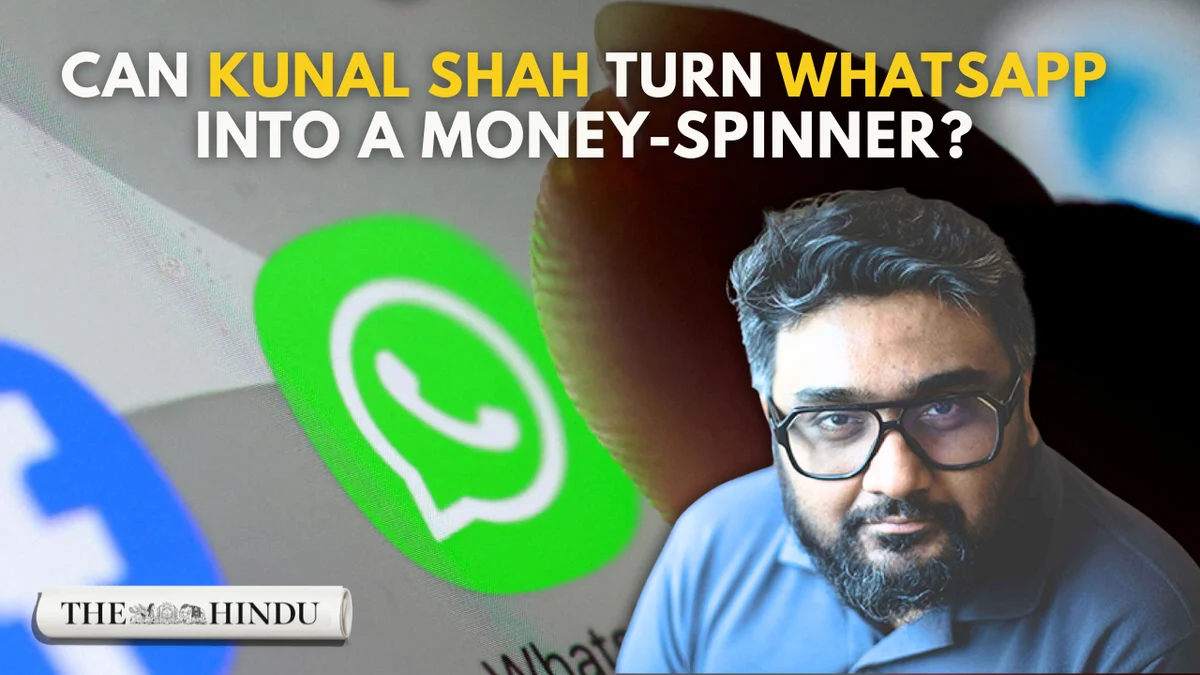
Bengaluru, India – June 27, 2026 – In a strategic manoeuvre poised to redefine the global messaging and digital payments landscape, Meta Platforms Inc. has announced the appointment of prominent Indian tech entrepreneur Kunal Shah, founder of CRED, as the new Global Head of WhatsApp. This landmark leadership change comes hand-in-hand with a significant $900 million investment by Meta into Shah’s highly successful fintech venture, CRED, signalling a profound commitment to unlocking the vast, untapped commercial potential of WhatsApp’s colossal user base.
The announcement, made public this evening, has sent ripples across the global technology and financial sectors. Shah, known for his disruptive innovation and keen understanding of consumer behaviour in high-trust environments, is tasked with the formidable challenge of transforming WhatsApp from a dominant, yet largely unmonetized, communication platform into a robust revenue-generating engine for Meta. This move is seen as a decisive step by Meta to address long-standing questions about WhatsApp’s profitability and to diversify its revenue streams beyond its core advertising business, particularly as it continues to pour billions into its ambitious metaverse vision.
Industry observers are keenly watching to see if Shah, with his track record of building successful, user-centric businesses in the complex Indian market, can navigate the intricate balance between preserving WhatsApp’s cherished simplicity and privacy while integrating advanced commerce and payment functionalities. The $900 million capital infusion into CRED, a company renowned for rewarding financially responsible individuals, suggests a deeper, synergistic play, potentially leveraging CRED’s expertise in embedded finance and premium user engagement within the WhatsApp ecosystem.
The Strategic Imperative: Unlocking WhatsApp’s Billions
For years, WhatsApp has been Meta’s sleeping giant. Acquired for an astonishing $19 billion in 2014, the platform boasts over 2.5 billion users worldwide, making it the most ubiquitous messaging app in numerous key markets, including India, Brazil, Indonesia, and across parts of Europe. Despite this unparalleled reach, its Average Revenue Per User (ARPU) has remained significantly lower than Meta’s other flagship platforms like Facebook and Instagram, which are heavily reliant on advertising.
Meta’s previous attempts at monetizing WhatsApp have met with mixed success. While the WhatsApp Business API has found traction with enterprises, enabling customer service and notifications, broader consumer-facing payment initiatives have struggled to gain widespread adoption or overcome regulatory hurdles. The company’s ambitious foray into global digital currency with the Diem (formerly Libra) project also ultimately failed, highlighting the complexities of building financial infrastructure on a global scale.
Kunal Shah’s appointment, therefore, represents a fresh, bold approach. His mandate is clear: to leverage WhatsApp’s massive network effect and trusted status to build out robust commerce, payments, and potentially other financial services, thereby finally turning the platform into the "money-spinner" Meta has long envisioned. The focus is expected to be particularly strong in emerging markets, where WhatsApp is deeply embedded in daily life and where digital payments are experiencing explosive growth.
A Chronology of WhatsApp, Meta, and the Quest for Monetization
The journey of WhatsApp from a simple messaging app to Meta’s potential revenue powerhouse has been fraught with challenges and strategic shifts.
2009: The Genesis of WhatsApp
Jan Koum and Brian Acton, former Yahoo! employees, found WhatsApp Inc. Their vision is to create a simple, ad-free messaging service that prioritizes user privacy. The app quickly gains popularity for its reliability and lack of intrusive advertisements.
2014: The $19 Billion Acquisition
Facebook (now Meta) acquires WhatsApp for an unprecedented $19 billion. Mark Zuckerberg promises to maintain WhatsApp’s independence, its ad-free model, and its focus on privacy. This acquisition is a strategic move to secure Facebook’s dominance in the mobile messaging space.
2017-2018: Founder Departures and Early Monetization Attempts
Brian Acton departs WhatsApp in late 2017, followed by Jan Koum in 2018, reportedly due to disagreements over data privacy and monetization strategies. Meta introduces the WhatsApp Business API, allowing businesses to communicate with customers, marking its first significant step towards monetization. WhatsApp Pay is piloted in India, aiming to leverage the Unified Payments Interface (UPI) system. However, regulatory delays and competition slow its rollout.
2019: The Diem (Libra) Ambition
Meta unveils its ambitious plan for Libra (later renamed Diem), a global digital currency, with WhatsApp envisioned as a key platform for its adoption. The project faces immediate and intense global regulatory scrutiny, raising concerns about financial stability, privacy, and sovereignty.
2021: Privacy Policy Backlash
WhatsApp updates its privacy policy, mandating users to agree to share certain data with Meta’s other services or face loss of functionality. This sparks widespread user backlash, privacy concerns, and a surge in downloads for rival messaging apps like Signal and Telegram, highlighting the delicate balance between monetization and user trust. Despite clarifications, the incident underscores the challenges of integrating WhatsApp more deeply into Meta’s ecosystem without alienating its user base.
2022-2025: Continued Feature Development and Payment Push
Meta sells off Diem assets, effectively ending its global digital currency aspirations. WhatsApp continues to roll out new features such as Communities, larger group chats, ephemeral messages, HD media sharing, and enhanced privacy controls. Efforts to expand WhatsApp Pay continue in India and Brazil, albeit with limited success in achieving widespread adoption compared to local incumbents. The platform experiments with "chat commerce" functionalities, allowing users to browse and purchase products directly within conversations.
2018-2026: The Rise of CRED
Concurrently, Kunal Shah founds CRED in 2018, following his successful exit from FreeCharge. CRED quickly establishes itself as a unique fintech platform, rewarding users for paying credit card bills on time. It expands into e-commerce, personal finance, and lending, building a loyal base of high-credit-score individuals. Shah gains a reputation for innovative product design, gamification, and understanding the psychology of affluent consumers, raising significant capital and achieving unicorn status.
June 2026: The Pivotal Appointment
Meta announces Kunal Shah as the new Global Head of WhatsApp and a $900 million investment in CRED, signaling a decisive shift in its strategy to monetize WhatsApp, particularly through payments and commerce.
Supporting Data: The Unfolding Opportunity and Past Hurdles
The decision to appoint Kunal Shah and invest heavily in CRED is underpinned by several critical data points and market realities.
WhatsApp’s Unrivalled Scale, Undercapitalized:
With over 2.5 billion monthly active users globally, WhatsApp’s reach is unparalleled. In India alone, it commands over 500 million users. Brazil, Indonesia, Mexico, and many European nations also see WhatsApp as the primary mode of communication. However, unlike WeChat in China, which has successfully integrated payments, e-commerce, and social networking into a "super app," WhatsApp has struggled to translate its massive engagement into significant direct revenue. This low ARPU is a constant point of concern for Meta investors.
Meta’s Financial Imperative:
Meta is at a critical juncture. Its core advertising business, while still robust, faces increasing headwinds from privacy changes (like Apple’s ATT), macroeconomic uncertainties, and intense competition. Simultaneously, the company is making multi-billion dollar investments in its metaverse vision, which will not yield substantial returns for years. New, diversified revenue streams are essential to fund these ambitions and ensure sustained growth. WhatsApp, with its enormous user base, represents the most immediate and significant opportunity for such diversification outside of advertising.
The Exploding Digital Payments Market:
The global digital payments market is projected to reach trillions of dollars annually. Countries like India, with its UPI system, and Brazil, with Pix, have demonstrated the immense potential for real-time, interoperable digital payments. These markets are ripe for disruption and offer a template for how messaging apps can become central to financial transactions. However, success requires deep localization, regulatory navigation, and building trust. Meta’s previous payment efforts, including WhatsApp Pay in India, have faced stiff competition from well-entrenched local players like Google Pay, PhonePe, and Paytm, often struggling with regulatory approvals and a slower pace of innovation.
Kunal Shah’s CRED Success Metrics:
CRED, despite its relatively niche focus on high-credit-score individuals, has demonstrated impressive engagement and loyalty. While specific profitability figures for CRED are often private, its valuation, which has soared into the billions, reflects investor confidence in its business model. The platform’s ability to gamify financial responsibility, integrate premium e-commerce experiences, and leverage data for targeted financial product offerings provides a blueprint for what WhatsApp could potentially achieve on a much larger scale. The $900 million investment not only provides CRED with significant capital for expansion but also creates a financial and strategic umbilical cord between the two entities, potentially facilitating a more seamless transfer of expertise and technology.
Official Responses and Industry Reactions
The announcement has elicited enthusiastic responses from Meta and Kunal Shah, while industry analysts weigh in on the complexities and potential impact.
Mark Zuckerberg, CEO of Meta Platforms, commented in an internal memo, later shared with the press: "WhatsApp is more than just a messaging app; it’s a foundational layer of communication for billions. With Kunal’s unparalleled vision for user-centric innovation and his deep understanding of digital commerce and payments, we are incredibly excited about the next chapter for WhatsApp. This is a strategic investment in the future of embedded finance and the global digital economy. Kunal has consistently demonstrated the ability to build delightful, impactful products that resonate deeply with users, and we believe he is uniquely positioned to unlock WhatsApp’s full potential as a true super app."
Kunal Shah, in his inaugural statement as Global Head of WhatsApp, expressed both humility and ambition: "I am deeply honoured by the trust Meta has placed in me. WhatsApp has an incredible legacy of connecting people, and my focus will be on preserving that core value while responsibly exploring new avenues for commerce and payments that truly enhance the user experience. We have an opportunity to build innovative solutions that simplify daily life for billions, particularly in emerging markets where digital inclusion is paramount. My experience at CRED has taught me the importance of building for trust and delight, and those principles will guide our journey at WhatsApp."
A spokesperson for CRED confirmed the investment, stating, "This significant capital infusion from Meta underscores the strength of CRED’s business model and our commitment to financial innovation. We look forward to exploring synergistic opportunities with WhatsApp while maintaining our independent operations and continued focus on our premium member base."
Ms. Anya Sharma, a lead analyst at TechInsights Global, offered a balanced perspective: "This is Meta’s boldest move yet to monetize WhatsApp. Kunal Shah is a visionary, especially in the Indian fintech space, and his appointment signals Meta’s seriousness about payments and commerce. However, the challenge is immense. WhatsApp’s global user base is incredibly diverse, and regulatory environments vary wildly. Shah will need to balance Meta’s monetization goals with WhatsApp’s long-standing promise of privacy and simplicity, a tightrope walk that has tripped up Meta before. The $900 million investment in CRED also hints at a deeper collaboration, potentially integrating CRED’s expertise in loyalty and premium financial services into WhatsApp, but the specifics of how that integration will work without alienating existing users remain to be seen."
Implications: A New Era for WhatsApp and Meta
The appointment of Kunal Shah and the significant investment in CRED herald a potentially transformative era for WhatsApp, Meta, and the broader digital economy.
For WhatsApp: The Super App Ambition Reborn
Shah’s leadership is expected to accelerate WhatsApp’s evolution from a pure messaging app to a comprehensive "super app," much like WeChat in China. This could involve:
- Enhanced Payments: A renewed and more aggressive push for WhatsApp Pay globally, with Shah’s expertise in navigating complex payment ecosystems likely to be leveraged. This could include deeper integration with local payment rails and innovative reward systems.
- Integrated Commerce: Seamless in-app shopping experiences, from browsing catalogues to completing purchases directly within chats, leveraging the WhatsApp Business platform.
- Financial Services: Potential expansion into micro-lending, insurance, or other embedded financial products, especially in markets where traditional banking access is limited.
- Premium Features: Exploration of optional paid features or premium tiers that offer enhanced functionalities without compromising the core free messaging experience.
- Advertising Integration: While full-screen ads might remain controversial, Shah might explore more subtle, permission-based advertising within specific commerce or service contexts, drawing lessons from CRED’s content-led ad model.
The critical challenge will be to implement these changes without compromising the user experience or WhatsApp’s reputation for privacy. Shah’s success at CRED, which built trust by rewarding responsible behaviour, suggests a potential pathway to monetization that focuses on value addition rather than intrusive advertising.
For Meta: A Diversified Revenue Stream and Strategic Synergy
For Meta, this move represents a significant strategic pivot. Successfully monetizing WhatsApp could:
- Fuel Metaverse Investments: Provide a much-needed new revenue stream to fund the billions being poured into its metaverse division, reducing reliance on the core advertising business.
- Strengthen Ecosystem: Further integrate WhatsApp into Meta’s "family of apps," creating cross-promotional opportunities and enhancing data synergy (while still respecting privacy boundaries).
- Global Leadership in Embedded Finance: Position Meta as a dominant player in the global digital payments and embedded finance space, particularly in emerging markets where WhatsApp’s penetration is highest.
- Regulatory Scrutiny: However, this expansion will also likely intensify regulatory scrutiny, especially regarding antitrust concerns and data privacy, given Meta’s already enormous market power.
For CRED: Growth, Collaboration, and Continued Independence
The $900 million investment offers CRED substantial capital for its own growth and expansion initiatives. While the exact nature of the collaboration with WhatsApp remains to be fully detailed, it could lead to:
- Cross-Pollination of Ideas: Sharing of product development methodologies, user acquisition strategies, and payment infrastructure expertise.
- Potential Integration Points: WhatsApp could become a new channel for CRED’s offerings, or CRED’s reward mechanisms could be adapted for WhatsApp’s payment features.
- Brand Identity: A key aspect will be how CRED maintains its distinct brand identity and premium positioning while potentially collaborating with a mass-market platform like WhatsApp. The investment suggests Meta values CRED’s independence and unique approach.
For the Global Tech Industry: A Blueprint for Messaging Platforms
This development sets a precedent for how global messaging platforms might evolve. It reinforces the "super app" model and underscores the critical role of embedded finance in user engagement. Competitors, from Google to Apple to regional players, will be closely observing Shah’s strategies, potentially accelerating their own efforts to integrate commerce and payments into their communication platforms.
Ultimately, Kunal Shah’s appointment is a high-stakes gamble for Meta. It is a recognition that WhatsApp’s immense potential can no longer remain dormant. His challenge is to weave sophisticated financial services and commerce into the fabric of a beloved, simple messaging app, all while navigating a complex global regulatory landscape and a user base fiercely protective of its privacy. The coming years will reveal if this bold move can finally turn Meta’s sleeping giant into a waking financial powerhouse.
