

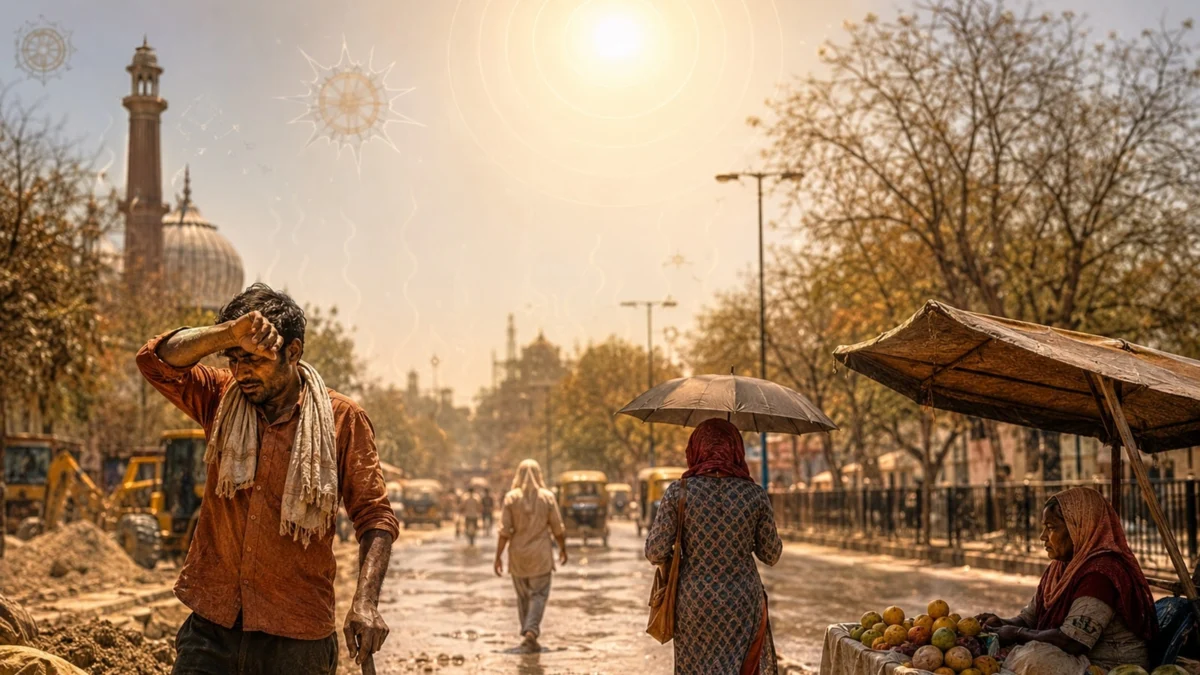
As northern India steeps into what is traditionally considered the most scorching period of the year, attention is once again fixed on "Nautapa," a nine-day celestial and climatic phenomenon deeply woven into the region’s cultural fabric. The term, derived from the Hindi words "Nau" (nine) and "tapa" (heat), signifies a period where the sun’s transit through the Rohini Nakshatra is believed to usher in intense summer heat. While rooted in ancient astronomical observations and folklore, particularly prevalent in Rajasthan, Nautapa invariably coincides with the year’s peak pre-monsoon temperatures, raising concerns that extend far beyond weather forecasts, impacting public health and agricultural stability.
This year, meteorological predictions paint a stark picture for north and central India, forecasting prolonged periods of intense heat and arid conditions. Daytime temperatures across many areas are expected to soar between 40 and 46 degrees Celsius, with some regions potentially reaching a blistering 47 to 48 degrees Celsius. Major urban centers like those in Punjab, Haryana, Delhi-NCR, Uttar Pradesh, and Rajasthan are bracing for severe daytime heat, accompanied by the relentless "loo" – hot, dry winds characteristic of the season. Compounding the discomfort, nighttime temperatures are predicted to offer limited respite, a phenomenon that exacerbates the physiological strain on the human body. While isolated pre-monsoon thunderstorms or showers might offer fleeting relief in scattered locations, experts are issuing urgent warnings about the significant challenges facing vulnerable populations, outdoor workers, and individuals exposed to prolonged heat stress.
The Celestial Calendar and the Emergence of Nautapa
The genesis of the Nautapa belief is deeply intertwined with the agrarian societies of northern and western India, particularly Rajasthan. Alok Singh, an expert in food history and science at Diga Organics, elaborates on this historical context: "Nautapa refers to the nine-day period that begins when the sun enters Rohini Nakshatra, typically during late May, and is traditionally considered the hottest phase of the summer season in north and western India. In agrarian societies such as Rajasthan, farmers and pastoral communities closely tracked celestial movements and seasonal shifts because their livelihoods depended heavily on rainfall cycles."
Over generations, these communities meticulously observed recurring patterns. They noticed a correlation between periods of extreme summer heat and the subsequent behavior of the monsoon rains. This empirical observation, passed down through oral traditions and cultural narratives, gradually solidified the cultural and agricultural significance of Nautapa within the realm of traditional weather wisdom. It was a practical system of understanding and preparing for the climatic vagaries that dictated their survival and prosperity.
Nautapa and the Monsoon: A Traditional Correlation
A persistent question surrounding Nautapa is whether a harsher period of heat can signal a more robust monsoon ahead. Singh offers a nuanced perspective, suggesting an underlying environmental logic, though cautioning against viewing it as a definitive scientific predictor. "There is some environmental logic behind this belief," he explains, "although it should not be viewed as a direct scientific predictor of monsoon performance. Intense land heating during late May and early June helps create low-pressure systems over the Indian subcontinent, which play an important role in drawing moisture-laden winds from the Indian Ocean."
Historically, communities may have indeed associated stronger heat with stronger monsoon activity because both phenomena are intrinsically linked to seasonal atmospheric dynamics. The intense heating of the landmass is a crucial precursor for the formation of low-pressure areas that draw in moisture-laden air from the oceans, ultimately fueling the monsoon. However, Singh emphasizes the complexities of modern climate patterns: "Historically, communities may have associated stronger heat with stronger monsoon activity because both are linked to seasonal atmospheric dynamics. However, modern monsoon behaviour is influenced by multiple global factors such as El Niño, sea surface temperatures, and changing climate patterns, so a severe Nautapa does not guarantee a good monsoon every year." This highlights the evolving nature of weather prediction, where traditional wisdom, while insightful, must be complemented by modern scientific understanding.
The Physiological Toll of Sustained Heat
The impact of prolonged extreme heat extends far beyond mere discomfort. It poses significant physiological challenges to the human body. Dr. Palleti Siva Karthik Reddy, an MBBS, MD General Medicine, and Consultant Physician at Elite Care Clinic, details the internal mechanisms at play. "During prolonged heat exposure such as Nautapa, the body is forced to work continuously to maintain its core temperature," he states. "This increases sweating, fluid loss, and strain on the cardiovascular system as the heart pumps harder to cool the body."
When these high temperatures persist for several consecutive days, the body’s natural cooling mechanisms begin to falter. This leads to an increased risk of dehydration, electrolyte imbalances, heat exhaustion, and in severe cases, heatstroke. "Even healthy individuals can be affected because sustained heat exposure reduces the body’s ability to recover adequately, especially when hydration, sleep, and nutrition are compromised," Dr. Reddy warns. The cumulative effect of sustained heat exposure can overwhelm the body’s thermoregulatory capacity, leading to serious health consequences.
Why Northern India Experiences Peak Heat During Nautapa
The geographical and atmospheric conditions of northern India make it particularly susceptible to extreme heat during this period. Singh explains the confluence of factors that contribute to this phenomenon: "North India typically experiences peak summer temperatures during this period because the sun’s position leads to maximum land heating across the Indo-Gangetic plains and arid regions like Rajasthan. Clear skies, dry winds, and low moisture levels allow heat to build rapidly over land surfaces."
The clear skies during this pre-monsoon phase allow for maximum solar radiation to reach the earth’s surface, leading to intense heating of the land. Coupled with the dry continental winds, which have a low capacity to hold moisture, the heat builds up rapidly. Furthermore, Singh notes the increased prevalence of the "loo": "At the same time, hot continental winds known as loo become more frequent and intense. This extreme heating is also part of the broader seasonal transition that helps establish the pressure gradient necessary for the southwest monsoon to advance into the subcontinent in the following weeks." The "loo" acts as a conduit, further exacerbating the heat by transferring hot air from arid regions. This intense heating is, in essence, a crucial step in the larger atmospheric dance that eventually brings the life-giving monsoon rains.
Official Responses and Public Health Advisories
In anticipation of the severe heatwave conditions, various government bodies and health organizations have issued advisories to mitigate the risks. The India Meteorological Department (IMD) has been providing regular updates on temperature forecasts and issuing heatwave warnings for affected regions. State governments are also implementing preparedness measures, including setting up control rooms and ensuring the availability of essential medical supplies.
Public health departments are emphasizing the importance of staying hydrated, avoiding strenuous outdoor activities during peak heat hours, and recognizing the early symptoms of heat-related illnesses. Campaigns are being launched to educate the public, especially vulnerable groups, on protective measures. These advisories underscore the recognition of the serious health implications of prolonged heat exposure and the need for a coordinated public health response.
Practical Strategies for Health and Well-being
Beyond general precautions, specific strategies are crucial for navigating periods of intense heat like Nautapa. Dr. Reddy provides practical advice for reducing health risks: "Beyond basic precautions, families should focus on maintaining consistent hydration throughout the day rather than waiting for thirst to develop." This proactive approach to hydration is key to preventing dehydration.
He further highlights the heightened vulnerability of certain groups: "Elderly individuals and children are especially vulnerable because their ability to regulate body temperature is less efficient, so they should remain in well-ventilated or shaded environments as much as possible." For those who must work outdoors, Dr. Reddy recommends: "Outdoor workers should take scheduled cooling breaks, avoid direct sun exposure whenever feasible, and replenish electrolytes in addition to water."
Dietary considerations are also important. "Doctors also advise avoiding heavy meals, excessive caffeine, and alcohol during heatwaves, as these can worsen dehydration," he adds. Finally, vigilance is paramount: "Monitoring vulnerable individuals for behavioural changes, weakness, or confusion is equally important, since heat-related illness can escalate rapidly if early symptoms are missed."
The Broader Implications: Climate Change and Future Preparedness
While Nautapa is a traditional phenomenon, the intensity and frequency of heatwaves are increasingly being linked to the broader impacts of climate change. Experts warn that such extreme weather events are likely to become more common and severe in the future. This necessitates a long-term strategy for adaptation and preparedness.
This includes investing in climate-resilient infrastructure, developing early warning systems that are more sophisticated and widespread, and promoting sustainable practices that can help mitigate climate change. For agricultural communities, this means exploring drought-resistant crops and adopting water-efficient irrigation techniques. For urban areas, it involves creating more green spaces and improving building designs to enhance natural cooling.
The Nautapa period serves as a stark annual reminder of the power of nature and the increasing challenges posed by a changing climate. While traditional wisdom offers valuable insights into understanding these cycles, a modern, science-informed approach is crucial for safeguarding public health, ensuring agricultural sustainability, and building a more resilient future for northern India and beyond. The ongoing dialogue between tradition and scientific understanding, coupled with robust public health measures and long-term climate adaptation strategies, will be key to navigating these increasingly hot summers.
