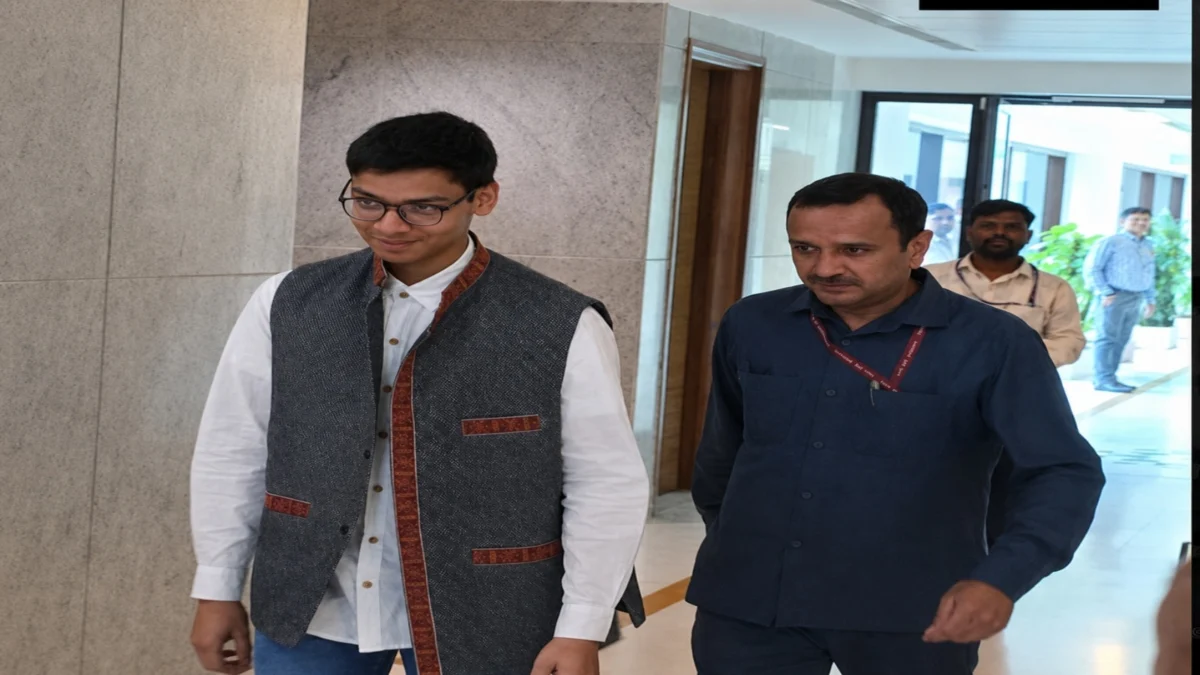
New Delhi, June 2, 2026 – The efficacy and integrity of the Central Board of Secondary Education’s (CBSE) newly implemented On-Screen Marking (OSM) system for Class 12 examinations are under intense scrutiny following a presentation by a concerned student before a powerful parliamentary committee. The Parliamentary Standing Committee on Education, Women, Children, Youth and Sports, led by Chairman Digvijaya Singh, has pledged to thoroughly investigate the issues raised, particularly those pertaining to alleged irregularities in the tendering process for the digital evaluation mechanism.
The pivotal moment in this unfolding narrative came with the appearance of Sarthak Sidhant, a Class 12 student, before the committee. Sidhant, who has become a vocal advocate for transparency in the CBSE’s evaluation processes, presented his findings on the implementation of the OSM system and detailed his allegations of impropriety in the procurement of services for this digital assessment tool. His presentation was attended by key figures from the CBSE, including Chairman Rahul Singh, and Secretary of School Education, Sanjay Kumar, alongside other officials from the Ministry of Education.
The Committee’s commitment to a comprehensive review signals a significant development for students and stakeholders invested in the fairness and accuracy of national examinations. This inquiry is expected to shed light on the operational challenges, technical glitches, and potential systemic flaws that have emerged with the transition to digital marking, a move that the CBSE maintains is aimed at enhancing efficiency and accuracy.
The Genesis of Concern: A Student’s Persistent Advocacy
The concerns surrounding the CBSE’s OSM system gained significant traction following the declaration of Class 12 results. Sarthak Sidhant emerged as a prominent voice, meticulously analysing publicly available CBSE tender documents. His research, presented to the parliamentary committee, pointed towards several discrepancies and anomalies in the tendering process, which he believes suggest a potential favouritism towards a specific vendor involved in the OSM implementation.
Sidhant’s analysis reportedly focused on critical aspects of the tender conditions, including provisions related to vendor performance, blacklisting clauses, financial eligibility requirements, and specific technical benchmarks such as Capability Maturity Model Integration (CMMI) levels and project qualification norms. The student’s meticulous approach and the gravity of his allegations have prompted the parliamentary committee to take them seriously, setting the stage for a thorough investigation.
It is crucial to note Sidhant’s clear stance: he is not inherently opposed to the concept of On-Screen Marking. Instead, he advocates for its careful and transparent implementation, believing that digital evaluation, when executed with due diligence, holds the potential to significantly improve the examination process. His objective appears to be ensuring that the system serves its intended purpose without compromising fairness or introducing undue risks.
Chronology of Events: From Results to Parliamentary Scrutiny
The timeline leading to the parliamentary committee’s intervention highlights a rapidly escalating situation:
- Class 12 Results Declaration (May 2026): Following the announcement of Class 12 results, several students, including Sarthak Sidhant, began raising concerns about the accuracy and fairness of the marks awarded under the newly introduced On-Screen Marking (OSM) system.
- Student-Led Analysis and Allegations: Sarthak Sidhant, armed with his research into CBSE tender documents, began articulating his findings regarding alleged irregularities in the tendering process for the OSM system. These concerns were amplified through various channels, reaching the public and educational authorities.
- Formal Complaint and Representation: Sidhant, along with other affected students, escalated their concerns, seeking a formal review of the OSM system’s implementation and the associated tendering procedures.
- Parliamentary Committee Intervention: The Parliamentary Standing Committee on Education, Women, Children, Youth and Sports, acknowledging the seriousness of the allegations, scheduled a meeting to address the issues.
- Presentation to the Committee (June 2, 2026): Sarthak Sidhant presented his detailed findings and allegations before the committee, which included senior officials from the CBSE and the Ministry of Education.
- CBSE’s Response and Assurances: The CBSE submitted a report to the committee, outlining its perspective on the challenges faced by students and assuring that technical glitches on its portal have been rectified. The board also extended the deadline for re-evaluation applications to June 6th.
- Ongoing Parliamentary Review: The committee continues its deliberations, incorporating the student’s presentation and the CBSE’s response into its ongoing review of educational matters, which also includes the implementation of the three-language formula.
This sequence of events underscores a proactive response from a student to perceived systemic issues, leading to a high-level parliamentary inquiry.
Supporting Data and Student Grievances: A Deep Dive into OSM Challenges
While the article primarily focuses on Sidhant’s allegations regarding the tendering process, it is important to contextualize these within the broader concerns expressed by students regarding the OSM system itself. These grievances, though not detailed in the provided excerpt, typically revolve around:
- Technical Glitches and System Failures: Students and examiners have reported issues with the OSM platform, including slow loading times, difficulty in accessing answer sheets, and problems with annotation tools, which can impact the efficiency and accuracy of evaluation.
- Inconsistent Marking: Concerns have been raised about potential inconsistencies in marking due to the digital nature of the evaluation. This can arise from variations in screen resolution, font rendering, or the subjective interpretation of digital annotations by different examiners.
- Examiner Training and Familiarity: The rapid transition to OSM may have led to challenges in adequately training all examiners in the nuances of digital marking, potentially affecting their proficiency and confidence.
- Re-evaluation Process: The process of re-evaluation itself can be a point of contention. Students might feel that their answer sheets are not being reviewed with the same rigor as during the initial marking, especially if the same system is used.
Sarthak Sidhant’s specific focus on the tendering process adds another layer of complexity. His analysis of multiple CBSE tender documents is crucial. The alleged discrepancies in tender conditions, such as those pertaining to:
- Poor Performance Clauses: The absence or weakening of clauses holding vendors accountable for subpar performance could lead to a lack of incentive for quality service delivery.
- Blacklisting Provisions: Loopholes or the absence of stringent blacklisting criteria might shield underperforming vendors from necessary consequences.
- Financial Eligibility Criteria: Alterations in financial prerequisites could potentially allow less financially robust companies to participate, raising questions about their capacity to deliver complex technological solutions.
- Capability Maturity Model Integration (CMMI) Requirements: CMMI is a framework for process improvement. Deviations from established CMMI requirements could indicate a compromise on the quality and reliability of the vendor’s development and management practices.
- Project Qualification Norms: Changes in the criteria for qualifying past projects could impact the selection of vendors with proven track records in similar large-scale implementations.
These specific points, if substantiated, would raise serious questions about the transparency and fairness of the procurement process, potentially impacting the overall reliability of the OSM system. The CBSE’s subsequent report to the panel, presented as their side of the story, will be crucial in addressing these allegations.
Official Responses and Assurances: The CBSE’s Position
In response to the concerns raised by students and the impending parliamentary review, the CBSE has submitted a report to the committee, presenting its perspective on the issues encountered. The board has also issued assurances regarding the rectification of technical problems.
Key points from the CBSE’s reported response include:
- Rectification of Glitches: The CBSE has assured the Members of Parliament (MPs) that the technical glitches previously observed on its portal have been addressed and resolved. This suggests a proactive approach to troubleshooting and system maintenance.
- Extended Re-evaluation Deadline: To provide students with ample opportunity to apply for re-evaluation of their answer sheets, the CBSE has extended the application deadline to June 6th. This move acknowledges the disruption and potential anxiety experienced by students due to the issues.
- Defence of the OSM System: While not explicitly detailed in the provided excerpt, the CBSE’s report would likely aim to defend the rationale and benefits of the OSM system, highlighting its intended advantages in terms of efficiency, accuracy, and environmental sustainability. They would also likely emphasize the robust security measures in place to protect student data and examination integrity.
The presence of CBSE Chairman Rahul Singh and Secretary, School Education, Sanjay Kumar, at Sidhant’s presentation underscores the seriousness with which the board is treating this matter. Their participation signifies a willingness to engage directly with the concerns and to present their case before the highest authorities.
However, the allegations of irregularities in the tendering process require more than just assurances about current system functionality. A detailed explanation of the tender modifications and the rationale behind them will be critical for the parliamentary committee’s assessment.
Implications and the Path Forward: Broader Ramifications for Educational Assessment
The parliamentary committee’s engagement with the CBSE’s OSM system and the associated tendering allegations carries significant implications for the future of educational assessment in India.
Potential implications include:
- Increased Transparency in Procurement: This inquiry could set a precedent for greater transparency and accountability in the procurement processes of educational boards and institutions. Future tenders for technological solutions may face more rigorous scrutiny from both regulatory bodies and the public.
- Refinement of Digital Evaluation Systems: The feedback and findings from this review could lead to improvements in the design, implementation, and operational management of digital evaluation systems. This might include enhanced security protocols, more robust training for examiners, and clearer guidelines for technical support.
- Strengthened Student Voice: Sarthak Sidhant’s proactive approach and the parliamentary committee’s response highlight the growing importance of student voices in shaping educational policies and practices. This could encourage more students to engage constructively with issues concerning their academic future.
- Re-evaluation of Vendor Selection Criteria: The allegations of favouritism in vendor selection might prompt a review of how such contracts are awarded, ensuring that merit, technical capability, and adherence to ethical procurement practices are paramount.
- Broader Review of Educational Practices: The committee’s simultaneous review of the three-language formula implementation, alongside the OSM concerns, suggests a broader mandate to assess critical aspects of the Indian education system. This integrated approach can lead to more holistic policy recommendations.
- Impact on Board Examinations: The credibility of board examinations is paramount. Any perceived flaws in the evaluation process can undermine student confidence and the perceived fairness of the entire system. The committee’s findings will be crucial in restoring and reinforcing this trust.
The parliamentary committee’s decision to consider these concerns after hearing Sidhant’s presentation signifies a commitment to a thorough and impartial investigation. The outcome of this review will likely shape future policies related to digital assessment, procurement practices within educational bodies, and the overall framework of accountability in the Indian education sector. The extended deadline for re-evaluation applications offers a small respite for students, but the larger questions about the integrity of the OSM system and its implementation remain at the forefront. The nation will be watching closely as this significant parliamentary inquiry unfolds.