

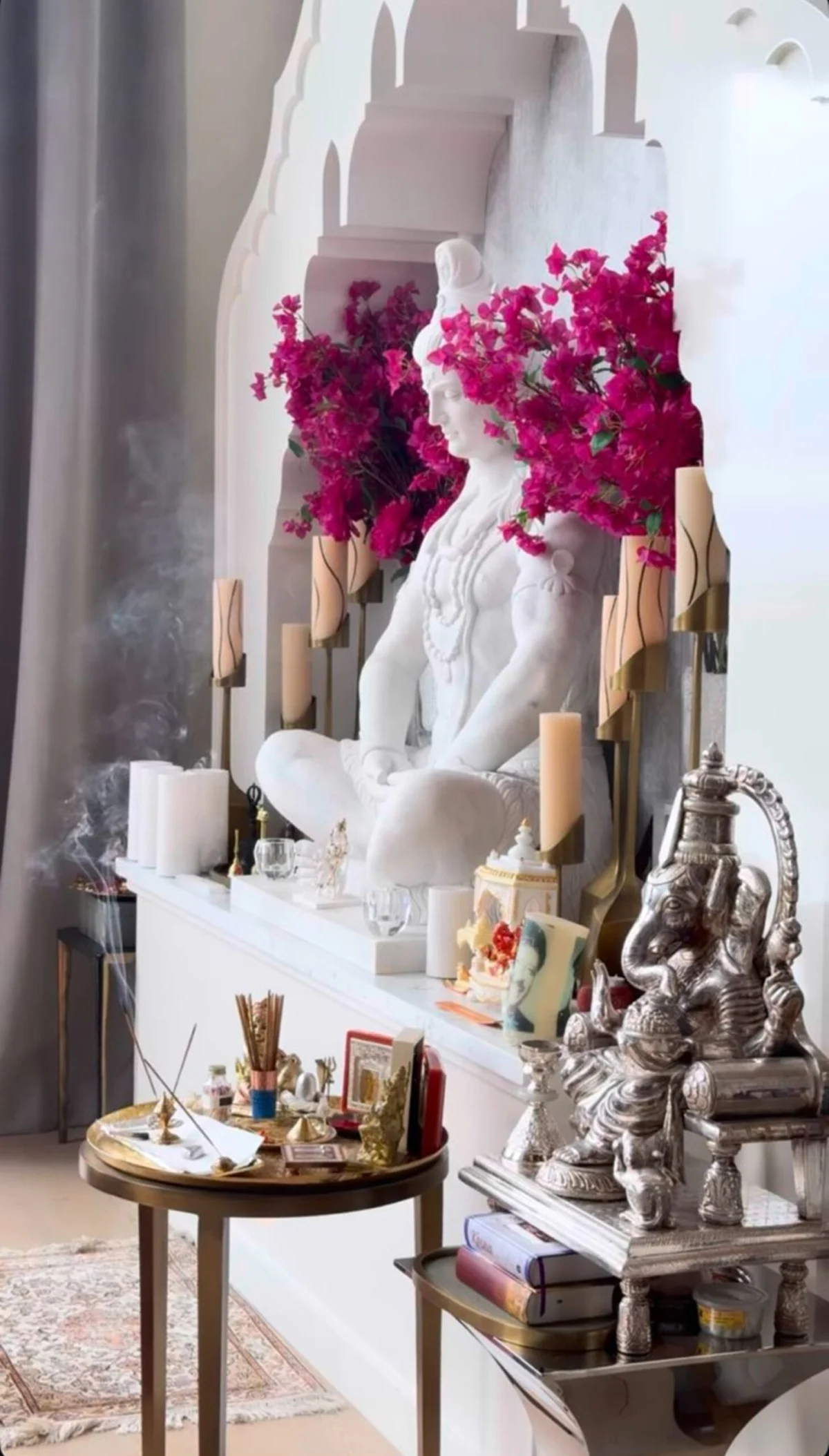
In the whirlwind of modern life, our homes have become more than just physical structures; they are sanctuaries, havens designed to nurture our emotional and mental well-being. For many, this extends to creating dedicated spaces for prayer, meditation, or quiet reflection – personal altars that offer a profound sense of calm, grounding, and emotional comfort. Recently, global icon Priyanka Chopra Jonas offered a poignant glimpse into such a space within her Los Angeles mansion, showcasing a prayer corner that masterfully blends minimalist aesthetics with rich cultural and spiritual resonance. This intimate peek into her personal sanctuary prompts a deeper exploration into the psychological impact of interior design and the profound benefits of cultivating intentional stillness within our living spaces.
The Art of Sacred Space: A Glimpse into Priyanka Chopra’s Sanctuary
The carefully curated prayer corner, revealed on Priyanka Chopra Jonas’s Instagram Stories on May 5th, exudes an aura of serenity and stillness. At its heart stands a graceful white statue of Lord Shiva in a meditative pose, a symbol of profound peace and introspection. This central piece is elegantly embraced by vibrant pink bougainvillaea flowers, their natural hues and textures softening the area and infusing it with life and organic beauty. The choice of flowers not only adds a splash of color but also brings a connection to nature, a vital element in fostering a sense of tranquility.
The ambiance is further enhanced by the gentle, warm glow of slender candles, casting a soothing light that invites quiet contemplation. Adjacent to the Shiva statue, a silver-toned idol of Lord Ganesha, the remover of obstacles and the deity of new beginnings, sits with quiet dignity. Surrounding these sacred figures are thoughtfully arranged brass trays, incense holders, and other ritual accessories, meticulously placed to reinforce the sacred atmosphere. This thoughtful arrangement speaks volumes about the intentionality behind the space. It’s a deliberate creation, designed to facilitate a deep connection with the divine and with oneself.
The design of Priyanka Chopra Jonas’s prayer corner is a testament to a sophisticated understanding of how modern aesthetics can harmoniously coexist with deeply rooted traditional Indian cultural elements. The result is a space that feels both elegantly refined and profoundly emotionally comforting. This fusion is not merely superficial; it reflects a conscious effort to create an environment that honors heritage while embracing contemporary living.
Echoes of Tranquility: The Home’s Design Language
The prayer corner is not an isolated element but rather a harmonious extension of the overarching design philosophy of Priyanka Chopra Jonas and Nick Jonas’s Los Angeles residence. The interiors of their home are predominantly characterized by a sophisticated mostly white palette, a choice that inherently promotes a sense of spaciousness and calm. This clean canvas is then artfully layered with earthy wooden accents, which introduce warmth, texture, and a vital sense of grounding. This interplay between the minimalist and the organic creates an environment that is both visually appealing and deeply restorative.
The presence of such dedicated spiritual spaces within a celebrity home often sparks broader conversations about the human need for personal sanctuaries. In a world saturated with digital stimuli and constant demands, the act of creating a physical space for reflection becomes increasingly vital. The way interiors are designed, the strategic use of lighting, the carefully selected color palettes, and the incorporation of meaningful decor all play a significant role in shaping our psychological landscape.
The Psychological Power of Prayer and Mindfulness Corners
To delve deeper into the impact of these dedicated spaces, we consulted with Sonal Khangarot, a licensed rehabilitation counselor and psychotherapist at The Answer Room. Khangarot emphasizes the profound positive influence that a dedicated spiritual, prayer, or mindfulness corner can have on emotional health.
"A dedicated spiritual, prayer, or mindfulness corner can become an important emotional anchor within a home," Khangarot explains. "Psychologically, humans respond well to spaces associated with consistency, reflection, and emotional grounding. Even a small corner with calming objects, soft lighting, meaningful symbols, candles, plants, or comfortable seating can signal the brain to slow down and regulate itself."
The power of repetition and association is key here. Over time, the consistent use of a specific space for prayer, meditation, journaling, deep breathing exercises, or simply moments of silence creates a powerful mental link between that location and feelings of calmness and stability. This learned association acts as an internal cue, allowing individuals to access a state of peace more readily when they enter their dedicated corner.
In our fast-paced, often overstimulating lives, these spaces offer a much-needed pause – a moment to disconnect from external pressures and reconnect with our inner selves, both emotionally and mentally. Khangarot elaborates on the tangible benefits: "They can improve focus, reduce stress reactivity, and create a stronger sense of inner control during uncertainty. Importantly, the benefit is not limited to religion alone; the therapeutic value often comes from intentional stillness, routine, and emotional safety. A home that includes spaces for reflection tends to support emotional resilience far beyond aesthetics alone."

This highlights a crucial distinction: the therapeutic value stems not just from the religious or spiritual practice itself, but from the intentionality of creating a space that supports stillness, regularity, and a feeling of being held and secure. This emotional safety is a bedrock for resilience, enabling individuals to navigate life’s challenges with greater fortitude.
The Harmonious Blend: Minimalism Meets Personal Meaning
The appeal of Priyanka Chopra Jonas’s prayer corner, and indeed many well-designed living spaces, lies in their ability to balance minimalism with personal and cultural touches. This blend is not arbitrary; it speaks to a fundamental human need for both order and connection.
Khangarot explains this phenomenon from a psychological perspective: "Many people are drawn to spaces that balance minimalism with personal or cultural touches because the mind tends to feel calmer in environments that are visually organised yet emotionally meaningful."
Minimalism, in this context, serves a crucial role in reducing sensory overload. "Minimalism can reduce overstimulation, mental clutter, and decision fatigue, helping the nervous system feel more regulated," Khangarot notes. In a world where we are constantly bombarded with information and visual stimuli, a decluttered and organized environment allows our brains to rest and conserve energy.
However, Khangarot cautions against the extremes. "Spaces that are too clinical or impersonal may begin to feel emotionally empty over time." This is where the integration of personal and cultural elements becomes indispensable. These elements act as anchors, infusing a space with warmth, identity, and a sense of belonging.
"Personal objects – such as family photographs, heirlooms, books, traditional textiles, artwork, spiritual symbols, or culturally familiar colors and scents – create a sense of identity, belonging, and continuity," Khangarot states. "These elements remind people who they are, where they come from, and what emotionally grounds them." This connection to one’s roots and personal history is vital for a stable sense of self and for fostering emotional security.
Environmental psychology further supports this assertion, demonstrating that spaces imbued with personal meaning significantly enhance comfort and emotional security. During stressful periods, these familiar and cherished elements can act as powerful sources of resilience. Khangarot concludes with a profound insight into what truly constitutes a restorative home: "A restorative home is not about perfection or trends; it is about creating an environment where the body can relax and the mind feels emotionally held, safe, and connected."
Implications for Modern Living
Priyanka Chopra Jonas’s thoughtfully designed prayer corner serves as an inspiring example of how intentional design can contribute significantly to emotional well-being. It underscores the idea that creating sanctuaries within our homes is not a luxury but a fundamental aspect of modern self-care. The implications are far-reaching:
- Democratizing Well-being: The principles illustrated by Chopra Jonas’s sanctuary are accessible to everyone, regardless of their living space or budget. Even a small nook can be transformed into a personal haven with mindful attention to lighting, scent, and meaningful objects.
- Bridging the Material and Spiritual: The integration of minimalist design with culturally rich elements demonstrates that spirituality and modern living are not mutually exclusive. A home can be both aesthetically pleasing and deeply resonant with personal meaning.
- The Power of Ritual: The dedicated space facilitates the establishment of consistent rituals, whether it’s daily meditation, prayer, or simply moments of quiet reflection. These routines provide a sense of structure and predictability in an often chaotic world.
- Enhancing Resilience: By fostering emotional safety and a sense of grounding, these dedicated spaces equip individuals with greater resilience to navigate the inevitable stresses and uncertainties of life.
- Beyond Aesthetics: The article strongly advocates for viewing home design through a lens of psychological well-being rather than solely aesthetic trends. The true measure of a home’s success lies in its ability to support the emotional and mental health of its inhabitants.
In conclusion, Priyanka Chopra Jonas’s prayer corner is more than just a celebrity feature; it is a powerful illustration of how intentional home design can be a cornerstone of emotional health. By embracing principles of calm, grounding, and personal meaning, individuals can cultivate sanctuaries that nurture their minds, bodies, and spirits, creating spaces that are not only beautiful but profoundly restorative.
Disclaimer: This article is based on information from the public domain and expert commentary. It is intended for informational purposes only and does not constitute medical advice. Always consult with a qualified health practitioner before starting any new routine or making significant changes to your lifestyle.
