

Powered by: Tech2 | Last Updated: May 26, 2026, 16:42 IST
Sydney, Australia – As the world grapples with escalating heatwaves and persistent water shortages, a groundbreaking innovation from Australia offers a beacon of hope. Scientists from the University of Sydney, in collaboration with the nascent startup Dewpoint Innovations, have unveiled a revolutionary "smart paint" – dubbed HydroCool Nano-Paint – that promises to simultaneously cool homes and extract potable water directly from the ambient air. This dual-action coating, currently undergoing advanced trials, could significantly mitigate the impacts of climate change on urban environments and vulnerable communities, fundamentally altering how we perceive building materials and resource management.
The development comes at a critical juncture, with global temperatures reaching unprecedented highs and many regions facing severe drought conditions. Traditional cooling methods, primarily air conditioning, are energy-intensive and contribute to greenhouse gas emissions, exacerbating the very problem they seek to alleviate. Water scarcity, on the other hand, is a growing humanitarian crisis, affecting billions worldwide. HydroCool Nano-Paint presents an elegant, passive solution to both dilemmas, operating entirely without external power input.
Main Facts: A Dual-Action Breakthrough for a Warming World
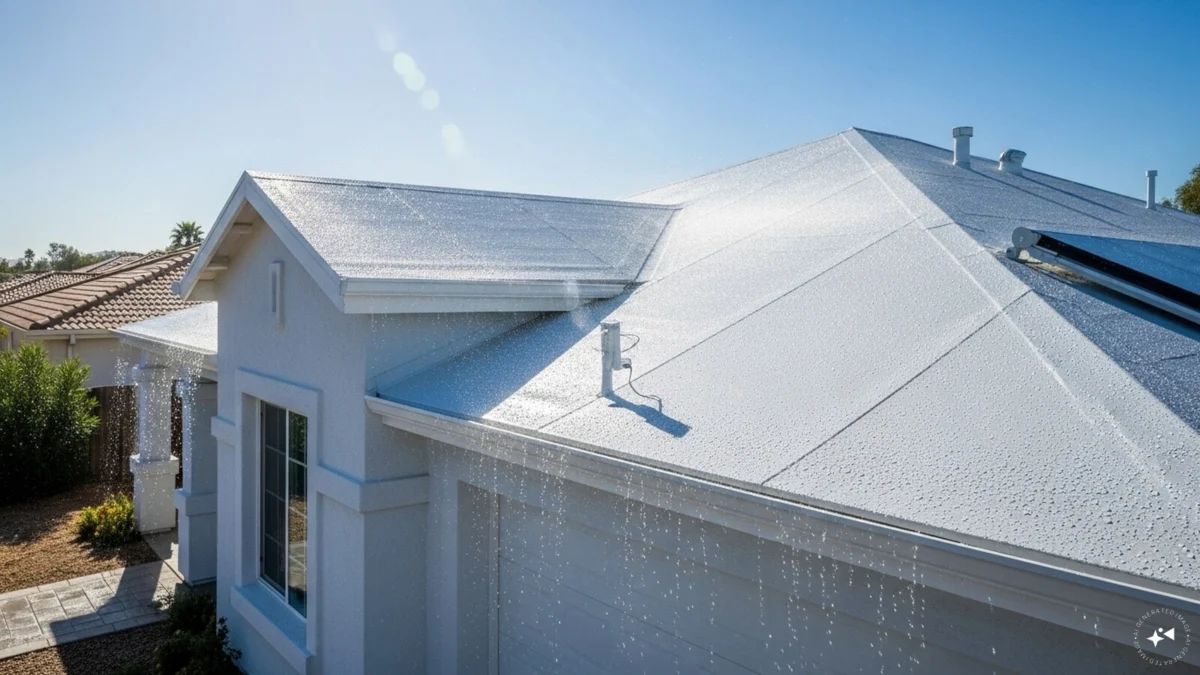
At its core, HydroCool Nano-Paint is a nano-engineered coating designed to perform two distinct, yet equally vital, functions: radiative cooling and atmospheric water harvesting. The paint achieves an astonishing feat of reflectivity, bouncing back up to 97% of incident sunlight. This exceptional solar reflectance drastically reduces the heat absorbed by building surfaces, leading to a measurable decrease in internal temperatures. Early test results indicate that surfaces coated with HydroCool Nano-Paint can be as much as 6 degrees Celsius cooler than conventional surfaces, even under direct sun exposure. This passive cooling effect translates directly into reduced reliance on energy-intensive air conditioning systems, offering substantial energy savings for homeowners and businesses alike.
Beyond its impressive cooling capabilities, the paint incorporates advanced hygroscopic materials that passively absorb moisture from the air. Through a carefully engineered micro-structure, this absorbed moisture is then condensed into water droplets, which can be collected and utilized. Crucially, this process occurs without any electrical power, leveraging natural temperature differentials and material properties. The synergy of these two functions positions HydroCool Nano-Paint not merely as a building material, but as an active participant in sustainable living, promising a future where our homes are not just shelters but active contributors to resource generation.
The project, spearheaded by the University of Sydney’s School of Chemical and Biomolecular Engineering and commercialized by Dewpoint Innovations, represents years of meticulous research and interdisciplinary collaboration. Its potential implications span from urban planning and energy policy to public health and humanitarian aid, offering a tangible tool in the global fight against climate change and resource depletion.
Chronology: From Concept to Commercial Horizon
The genesis of HydroCool Nano-Paint can be traced back to fundamental research initiated at the University of Sydney nearly a decade ago. Professor Anya Sharma, a materials scientist renowned for her work in advanced polymers and surface engineering, first conceptualized the idea of a multi-functional coating that could interact dynamically with its environment. Her early work focused on improving the thermal properties of building materials, exploring novel ways to enhance solar reflectivity without compromising durability or aesthetic appeal.
2017-2019: Early Explorations and Proof of Concept
Initial laboratory experiments, often involving complex quantum dot structures and specialized ceramic nanoparticles, demonstrated promising results in achieving high solar reflectance. However, the challenge remained in integrating these materials into a stable, cost-effective paint formulation. During this period, Professor Sharma’s team also began exploring the potential for atmospheric water harvesting, drawing inspiration from nature – particularly from desert beetles and certain plant species that have evolved mechanisms to collect dew. The initial proof-of-concept for water collection involved hygroscopic polymers embedded in a matrix, showing that passive moisture absorption and condensation were indeed feasible.
2020-2022: Synergy and Nano-Engineering Breakthroughs
A pivotal moment arrived when Dr. Ben Carter, a young postdoctoral researcher specializing in nanotechnology, joined Professor Sharma’s lab. Dr. Carter’s expertise proved instrumental in developing the specific nano-scale architecture that allowed both radiative cooling and water harvesting to occur concurrently within a single coating. This involved creating a porous, multi-layered structure where the top layers optimized solar reflection, while deeper layers housed the hygroscopic elements and facilitated condensation. The team successfully engineered a composite material that could reflect 97% of sunlight while also efficiently absorbing water vapor. This period also saw significant breakthroughs in ensuring the paint’s long-term durability and resistance to weathering, crucial for outdoor applications.
2023: Formation of Dewpoint Innovations and Seed Funding
Recognizing the immense commercial potential and societal impact of their invention, Professor Sharma and Dr. Carter, along with a team of business strategists, founded Dewpoint Innovations. The startup quickly attracted seed funding from several venture capital firms and government innovation grants, primarily due to the paint’s dual functionality and its alignment with global sustainability goals. The initial funding was critical for scaling up laboratory processes, securing patents, and conducting preliminary market feasibility studies.
2024-2025: Pilot Projects and Refinement
With increased funding, Dewpoint Innovations moved into the pilot project phase. Early trials were conducted on university buildings and a handful of residential properties in Sydney’s western suburbs, known for their intense summer heat. These real-world applications provided invaluable data, allowing the team to fine-tune the paint’s formulation for optimal performance in varying humidity levels and temperatures. Feedback from early adopters highlighted the tangible energy savings and the unexpected benefit of having a readily available, albeit small-scale, water source. During this period, the paint’s water collection efficiency was further enhanced, and methods for safe, hygienic water collection systems were integrated into the overall product design.
2026: Nearing Commercialization and Global Interest
As of May 2026, HydroCool Nano-Paint is on the cusp of commercial release. Extensive testing has confirmed its efficacy, durability, and environmental safety. Dewpoint Innovations is currently finalizing manufacturing partnerships and navigating regulatory approvals in Australia and several other countries. The announcement of the paint’s capabilities has already generated significant interest from international developers, humanitarian organizations, and governments seeking innovative solutions to climate change challenges. The journey from a theoretical concept to a tangible, market-ready product underscores the power of interdisciplinary research and the critical role of innovation in addressing global crises.
Supporting Data: The Science Behind the Sustainability
The impressive performance of HydroCool Nano-Paint is rooted in sophisticated materials science and nanotechnology, blending principles of radiative cooling and atmospheric water harvesting into a single, seamless application.
Radiative Cooling: Deflecting the Sun’s Fury
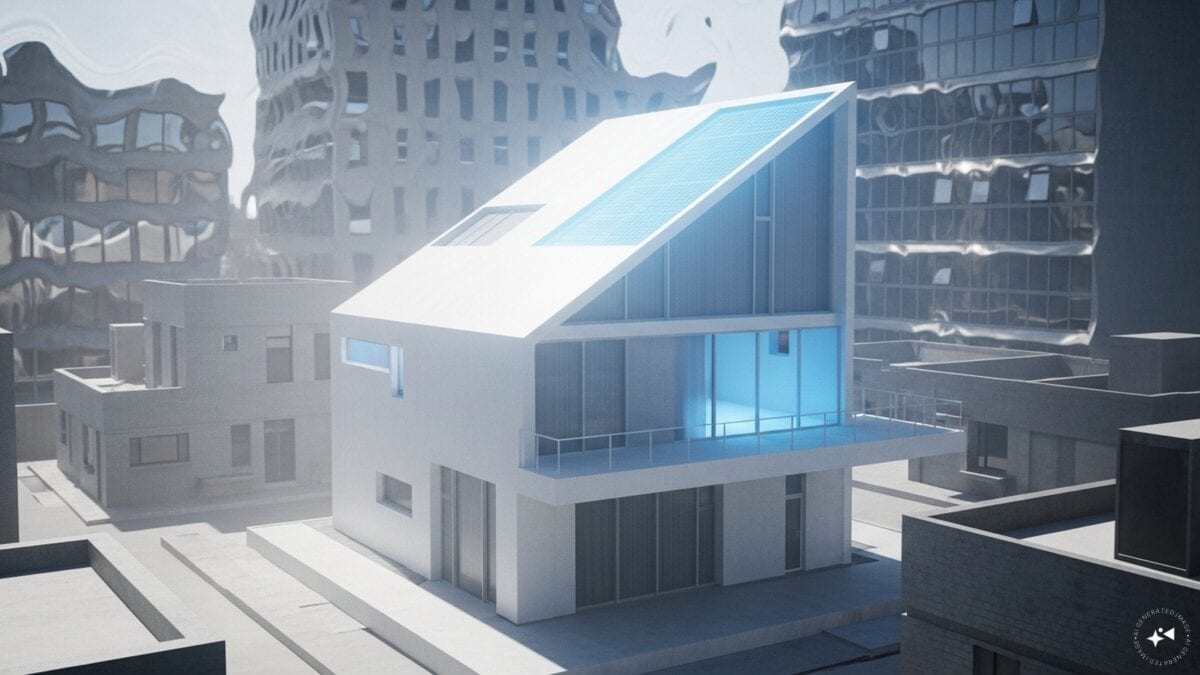
The paint’s extraordinary cooling power stems from its ability to achieve "sub-ambient cooling," meaning it can cool a surface to temperatures below the surrounding air temperature. This is primarily achieved through passive radiative cooling, a phenomenon where an object radiates heat into the cold vacuum of space. The paint is engineered with a highly reflective white pigment, often incorporating barium sulfate or similar dielectric materials, arranged at a nano-scale to scatter the full spectrum of sunlight. Crucially, it also possesses high thermal emissivity in the mid-infrared range (8-13 micrometers), allowing it to efficiently shed absorbed heat directly into space, bypassing atmospheric absorption.
Compared to conventional white paints, which typically reflect 80-90% of sunlight, HydroCool Nano-Paint’s 97% reflectance represents a significant leap. This small percentage difference translates to substantial energy savings. For every square meter of roof painted, calculations suggest an average reduction in cooling load equivalent to 10-15 kWh per year in warm climates, depending on insulation and climate zone. For a typical residential home with 150 square meters of roof area, this could mean annual savings of 1,500-2,250 kWh, significantly reducing electricity bills and carbon footprints. In urban environments, widespread adoption could drastically reduce the "urban heat island effect," where cities become significantly warmer than surrounding rural areas due to heat absorption by dark surfaces.
Atmospheric Water Harvesting: Tapping the Sky
The water collection mechanism relies on advanced hygroscopic materials, such as specialized metal-organic frameworks (MOFs) or engineered desiccant polymers, embedded within the paint’s structure. These materials have a high affinity for water molecules and can efficiently absorb moisture even from relatively dry air. The paint’s multi-layered porous structure facilitates this absorption during cooler night-time hours or periods of higher humidity.
As temperatures rise during the day, or as the paint is exposed to slightly warmer conditions, the absorbed water is released. The innovative aspect lies in how this released moisture is condensed. The nano-pores are designed to create localized microclimates that encourage condensation into liquid water, which then coalesces into droplets. These droplets are guided by micro-channels within the paint structure to collection points, typically small gutters or reservoirs integrated into the building’s design.
The efficiency of water harvesting is highly dependent on ambient humidity and temperature fluctuations. In humid coastal regions or areas with significant dew points, the paint can collect up to 0.5-1 liter of water per square meter per day. While this may seem modest for individual homes, for large commercial buildings, industrial complexes, or entire communities, the cumulative potential is enormous. A building with 1,000 square meters of painted roof could potentially yield 500-1,000 liters of potable water daily, providing a supplementary source for non-potable uses like irrigation, toilet flushing, or even filtered drinking water, especially in regions with chronic water scarcity. This passive water generation capability significantly reduces reliance on municipal water supplies and expensive desalination plants.
Environmental and Economic Impact
The combined effects of reduced energy consumption and passive water generation offer substantial environmental benefits. Lower AC usage directly translates to decreased demand for electricity, often generated from fossil fuels, thus lowering greenhouse gas emissions. The reduction in urban heat islands improves air quality and biodiversity. Economically, consumers stand to benefit from lower utility bills, while the potential for decentralized water production offers resilience against drought and infrastructure failures. The long-term durability of the paint, estimated at 10-15 years, ensures a sustained return on investment.
Official Responses: Enthusiasm and Strategic Outlook
The unveiling of HydroCool Nano-Paint has been met with widespread enthusiasm from the scientific community, environmental advocates, and potential industry partners.
Professor Anya Sharma, Lead Researcher, University of Sydney:
"This project has been a labor of love for nearly a decade," stated Professor Sharma during a recent press conference. "We started with a vision to create truly smart materials that could actively respond to climate challenges. What we have achieved with HydroCool Nano-Paint is a testament to interdisciplinary science – combining advanced materials engineering with a deep understanding of atmospheric physics. We’re not just offering a paint; we’re offering a step towards building resilience, towards homes that actively contribute to a sustainable future rather than just consuming resources." She emphasized the ethical imperative behind the research: "Our goal was always to develop solutions that are accessible and impactful, especially for communities most affected by climate change."
Dr. Ben Carter, CTO, Dewpoint Innovations:
"The transition from lab to commercial viability has been incredibly challenging but rewarding," added Dr. Carter. "Our focus now is on scaling production efficiently and ensuring the paint is affordable and easy to apply. We envision a future where every new building, and many existing ones, are coated with HydroCool Nano-Paint. Imagine entire cityscapes becoming active cooling agents and decentralized water harvesting zones. The engineering behind making this paint durable, weather-resistant, and aesthetically pleasing was as crucial as its functional properties." Dr. Carter also highlighted ongoing research into integrating smart sensors within the paint to monitor its performance and communicate data on energy savings and water collection in real-time.
Environmental Advocacy Groups:
Organizations like the Global Climate Initiative and Water for All have lauded the innovation. A spokesperson for the Global Climate Initiative remarked, "This ‘smart paint’ represents precisely the kind of innovative, passive solution we need to combat climate change. Reducing energy demand for cooling and providing a decentralized water source are two critical pillars of climate adaptation. We urge governments and urban planners worldwide to explore rapid adoption."
Government and Industry Interest:
Preliminary discussions are reportedly underway with several city councils in Australia and Southeast Asia, regions particularly vulnerable to heatwaves and water stress. Urban development agencies are keen to explore HydroCool Nano-Paint as a component of their green building initiatives and smart city programs. Major construction material manufacturers have also expressed interest in licensing agreements or partnerships, recognizing the immense market potential. While no official government endorsements have been made public yet, sources suggest that federal and state climate departments are closely monitoring Dewpoint Innovations’ progress, potentially looking at incentives for widespread adoption.
Implications: Reshaping Urban Living and Resource Management
The advent of HydroCool Nano-Paint carries profound implications across environmental, economic, social, and technological domains, promising to reshape how we construct and inhabit our built environments.
Environmental Implications:
The most immediate environmental benefit is the significant reduction in energy consumption for cooling, directly leading to a decrease in greenhouse gas emissions. Widespread adoption could dramatically curb the urban heat island effect, transforming heat-trapping cities into cooler, more comfortable spaces. This cooling effect also has secondary benefits, such as reduced smog formation and improved air quality. Furthermore, the passive water harvesting capability offers a sustainable, decentralized source of water, lessening the strain on conventional water supplies, which are increasingly vulnerable to drought and climate variability. This could be particularly impactful in arid regions or areas with aging water infrastructure, fostering greater water security.
Economic Implications:
Economically, the paint could be a game-changer. For consumers, lower electricity bills due to reduced AC usage represent substantial savings over the lifespan of the paint. For businesses and industries, particularly those with large roof areas, the energy cost savings could be even more significant. The emergence of a new market for ‘smart building materials’ will spur innovation, create new jobs in manufacturing, installation, and maintenance, and potentially disrupt traditional construction material sectors. While the initial cost of HydroCool Nano-Paint might be higher than conventional paints, the long-term return on investment through energy and water savings is expected to be highly attractive. Governments could also see reduced expenditure on energy infrastructure and water management.
Social Implications:
The social benefits are equally compelling. Cooler homes translate directly to improved comfort and public health, especially for vulnerable populations such as the elderly, children, and those with pre-existing health conditions, who are most susceptible to heat-related illnesses and fatalities. Access to a supplementary, decentralized water source can improve sanitation, hygiene, and overall quality of life, particularly in underserved communities or remote areas. It also fosters a sense of self-sufficiency and resilience against environmental shocks. For instance, in areas prone to intermittent water supply, the paint could provide a reliable source for basic needs.
Technological Implications:
From a technological standpoint, HydroCool Nano-Paint represents a leap forward in material science. It exemplifies the potential of nanotechnology to solve macro-scale problems. The development could pave the way for other multi-functional building materials – perhaps coatings that generate electricity, purify air, or self-repair. It also encourages further research into passive systems, moving away from energy-intensive active solutions. The integration of such paints with smart home systems, allowing users to monitor water collection and energy savings via smartphone apps, is a natural next step, enhancing user engagement and data-driven resource management.
Policy and Future Challenges:
For HydroCool Nano-Paint to achieve its full potential, supportive policies will be crucial. This includes government incentives for adoption, integration into green building codes, and public awareness campaigns. Challenges remain in scaling up manufacturing to meet global demand, ensuring affordability, and establishing robust supply chains for specialized raw materials. Public acceptance and understanding of the technology will also be vital. Questions around the long-term maintenance of the water collection system, the purity of the harvested water, and regulatory standards for its use will need to be addressed comprehensively. However, the sheer versatility and environmental benefits of HydroCool Nano-Paint suggest it could become an indispensable tool in our collective effort to build a more sustainable and resilient future.
