

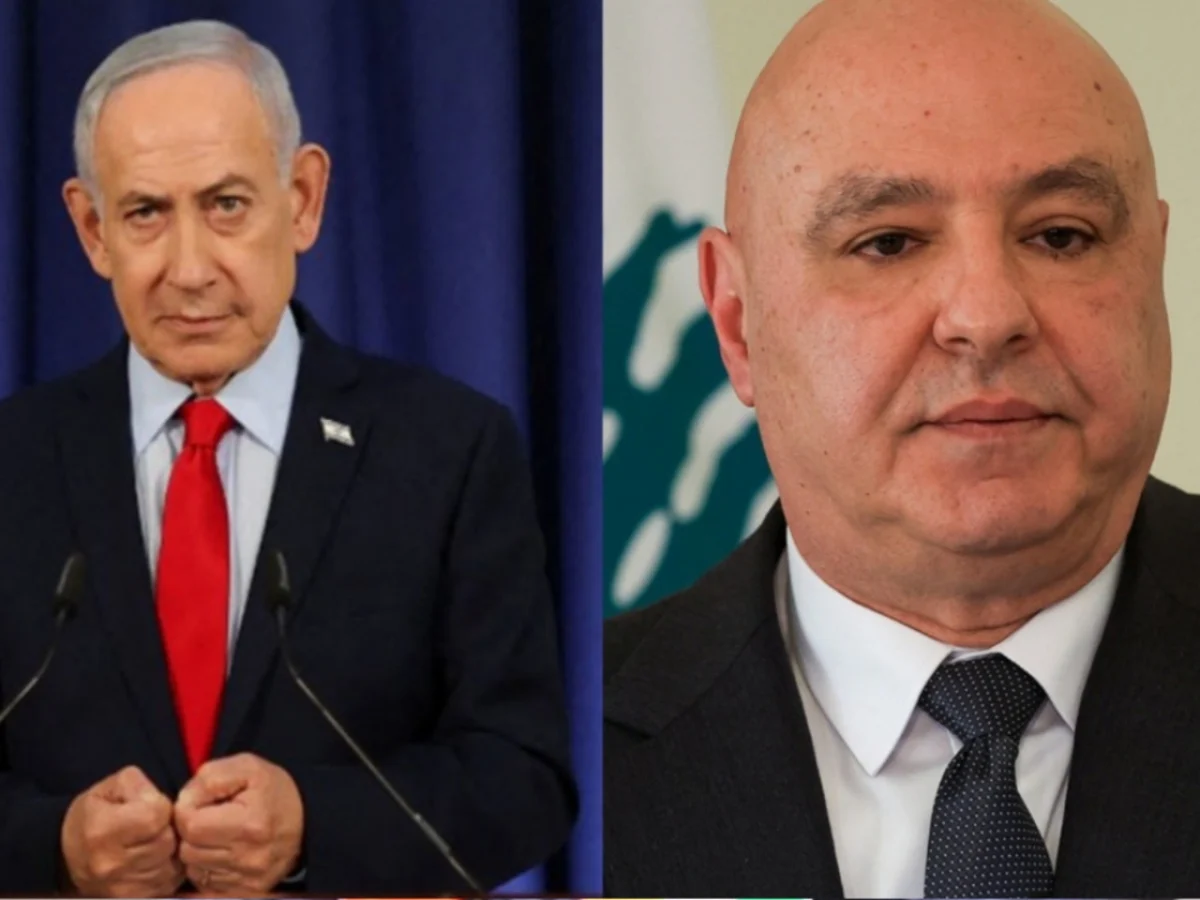
Washington D.C. – In a significant diplomatic push to stabilize one of the Middle East’s most volatile borders, the United States is currently hosting Israeli and Lebanese officials in Washington for a crucial three-day series of negotiations. The talks, aimed at solidifying a fragile ceasefire and paving the way for a more enduring peace and security arrangement, underscore renewed American efforts to de-escalate tensions between the two long-standing adversaries.
Main Facts: A Bid for Lasting Peace
The high-level discussions, which commenced this week, bring together representatives from Israel and Lebanon under the aegis of the U.S. State Department. American officials have explicitly stated the primary objective is to "end the cycle of violence for good" and foster an environment where both nations can negotiate as sovereign entities towards comprehensive peace and security.
Leading the U.S. delegation are Counsellor Dan Holler and Assistant Secretary of Defense for International Security Affairs Dan Zimmerman. The structured format of the talks includes an opening joint military and political session, followed by a dedicated military session, and will conclude with a political closing round. This multi-faceted approach aims to tackle both immediate security concerns and broader political frameworks necessary for a durable agreement.
While the specific names of the Israeli and Lebanese representatives attending this particular round of talks have not been publicly disclosed, the very presence of delegations from both nations in the U.S. capital signifies a shared, albeit cautious, commitment to dialogue. The duration of the negotiations, spanning three intensive days, suggests a substantive agenda designed to build momentum beyond mere symbolic gestures. This initiative follows preparatory diplomatic efforts, including calls between U.S. Secretary of State Marco Rubio, Israeli Prime Minister Benjamin Netanyahu, and Lebanese President Joseph Aoun, which were instrumental in solidifying the current ceasefire and laying the groundwork for these future discussions.
)
Furthermore, in a move to bolster trust and provide real-time monitoring of border activities, the U.S. has established a CENTCOM monitoring mechanism. This system is designed to provide immediate updates on any cross-border incidents in Lebanon, a critical component for maintaining the ceasefire’s integrity during the sensitive negotiation period. The talks are seen as a pivotal opportunity to translate de-escalation into tangible, long-term stability, with the global community keenly observing their progress.
Chronology: A History of Conflict and Intermittent Dialogue
The relationship between Israel and Lebanon has been characterized by decades of animosity, punctuated by periods of intense conflict and sporadic, often indirect, diplomatic engagements. Understanding the historical context is crucial for appreciating the significance and complexity of the current Washington talks.

Decades of Hostility and Proxy Conflicts
The two nations technically remain in a state of war, having never signed a formal peace treaty since the 1948 Arab-Israeli War. The 1949 Armistice Agreement largely delineated their shared border, often referred to as the Blue Line, but this demarcation has been a constant source of contention. Throughout the 1970s and 1980s, Lebanon became a significant battleground for various regional and international actors, including Israel, which launched major military operations in 1978 and 1982, occupying parts of southern Lebanon for nearly two decades. The rise of Hezbollah, a powerful Shiite political party and militant group backed by Iran, further complicated the dynamics, transforming the border into a flashpoint for asymmetric warfare.
Major confrontations, such as the 2006 Lebanon War, underscored the devastating human and infrastructural costs of continued conflict. These periods of intense fighting, often triggered by cross-border incidents, have reinforced a cycle of violence that American officials are now explicitly seeking to break. Even in periods of relative calm, the absence of direct diplomatic channels and the persistent threat of escalation have maintained a high state of alert along the Blue Line.
)
Previous Mediation Efforts and the Road to Washington
Despite the deep-seated mistrust, there have been intermittent attempts at U.S. and international mediation. The most notable recent success was the U.S.-brokered maritime border agreement in October 2022, which resolved a long-standing dispute over offshore gas fields. While a technical agreement, it demonstrated the potential for progress when both sides engaged in indirect negotiations facilitated by a trusted third party. This agreement, though not directly related to the land border or a comprehensive peace, established a precedent for successful U.S. diplomatic engagement.
The current talks in Washington are a direct consequence of recent heightened tensions and the need to reinforce a fragile ceasefire. While the article doesn’t specify the exact nature of these recent escalations, one can infer a period marked by increased cross-border skirmishes, rhetoric, or regional instability that necessitated urgent diplomatic intervention. The U.S. initiative, including Secretary Rubio’s direct engagement with the Israeli and Lebanese leadership, highlights a proactive strategy to prevent a full-blown return to hostilities. The establishment of the CENTCOM monitoring mechanism is a tangible step taken prior to the talks, reflecting the immediate security concerns that underpin the diplomatic push. This chronology underscores that the current negotiations are not occurring in a vacuum but are built upon a complex history of conflict, limited cooperation, and persistent efforts to find a pathway to peace.
)
Supporting Data: Geopolitics, Economics, and Regional Stakes
The potential for peace or continued conflict between Israel and Lebanon carries profound implications, extending far beyond their shared border. The current talks are thus embedded within a broader tapestry of regional geopolitics, economic imperatives, and international security concerns.
Geopolitical Significance: A Regional Domino Effect
A stable Israel-Lebanon border is critical for broader Middle East security. The presence of Hezbollah in Lebanon, a non-state actor with significant military capabilities and strong ties to Iran, profoundly influences the regional power balance. Any escalation between Israel and Lebanon risks drawing in other regional players, potentially destabilizing Syria, Iraq, and beyond. Iran’s influence through its proxies remains a central concern for the U.S. and its allies, and a reduction in tensions along the Blue Line could indirectly lessen regional flashpoints.
)
Conversely, a breakdown in the current ceasefire and a return to open conflict would have a cascading effect. It could empower extremist elements, complicate international efforts to address other regional crises, and potentially lead to a wider conflagration. The U.S. interest in mediating these talks is therefore not merely altruistic but strategic, aiming to safeguard its regional interests and those of its allies. The talks are also a test of the U.S.’s ability to project diplomatic influence in a region where other powers, such as Russia and China, are increasingly seeking to expand their footprint.
Economic Imperatives: The Cost of Instability
For Lebanon, a nation grappling with an unprecedented economic crisis, political instability, and a massive refugee burden, peace with Israel could unlock significant economic opportunities. While direct trade and economic ties are a distant prospect, a secure border would reduce military expenditures, foster investor confidence, and potentially facilitate access to international aid and reconstruction efforts. The resolution of maritime border disputes, as seen with the 2022 agreement, offers a glimpse into how economic benefits, particularly from offshore energy reserves, could incentivize cooperation. Continued conflict, however, would further cripple Lebanon’s already devastated economy, exacerbating poverty and driving more of its population into desperation.
)
For Israel, while its economy is robust, border stability translates into reduced security costs, greater confidence for investment in its northern regions, and the potential for new trade routes or regional infrastructure projects in the long term. The constant threat from Hezbollah necessitates significant defense spending and readiness, resources that could be reallocated in an era of genuine peace. Furthermore, regional stability is crucial for Israel’s burgeoning technology and tourism sectors.
The Role of UNIFIL and International Law
The United Nations Interim Force in Lebanon (UNIFIL) has been deployed along the Blue Line since 1978, tasked with monitoring the ceasefire and supporting the Lebanese Armed Forces. While not a direct party to the Washington talks, UNIFIL’s presence and mandate are intrinsically linked to any discussion of border security and ceasefire consolidation. Any agreement reached in Washington would likely require strong coordination with UNIFIL and adherence to relevant UN Security Council resolutions, particularly Resolution 1701 which ended the 2006 conflict and outlined conditions for a permanent ceasefire. The talks implicitly acknowledge the limitations of a purely military approach and the necessity of diplomatic and political solutions to reinforce UNIFIL’s mission.
)
Official Responses: Cautious Optimism and Defined Agendas
The official statements surrounding these talks, though measured, reveal a cautious optimism from the U.S. and highlight the distinct priorities each party brings to the negotiating table.
The United States: Facilitator and Peacemaker
The U.S. State Department has emphasized its role as an "enabler," facilitating direct negotiations between Israel and Lebanon as sovereign states. This approach underscores a commitment to fostering indigenous solutions rather than imposing external mandates. A State Department official reiterated the shared goal: "Our shared goal is to end the cycle of violence for good." The presence of both military and political sessions within the three-day agenda reflects the U.S.’s understanding that a lasting peace requires addressing both immediate security concerns and the broader political underpinnings of the conflict.
)
The U.S. engagement, spearheaded by Counsellor Holler and Assistant Secretary Zimmerman, signals a high-level commitment. The active involvement of Secretary of State Marco Rubio in pre-talk diplomacy with PM Netanyahu and President Aoun further solidifies the U.S.’s dedication. This robust diplomatic footprint aims to instill confidence and maintain momentum, critical ingredients for overcoming historical animosities.
Israel: Security First and Foremost
For Israel, the primary agenda item in any negotiation with Lebanon revolves around security. The persistent threat from Hezbollah, particularly its arsenal of rockets and missiles and its cross-border tunnels, is a paramount concern. Israeli representatives would likely be seeking firm commitments on:
)
- Border Security: Stricter enforcement along the Blue Line, preventing infiltrations and attacks.
- Hezbollah’s Disarmament/Restraint: While a full disarmament might be a long-term aspiration, immediate demands would likely focus on limiting Hezbollah’s operational capabilities near the border and preventing its rearmament with advanced weaponry.
- Recognition of Sovereignty: Though a full peace treaty might be far off, steps towards mutual recognition of sovereignty and an end to hostile rhetoric would be important.
- Intelligence Sharing/Coordination: Potential mechanisms for de-confliction and information exchange to prevent accidental escalations.
Israeli officials, while likely cautious given past failures, would see these talks as an opportunity to secure tangible improvements in their northern border security, a critical component of national defense.
Lebanon: Sovereignty, Stability, and Resources
Lebanese representatives arrive in Washington burdened by their nation’s multifaceted crises but with clear objectives centered on sovereignty, stability, and resource rights. Their priorities would likely include:
)
- Full Implementation of UN Resolution 1701: Emphasizing Israel’s full withdrawal from disputed areas (e.g., Shebaa Farms, Ghajar) if these are on the table, and adherence to the resolution’s provisions regarding Lebanese sovereignty.
- Border Demarcation: Clarifying the land border, especially in contested zones, to prevent future disputes.
- Resource Rights: While the maritime border was settled, land-based resources or further clarification on economic zones might be part of the discussion.
- Internal Stability: Any agreement must be politically viable within Lebanon’s complex sectarian landscape and not undermine the fragile authority of the Lebanese state. The role of Hezbollah, though not officially representing the Lebanese state, cannot be ignored, and any deal would need to be perceived as serving Lebanon’s national interests by a broad spectrum of its political actors.
- Humanitarian Concerns: Addressing issues related to refugees or displaced persons if these are deemed relevant to border stability.
Lebanese officials would likely seek assurances that any security arrangements respect their nation’s sovereignty and do not impinge on their territorial integrity, while also seeking pathways to de-escalate tensions that drain their already scarce resources.
International Community: A Watchful Eye
The international community, particularly the United Nations and European Union, watches these talks with a keen interest. Success would be lauded as a significant step towards regional stability, potentially encouraging further diplomatic efforts in other conflict zones. Failure, however, would be a setback, reinforcing the perception of the intractability of the Israeli-Lebanese conflict and potentially prompting calls for renewed international pressure or intervention.
)
Implications: Short-term Hopes, Long-term Challenges
The ongoing Israel-Lebanon peace talks in Washington carry significant implications, both for the immediate future of the fragile ceasefire and for the long-term prospects of regional stability. The path ahead is fraught with challenges, yet the potential for positive outcomes makes this diplomatic endeavor critically important.
Short-term Hopes and Risks
Immediate Success Metrics: For this three-day session, "success" might not entail a comprehensive peace treaty but rather concrete steps towards strengthening the ceasefire. This could include:
)
- Agreement on De-escalation Mechanisms: Formalizing protocols for communication and de-confliction to prevent misunderstandings from escalating into conflict.
- Enhanced CENTCOM Monitoring: A mutual agreement to cooperate with and expand the U.S.-led monitoring mechanism, fostering transparency and trust.
- Commitment to Further Talks: A clear roadmap for subsequent rounds of negotiations, indicating a sustained commitment to dialogue.
- Specific Security Assurances: Initial agreements on limiting certain military activities along the border or addressing specific points of friction.
Risks of Failure: Should these talks falter or conclude without tangible progress, the implications could be severe. It could signal a return to heightened tensions, undermine the credibility of the current ceasefire, and potentially lead to renewed cross-border hostilities. Failure could also erode trust in U.S. mediation efforts, making future diplomatic interventions more difficult and emboldening hardliners on both sides who oppose any form of engagement. The immediate risk is a return to the "cycle of violence" that the talks aim to end.
Long-term Regional Impact and Future Outlook
A Blueprint for Regional Peace? If the Washington talks yield significant progress, they could serve as a model for resolving other intractable conflicts in the Middle East. A stable Israeli-Lebanese border could free up resources and political capital, allowing both nations to focus on internal development and potentially fostering broader regional cooperation. This could also bolster U.S. foreign policy objectives in the region, demonstrating the efficacy of persistent diplomacy.
)
Implications for Hezbollah and Iran: A lasting peace agreement, particularly one that includes robust security arrangements along the border, could significantly alter Hezbollah’s operational environment. While Hezbollah is unlikely to disarm unilaterally, a stable border might reduce its justification for constant vigilance and armed confrontation, potentially shifting its focus more towards its political role within Lebanon. This, in turn, could indirectly impact Iran’s regional influence, particularly if a reduction in cross-border tensions diminishes the need for its proxy’s military actions.
Connection to US-Iran Talks: The article also mentions separate U.S.-Iran talks in Switzerland, mediated by Qatar and Pakistan, aimed at a 60-day roadmap towards a final deal. While distinct, there is an undeniable interlinkage. Progress on the Israel-Lebanon front, especially if it curtails Hezbollah’s freedom of action, could create a more conducive atmosphere for broader regional de-escalation, potentially aiding the U.S.-Iran dialogue. Conversely, a failure in Washington could complicate efforts elsewhere, as regional actors might perceive a weakening of diplomatic momentum. The establishment of a "Lebanon de-confliction cell" and a "Strait of Hormuz communication line" in the context of the US-Iran talks further highlights the interconnectedness of these diplomatic initiatives across the region.
)
Future Challenges: Even with successful initial talks, the road to comprehensive peace will be long and arduous. Deep-seated historical grievances, internal political complexities in both nations (particularly Lebanon’s fragmented political landscape and Hezbollah’s entrenched position), and the influence of external actors will continue to pose significant challenges. Sustained U.S. commitment, coupled with the political will of both Israeli and Lebanese leadership, will be paramount in navigating these obstacles. The goal of a final agreement within 60 days for the US-Iran talks sets an ambitious precedent, suggesting that the pressure for swift and meaningful progress will remain high across all regional diplomatic fronts.
Ultimately, these Washington talks represent a critical juncture. They offer a rare window of opportunity to pivot from a perpetual cycle of violence towards a future of genuine peace and security for Israel and Lebanon, with profound ramifications for the stability of the entire Middle East. The world watches, hoping that this round of diplomacy will indeed mark a turning point.
