

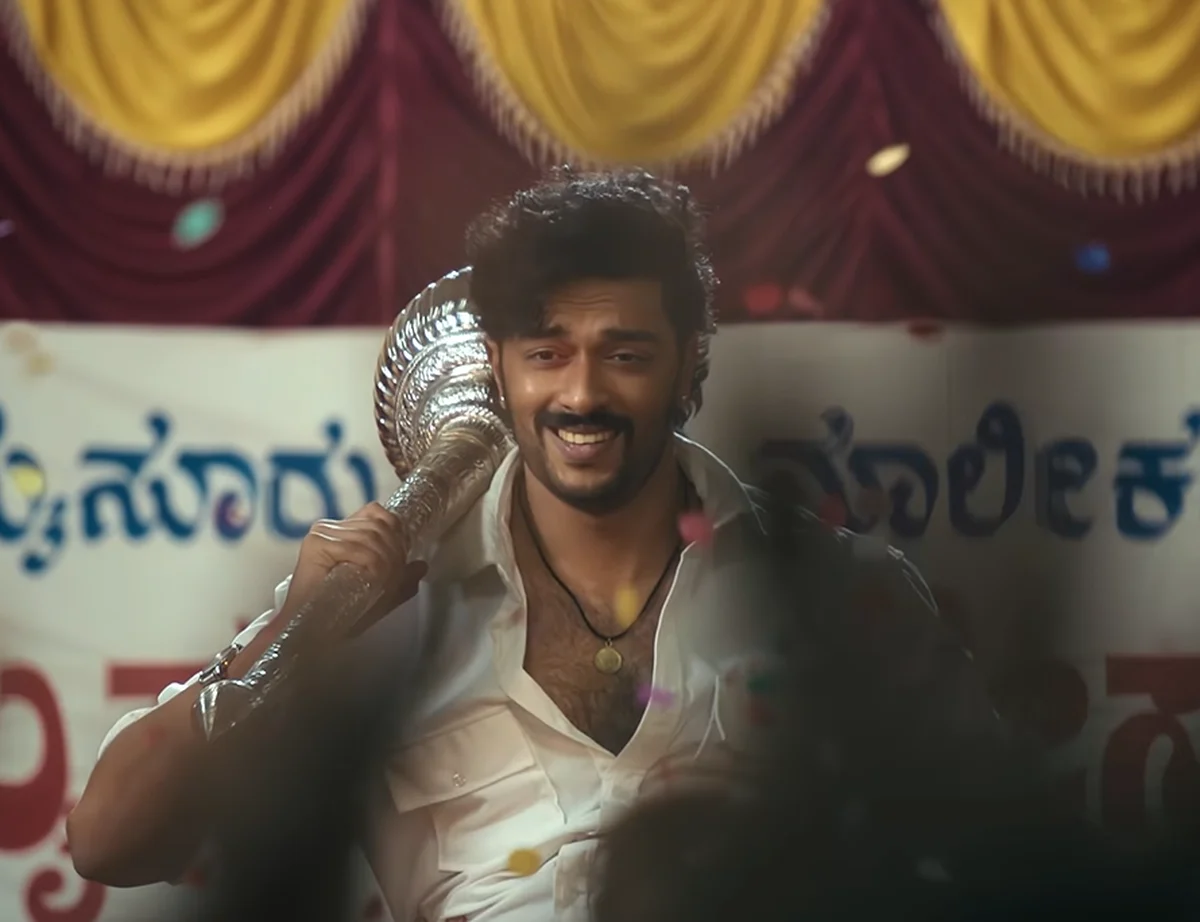
Kannada cinema witnesses the arrival of a new talent, Sanchith Sanjeev, nephew of the celebrated Kichcha Sudeep, as he steps into the limelight with his debut film, Mango Pachcha. While comparisons to his illustrious uncle are inevitable, Sanjeev is resolute in his ambition to forge his own distinct identity, emphasizing artistic integrity and a mature understanding of the craft.
The Debut and the Inevitable Comparisons
Sanchith Sanjeev’s entry into the Kannada film industry with Mango Pachcha, released on June 05, 2026, has been met with considerable anticipation. As is often the case with actors linked to established stars, the immediate reaction has been to draw parallels with his uncle, Kichcha Sudeep, a towering figure in Indian cinema. Sanjeev, however, embraces these comparisons with a sense of pride, viewing them as a testament to Sudeep’s enduring legacy.
"I take it with a lot of pride when people say I resemble Sudeep sir," Sanjeev shared in an exclusive interview with The Hindu. "I take it as a big compliment. You are comparing me with a man who has been in the industry for 30 years. He is somebody who has made a name for himself across the country. When you grow up looking up to someone as your role model, you will pick up certain things that you like about them."
This acknowledgment of his uncle’s influence is tempered by a clear desire for individual recognition. Sanjeev is acutely aware that his journey is just beginning and that establishing his own artistic footprint will require time and consistent effort. "That said, I am here to make my identity. But give me that time to show who I am as an actor," he asserted. "I am not saying the comparisons will end with my next movie. Give me time to show that I am a lot more than what you have perceived." This self-awareness and desire to prove himself beyond his familial connections set a promising tone for his nascent career.
A Glimpse into Sudeep’s Craftsmanship
The presence of Kichcha Sudeep during the final schedule of Mango Pachcha, where he lent his expertise to mentor debutant director Viveka, offered Sanjeev a unique opportunity to witness his uncle’s filmmaking acumen up close. Sanjeev’s recollections highlight Sudeep’s meticulous approach to filmmaking, revealing a director deeply invested in every facet of a project.
"Before a scene, he is very picky. He has several questions about a character. He will point out aspects that we might have missed while reading the script," Sanjeev explained. This detailed observation extends to the nuanced presentation of characters, from their dialogue delivery to their sartorial choices. "Be it the way a character talks or what he or she dresses, he is very particular about how a character is presented. He is very specific about framing and the kind of background against a scene unfolds," he elaborated. This firsthand experience with Sudeep’s directorial process has undoubtedly provided Sanjeev with invaluable insights into the art of storytelling and character development.

Mango Pachcha: A Deliberate Departure from Convention
Sanchith Sanjeev’s debut film, Mango Pachcha, surprised many by eschewing the conventional tropes often associated with the launch of actors from film families. The movie deliberately sidesteps typical hero-introduction songs, bombastic punchlines, and overt "massy" scenes, opting instead for a more grounded and character-driven narrative. The film is described as a slick crime drama that delves into the murky world of illegal drug cultivation in Mysuru during the mid-2000s.
Sanjeev’s choice of Mango Pachcha for his debut was a conscious decision to prioritize performance over star-vehicle clichés. "When I heard the story of Mango Pachcha, I felt that the film had a good character graph for the protagonist," he revealed. "More than it becoming a ‘star film’, I felt the movie had great potential to show me as a good performer." This emphasis on showcasing his acting prowess from the outset underscores his commitment to a sustainable and respected career in cinema.
He further elaborated on this strategic decision, stating, "Throughout the movie, we were conscious that we would not show any scene that makes me look like a star. Because if I need to appear like a star, I need to have a certain kind of aura around me. Currently, I am building my reputation and still getting introduced to the Kannada audience. If I start behaving like a star too soon, the audience will write me off." This mature perspective on audience perception and career trajectory is a significant indicator of Sanjeev’s thoughtful approach to his craft.
The Actor’s Philosophy: Navigating the Noise and Defining Art
Sanchith Sanjeev articulates a profound understanding of the challenges faced by actors, particularly in an industry where opinions and expectations can be overwhelming. He draws inspiration from a poignant dialogue from the acclaimed series The Crown: "There is a dialogue from the series that says, ‘I am aware that I am surrounded by people who feel that they could do the job better.’ So, cutting out that noise is crucial for me as an actor." This quote encapsulates his dedication to internal artistic conviction over external validation.
"I don’t want to be influenced by anybody’s opinion of what acting is. Art is subjective," Sanjeev reasoned, emphasizing his belief in developing his own critical judgment. This philosophy allows him to remain grounded and focused on his artistic growth, free from the pressures of conforming to external pressures or unsolicited advice. His commitment to making his own judgments is a cornerstone of his burgeoning artistic independence.
A Character Study in Mango Pachcha and Future Aspirations
In Mango Pachcha, Sanchith Sanjeev delivers a compelling performance as a vulnerable young man driven by a desire for societal respect. His character becomes entangled in the illegal drug trade, seeking a lavish lifestyle to counterbalance the perceived disrespect his family endured. This intense portrayal has been well-received, showcasing Sanjeev’s ability to embody complex emotions and motivations.

Looking ahead, Sanjeev harbors a desire to explore a diverse range of genres, with a particular interest in romantic comedies and light-hearted films. He believes that his on-screen persona might not fully reflect his off-screen personality. "With the people I am very fond of, with whom I can be relaxed, I am an easy-going person. I might look like a serious person. My body language might make me come across like that. Not every funny person has to be wobbly and excited all the time," he explained.
His admiration for filmmakers like Imtiaz Ali, known for his emotionally resonant romantic dramas, highlights his inclination towards nuanced storytelling. "I’m looking forward to doing a light-hearted movie where I play a happy-go-lucky character. I’m a big fan of Imtiaz Ali. I want to do a romantic drama with a lot of depth. If it’s a comedy, I want it to have a big heart. I can’t do anything superficial,” he stated. This preference for depth and authenticity in storytelling suggests a desire to engage audiences on a more profound emotional level.
A Call for Recognition of Cinematic Storytelling
When queried about a potential Kannada equivalent to Imtiaz Ali, Sanjeev expressed a lack of direct parallels but highlighted films that have resonated with him for their exploration of relationship dynamics. He cited Suri’s Inthi Ninna Preethiya (2008) for its poignant depiction of loss and Just Maath Maathalli (2010) for its narrative depth. However, he lamented the lack of immediate appreciation for such films upon their release, suggesting a cultural lag in the acceptance of complex relationship dramas within the Kannada film industry.
"But what happened to these movies? They were accepted much later. Where were these people when these movies were released? They pushed the creators to a situation where they decided not to attempt such stories," Sanjeev observed, expressing concern over the industry’s tendency to overlook unconventional narratives.
This leads him to a critical point about the importance of valuing writers and their contributions to filmmaking. "We, as an industry, have a long way to go as far as writing complex yet engaging relationship dramas is concerned. We need to start respecting our writers by paying them well. If we don’t do it, people will quit their film dreams and opt for a 9-5 job." This advocacy for writers underscores his holistic view of filmmaking and his commitment to nurturing a more robust creative ecosystem.
Addressing the Nepotism Debate with Humility
The release of Mango Pachcha has inevitably reignited the nepotism debate within the Kannada film industry. Sanjeev candidly acknowledges the inherent advantage of coming from a film family, admitting that it provides an initial gateway to the industry. However, he firmly believes that sustained success is contingent on audience acceptance.

"I don’t want to understand what it takes to be accepted by people. The minute I start thinking that way, I will put myself in a bracket. It’s like asking, ‘Why do you love a person’? If you start overanalysing your feelings, there is no magic left," Sanjeev articulated his approach to audience reception. He prefers to focus on his performance and allow the audience to form their own opinions. "For now, I am trying to be a good actor. If you appreciate me, I take it as an encouragement. If you didn’t like my performance, please feel free to express that." This open-mindedness and willingness to accept both praise and criticism are indicative of his maturity and commitment to artistic growth.
A Director’s Ambition: Homage to Action Cinema
Prior to Mango Pachcha, Sanchith Sanjeev was slated to make his directorial debut with a film titled Jimmy. While this project has been put on hold, the glimpse of his character in an intense, action-oriented avatar hinted at a directorial vision focused on the genre. He remains keen on exploring action cinema and dreams of creating a gripping action movie in Kannada.
"I want to make a really good action movie. I am not keen on having several slow-motion scenes. I want it to look very real. It should have amazing music and action choreography set against terrific locations," he described his ideal action film. His ambition is clearly inspired by the impactful storytelling of films like John Wick. "I want to make a movie as a homage to John Wick," he concluded, signaling a desire to push the boundaries of action filmmaking within the Kannada industry.
Sanchith Sanjeev’s debut marks the arrival of a thoughtful and driven actor who is not content to rest on his laurels or family name. His emphasis on artistic integrity, his willingness to challenge conventions, and his clear vision for his future career trajectory suggest that he is poised to carve a significant niche for himself in the annals of Kannada cinema. As he navigates the complexities of the industry, his self-awareness and dedication to the craft promise a compelling journey for audiences and critics alike.
