

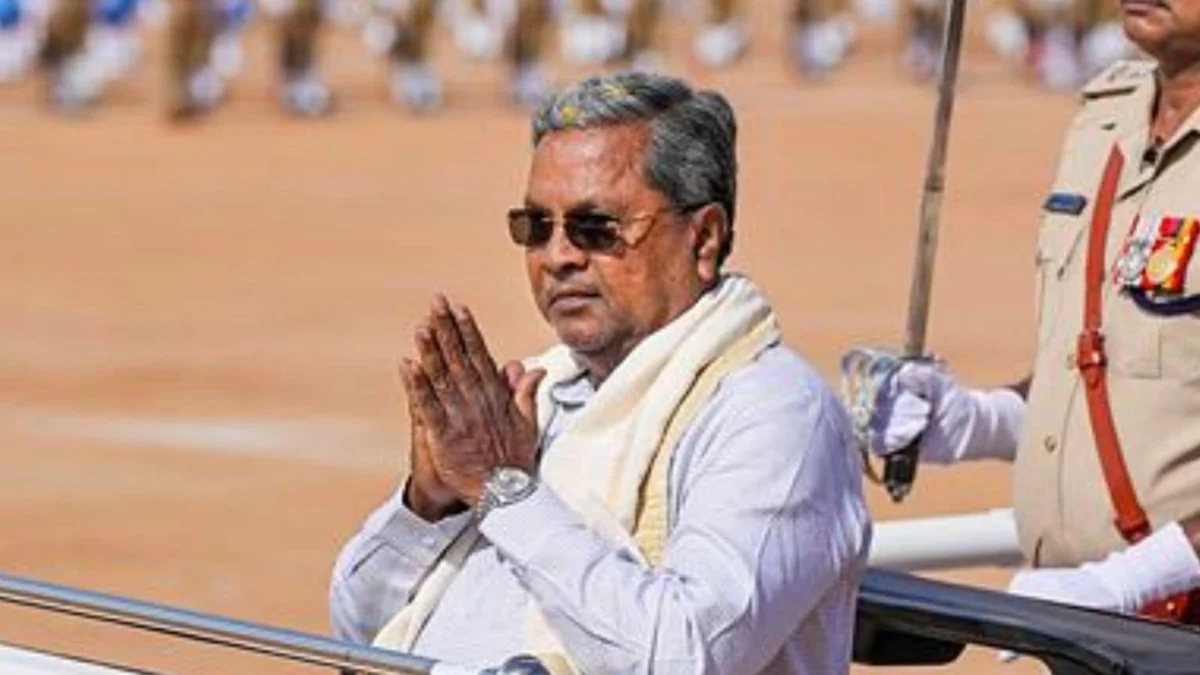
Bengaluru, Karnataka – In a calculated move just moments before relinquishing the Chief Ministerial mantle of Karnataka on June 3, Congress veteran Siddaramaiah, a prominent face of the Other Backward Classes (OBC) community, enacted a series of decisions poised to significantly impact the state’s intricate caste politics. These eleventh-hour approvals, notably the sanctioning of Rs 71.85 crore for the construction of community halls and student hostels across 150 OBC groups, alongside the acceptance of a long-awaited caste survey report, underscore his enduring commitment to championing the cause of the backward classes and solidify his position as a formidable power center in state politics.
The timing and nature of these decisions, coming amidst a high-stakes leadership transition that saw him replaced by D.K. Shivakumar, a Vokkaliga strongman, reveal a meticulously crafted strategy. Siddaramaiah, known for his deep understanding of Karnataka’s socio-political landscape, appears to be positioning himself as the unassailable protector of the OBC, Dalit, and minority (AHINDA) bloc, a traditional bedrock of Congress support in the state.
A Leader’s Final Directives: Unpacking the Decisions
Just prior to his official exit, Siddaramaiah’s office issued orders that resonated deeply within the state’s backward communities. The allocation of Rs 71.85 crore is earmarked for vital infrastructure projects, including community halls that serve as gathering spaces for cultural and social activities, and student hostels crucial for enhancing educational access among economically disadvantaged OBC youth. This substantial financial commitment, as Siddaramaiah himself articulated, is a "preliminary exercise" designed to lay the groundwork for subsequent "release of grants" and further support.
Crucially, a significant portion of these facilities is intended for his own Kuruba OBC community, which constitutes the largest segment of the backward classes in Karnataka, accounting for approximately 12% of the total 42% OBC population. While this allocation naturally sparked discussions about patronage, Siddaramaiah defended the distribution, stating on social media on June 11, "The Kuruba community received more grants than other communities due to the large number of applications submitted to the department." He also meticulously listed other beneficiaries, including the Madiwala, Lingayat, Vokkaliga, Besta, Balija, Golla, Jetti, Kumbara, Arasu, Helava, Savita Samaj, Uppara, Ganiga, Kuruhina Shetty, Halakki, and Reddy communities, highlighting the broad spectrum of groups targeted by the initiative.
Simultaneously, and perhaps even more politically charged, was Siddaramaiah’s acceptance of the caste survey report compiled by the Karnataka State Backward Classes Commission (KSBCC). This report, presented by the commission headed by Madhusudhan Naik, holds the potential to redraw the socio-political map of Karnataka by providing updated demographic data on various caste groups. Its acceptance by the outgoing Chief Minister, just days after the Congress high command’s decision to effect a leadership change, adds another layer of intrigue and strategic intent to his final acts in office.
Chronology of a Political Transition and Strategic Manoeuvres
Siddaramaiah’s political journey has long been intertwined with the politics of social justice and OBC empowerment. His first tenure as Chief Minister (2013-2018) was marked by a bold initiative to commission a comprehensive caste survey, a move that garnered both praise and significant resistance from dominant communities wary of its potential implications for reservation policies and political power distribution. The original survey, though commissioned, faced immense political headwinds and was never officially released or acted upon during his first term, leading to accusations of "compromise" on social justice issues.
The recent sequence of events unfolded rapidly in late May and early June. Following intense internal deliberations within the Congress party after the state assembly elections, the high command conveyed its decision to Siddaramaiah on May 26, asking him to make way for D.K. Shivakumar. This directive, reportedly a surprise to Siddaramaiah himself, set in motion the transition process.
In the days leading up to his official departure on June 3, Siddaramaiah moved swiftly. The approval for OBC facilities was one of his final administrative acts, reflecting a clear desire to leave a lasting imprint and reinforce his image as a pro-backward classes leader. The acceptance of the KSBCC’s new caste survey report also occurred within this narrow window, signaling a crucial endorsement before the reins of power were fully transferred.
Following the swearing-in of the new Shivakumar ministry, Siddaramaiah’s social media statement on June 11 served as a public clarification and defense of the OBC grants, emphasizing the preliminary nature of the approvals and the departmental process for application review. This statement not only highlighted the reach of the initiative but also subtly underscored his continued engagement with the welfare of backward communities, even from a non-CM position. The subsequent cabinet formation saw the Congress leadership attempt to balance power dynamics by accommodating Siddaramaiah’s son, Yathindra, 45, and close aide Byrathi Suresh, 53, both from the Kuruba community, into the new ministry. This move was widely seen as an effort to mitigate any potential fallout from replacing a popular OBC leader with a Vokkaliga counterpart.
Supporting Data: The Deep Roots of Caste Politics
Karnataka’s political landscape is profoundly shaped by its intricate caste dynamics. The state’s backward classes constitute a significant electoral bloc, estimated at 42% of the total population. Within this, Siddaramaiah’s Kuruba community is a numerically dominant force, accounting for approximately 12% of the OBC population, making them a crucial vote bank for any aspiring political leader.
The AHINDA bloc – an acronym coined by Siddaramaiah himself, representing Alpasankhyataru (Minorities), Hindulidavaru (Backward Classes), and Dalitaru (Dalits) – collectively wields considerable influence. Analysts suggest that these communities together have a significant electoral presence in as many as 80 of Karnataka’s 224 Assembly constituencies. This demographic reality explains why Siddaramaiah has assiduously cultivated his image as the bloc’s champion over several decades, making his recent actions highly strategic.
The financial allocation of Rs 71.85 crore, while substantial, is not merely a gesture of goodwill; it’s an investment in community infrastructure that fosters a sense of belonging and provides tangible benefits. The facilities, ranging from community halls to student hostels, address practical needs, particularly for youth seeking educational opportunities away from their homes. The list of communities slated to benefit – from the prominent Kuruba, Lingayat, and Vokkaliga groups to smaller, equally significant communities like Madiwala, Besta, Golla, and Uppara – illustrates an attempt at broad-based appeal, even if the Kuruba community received a larger share due to application volume.
The caste survey reports themselves are at the heart of the debate over social justice and representation. The original survey, commissioned during Siddaramaiah’s first tenure, reportedly indicated that the core OBC population could be as high as 70%, with a recommendation for a 51% OBC quota in jobs and education, a significant jump from the existing 32%. The latest report accepted by Siddaramaiah, while not fully public, has pegged the OBC population at 42%, suggesting a refinement or different methodology. Regardless of the precise figures, the acceptance of such a report by an outgoing CM is a powerful statement, setting the stage for renewed discussions and potential policy shifts regarding reservations and affirmative action.
Historically, Karnataka has witnessed pioneering efforts in social justice. Former Chief Minister Devaraj Urs (1972-1977) is revered for his land reforms and reservation policies that empowered OBCs, Dalits, and minorities, fundamentally altering the state’s power structure. Siddaramaiah has often drawn parallels with Urs, consciously positioning himself in the same mould as a champion of the marginalized. His recent actions reinforce this narrative, solidifying his legacy as a leader deeply committed to the principles of social equity.
Official Responses and Political Calculations
Siddaramaiah’s public statements have consistently framed his actions within the broader context of social justice. His social media post on June 11 not only clarified the allocation details but also reiterated his commitment to reviewing more applications and releasing further grants, projecting an image of ongoing vigilance and support for backward classes. This proactive communication strategy aims to maintain his connection with the OBC electorate even as he transitions out of the Chief Minister’s office.
The Congress high command’s decision to replace Siddaramaiah with Shivakumar, a leader from the dominant Vokkaliga community, was a complex balancing act. While Siddaramaiah enjoys a vast base, particularly among OBCs and Muslims, Shivakumar brings his own strengths as a powerful Vokkaliga leader and a party loyalist. The surprise element of this change for Siddaramaiah, as relayed by close associates, suggests an internal struggle over the party’s strategic direction. The belief within Siddaramaiah’s camp was that the party would not "upset its traditional OBC applecart" by replacing him with a leader from a dominant caste.
To temper the perceived political losses from Siddaramaiah’s exit, the Congress leadership made calculated moves. The inclusion of his son, Yathindra, and trusted aide, Byrathi Suresh, both Kurubas, in the new Shivakumar cabinet was a clear signal to the community that their interests would not be entirely sidelined. Furthermore, party sources indicate that an additional Kuruba face is likely to be inducted when the cabinet expands to its full strength of 34 ministers, further demonstrating the party’s efforts to maintain caste balance.
The issue of the caste survey, however, presents a potential point of friction. While Siddaramaiah has championed it, Shivakumar has historically expressed reservations or even opposition to its findings. Congress sources suggest that despite Shivakumar’s past stance, Siddaramaiah’s acceptance of the report before his exit is a strong indication that there will be an internal "push for its acceptance" by the new Cabinet. This puts the Congress leadership in a delicate position, balancing the demands of social justice advocates with the concerns of dominant communities.
Further illustrating the Congress’s strategy to offset potential losses, the appointment of party veteran B.K. Hariprasad, who belongs to the smaller but politically significant Billavas/Idigas OBC community and is a known votary of the caste census, is another calculated move. This aims to reassure other backward communities that their voices will be heard and their interests represented within the party structure.
Implications: Reshaping Karnataka’s Political Landscape
Siddaramaiah’s strategic farewell moves carry profound implications for Karnataka’s political future, the Congress party’s internal dynamics, and the broader discourse on social justice.
Firstly, his rejection of a Rajya Sabha nomination, signaling his intent to remain a power center in state politics, transforms him into a formidable "extra-constitutional" authority. Without the constraints of an official government position, he gains the freedom to champion the OBC cause and social justice from an independent platform. As a party leader and former associate remarked, "Siddaramaiah is not a leader who can stay away from active politics… this could cause friction, especially if he is not given importance and is sidelined in the Congress." This sets the stage for a potentially complex dynamic between the new CM, D.K. Shivakumar, and the influential former CM.
Secondly, the acceptance of the caste survey report before his exit is a powerful political lever. It pushes the critical issue of caste-based reservations and representation back to the forefront of the state’s agenda. The report’s potential recommendations, particularly regarding a higher OBC quota, could spark widespread debate and resistance from dominant communities, forcing the new government to take a definitive stance. The Congress leadership, having historically favored such surveys at the national level, might find itself compelled to approve it, despite potential internal dissent from leaders like Shivakumar. This could reshape not only reservation policies but also electoral strategies for all parties in the state.
Thirdly, Siddaramaiah’s actions solidify his legacy as a champion of social justice, akin to Devaraj Urs. This positioning allows him to maintain a strong connection with the AHINDA bloc, irrespective of his official capacity. In a state where caste identity remains a pivotal factor in electoral outcomes, having a strong, vocal advocate for backward communities can be a significant asset for the Congress, even if that advocate operates outside the immediate power structure. However, it also presents a challenge for the new leadership, which must navigate its own relationship with these crucial vote banks.
Lastly, these developments in Karnataka resonate beyond state borders, feeding into the national conversation around caste politics and the Congress party’s strategy. As the party seeks to revive its fortunes nationally, a clear stance on OBC empowerment and social justice, spearheaded by figures like Siddaramaiah, could become a blueprint. The internal dynamics in Karnataka – balancing dominant caste leadership with powerful OBC advocacy – will serve as a test case for the Congress’s ability to manage diverse aspirations within its ranks.
In conclusion, Siddaramaiah’s final days as Chief Minister were far from a quiet exit. Instead, they constituted a carefully orchestrated political gambit, designed to secure his legacy, protect his political base, and exert continued influence on Karnataka’s social justice agenda. The reverberations of these decisions will undoubtedly shape the state’s political discourse and power equations for years to come, making his departure less an end and more a strategic re-positioning in the ever-evolving saga of Karnataka politics.
