

Nestled within the sprawling 125-acre organic Sardar Patel farm in Bilasya, Kathwada, a mere 30 kilometers from the bustling heart of Ahmedabad, stands an architectural anomaly: Studio ALT. This imposing structure, a testament to the raw power of brick, concrete, and steel, serves as a striking counterpoint to the lush, verdant surroundings. More than just a building, Studio ALT is a meticulously crafted collaborative space, a sanctuary for two distinct creative practices that, despite their disparate mediums, find profound harmony within its robust walls.
At its core, Studio ALT houses Studio Wildflower, the domain of ceramic artist Dhruva Patel, an alumna of NIFT Chennai. Adjacent to it lies Sonic Architect, the brainchild of Sahil Thappa, Patel’s brother-in-law. Thappa, a mechanical engineer and a proud alumnus of NID Ahmedabad, channels his expertise into the creation of bespoke, handcrafted speaker systems, where wood forms the intricate architecture of sound. For Patel, who previously utilized a retrofitted shipping container on her family farm as her ceramic workshop, and for Thappa, whose sonic creations demanded a home that would resonate with their artisanal quality, this 740-square-meter edifice, constructed on a modest budget of approximately ₹1.25 crore, offers a potent symbol of their shared vision and a fertile ground for synergistic creation.
A Harmonious Dichotomy: The Architectural Genesis of Studio ALT
The architectural blueprint for Studio ALT was conceived by the Ahmedabad-based duo, Muntaha and Filza Rushnaiwala of Rushnaiwala Architects. Their vision for the studio was to create a space that existed in a state of deliberate tension, "poised between the ordered procession of a church and the utilitarian logic of a factory." This conceptual duality, mirroring the contrasting artistic practices it would house, became the guiding principle for their design. Both Muntaha and Filza are alumni of CEPT, Ahmedabad, a testament to the city’s rich architectural heritage and its role in nurturing innovative design minds.
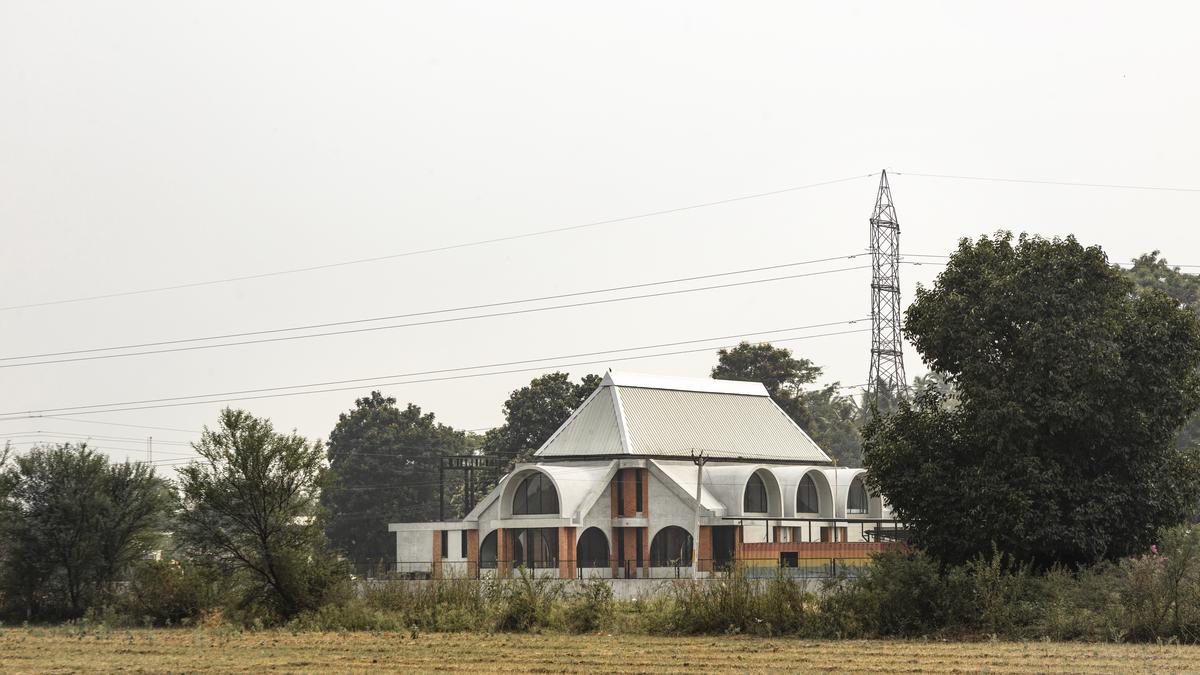
Muntaha Rushnaiwala, who spearheaded the project in mid-2022, recalls the distinct brief from his clients: the space needed to embody a raw, industrial aesthetic. "We knew we had to work with the dualities of their practice – one with clay, and the other with wood," he explains. "This translated into using two distinct material approaches as well. We were clear that we did not want too much concrete to overwhelm the structure." The initial inclination was to explore the use of stone, envisioning larger, monumental pieces for the exterior façade, juxtaposed with a stark contrast in the interiors, featuring slender metalwork.
The inspiration for this approach was drawn from the masterful work of French architect Henri Labrouste, particularly his iconic Bibliotheque Nationale de France. "We were inspired by the juxtaposition you see at Henri Labrouste’s Bibliothéque Nationale de France, with imposing arches but a certain delicate appeal within," Muntaha elaborates. This sentiment speaks to a desire to create a building that is both monumental and inviting, robust yet refined, a physical manifestation of the delicate balance between form and function, between the tangible and the ephemeral.
The Legacy of Henri Labrouste: A Guiding Light
Henri Labrouste (1801-1875) was a pivotal figure in 19th-century French architecture, renowned for his pioneering use of iron in library design. His two celebrated reading rooms in Parisian libraries, the Bibliothèque Sainte-Geneviève (1838-1850) and the Bibliothèque Nationale (1859-1875), are landmarks of structural innovation. Labrouste masterfully integrated exposed metal frameworks with exquisitely detailed masonry, pushing the boundaries of construction by incorporating new mechanical systems, advanced forms of heating, and ingeniously utilizing gas lighting to enhance luminosity. His work provided a powerful precedent for architects seeking to blend structural honesty with aesthetic sophistication, a principle that clearly resonated with the Rushnaiwala siblings.
The Alchemy of Materials: From Clay to Sound Waves
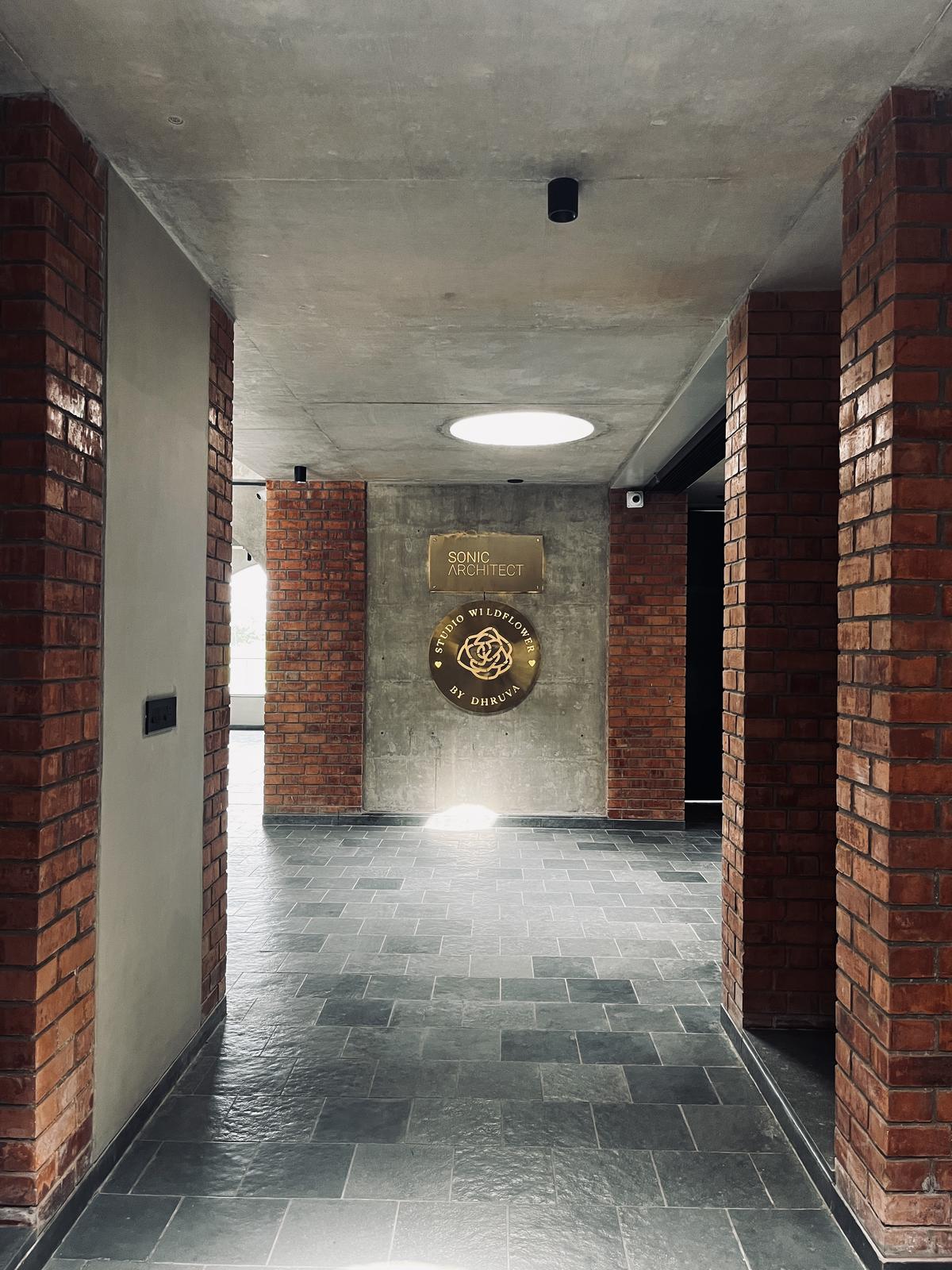
For Dhruva Patel, the name "ALT" itself signifies alternative perspectives. This ethos is palpable in her work at Studio Wildflower, where vivid colors and intricate textures define her glazed ceramic creations. Similarly, Sahil Thappa’s Sonic Architect explores the sonic possibilities within the natural beauty of wood. "This studio has panned out exactly as we envisioned, a raw space that can complement our work," Patel states with evident satisfaction. "This neutral palette also uses local materials and is constructed by a local crew." This commitment to local resources and craftsmanship underscores a deep connection to the region and a desire to create a sustainable and contextually relevant architectural statement.
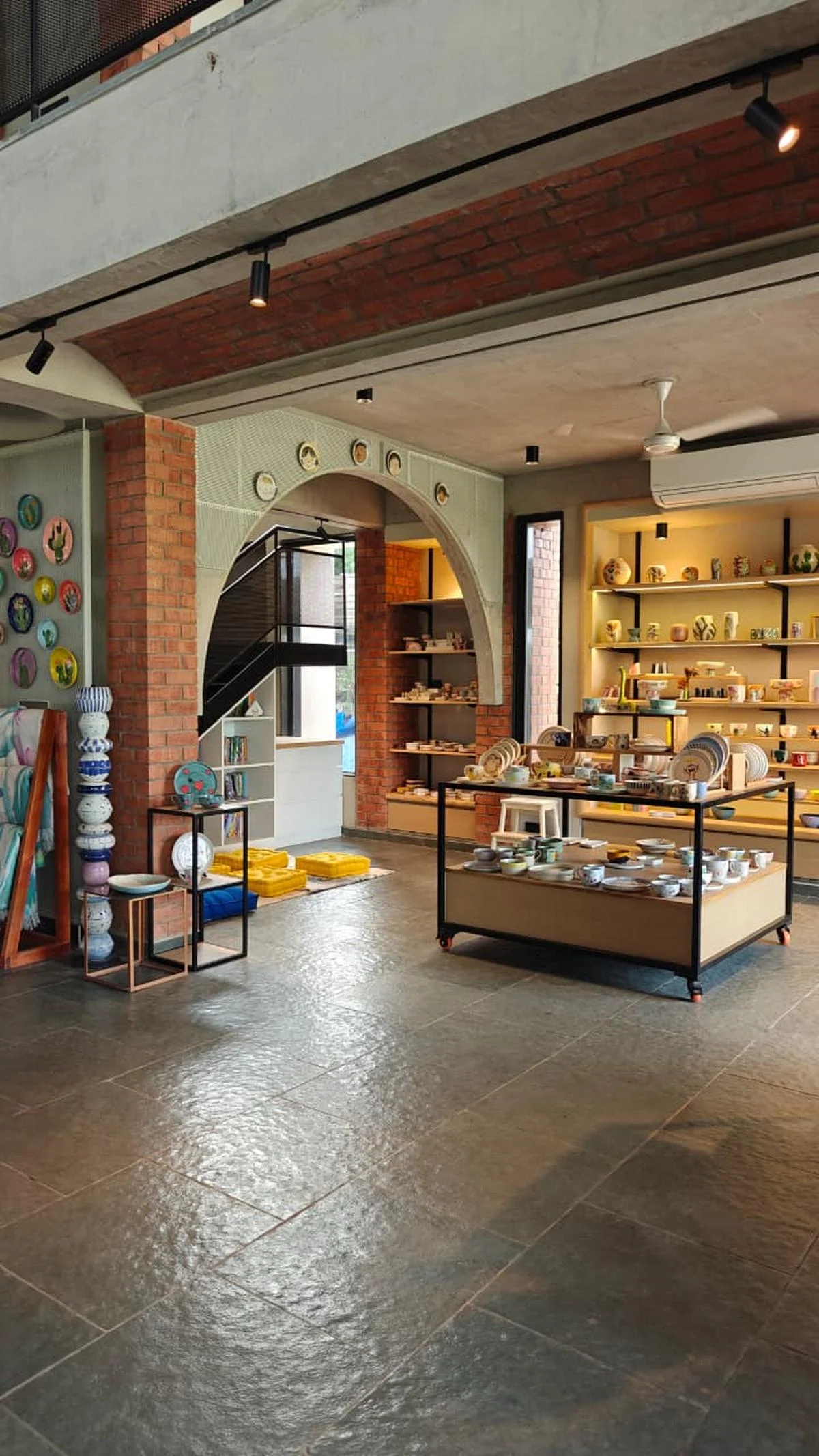
The entrance to Studio ALT is an experience in itself. Curved steps lead the visitor towards an inviting entrance, marked by a striking 12-meter walkway. Upon entering the generous exhibition and gallery space, one is immediately enveloped by a sense of warmth, a result of the diffused golden light that streams in through strategically placed large windows and skylights. This natural illumination plays beautifully against the cool, textured Kota flooring, a material choice that not only enhances the aesthetic but also contributes to the building’s climate-responsive design.
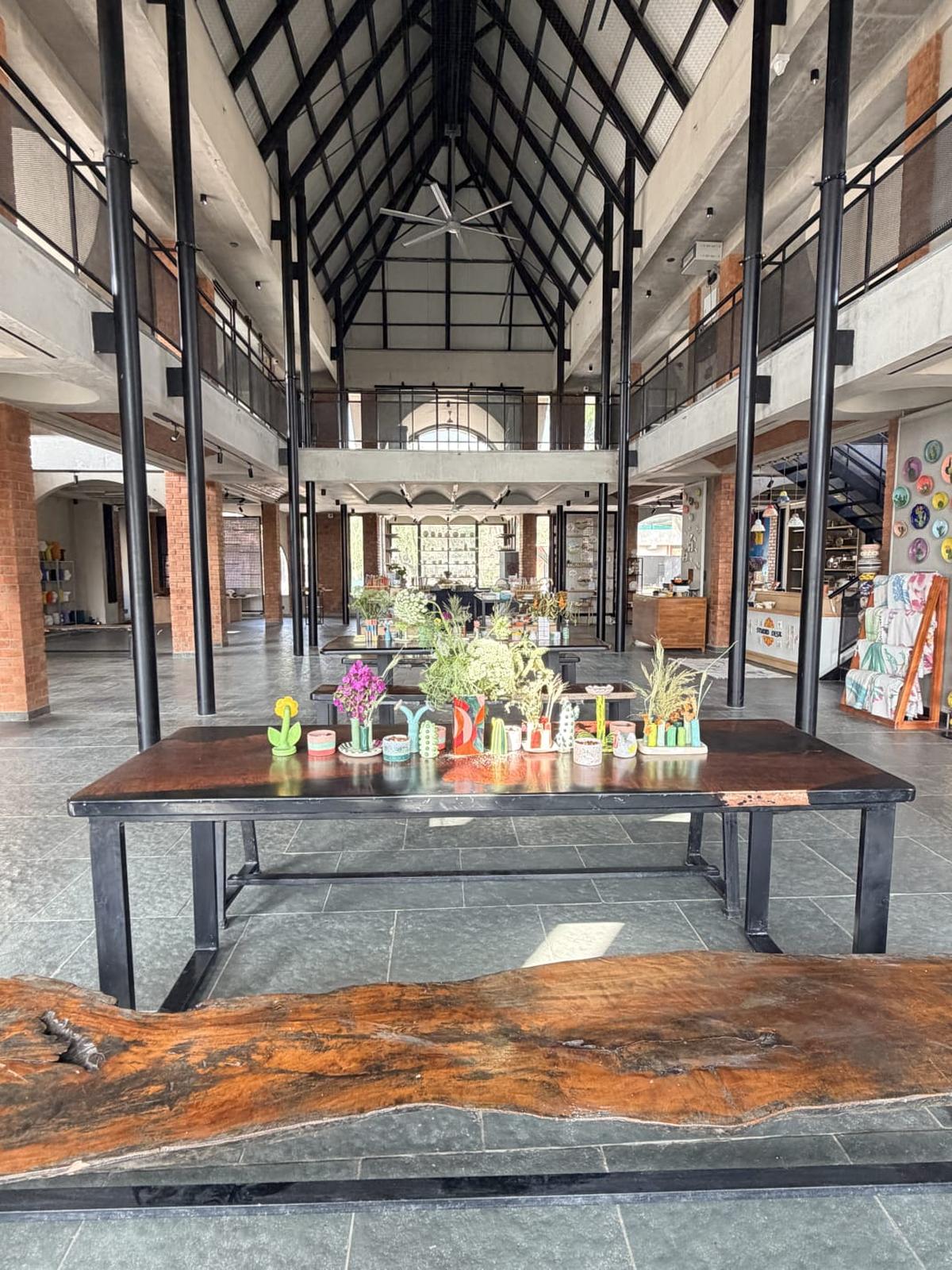
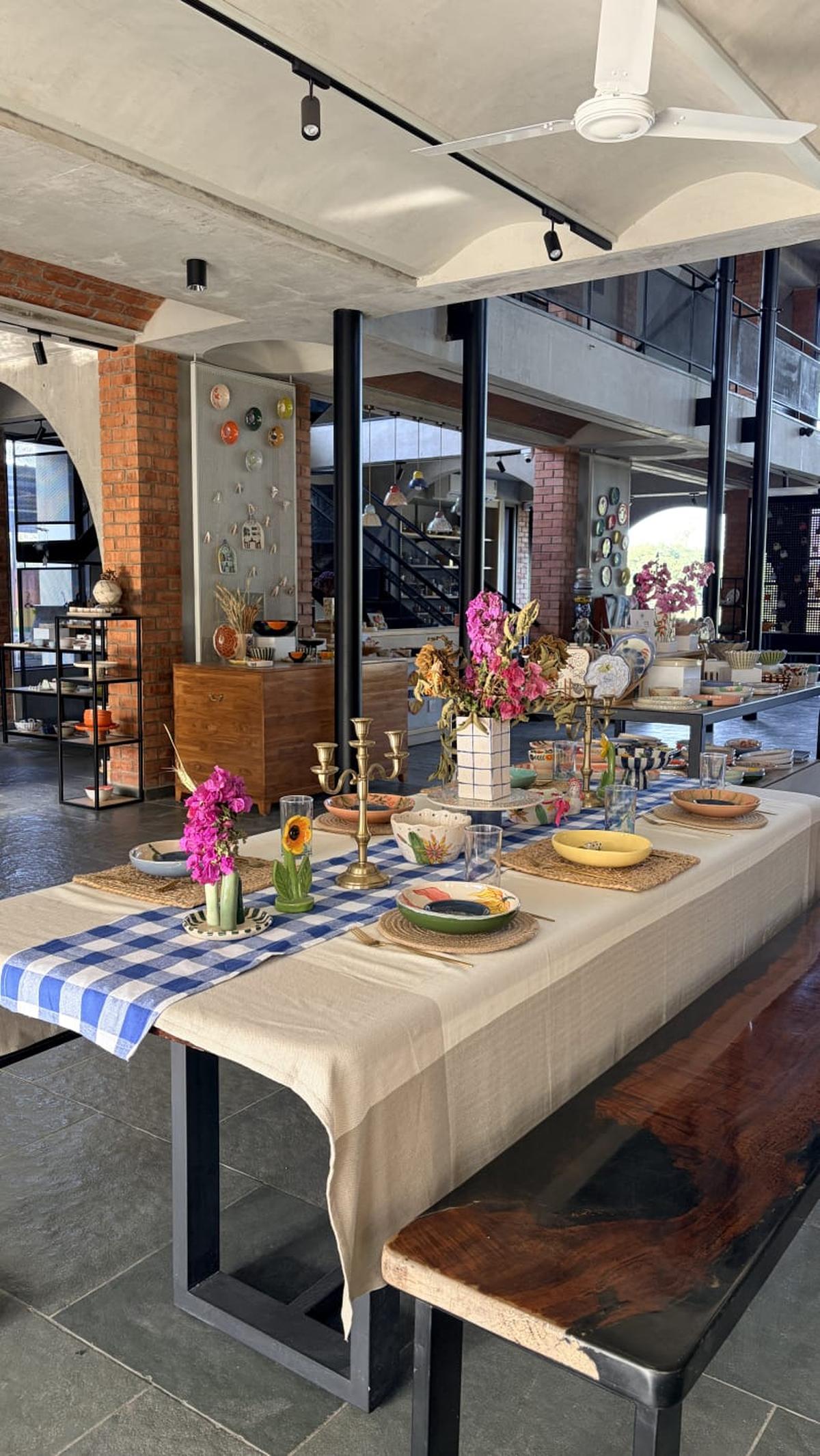
At the heart of Studio ALT lies a magnificent central hall that ascends across three levels, serving as the building’s primary nexus. This dynamic space has already witnessed a spectrum of events, from a farm-to-table meal in March, where ceramic displays, floral arrangements, and warm wood furniture created an immersive sensory experience, to a ceramic workshop held in early April. Recessed alcoves on the ground floor, thoughtfully equipped with tracking lighting, provide a sophisticated backdrop for showcasing Patel’s ceramic works, allowing their rich palette and sculptural forms to take center stage.

On the left side of this central space, adaptable cabinetry mounted on castors offers Dhruva Patel the flexibility to reconfigure the interior layout as needed, a practical consideration for an artist whose creative process often demands fluid studio arrangements. To the right, Sahil Thappa’s domain unfolds, featuring a serene listening room bathed in soft sunlight. This area is thoughtfully designed with dedicated display spaces for his meticulously crafted speaker systems, allowing visitors to experience the fusion of auditory excellence and visual artistry. "A small pop-up display at the sonic area brings together fragments of ongoing experimentation with materials, forms, and functions in intermittent stages of becoming objects that sit somewhere between prototype, study, and finished piece," Thappa explains, highlighting the ongoing evolution and experimental nature of his work.
Embracing the Vaulted Spaces: Intimacy and Complexity
Ascending the black metal stairs to the mezzanine level reveals a series of five intimate "vaults." This architectural element, reminiscent of the secure and focused spaces found in libraries or archives, offers distinct zones for both artists. Two vaults are dedicated to Patel, and two to Thappa, with a small library space serving as a shared resource. Patel utilizes one of her vaults as a cozy office space, a personal sanctuary for contemplation and design. One of Thappa’s vaults is slated to feature an engaging Lego display, hinting at a playful yet intricate aspect of his creative process.
While the overall plan of the mezzanine might appear conventional and symmetrical, the architects have masterfully achieved a sense of spatial complexity. This is accomplished through subtle variations in volume, carefully calibrated skylights that punctuate the ceiling, and the interwoven nature of the levels. These intimate vault spaces, tucked away above, offer a distinct contrast to the grand, voluminous gallery space below, creating a dynamic interplay between the public and the private, the expansive and the contained.
Adding to the functional and welcoming nature of Studio ALT, two residential units are situated at the southern end of the building. These units are designed to offer comfortable accommodation for visiting artists participating in residencies or for individuals eager to immerse themselves in the principles of organic farming, further extending the farm’s ethos of learning and creative exchange.
Climate-Responsive Design: The Art of Passive Cooling
The construction of the mezzanine level incorporates jack-arch flooring, a traditional yet effective method that contributes to the building’s structural integrity and thermal performance. The reinforced concrete roof, soaring with skylights, is supported by a steel portal frame that spans the "nave" of the building, a term borrowed from ecclesiastical architecture to describe the central, long, and main longitudinal area.
Understanding the ‘Nave’ in Architectural Context
The term "nave," derived from the Latin word "navis" meaning "ship," traditionally refers to the central, long, and main longitudinal area of a Christian church or cathedral. It is designed to accommodate the congregation and extends from the main entrance to the altar. In an architectural sense, the nave symbolizes the church as a vessel for a spiritual journey. In the context of Studio ALT, the central hall, with its soaring height and expansive feel, evokes a similar sense of grandeur and purpose, albeit for artistic and creative endeavors rather than spiritual ones.
Muntaha Rushnaiwala emphasizes the paramount importance of climate-responsive design and material selection. "We have small windows at the lower level kept open during the relatively cooler mornings," he explains. "As the afternoon sun gets harsh, hot air rises and is vented out through a narrow slit along the pitched roof, enabling passive cooling within the gallery." This ingenious system of natural ventilation ensures a comfortable environment without relying heavily on mechanical cooling.
The choice of river-polished Kota flooring further contributes to the building’s inherent coolness. At the uppermost level, thick PUF (polyurethane foam) panels are employed to insulate the roof, effectively reducing heat absorption. This holistic approach to climate control demonstrates a deep understanding of the local environmental conditions and a commitment to sustainable architectural practices.
The Future of Collaboration: Workshops and Farm-to-Table Experiences
Looking ahead, Dhruva Patel expresses her enthusiasm for hosting a variety of workshops within the versatile spaces of Studio ALT. "We will have a farm-to-table meal with produce from our farm, cooked and served on my ceramic ware, with tunes playing on Sahil’s speaker systems," she concludes, painting a vivid picture of the synergistic experiences that Studio ALT is poised to offer. This vision encapsulates the very essence of the project: a celebration of interconnectedness, where the bounty of the land, the artistry of the hand, and the precision of sound converge to create something truly unique and inspiring. Studio ALT stands not just as a building, but as a living testament to the power of collaboration, innovation, and a profound respect for both nature and craft.
