

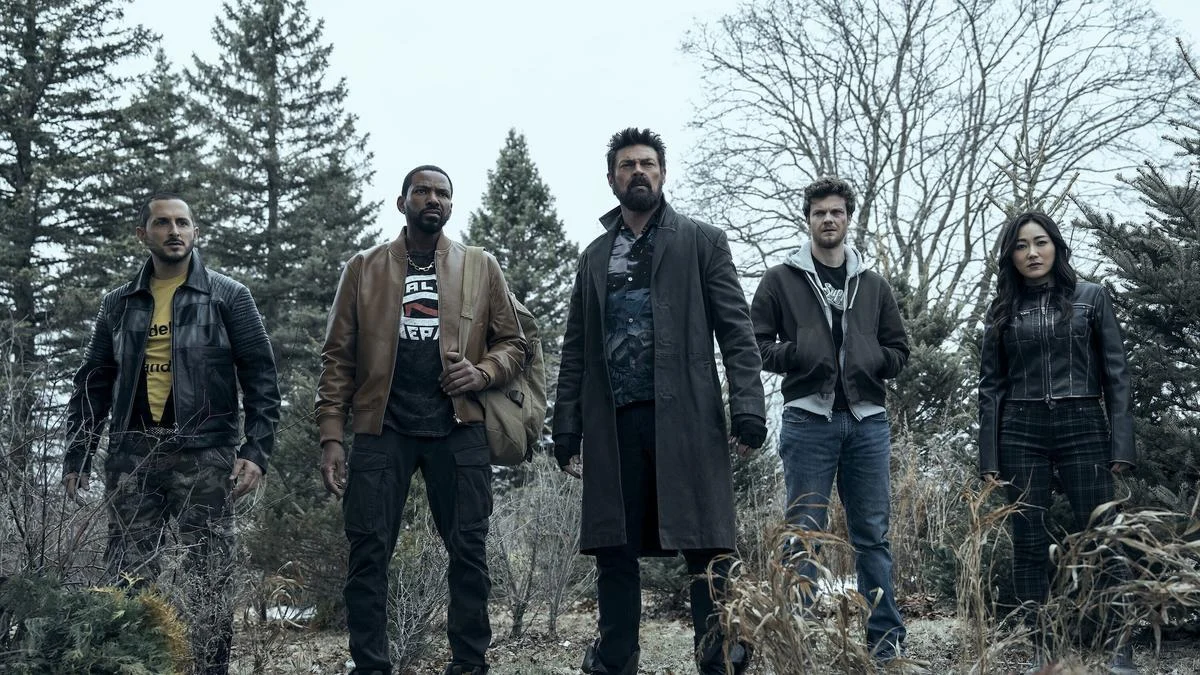
Prime Video’s flagship superhero deconstruction, "The Boys," has finally delivered its fifth and final season, bringing to a close seven years of visceral action, biting satire, and a relentless critique of celebrity culture and corporate power. Created by Eric Kripke and based on the celebrated comic series by Garth Ennis and Darick Robertson, the show has consistently pushed boundaries, offering a dark, often disturbing, yet undeniably entertaining mirror to our own societal anxieties. This concluding chapter, however, faces the unique challenge of providing a cathartic end to its narrative while navigating a global landscape that has increasingly begun to resemble its own dystopian vision.
The Premise and the Promise of a Final Stand
For its entire run, "The Boys" has been built upon a foundational premise that is both simple and profound: what if superheroes were not altruistic saviors, but rather marketable commodities, manufactured and controlled by a powerful corporation? Vought International, the fictional behemoth at the heart of the series, has positioned its "supes" as the ultimate brand ambassadors, embodying a warped sense of patriotism and aspirational heroism. Standing in their way are the titular "Boys," a ragtag group of vigilantes, led by the morally ambiguous Billy Butcher (Karl Urban), whose sole mission is to expose the rot beneath the polished facade of superheroism and dismantle Vought’s iron grip.
Season 5 carries the immense weight of concluding this multi-year conflict. The narrative has consistently revolved around the escalating power and influence of Homelander (Antony Starr), Vought’s most prized, and most terrifying, creation. He embodies the narcissistic megalomaniac, a being of immense power fueled by insecurity and a profound lack of empathy. The journey towards his ultimate downfall has been a central thread, interwoven with the personal tragedies and moral compromises of the Boys.
A World Too Close to Home: Season 5’s Unsettling Resonance
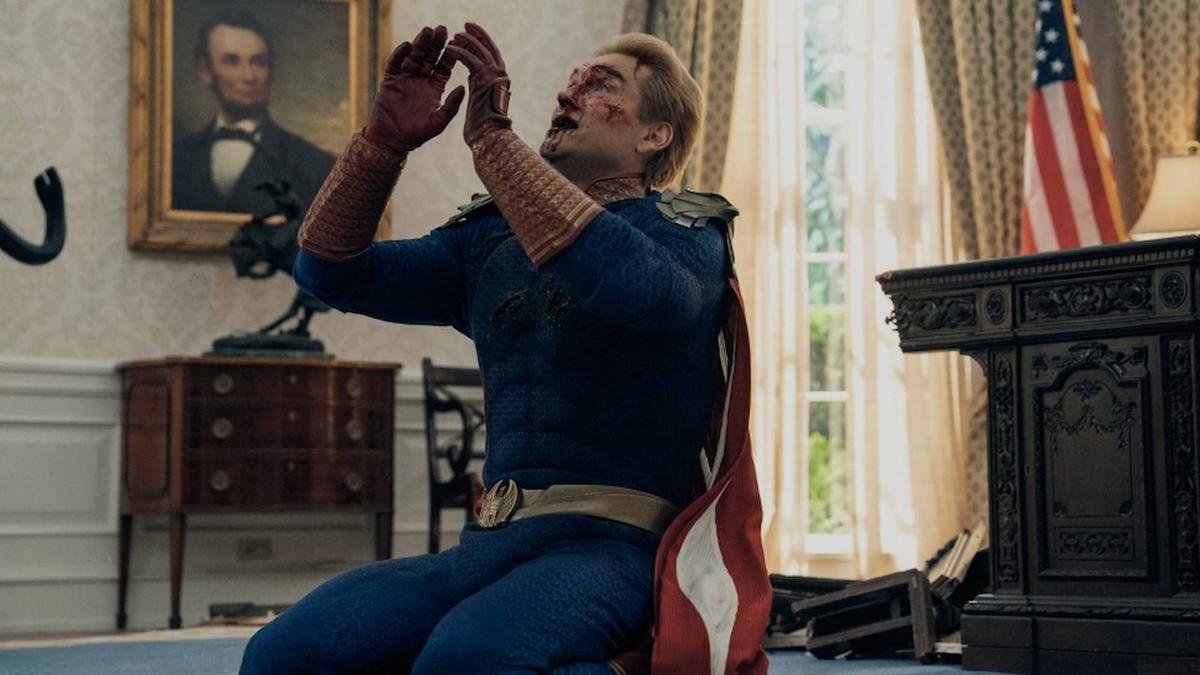
The fifth season opens with Homelander having solidified his control over the American political landscape. No longer content with merely being the figurehead of Vought, he has effectively become a de facto ruler, wielding power through a network of sycophants and a pervasive media apparatus that churns out propaganda with terrifying efficiency. The season’s depiction of concentration camps for political dissidents, the industrial-scale production of "superganda," and the pervasive nationalist hysteria feels less like exaggerated satire and more like a chilling reflection of contemporary political discourse. This uncanny alignment with real-world events, as the article notes, "has unfortunately aged like fine wine, much to the chagrin of Kripke’s razor sharp wit."
Homelander’s ascent in this final season is portrayed as a theological one. He is actively seeking to apotheosize himself, transforming from a powerful CEO into a divine authority. Through the machinations of characters like Firecracker and the sermonizing of Oh Father, Homelander constructs a "Democratic Church of America," a state-sponsored gospel that positions him as a messianic figure. Antony Starr’s performance as Homelander continues to be a masterclass in portraying both terrifying power and deeply unsettling vulnerability, capturing the character’s desperate need for adoration and validation.
Narrative Threads and Missed Opportunities: The Flaws in the Grand Design
Despite the compelling thematic resonance and strong performances, the article points to significant narrative shortcomings in Season 5. A central criticism is the show’s heavy reliance on elaborate plot devices that ultimately lead to anticlimactic resolutions. The supe-killing virus, meticulously built up in previous seasons as a potential doomsday weapon, is relegated to the periphery with surprisingly little impact. Homelander’s acquisition of a new, supposedly unassailable level of power through Compound V-One is rendered almost immediately redundant.

Similarly, the roles of key characters and their established arcs feel underdeveloped or abruptly concluded. Soldier Boy, a character with immense potential due to his ability to strip powers, drifts through much of the season without a clear purpose, despite his revenge narrative being intrinsically linked to MM’s journey since Season 3. Ryan, Homelander’s estranged son, whose ideological tug-of-war with his father and Butcher was a major focus in prior seasons, is reduced to a convenient plot device, appearing as a last-minute reinforcement.
The article highlights a recurring pattern: "The Boys keeps arranging loaded firearms before eventually discovering a completely different and wildly unsatisfying answer to end the caped menace once and for all." This sentiment underscores a frustration with the season’s inability to organically weave together its established narrative threads into a cohesive and impactful conclusion.
The Climax and its Controversial Resolutions
The highly anticipated showdown in the Oval Office, meant to be the culmination of years of promises of an apocalyptic confrontation, is met with mixed reactions. The final image of Homelander’s transformation from self-appointed god to a "pathetic sniveling wreck of panic and humiliation," his head graphically split open on live television, is described as "genuinely cathartic." Antony Starr’s performance in these final moments, stripping the super-demagogue down to a frightened child, is lauded.

However, the path leading to this moment is criticized as "frustratingly undercooked." The article specifically calls out Kimiko’s sudden emergence as a "walking deus ex machina" whose convenient supe-depowering ability instantly resolves the central conflict that the series had spent years building. This narrative shortcut is seen as a significant misstep, undermining the established stakes and the arduous journey of the Boys.
Furthermore, the finale’s "rushed creative accounting" leads to the hasty dismissal of numerous supporting characters. The Seven, a central antagonistic force throughout the series, are swept aside with startling speed. Characters from the "Gen V" spin-off, like Marie Moreau, are reduced to mere cameos, their presence feeling inconsequential. Even Sister Sage, who orchestrated significant horrors, escapes with surprising ease. MM’s revenge arc involving Stan Edgar is also left unresolved, with Edgar seemingly reclaiming Vought without consequence. The decision for Annie to name her child after Hughie’s deceased former girlfriend is also noted as a questionable narrative choice.
The Ironic Martyrdom and the Shadow of Reality
Perhaps one of the most controversial aspects of the season, as pointed out by the article, is the "nauseatingly contrived coronation of Frenchie’s martyrdom." The series, which has positioned itself as a fierce critic of authority and a champion of the anti-establishment, is seen as creating a "grotesque irony" by elevating a character played by an ex-IDF soldier to a status of near-saintly reverence, especially in the context of its anti-authoritarian messaging.
The article concludes by reflecting on the show’s tragically apt timing. "The Boys" once found its satirical edge in lampooning celebrity worship and military-industrial branding. However, as the article observes, "the American political reality accelerated into increasingly on-brand habits involving messianic AI portraiture and a growing enthusiasm for masked-men-in-unmarked-vans democratically eliminating all dissenters, among many other bizarre dystopic truths." This convergence means that the show’s once-outrageous satirical jabs now often feel like they are playing catch-up with the absurdity of the real world.
While the season undeniably delivers on its promise of gore and gratuitous violence, its satirical impact is blunted by the unsettling fidelity with which current events mirror its fictional world. The article ends with a poignant hope that perhaps, in a near future, reality will follow the script of "The Boys" and see its own self-anointed messiahs meet similarly humiliating ends.
"The Boys" Season 5 is currently streaming on Prime Video.
