

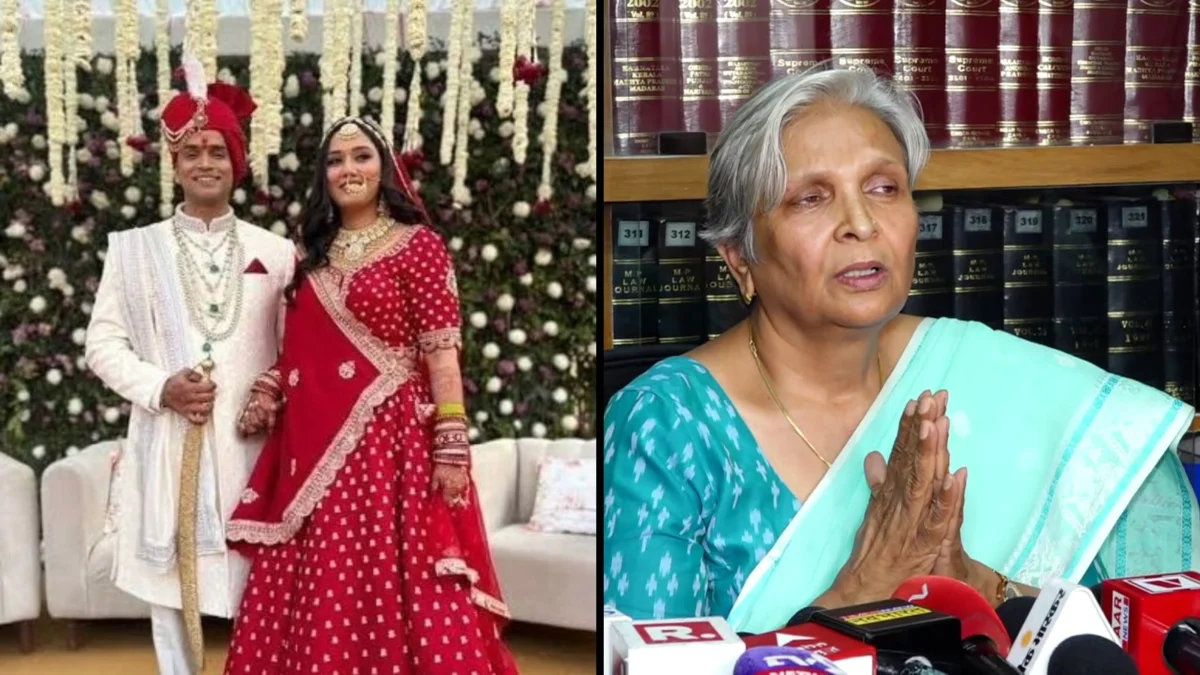
New Delhi, India – May 26, 2026 – A cultural undercurrent, often simmering beneath the surface of societal norms, is increasingly coming to a boil in India. The traditional image of the "perfect bahu" – the ideal Indian daughter-in-law – is intrinsically linked to her domestic prowess: her ability to cook flawlessly, manage the household with quiet efficiency, and often, to subsume her individual aspirations for the sake of marital harmony. However, a growing chorus of voices, amplified by landmark judicial pronouncements, is challenging these deeply entrenched expectations, arguing that they are not only archaic but actively suffocating modern Indian marriages and the well-being of women.
The issue has gained significant traction, moving from hushed conversations within families to the hallowed halls of justice. Recent court rulings, particularly from the Bombay High Court and the Supreme Court of India, are beginning to recognize what society has long struggled to acknowledge: a wife is not domestic staff, and her value and the viability of her marriage should not be contingent upon her subservience to traditional household duties. This article delves into the heart of this complex issue, exploring the pervasive nature of these domestic expectations, the tragic consequences they can engender, and the evolving legal landscape that offers a glimmer of hope for a more equitable future in Indian matrimony.
The Pervasive Myth of the "Perfect Bahu"
The digital age has, paradoxically, amplified the visibility of these age-old domestic expectations. Social media platforms frequently become stages for airing grievances against new brides, often aired by mothers-in-law, aunts, and other extended family members. The chief complaints echo a familiar refrain: "Voh ghar ka kaam nahi karti" (She doesn’t do household chores) or, more pointedly, "Usey khana banana nahi aata" (She doesn’t know how to cook). These pronouncements, often delivered with an air of aggrieved entitlement, reduce a woman’s worth to her culinary skills and her ability to maintain a spotless home.
The tragic case of Twisha Sharma serves as a stark, albeit devastating, illustration of this phenomenon. Her mother-in-law’s lament, "She didn’t even water the plants," initially appears as a trivial complaint about a wilting houseplant. However, it represents a deeper, more insidious judgment. It questions why a woman’s value, even when she holds a professional degree, earns an income, and possesses a life and identity beyond the domestic sphere, is still primarily measured by her engagement in cooking, cleaning, and other household tasks. This narrative suggests that even with professional accomplishments, a woman’s primary role is still that of a domestic manager.
Further revelations from the Twisha Sharma case, including leaked conversations with her brother, exposed how a woman’s past relationships can be weaponized by her in-laws. This not only highlights a gross invasion of privacy but also underscores a disturbing tendency to scrutinize and judge a woman’s personal history, using it as ammunition within the marital context, rather than offering support and understanding.
The stakes are dramatically raised when these rigid domestic demands morph into outright extortion and abuse. The case of Deepika Nagar from Greater Noida is a harrowing testament to this escalation. Despite her family’s substantial wedding expenditure of Rs 1 crore, Deepika’s in-laws relentlessly harassed her for an additional Rs 51 lakh in cash and a luxury SUV. The heartbreaking admission by her family that they often advised her to "adjust" to salvage the marriage reveals a terrifying reality: the ingrained societal instruction to prioritize domestic peace and avoid confrontation can blind families to severe, life-threatening danger. This cultural imperative to "keep the peace" at all costs can inadvertently enable abusive situations to fester and worsen, with devastating consequences.
Chronology of a Changing Perspective: Judicial Intervention
For generations, the benchmark for an "ideal Indian wife" has been inextricably linked to her domestic contributions. The ability to prepare perfect rotis, adhere to established household routines, and exhibit unwavering obedience has been lauded. Conversely, any perceived deviation from these norms, such as an imperfectly cooked meal or a resistance to rigid routines, has often been branded as "defiance." In some deeply unfortunate instances, these domestic "failures" have even been presented as grounds for divorce in courtrooms, often categorized under the broad and subjective heading of "mental cruelty."

However, a significant shift in this judicial interpretation is becoming evident, signaling a potential recalibration of societal expectations within the legal framework.
The Bombay High Court’s Landmark Ruling: Wives are Not "Deemed Maids"
A pivotal moment in this evolving legal narrative arrived with a significant ruling by the Bombay High Court. A division bench, comprising Justices Bharati Dangre and Manjusha Deshpande, overturned a family court order that had granted a divorce to a Chartered Accountant husband. The husband’s primary contention, dating back to the inception of the marriage, was that his wife was an inadequate cook, disobedient, and failed to manage household chores flawlessly, thereby causing him "mental stress."
The High Court’s response was unequivocal and forceful. The bench soundly rejected the husband’s arguments, quashing the divorce decree and mandating the husband to pay Rs 20,000 in monthly maintenance to his wife. Crucially, the court explicitly declared that wives are not to be considered "deemed maids" and that imperfections in household work do not automatically constitute cruelty. The judges emphasized that ordinary disagreements and domestic friction, particularly in the nascent stages of a marriage, should not be magnified into legal grounds for separation. For conduct to be deemed legal cruelty, it must involve behavior that is severe, humiliating, or deeply abusive, rendering the continuation of the marriage impossible – a standard far exceeding a burnt meal or an undone chore.
The Supreme Court’s Stance: Protecting Professional Identity
The suffocating nature of traditional domestic expectations becomes particularly acute for educated, ambitious, and working women. They often find themselves navigating a precarious tightrope between upholding traditional familial roles and pursuing their professional aspirations. Despite possessing degrees and career ambitions, these women frequently encounter a subtle yet persistent pressure to "put their careers on hold" the moment a domestic duty is perceived as neglected or an in-law feels slighted.
In a striking parallel and a reaffirmation of this evolving judicial perspective, the Supreme Court of India recently addressed this very conflict. The case involved a qualified dentist married to an Indian Army Lieutenant Colonel. Lower courts had previously granted the husband a divorce on the grounds that his wife chose to live separately in Ahmedabad to establish her dental clinic and provide a stable medical environment for their young daughter. Her decision to prioritize her career and her child’s well-being over continuously relocating to accommodate her husband’s high-mobility military postings, including a challenging assignment in Kargil, was interpreted as an act of cruelty by the lower courts.
The apex court, however, delivered a resounding condemnation of this "regressive," "ultra-conservative," and "patriarchal" interpretation. The Supreme Court powerfully articulated that in the 21st century, it is unacceptable to treat a qualified woman’s pursuit of her professional career and her endeavor to secure a safe and stable environment for her child as an act of cruelty. This ruling underscores the judiciary’s growing recognition of women’s autonomy and their right to maintain their professional identities and pursue personal stability, even within the confines of marriage.
Supporting Data and Societal Realities
The statistics surrounding domestic violence and marital discord in India paint a grim picture that underscores the urgency of addressing these entrenched expectations. While specific data directly linking divorce rates to domestic chore disputes is scarce, broader trends provide significant context.
- National Crime Records Bureau (NCRB) Data: Reports consistently highlight the prevalence of dowry-related harassment, domestic violence, and cruelty by husbands and in-laws as significant reasons for marital distress and, tragically, for women’s deaths. While these figures often encompass a range of abuses, the underlying expectation of financial and domestic subservience from the bride plays a crucial role.
- The Burden of Unpaid Care Work: Studies on women’s time use in India reveal that women spend a disproportionately larger amount of time on unpaid care work and household chores compared to men. This burden is often exacerbated after marriage, with new brides expected to shoulder these responsibilities fully, regardless of their own professional commitments.
- Social Acceptance of "Adjustment": The recurring advice for women to "adjust" in difficult marital situations, as seen in the Deepika Nagar case, reflects a deep-seated societal bias that prioritizes the preservation of the marital unit, often at the expense of the woman’s well-being and dignity. This cultural conditioning makes it challenging for women to seek redressal and for families to intervene effectively.
- Mental Health Impact: The constant pressure to meet unrealistic domestic standards, coupled with potential criticism and judgment, can have a severe impact on a woman’s mental health, leading to anxiety, depression, and a diminished sense of self-worth. This psychological toll can be a significant factor in marital breakdown.
Official Responses and Evolving Legal Frameworks
The judiciary’s pronouncements represent a significant official response to the pervasive issue of suffocating domestic expectations. The Bombay High Court and the Supreme Court, through their rulings, are actively pushing back against archaic patriarchal interpretations that have historically disadvantaged women within marriage.
These judgments serve as important legal precedents, providing a framework for lower courts and empowering women to challenge unfair and discriminatory domestic demands. The explicit rejection of the "deemed maid" notion and the affirmation of a woman’s right to her career and personal stability are crucial steps towards legal recognition of gender equality within marriage.
Furthermore, these judicial interventions are likely to influence public discourse and potentially prompt policy discussions. While there may not be immediate legislative changes directly targeting domestic chore disputes, the broader impact of these rulings can contribute to a cultural shift that influences how laws related to marriage, divorce, and domestic violence are interpreted and applied.
Implications for the Future of Indian Marriages
The current legal trajectory, marked by the landmark rulings discussed, carries profound implications for the future of Indian marriages. At its core, this is no longer merely a debate about who prepares dinner or who cleans the house. It is a fundamental question about whether Indian marriages will continue to define and measure women through the lens of unpaid domestic labor, thereby overlooking their individuality, their career aspirations, their emotional well-being, and their inherent dignity.
The courts are increasingly acknowledging a truth that society is still grappling with: a wife is not a domestic servant, and her worth, her contributions, and the viability of her marriage are not intrinsically tied to her ability to churn out rotis, adhere to rigid routines, or engage in silent sacrifice.
As more women find the courage to challenge these inherited expectations and assert their rights, the critical question shifts from whether a "bahu" can "manage the house" to whether families are prepared to evolve and embrace a more equitable paradigm. This paradigm involves recognizing and respecting women as equal human beings within the marital home, valuing their multifaceted identities, and fostering partnerships built on mutual respect, shared responsibilities, and individual autonomy. The path ahead requires not just legal reforms but a deep-seated cultural transformation, where the myth of the "perfect bahu" is finally dismantled, making way for genuine equality and mutual understanding within the sacred bond of marriage.
