

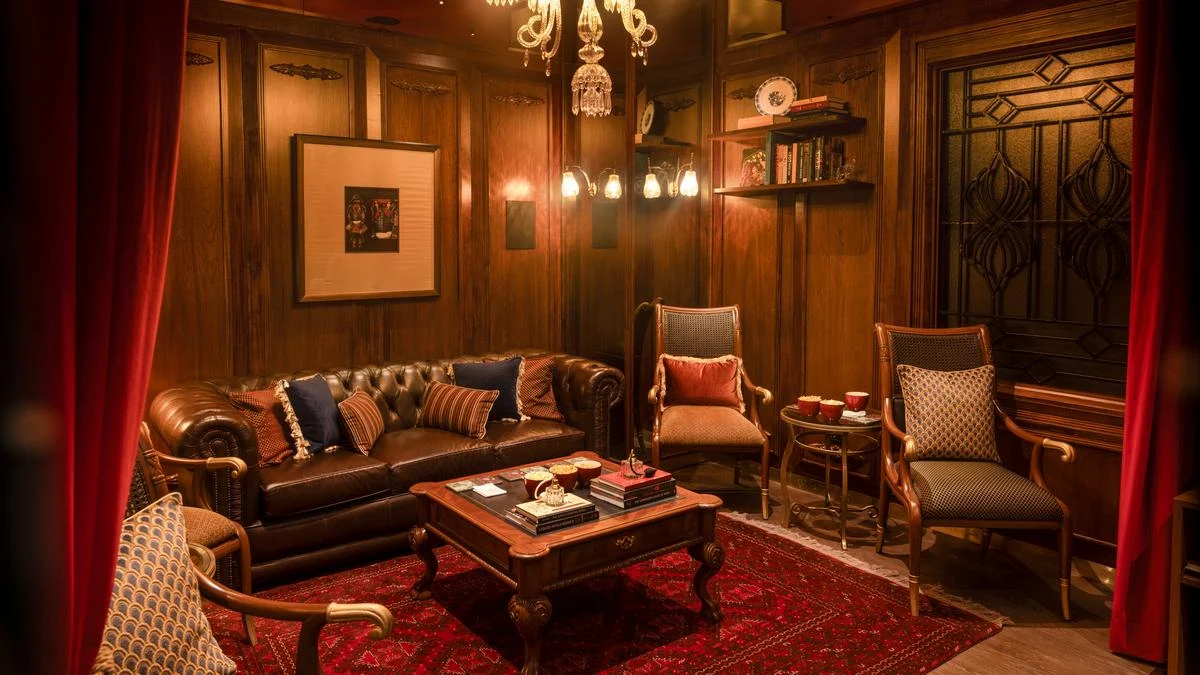
India’s vibrant and ever-evolving bar scene is witnessing a fascinating new trend: the emergence of "nested bars." These intimate, often diminutive spaces, tucked away within larger restaurants and existing bars, are redefining the cocktail experience by offering unparalleled personalization, meticulous craftsmanship, and a deep dive into the art of mixology. Moving beyond the bustling energy of mainstream establishments, these "dual-concept spaces," as they are sometimes dryly referred to, are creating exclusive havens for discerning patrons seeking a more focused and engaging interaction with their drinks and the minds behind them.
The Genesis of Intimacy: From Bohemian Beach Vibes to Hidden Gems
The concept is vividly illustrated at Goa’s Anjuna beach, where Pisco by the Beach offers a quintessential sundowner experience with its boho-chic ambiance and delectable seafood. As dusk settles, a discreet wooden door at the corner of the restaurant unveils "After Dinner," a cocktail bar that shares the same breathtaking ocean view but presents a dramatically different atmosphere. The boisterous beachside chatter gives way to a hushed cadence of conversation and curated music, signaling a shift in pace and intent. This is the essence of a nested bar – a sanctuary dedicated to the craft of cocktails, designed to provide an experience that is both exclusive and deeply personal.
Neil D’Souza, founder of Goa’s Slow Tide, whose nested bar, the 24-seat Stoned Pig, operates within the main restaurant, articulates the driving force behind this concept. "As bartenders, we also crave a room that’s just about drinks," he explains. "It honestly comes from wanting to do two things in the same space without diluting either." D’Souza views Stoned Pig as a "second personality" for Slow Tide, a space where the focus is solely on the intricate world of cocktails, unburdened by the broader dining experience.
A National Wave: Nested Bars Flourish Across India
In the past year, this innovative concept has gained significant traction across India, with cities like Delhi, Mumbai, and Bengaluru embracing the trend with enthusiasm.

-
Delhi’s Innovative Offerings: In the nation’s capital, Barbet & Pals is home to Cavity, a nine-seat space that curates an ambitious nine-course cocktail tasting menu. Meanwhile, Olive in Mehrauli houses The Hidden Club, an even more intimate four-seater establishment. These venues are not merely serving drinks; they are orchestrating liquid journeys.
-
Mumbai’s Culinary Cocktail Pairings: Mumbai’s Slink & Bardot boasts the Koliwada Cocktail Club (KCC), a cozy six-course establishment that presents a savory cocktail tasting menu, blurring the lines between liquid refreshment and culinary art.
-
Bengaluru’s Thematic Retreats: Bengaluru is also contributing to this growing trend. Una Hacienda features The Bunker Room, an exclusive enclave for patrons. The Leela Bengaluru has unveiled ZLB23, which houses The Theatre, a space designed for immersive cocktail narratives.
-
Goa’s Experimental Laboratories: Goa, a hub for innovative hospitality, continues to push boundaries. The Second House introduced Bartender’s Bunker, a space that evolved from a cocktail laboratory into an experimental cocktail haven. The upcoming Bar O at Bar Outrigger, a compact four-seater, promises to be another platform for exploring cutting-edge techniques and ingredients.

These nested bars are not just about size; they are about intention. They are deliberately intimate, often seating no more than a handful of guests, fostering an environment conducive to deep engagement. The décor often reflects this exclusivity, with plush seating, moody lighting, and unique thematic elements designed to transport patrons into a different realm.
The Art of the Experience: Beyond the Drink
What sets these nested bars apart is their commitment to an immersive and narrative-driven approach to cocktail creation. Unlike the more casual setting of a main bar, these spaces are designed to be stages for the art of mixology.
Vicky Singh, partner-founder of KCC at Mumbai’s Slink & Bardot, emphasizes the philosophy behind his establishment. "A great cocktail bar should create space for slower drinking, meaningful conversations, and a deeper appreciation of the craft behind every drink," he states. KCC, hidden behind a velvet curtain and adorned with deep blue hues and fishing net décor, offers a six-course liquid "dinner" that begins with an amuse-bouche and concludes with a dessert-inspired savory cocktail. This approach transforms the act of drinking into a curated culinary and sensory journey.
Similarly, Delhi’s The Theatre at Barbet & Pals was conceived from the desire to create a more "immersive and narrative-led extension" of the main bar. These establishments are not simply serving drinks; they are presenting meticulously crafted performances where cocktails are the protagonists, supported by visual aids and compelling storytelling. Suchismita Roy Chowdhury, the restaurant and bar operations manager, explains, "Instead of simply serving a drink, we take guests through its inspiration [such as the first act being inspired by 19th-century Milan and the Milano-Torino cocktail], ingredients, process, and philosophy, making them part of the experience."

Facetime with the Bartender: An Intimate Connection
A crucial distinction between nested bars and "secret bars" lies in their accessibility and intent. While secret bars often employ an element of exclusivity through invitation or high entry fees, nested bars are open to all patrons, albeit with limited seating. Their primary function is to provide a platform for unbridled creativity that might be challenging to execute in the bustling environment of a larger bar.
The menus in these intimate spaces are often a testament to advanced techniques and compelling narratives. Many offer cocktail tasting menus, allowing guests to embark on a multi-course exploration of flavors and concepts. Some, like Blindspot at Bar Outrigger and Bartender’s Bunker, even trace their origins back to being cocktail laboratories, where experimentation and innovation were paramount.
Cavity in Delhi exemplifies this dedication to detail with its two-and-a-half-hour, nine-course cocktail tasting menu. The focus here is on celebrating India’s Geographical Indication (GI) ingredients, incorporating elements like house-fermented Sunderban honey mead and Tamil Nadu’s Tooyamalli Rice into their creations. The Bunker Room in Bengaluru offers a four-course cocktail omakase, a nod to the Japanese culinary tradition of trusting the chef (or in this case, the bartender) to curate the experience.
Somanna Muthanna, founder and CEO of The Soul Company, highlights the core appeal: "With these bars, you can get into the thinking and nerdiness around the drink, while also cutting away from the noise. It’s an option that didn’t exist before." This sentiment is echoed by Vicky Singh of KCC, who notes that the intimate setting fosters conversations that extend far beyond the cocktails themselves. "The cocktail often becomes the starting point [conversations moving from an ingredient or technique to local history, food traditions, fermentation, or even music]," he explains. The limited seating allows bartenders to dedicate more time to each guest, fostering a level of engagement that is difficult to achieve in larger, more chaotic environments.

This direct interaction, this "facetime" with the bartender, is a significant draw for customers. Palki Hatangadi, a fashion retail professional from Bengaluru, observes, "In a bigger bar, you cannot get an in-depth perspective on the drinks. It adds to the cocktail drinking experience: you are improving what you know and how you understand the drinks."
Abhishek Gupta, a product manager who has visited several of these nested bars, including Bunker, The Theatre, Cavity, Stoned Pig, and Blindspot, attests to their impact on his overall enjoyment. "At Barbet & Pals, it is hard to get time with the bartenders as the bar is usually busy. Cavity solves this issue for me. I get to spend a relaxed two-three hours being one out of nine people learning about the drinks," he says. Furthermore, he believes that a positive experience at a nested bar enhances his overall comfort and sense of belonging at the main bar, as he has "built a rapport with the team that helps me feel better and more welcome."
The Economics of Intimacy: Value Beyond Price
The pricing of these nested bar experiences reflects their exclusive nature. Multi-course cocktail tastings typically range from approximately ₹2,000 to ₹4,000 per person, with some premium experiences potentially reaching up to ₹8,000. While this might seem steep to some, for many patrons, the personalized attention, the intimate setting, and the depth of the experience justify the cost. It aligns with a growing desire among consumers for quality over quantity and for experiences that offer genuine value and lasting memories.
Neil D’Souza of Slow Tide observes a fundamental shift in consumer behavior: "How people spend their night has changed. They want smaller groups, better conversations, and want to pay more attention to what they’re drinking. These spaces work because they respect that shift."

Somanna Muthanna of The Soul Company adds that while cost is a consideration, it is not the primary driver. "More than the money, it is the mindset, the intent for the night. Are you ready to walk into a space and surrender to an experience like this? It’s not for everyone." This suggests a discerning clientele seeking more than just a drink; they are looking for an immersive journey and a deeper connection with the craft.
The demographic attracted to these nested bars is diverse, often comprising well-traveled individuals who have experienced global cocktail scenes and possess an appreciation for craft and storytelling. Vicky Singh of KCC notes, "At KCC, we’ve had everyone from industry professionals and cocktail enthusiasts to creatives, and entrepreneurs. What they tend to have in common is a willingness to engage, to ask questions, to spend time understanding what’s in the glass rather than just ordering a familiar drink." He recounts instances of guests spending considerable time discussing a single ingredient or unraveling the transformation of a familiar flavor, highlighting the intellectual engagement these spaces foster.
Ultimately, these nested bars are fulfilling a crucial niche in India’s burgeoning bar landscape. They offer a sanctuary for those who wish to delve deeper into the world of cocktails, to appreciate the artistry, the ingredients, and the stories behind each meticulously crafted drink. As Somanna Muthanna aptly puts it, "These bars make it possible to geek out over cocktails." They are not just serving beverages; they are curating experiences, fostering connections, and elevating the very definition of a night out.
The writer is a freelance journalist and editor from Goa.
