

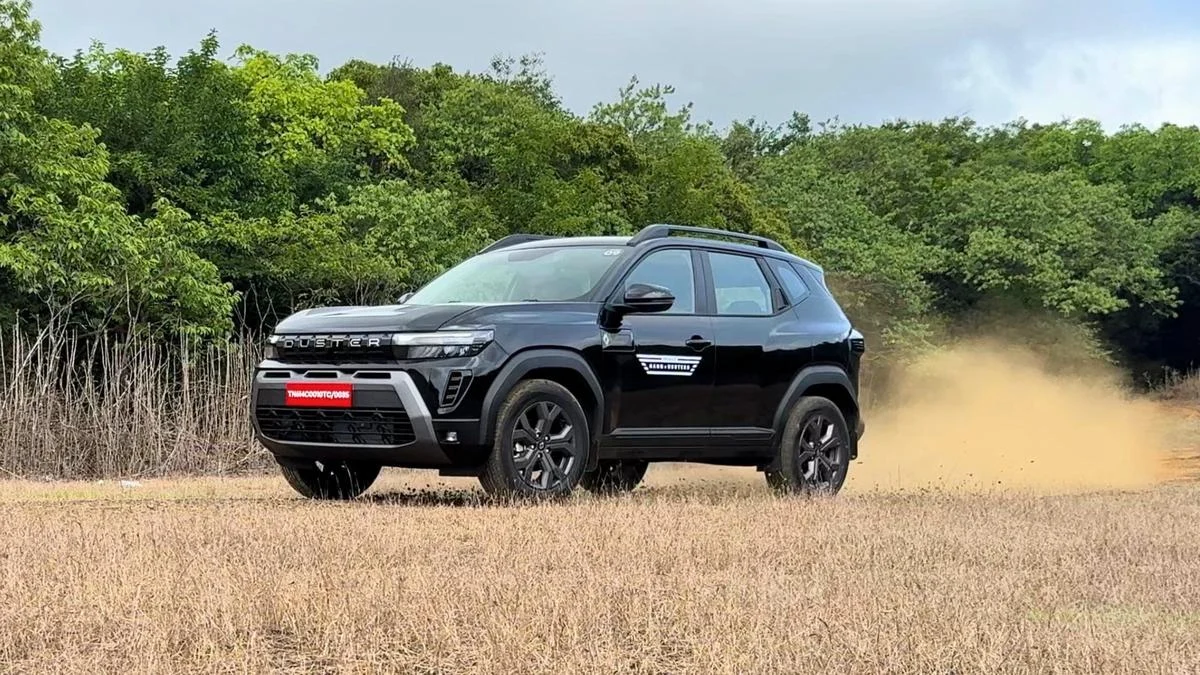
In the competitive landscape of the Indian automotive market, a persistent skepticism often shadows small-capacity engines. For the average car buyer, the equation has long been linear: larger displacement equals greater capability, especially when applied to the rugged silhouette of a Sport Utility Vehicle (SUV). There is an inherent assumption that a sub-1.0-litre engine, regardless of its technological pedigree, will inevitably struggle under the weight of a family-sized vehicle, particularly when faced with the varied topographies of the Indian subcontinent.
However, the Renault Duster TCe 100 arrives not just as a new powertrain option, but as a direct challenge to these deep-seated prejudices. By pairing a 999cc three-cylinder turbocharged petrol unit with one of the most celebrated chassis in the segment, Renault aims to prove that engineering finesse and torque delivery are far more critical to the driving experience than sheer cubic capacity.
Main Facts: Breaking Down the TCe 100 Proposition
At the heart of this discussion is the Renault Duster TCe 100. On paper, its specifications might seem modest to the uninitiated. The 1.0-litre turbocharged engine produces 100 PS of power and 166 Nm of torque. While these figures do not immediately suggest high-performance thrills, the "Techno" variant tested here bridges the gap between budget-conscious efficiency and premium SUV aspirations.
Key Specifications at a Glance:
- Engine: 999cc, 3-cylinder, Turbocharged Petrol
- Power: 100 PS @ 5,000 rpm
- Torque: 166 Nm @ 2,000–3,500 rpm
- Transmission: 6-speed Manual
- Price Range: ₹10.49 lakh – ₹13.49 lakh (Ex-showroom)
- Key Features: All-wheel disc brakes, 17-inch alloy wheels, 8-inch touchscreen with Android Auto/Apple CarPlay, and a sunroof.
The Duster TCe 100 occupies a strategic price bracket, positioning itself as a value-driven alternative to European rivals like the Volkswagen Taigun and Skoda Kushaq, while offering a more rugged, "go-anywhere" persona than many of its Korean and Japanese counterparts.
Chronology: The Evolution of a Disruptor
To understand the significance of the TCe 100, one must look at the Duster’s journey in India. Launched over a decade ago, the original Duster was the catalyst for the compact SUV revolution in the country. It offered the ride quality of a luxury sedan with the ground clearance and presence of a true off-roader.

Over the years, the Duster has seen various iterations, from the legendary 1.5-litre K9K diesel engine to the high-performance 1.3-litre turbo petrol developed in collaboration with Daimler. However, as emission norms tightened and market preferences shifted toward petrol, Renault recognized the need for a "sweet spot"—an engine that could offer the fuel efficiency of a small hatch with the tractability required for an SUV.
The development of the TCe 100 involved more than just transplanting the engine found in the Renault Kiger or Magnite. For the Duster, engineers re-calibrated the turbo-spooling characteristics and revised the gear ratios of the six-speed manual transmission to account for the Duster’s higher curb weight and its role as a long-distance cruiser. This chronological shift from high-displacement naturally aspirated engines to downsized, high-efficiency turbocharged units marks the current era of Renault’s Indian portfolio.
Supporting Data: Engineering the "Big Engine" Feel
The primary triumph of the TCe 100 is its lack of "small engine" symptoms. Typically, three-cylinder engines suffer from two major flaws: inherent vibrations and a "laggy" power delivery before the turbocharger kicks in. Renault has addressed these through several technical avenues.
1. Torque Management and Tractability
The 166 Nm of torque is available from as low as 2,000 rpm. This broad spread of torque is what allows the Duster to feel effortless. In urban environments, the vehicle can pull cleanly from 25-30 km/h in third gear. This "elasticity" reduces the need for frequent gear changes, a common grievance with small-capacity manuals.
2. Refinement and NVH (Noise, Vibration, Harshness)
While a slight thrum is audible at idle—a characteristic of the three-cylinder layout—it smoothens out remarkably once the vehicle is in motion. Renault’s use of advanced insulation materials and optimized engine mounts ensures that the vibrations do not migrate to the cabin or the steering wheel, providing a mature driving environment that belies the engine’s size.

3. The Role of the Six-Speed Gearbox
Unlike many of its competitors who offer a five-speed manual with their entry-level turbos, Renault has opted for a six-speed unit. The additional cog allows for shorter lower ratios (aiding city acceleration) and a taller sixth gear, which keeps the engine spinning at lower RPMs during highway cruising. At 100 km/h, the engine remains in its efficiency band, yet retains enough boost to overtake without needing a downshift.
Field Test: From City Commutes to Mountain Passes
The true measure of an SUV is its performance under duress. During extensive testing across varied terrains, the Duster TCe 100 revealed a surprising level of composure.
Urban Maneuverability
In stop-and-go traffic, the light clutch and precise gear shifts make the Duster an easy companion. The crisp throttle response ensures that there is no nervous waiting period for power when merging into tight gaps.
Highway Composure
On the open road, the Duster maintains its reputation for being a "mile-muncher." The suspension, though leaning toward the firmer side, works in tandem with the 17-inch alloys to provide a planted feel. Unlike some rivals that feel "floaty" at high speeds, the Duster remains hunkered down.
Mountain Performance
The most significant revelation occurred on steep inclines. Small engines often "run out of breath" on mountain roads, forcing the driver to stay in first or second gear. The TCe 100, however, utilized its mid-range torque to climb confidently. Even with a full load, the engine didn’t feel strained, proving that the turbocharger’s calibration is well-suited for high-altitude driving.

Interior and Technology: A Measured Approach to Luxury
Renault has avoided the "gimmickry" often found in modern SUV cabins, opting instead for a functional yet sophisticated environment.
- Aesthetic Appeal: The dual-tone interior is accented with brown highlights and a generous use of fabric on the dashboard and door pads. This provides a tactile warmth that hard plastics cannot replicate.
- Ergonomics: The seats offer excellent lateral support, and the visibility is commanding, staying true to the SUV ethos.
- Connectivity: The 8-inch touchscreen is snappy and supports seamless smartphone integration. While it may not be the largest screen in the segment, its usability is high, avoiding the lag issues seen in more complex systems.
- Safety and Convenience: The inclusion of all-wheel disc brakes in the Techno variant is a standout feature, providing superior stopping power. The powered tailgate and wireless charging add a layer of modern convenience that aligns with buyer expectations in 2024.
Official Responses and Strategic Positioning
While Renault has not officially labeled this as a "premium" offering, their strategic positioning suggests they are targeting the "rational enthusiast." Internal communications from Renault indicate that the TCe 100 is intended to be the volume driver for the brand, offering a European driving experience at a price point that undercuts the primary competition.
Industry analysts note that Renault’s decision to stick with a manual-first approach for the TCe 100 is a nod to the purists who still value mechanical control. By sharing the basic engine block with the Kiger but re-engineering the peripherals, Renault has achieved an economy of scale that allows them to keep the Duster’s price competitive (starting at ₹10.49 lakh) without sacrificing the "heavy-duty" feel the Duster is known for.
Implications: The Future of the Compact SUV Segment
The success of the Duster TCe 100 has broader implications for the Indian automotive industry:
- The Death of the Displacement Myth: As more buyers experience the efficacy of small-capacity turbos, the demand for high-displacement naturally aspirated engines is likely to wane. The TCe 100 proves that 1,000cc is sufficient for a C-segment SUV if the forced induction is handled correctly.
- Focus on Dynamics: The Duster remains one of the few SUVs in its class with communicative steering and a chassis that rewards enthusiastic driving. This may force competitors to move away from "dead" steering setups in favor of more driver-centric calibrations.
- Value vs. Features: While the Duster lacks certain "glamour" features—such as ventilated seats or a fully digital cockpit—it prioritizes mechanical integrity and ride quality. Its success will signal whether the Indian consumer is ready to prioritize "substance over style."
Areas for Improvement
Despite its strengths, the Duster TCe 100 is not without its omissions. In the sweltering Indian summer, the lack of ventilated seats is a noticeable absence. Additionally, while the manual gearbox is excellent, the lack of an automatic option for the TCe 100 might alienate urban buyers who are increasingly moving away from three-pedal setups.

Conclusion: The Balanced Choice
The Renault Duster TCe 100 is a reminder that the best vehicles are often those that exceed the sum of their parts. It is a vehicle that demands to be driven rather than just read about on a spec sheet. By delivering a refined, torque-rich experience in a rugged and practical package, Renault has created what is arguably the most balanced offering in the Duster lineup.
For those who seek the thrill of outright speed, the 1.3-litre turbo remains the apex predator. But for the family buyer who values efficiency, composure, and a genuine connection to the road, the TCe 100 isn’t just a compromise—it is the sweet spot. It proves that in the modern era of automotive engineering, it isn’t the size of the engine that matters, but the depth of the engineering behind it.
Renault Duster TCe 100 Price: ₹10.49 lakh – ₹13.49 lakh (Ex-Showroom).
Review conducted in association with Motorscribes and The Hindu.
