

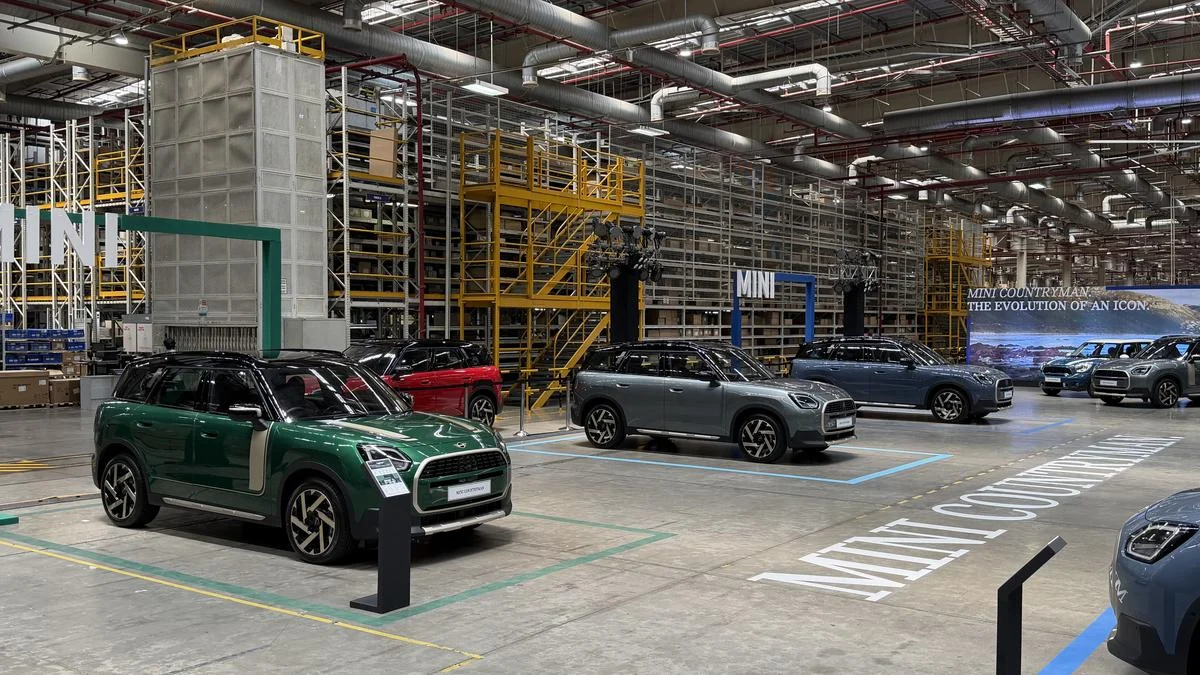
The landscape of India’s premium compact SUV segment underwent a significant transformation today as MINI, the iconic British-born marque under the BMW Group umbrella, officially launched the all-new MINI Countryman C. This launch, held in the industrial and automotive hub of Chennai, represents far more than just a product update; it signifies a strategic pivot for the brand as the Countryman C becomes the first petrol-powered variant of the model to be locally manufactured at the BMW Group Plant Chennai.
Priced at ₹47.50 lakhs (ex-showroom), the new Countryman C is designed to bridge the gap between the brand’s heritage of spirited "go-kart" handling and the practical demands of the modern Indian urban family. By moving to local production, MINI is not only streamlining its supply chain but also reinforcing its commitment to the "Make in India" initiative, positioning itself competitively against established rivals in the luxury compact space.
I. Main Facts: A New Benchmark for the Premium Compact SUV
The MINI Countryman has long been the outlier in the MINI family—the "big" sibling that offered four doors and a usable boot. However, the latest iteration, the Countryman C, takes this concept to its logical zenith.
Pricing and Availability
The vehicle enters the market with a starting price of ₹47.50 lakhs. To cater to the aesthetic sensibilities of its bespoke-minded clientele, MINI is offering the Countryman C in five distinct color variants. This pricing strategy places it in direct contention with the likes of the Audi Q3, the BMW X1 (with which it shares some mechanical DNA), and the Mercedes-Benz GLA.
Powertrain and Performance
Under the hood, the Countryman C is powered by the latest generation of MINI’s TwinPower Turbo petrol engine. This power plant delivers a robust 156 hp and a peak torque of 240 Nm. Power is sent to the front wheels via a sophisticated seven-speed dual-clutch Steptronic Sport transmission. This setup is engineered to provide a seamless balance between fuel efficiency for city crawls and rapid gear shifts for spirited highway driving.
Dimensions and Versatility
The "C" in Countryman could easily stand for "Capacious." The vehicle has grown in nearly every dimension compared to its predecessor. This growth translates directly into cabin comfort. The luggage compartment offers a base capacity of 505 litres, which can be expanded to a massive 1,450 litres by folding down the rear seats. This makes it the most versatile MINI ever offered to the Indian consumer.

II. Chronology: The Road to Local Production
The journey of the MINI brand in India has been one of steady, calculated growth. Understanding the timeline of the Countryman’s evolution is essential to grasping the significance of this launch.
- 2012: The Arrival: MINI officially entered the Indian market, initially offering its range as Completely Built Units (CBUs). The Countryman was quickly identified as the volume driver due to India’s preference for SUVs and high-ground-clearance vehicles.
- The SKD Phase: For several years, MINI experimented with Semi-Knocked Down (SKD) kits for certain variants, but the petrol Countryman remained largely an imported affair or limited in its local assembly scope.
- 2023: The Global Reveal: The new generation of the Countryman was unveiled globally, showcasing a radical departure in design philosophy—moving toward "Charismatic Simplicity."
- June 2026: The Chennai Milestone: The launch of the Countryman C marks the culmination of BMW Group’s investment in its Chennai facility. By localizing the production of the petrol variant, MINI has achieved a level of manufacturing integration previously reserved for BMW’s core sedans and X-series SUVs.
This chronological shift from an imported niche product to a locally manufactured cornerstone signifies MINI’s transition from a "lifestyle accessory" brand to a serious contender in the luxury automotive mainstream.
III. Supporting Data: Engineering and Digital Innovation
The all-new Countryman C is a tour de force of both mechanical engineering and digital integration. To understand why this model is being hailed as a "new kind of BIG," one must look at the data and specifications that define its character.
Digital Architecture: MINI Operating System 9
The centerpiece of the interior is a 240mm diameter circular OLED display. This is not merely a screen; it is a high-resolution hub that runs the new MINI Operating System 9.
- Touch and Voice: Developed in-house by the BMW Group, the OS supports advanced touch gestures and the "Hey MINI" Intelligent Personal Assistant.
- Connectivity: The system features wireless Apple CarPlay and Android Auto, along with remote software upgrades (OTA), ensuring the vehicle’s tech remains current throughout its lifecycle.
- Experience Modes: The cabin atmosphere can be altered through various "MINI Experience Modes," which change the lighting, display graphics, and even the synthetic engine sound profile to match the driver’s mood.
Interior Sustainability and Comfort
In a move toward environmental consciousness, MINI has moved away from traditional leather.
- Materials: The dashboard and door panels are covered in a specially developed textile made from recycled polyester.
- Seating: The premium sports seats offer enhanced lateral support, and the rear bench features a sliding mechanism that allows owners to prioritize either rear legroom or boot space.
- Acoustics: The vehicle is equipped with a high-fidelity Harman Kardon audio system, specifically tuned to the acoustic properties of the Countryman’s larger cabin.
Safety and Assistance
While the "go-kart feel" is a marketing staple, the Countryman C is grounded in safety data. It comes equipped with a suite of Driver Assistant systems, including:

- Active Park Assist.
- A 360-degree fisheye camera for narrow urban maneuvers.
- The "Digital Key Plus" system, which uses ultra-wideband (UWB) technology to allow users to unlock and start the car using their smartphone without removing it from their pocket.
IV. Official Responses: Leadership Perspectives
The launch event in Chennai was attended by high-ranking officials from BMW Group India, who provided context on where the Countryman C fits into the broader corporate strategy.
Hardeep Singh Brar, President and CEO of BMW Group India, was emphatic about the vehicle’s role in the portfolio. "The all-new MINI Countryman C is a new kind of BIG," Brar stated during the unveiling. "It is larger, more powerful, and yet retains the soul of a MINI. By producing this petrol variant locally at our Chennai plant, we are not only responding to the growing demand for premium SUVs in India but also offering our customers a value proposition that was previously unattainable in this segment."
Brar further noted that the decision to localize production was driven by the consistent growth seen in the Indian luxury car market. "Our customers in India are evolving. They want the distinctiveness of MINI but the practicality of a family vehicle. The Countryman C delivers exactly that, with the added benefit of being ‘Made in India’ to the highest global standards."
Manufacturing experts at the BMW Group Plant Chennai also highlighted that the facility has undergone upgrades to accommodate the specific assembly requirements of the new MINI platform, ensuring that the local units are indistinguishable in quality from those produced at MINI’s Oxford or Leipzig facilities.
V. Implications: The Future of MINI in the Indian Market
The local production of the MINI Countryman C carries several long-term implications for the brand, the industry, and the consumer.
1. Competitive Pricing and Market Penetration
By avoiding the heavy customs duties associated with Fully Built Units (CBU), MINI can price the Countryman C more aggressively. At ₹47.50 lakhs, it sits in the "sweet spot" of the luxury market, potentially poaching customers who might have previously opted for a high-end Toyota Fortuner or a base-model German SUV.

2. Strengthening the "Make in India" Narrative
MINI’s commitment to local production serves as a significant endorsement of India’s manufacturing capabilities. It signals to other global luxury brands that the Indian ecosystem is mature enough to handle the production of complex, high-technology vehicles. This could lead to further investments in the automotive sector, particularly in the premium segments.
3. A Shift in Brand Identity
For decades, MINI was seen as a "second car" or a "weekend toy." The Countryman C challenges this perception. With its 505-litre boot, advanced safety tech, and comfortable rear seating, MINI is positioning itself as a viable "first car" for young, affluent families. This shift in identity is crucial for long-term volume growth in a market like India, where utility is often as important as status.
4. The Path to Electrification
While the Countryman C is a petrol-powered milestone, it sets the stage for MINI’s future. The infrastructure and supply chains established for the local production of this model will likely serve as the foundation for future electrified MINI models. As India’s EV charging infrastructure matures, the transition from local petrol production to local EV assembly becomes a much shorter leap.
5. Resale Value and Serviceability
Local production generally leads to better availability of spare parts and more standardized service costs. This is expected to improve the long-term ownership experience and boost the resale value of the Countryman in the pre-owned market—a critical factor for Indian luxury car buyers.
Conclusion
The launch of the MINI Countryman C in Chennai is a landmark moment that blends British heritage with Indian industrial prowess. By delivering a vehicle that is larger, smarter, and locally built, MINI is not just selling a car; it is making a statement about its permanence in the Indian automotive landscape. As the first units roll off the Chennai assembly line, the "new kind of BIG" looks set to leave a very large footprint on India’s roads.
